What a Sand and Gravel Plant Conveyor Pulley Does
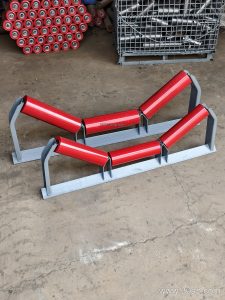
In a sand and gravel plant, belt conveyors move crushed stone, washed sand, and aggregate between crushers, screens, and stockpiles. The conveyor pulley is the rotating drum that drives the belt, redirects it, or maintains tension. Unlike an idler roller, which supports the belt along its carrying run, a pulley transmits power or changes belt direction at key transfer points. The drive pulley, often called the head pulley, grips the belt and pulls it forward. The tail pulley at the loading end redirects the return belt, while bend and take-up pulleys guide the belt through curves and maintain proper tension. Each subtype has a distinct role; a drive pulley cannot be swapped with a tail pulley without redesigning the conveyor.
Construction and Surface Options
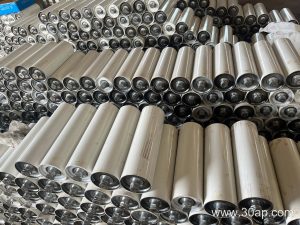
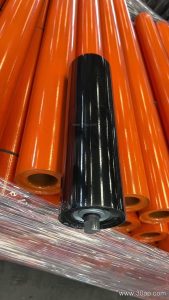
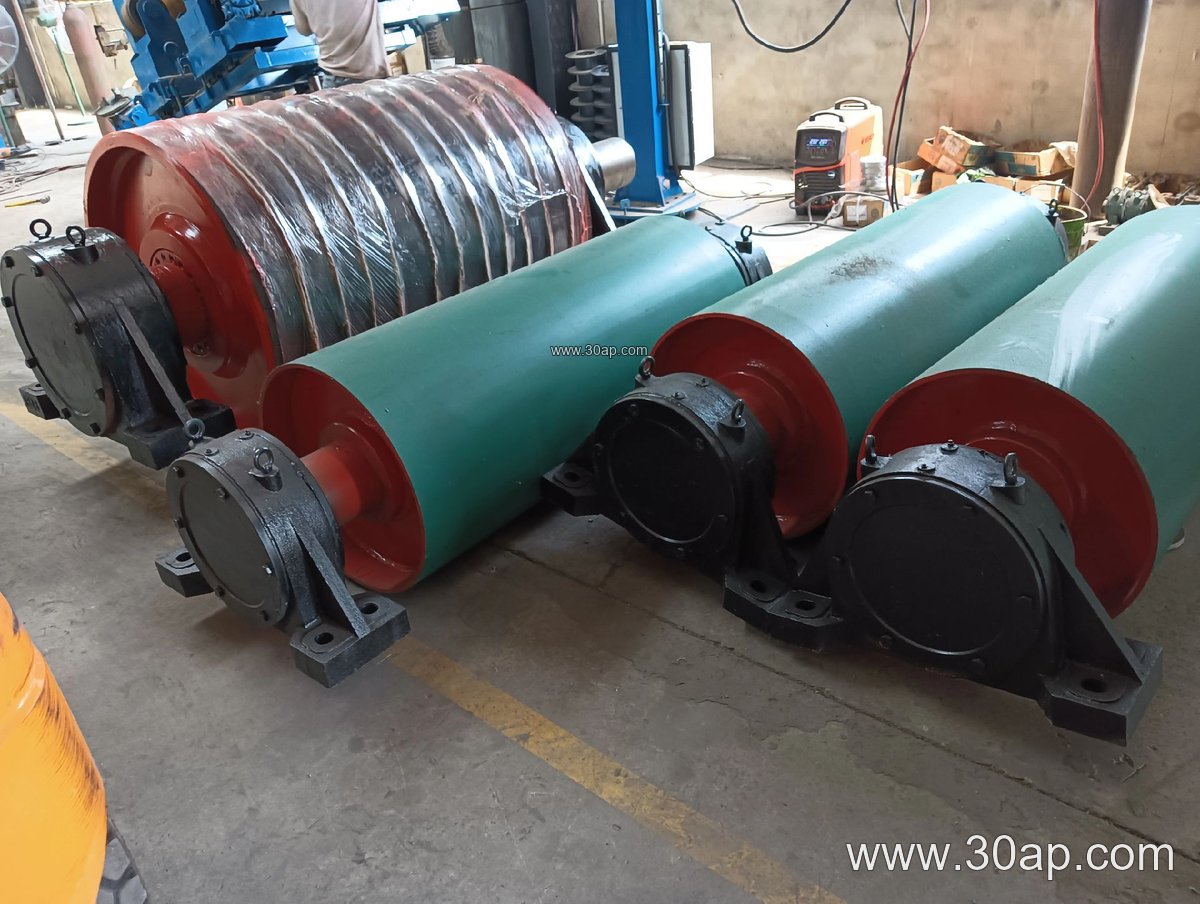
A typical sand and gravel plant conveyor pulley is built from a steel shell, end discs, a shaft, and bearing housings. The shell diameter and face width are matched to the conveyor design and belt width. Common face widths run slightly wider than the belt, for example about 950 mm for a B800 belt or about 1400 mm for a B1200 belt. Diameters often range from Ø200 to Ø1250 or larger, depending on torque and belt speed. Shaft diameters are determined by torque and load, not by belt width alone; typical shaft sizes include Ø80, Ø100, Ø120, and Ø140.
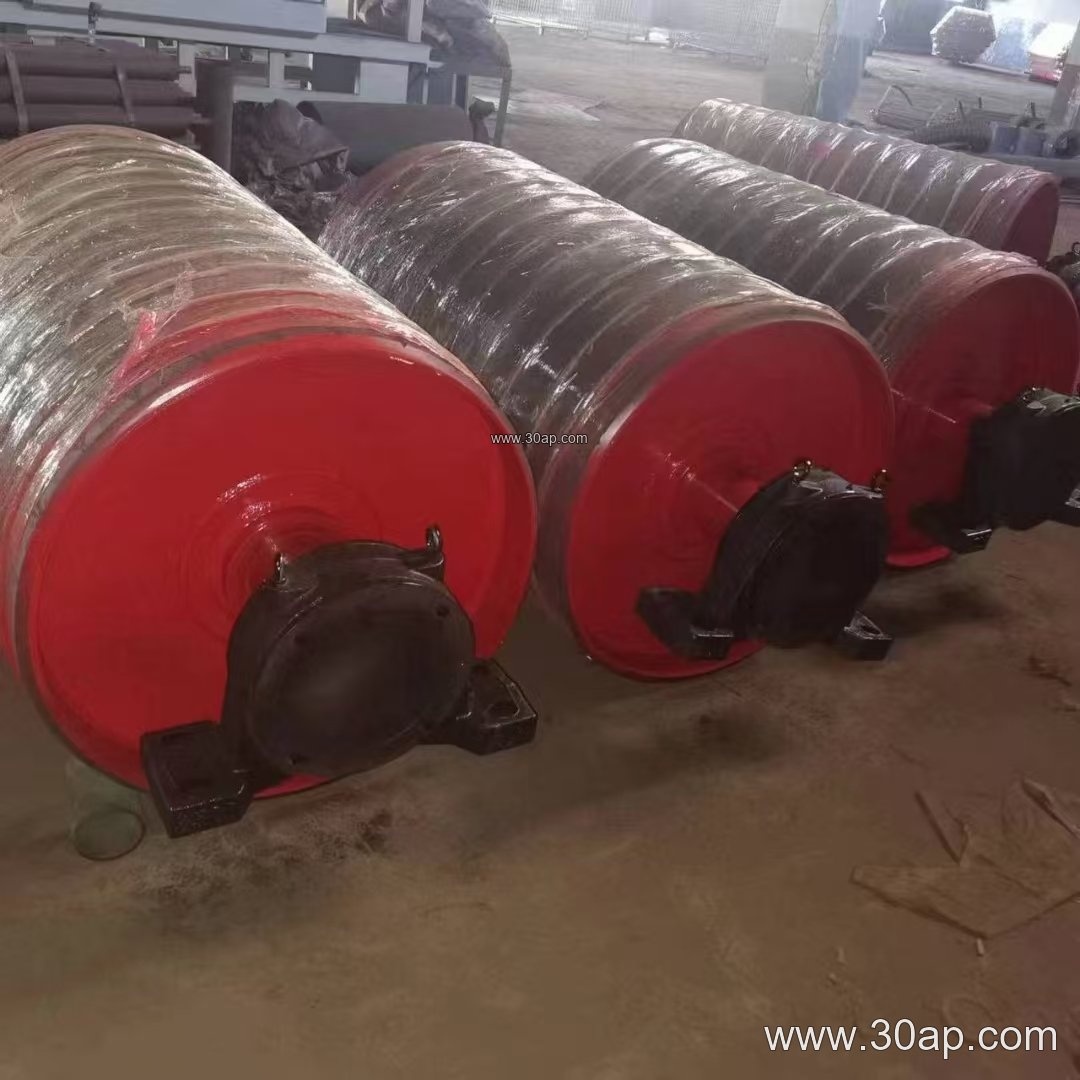
Surface treatment affects grip and wear life. Plain steel is used where traction is not critical. Rubber lagging—applied by cold bonding or hot vulcanizing—improves friction and protects the shell. Diamond and herringbone patterns channel water and fines away from the contact area, which helps in wet sand and gravel operations. Ceramic lagging offers high abrasion resistance for heavily loaded drive pulleys. Lagging thickness commonly falls between 8 mm and 20 mm. The right choice depends on belt tension, material moisture, and the amount of slip expected.
Where It Fits in the Plant
In a sand and gravel pit or aggregate line, the drive pulley is usually located at the discharge end of a conveyor, often above a screen or stockpile. The tail pulley sits at the loading point, where a hopper or feeder drops material onto the belt. Bend pulleys are used in take-up systems to increase belt wrap around the drive pulley or to route the belt around obstacles. In a crushing circuit, a heavy-duty pulley may handle high impact loads from primary crushed rock. In a concrete batch plant or asphalt plant, smaller pulleys feed aggregate bins. The same pulley design principles apply in limestone quarries, iron ore operations, and construction waste recycling, though duty levels vary.
Matching the Pulley to the Belt
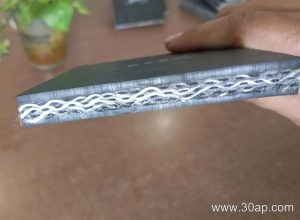
The conveyor belt and pulley work as a system. A rubber conveyor belt with a smooth cover may need more lagging friction on the drive pulley than a rough-top belt. An EP conveyor belt or NN conveyor belt with fabric core is common in aggregate conveyors, while steel cord conveyor belt is used for long, high-tension runs. Abrasion resistant conveyor belt is typical for sharp crushed stone, and a chevron conveyor belt may be used on inclines, requiring pulleys that can handle the belt profile. The pulley face width should exceed the belt width to allow for mistracking. For example, a B650 belt might use a pulley face around 750 mm, and a B1000 belt around 1150 mm. These are reference relationships, not fixed rules; final dimensions come from the conveyor designer.
Buyer Checklist
- Confirm the pulley type: drive, tail, bend, take-up, or snub. Each has a different function and cannot be interchanged casually.
- Specify belt width and required face width. Common belt widths include B500, B650, B800, B1000, B1200, and B1400.
- State the required diameter and shaft size based on torque and load, not just belt width.
- Choose lagging type and thickness for the environment: plain, diamond, herringbone, or ceramic; 8–20 mm thickness is common.
- Check bearing housing size and mounting dimensions against the conveyor bracket.
- For maintenance, inspect lagging wear, shaft alignment, and bearing condition regularly. Replace worn lagging before it damages the belt.
Whether the plant handles quarry rock, sand, or recycled aggregate, selecting the correct sand and gravel plant conveyor pulley ensures reliable belt tracking and reduces downtime. Buyers should provide complete conveyor data to the pulley manufacturer and avoid assuming that one belt width dictates a single pulley diameter or shaft size.