What a Conveyor Carrying Bracket Does
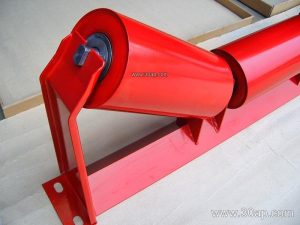
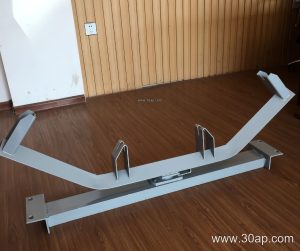
A conveyor carrying bracket is the frame that holds the troughing idlers on the load side of a belt conveyor. It sits between the conveyor stringers and the idler roller, giving each roller a fixed position and the correct trough angle so the belt keeps its shape under load. In a quarry or a power plant coal yard, this part is easy to overlook, yet it decides how evenly the belt sits, how the load is distributed, and how long the rollers last.
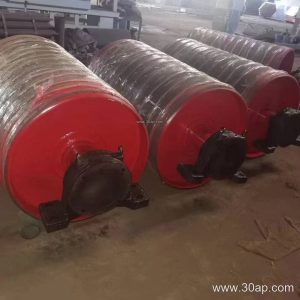
Buyers often search for this item under its equivalent name, the troughing idler bracket or carrying idler frame. Both refer to the same product: the upper, load-carrying support that carries the belt and the material on it. It should not be confused with the return bracket below the belt, or with the frame that holds a drive pulley or a bend pulley. Those parts do different jobs and are not interchangeable.
How the Bracket Is Built
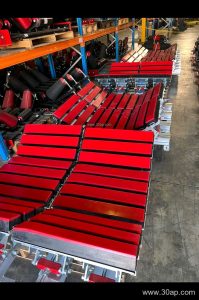
Most carrying frames are fabricated from angle steel, channel steel, or folded steel plate. The crossbeam length and the mounting hole spacing follow the belt width, the trough angle, and the roller diameter, so they are set by design rather than by a single fixed number. A typical unit has two or three roller seats, with the side seats angled upward to form the trough.
Common reference values used when describing these frames:
| Item | Typical range |
|---|---|
| Belt width | B500, B650, B800, B1000, B1200, B1400, B1600, B1800 |
| Trough angle | 20 degrees, 30 degrees, 35 degrees, 45 degrees |
| Roller diameter | Ø89, Ø108, Ø133, Ø159, Ø194 |
| Material | Angle steel, channel steel, folded plate |
These are reference figures, not a fixed matching rule. A B800 frame may be built for 30 degrees or 35 degrees, and a Ø108 roller is not tied to one belt width. Forward-leaning frames, often set at about 1.5 to 2 degrees, are a separate subtype used for belt training, and they should not be treated as a replacement for the standard carrying bracket.
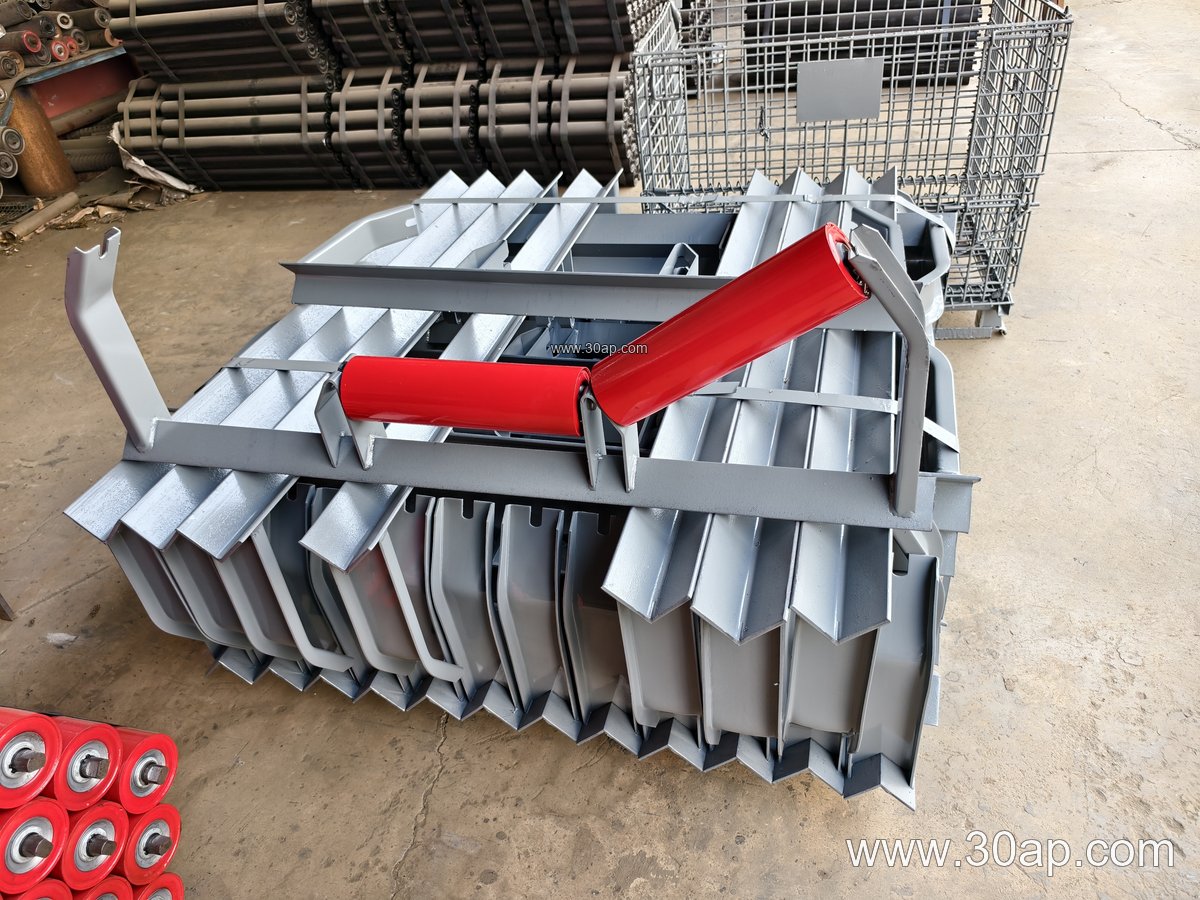
Where It Fits on the Conveyor
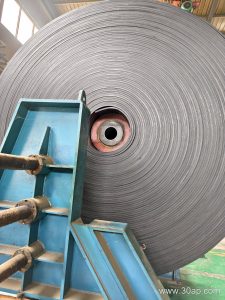
The carrying bracket belongs to the upper run. On a stone crushing line it supports the conveyor belt under coarse aggregate; in a cement plant it holds the belt beneath clinker or limestone; in a power plant coal handling system it sits under a flame retardant conveyor belt or an abrasion resistant conveyor belt. The same frame type appears under a heavy-duty mining conveyor belt in an iron ore or copper ore operation, where impact and wear are high and the bracket must stay square.
Frames also appear on the inclined sections of a pipe conveyor belt system and on the loading zone of a skirted conveyor belt, though the loading point usually needs a buffer or impact bracket instead of a plain carrying frame. The bracket works together with the idler roller and the belt; if the frame is twisted, the belt will run off center no matter how good the roller is. More detail on matching frames with rollers is available at yongli-conveyor.com/conveyor-carrying-bracket.
Fixed, Adjustable, and Transition Frames
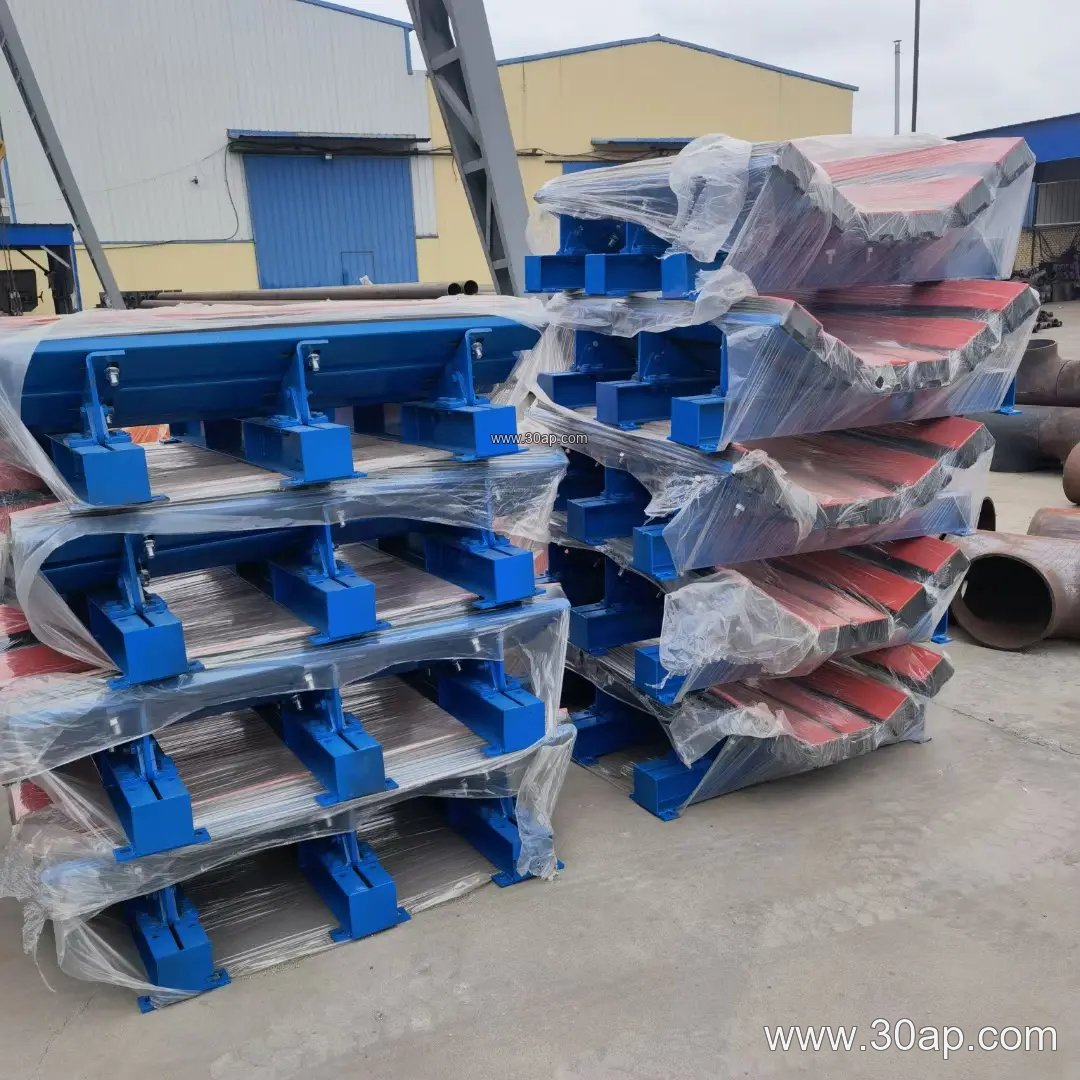
Fixed frames hold one trough angle. Adjustable frames let maintenance staff change the angle between 20 and 45 degrees, which helps when a line handles different materials or when the belt needs fine tuning after installation. Transition brackets sit near the pulleys, where the belt changes from flat to troughed, and they are graded in angle to avoid stressing the belt edge.
A buyer comparing options should note that a transition frame and an adjustable frame are not substitutes for each other, and neither replaces the standard carrying bracket along the main run.
What to Check Before Ordering
- Belt width and the actual trough angle required by the conveyor design.
- Roller diameter and the seat style used by the existing idlers.
- Mounting hole spacing and crossbeam length, measured on site if replacing.
- Material and finish for the environment: wet washing areas, dusty coal yards, or coastal ports.
- Whether the line needs buffer frames at the load point or training frames on a long run.
For a coal mining conveyor belt or an underground installation, confirm that the frame fits the available clearance and that the roller seats accept the specified idler. For a high temperature conveyor belt in a sintering or cement line, check that the frame material and coating suit the heat radiated from the load. Matching frames to EP conveyor belt or steel cord conveyor belt lines is mostly a matter of correct width, angle, and roller seat, not a special grade. Further selection notes can be found at yongli-conveyor.com/conveyor-bracket.
Good practice is to keep spare frames and seats for the sections that wear fastest, usually the loading zone and the transition area. A straight, well-aligned carrying bracket keeps the belt centered, reduces edge damage, and lets the idler roller turn freely, which is the simplest way to protect the whole conveyor.