What an Aggregate Conveyor Pulley Does
In a crushing and screening circuit, the aggregate conveyor pulley is the rotating drum that turns the belt, sets its tension, and keeps the load moving between the jaw crusher, screens, and stockpiles. It is a simple-looking part with a demanding job: it carries the full belt tension, absorbs shock from falling rock, and holds alignment through dust, grit, and wash-down water. While the belt and idler roller set do most of the visible work, the pulley decides how reliably the whole conveyor behaves.
The same component is often called a conveyor drum, and the two names describe the same product. It should not be confused with the tail or bend pulley, which perform different duties at different points of the conveyor line.
How the Drum Is Built
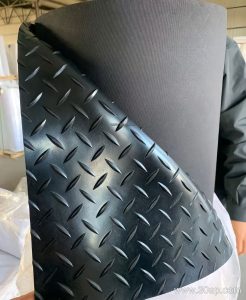
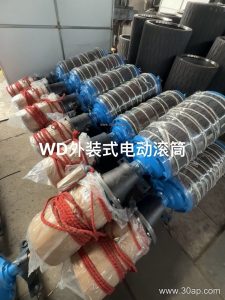
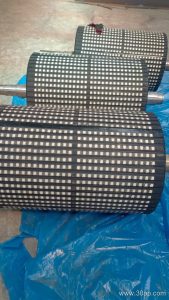
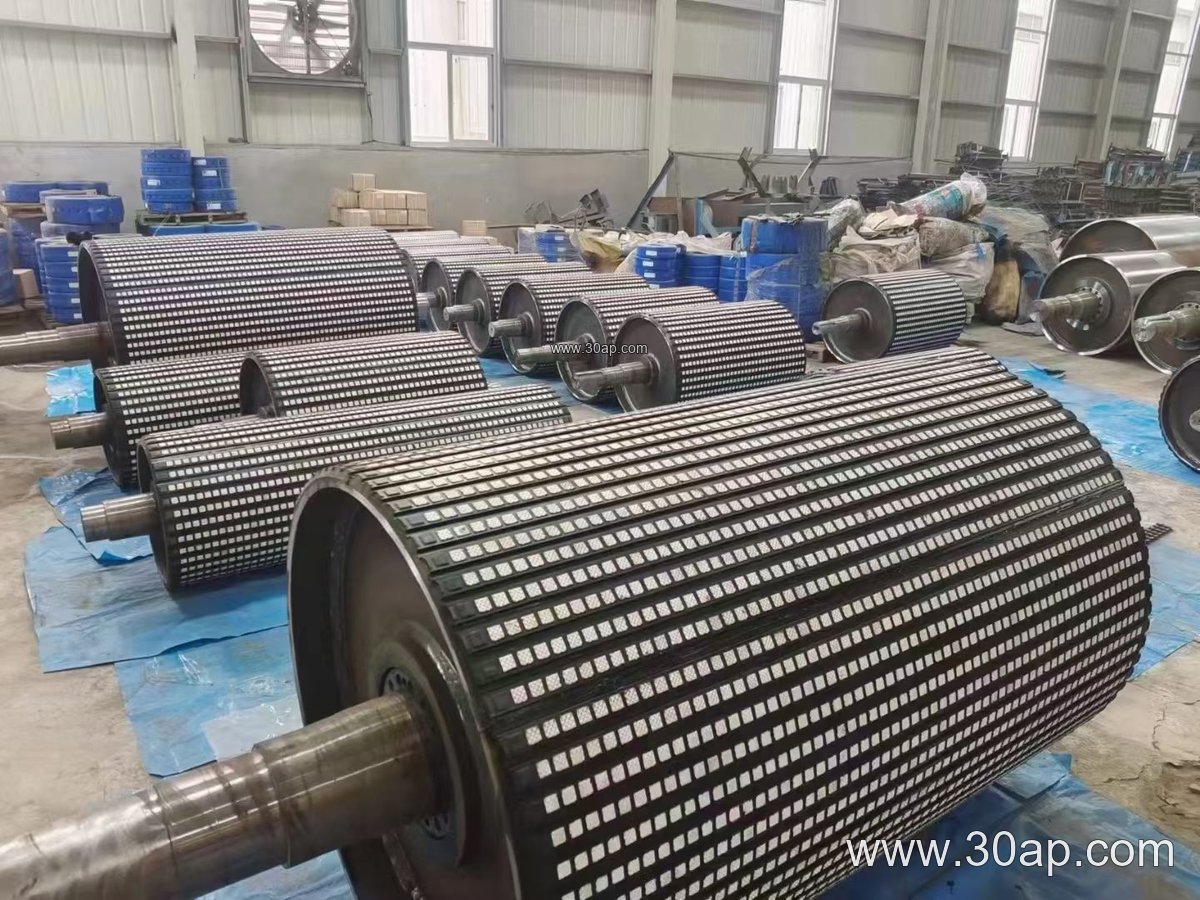
A typical unit combines a steel shell, two end discs, a shaft, and bearing housings. The shell is machined or rolled to a slight crown so the belt tracks toward the centre. Locking elements or keyed hubs connect the shaft to the end discs. Surface treatment is chosen to match the duty: plain finish for light work, cold-bonded rubber, hot-vulcanised rubber, diamond grooving, herringbone grooving, or ceramic lagging where grip and wear life matter.
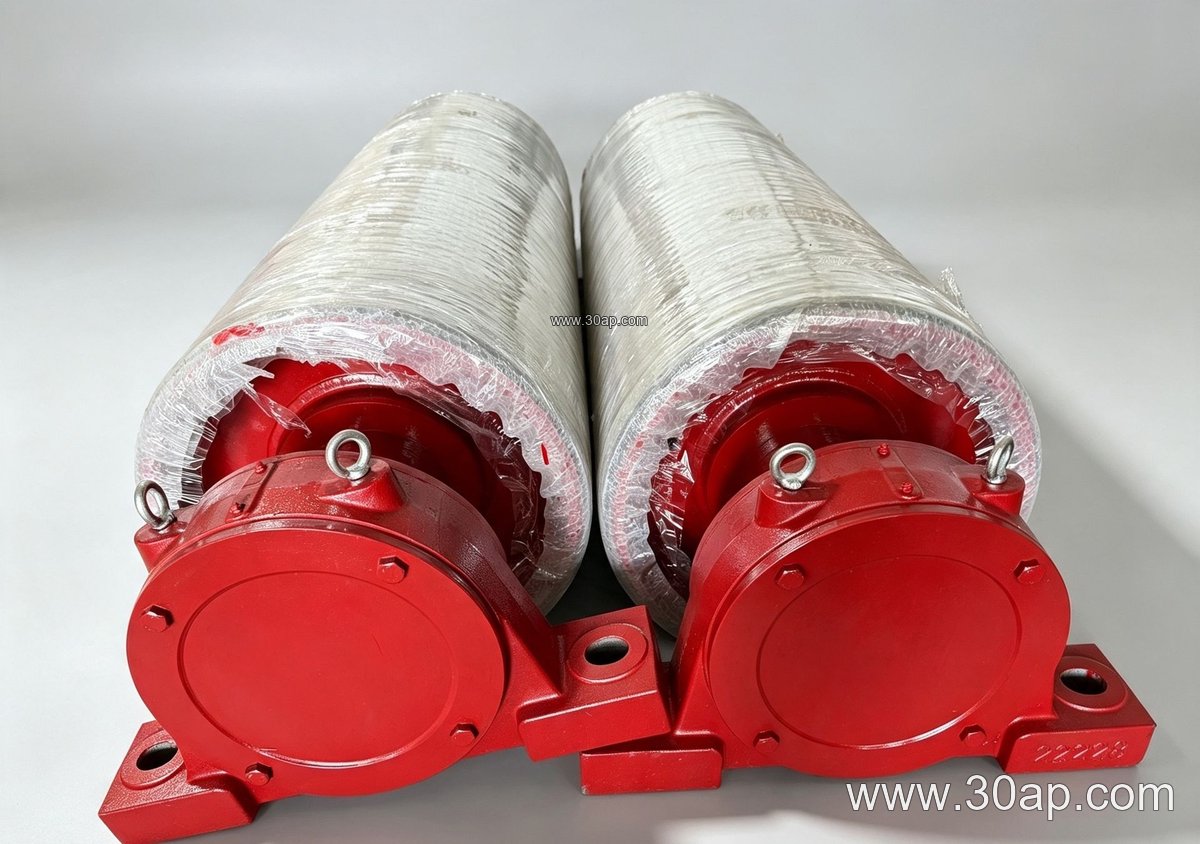
Common face widths follow the belt they serve, and the drum face is usually wider than the belt. Reference examples include B650 with a face near 750 mm, B1000 near 1150 mm, and B1400 near 1600 mm. Diameter is selected from belt tension and wrap angle, not from belt width alone. Combinations such as B800 x Ø500 or B1200 x Ø1000 appear in aggregate plants, but no single diameter is mandatory for a given belt. Shaft size depends on torque and bearing load; Ø80 to Ø160 are common in mid-size quarry conveyors, with larger shafts on high-tension drives.
Where It Fits in the Plant
Aggregate operations use this drum at the head of the discharge conveyor, at the take-up, and at transition points where the belt changes direction. A quarry conveyor pulley at the head end usually carries lagging for grip, while a bend position may run a plain or lightly lagged shell. In a sand and gravel line, the same drum sits under the primary screen and must tolerate grit and intermittent surges.
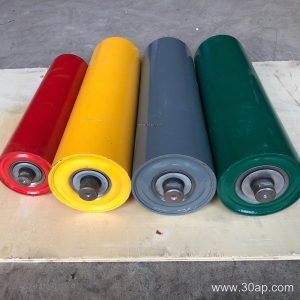
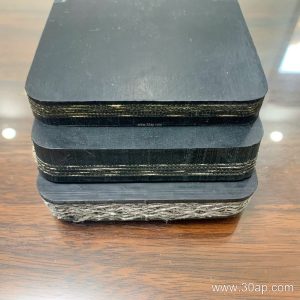
The belt itself is part of the same system. A heavy-duty abrasion resistant conveyor belt on a quarry conveyor works best when the drum diameter gives enough wrap and the lagging matches the wet or dry condition. In dusty cement plants, sealing and bearing protection matter as much as the shell thickness.
Matching the Pulley to the Belt and the Job
Selection starts with the belt, not the drum. A multi-ply fabric core belt such as an EP conveyor belt or NN conveyor belt needs a diameter large enough to limit flex fatigue at each revolution. A steel cord conveyor belt in a long overland run needs a larger drum and a carefully checked shaft. Chevron conveyor belt and corrugated sidewall belt profiles can require a slightly larger diameter and a clean, well-aligned face so the cleats or walls do not rub.
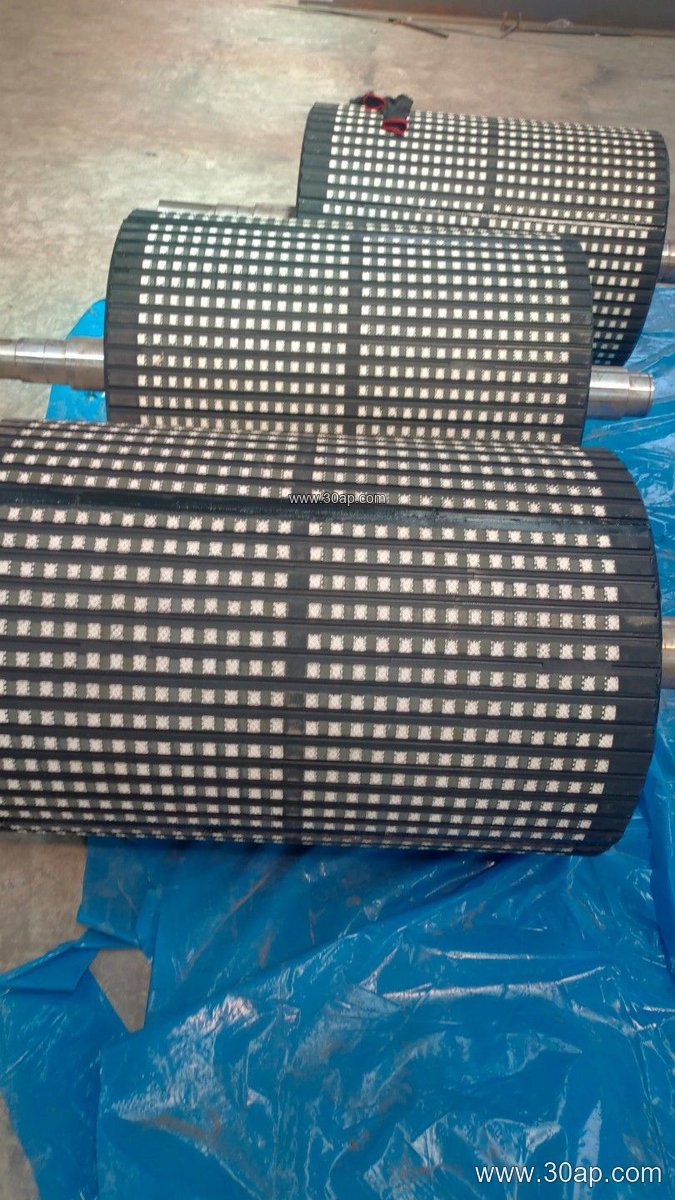
Lagging choice follows the material and the weather. Diamond lagging sheds water in wash plants; ceramic lagging suits high-traction drives handling sharp rock; plain face is adequate for low-tension return positions. On a coal mining conveyor belt or an underground mining conveyor belt, flame retardant and anti-static properties of the belt are specified separately from the drum, so the two must be checked together.
Specification Reference
Values below are common reference points, not fixed pairings or supply promises. Final dimensions are set by the conveyor designer.
- Belt widths: B400, B500, B650, B800, B1000, B1200, B1400, B1600, B1800, B2000
- Diameters: Ø200, Ø250, Ø315, Ø400, Ø500, Ø630, Ø800, Ø1000, Ø1250
- Lagging thickness: 8, 10, 12, 15, 20 mm
- Shaft diameters: Ø50, Ø60, Ø70, Ø80, Ø90, Ø100, Ø120, Ø140, Ø160
What a Buyer Should Check
Ask for the calculated belt tension, the wrap angle, and the duty cycle before agreeing on a diameter. Confirm the lagging type and thickness, the shaft material, and the bearing arrangement. Check that the face width clears the belt and that the crown is correct for tracking. For a crusher conveyor belt handling sharp, heavy rock, impact and abrasion resistance on the belt should be reviewed alongside the drum surface, because a slipping or worn pulley shortens belt life quickly.
On site, keep the drum clean, inspect lagging for grooves and tears, and recheck locking elements at intervals. A well-matched aggregate conveyor pulley, working with the right conveyor belt and idler roller set, keeps a crushing plant running through long shifts with fewer stoppages.