What a Trough Idler Bracket Set Does on a Conveyor
A trough idler bracket set is the steel frame that holds the carrying idlers in a troughed profile under the conveyor belt. Instead of a single flat support, the set positions two or three idler rollers so the belt forms a shallow or deep trough, keeping bulk material centered on the belt. In a quarry, a coal handling plant, or a cement mill, this small assembly decides how well the belt tracks and how much spillage the operator has to clean up.
The bracket set is often called a troughing idler frame or carrying idler bracket assembly. It is a structural part, not a rotating part, and it works together with the idler roller, the conveyor bracket that ties it to the stringer, and the belt itself.
How the Set Is Built
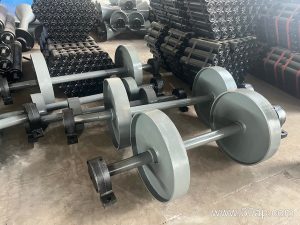
Most units are fabricated from angle steel, channel steel, or bent steel plate, then drilled or punched for the idler shaft. A typical set includes a central base, two side wings angled to create the trough, and mounting slots for the idlers. The wings may be fixed or hinged for adjustment.
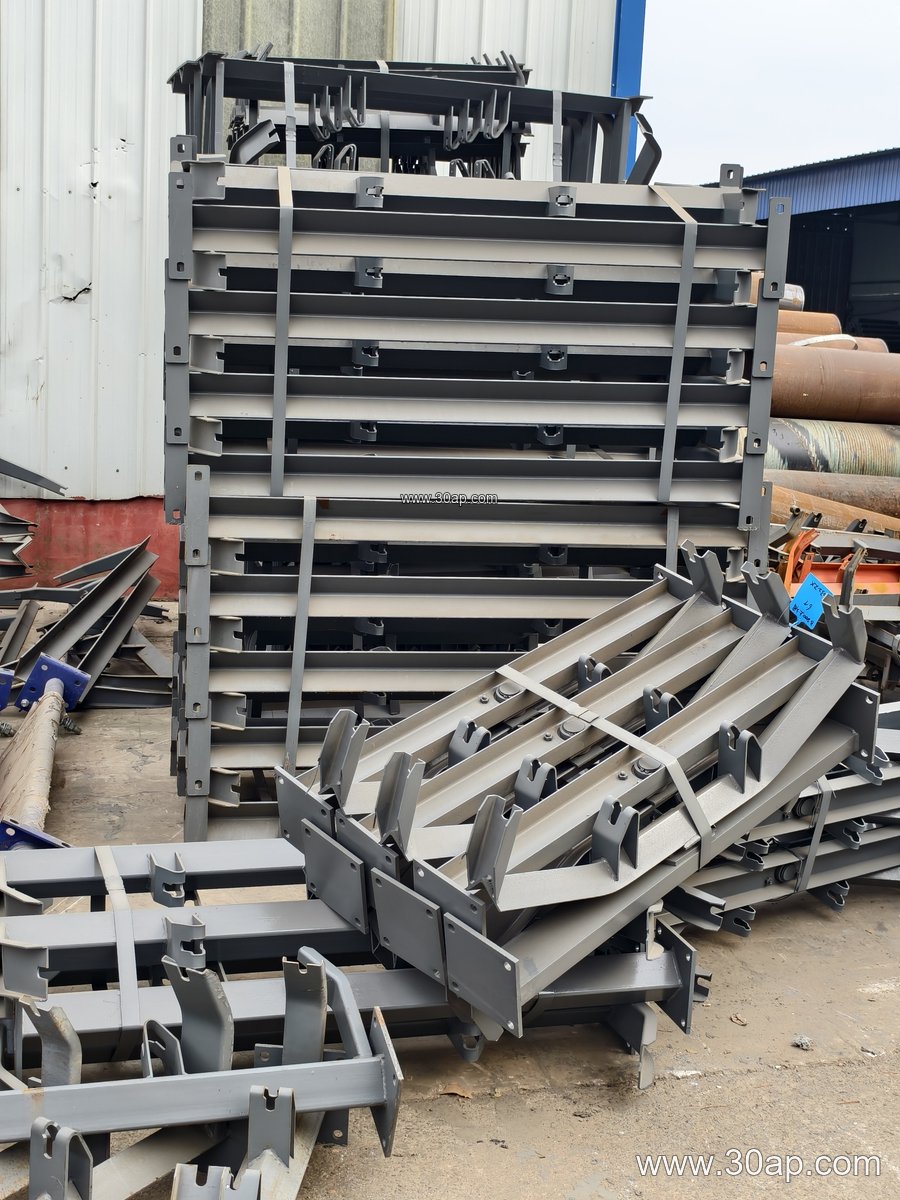
- Fixed troughing brackets with a set trough angle
- Adjustable brackets that can be set between common trough angles
- Transition brackets used near the tail or head to ease the belt from flat to troughed
- Impact bracket sets with reinforced frames for loading points
- Self-aligning or forward-tilted designs for belt training
Common trough angles are 20, 30, 35, and 45 degrees, and forward tilt is usually about 1.5 to 2 degrees. Roller diameters such as Ø89, Ø108, Ø133, Ø159, and Ø194 are matched to belt width and load, but the pairing is a design choice, not a fixed rule.
Matching Belt Width and Bracket Geometry
The bracket set must suit the belt width and the conveyor layout. A narrow frame on a wide belt leaves the outer idlers unsupported; an oversized frame on a small belt wastes space and can interfere with the skirt rubber. Typical belt widths include B500, B650, B800, B1000, B1200, B1400, B1600, B1800, B2000, B2200, but the actual frame length and mounting hole spacing change with width and trough angle.
| Belt Width | Trough Angle | Idler Diameter | Typical Use |
|---|---|---|---|
| B650 | 30 degrees | Ø89 | Light aggregate lines |
| B800 | 35 degrees | Ø108 | Sand and gravel plants |
| B1000 | 35 degrees | Ø133 | Cement and power plant belts |
| B1200 | 45 degrees | Ø133 | High-capacity ore handling |
| B1400 | 35 degrees | Ø159 | Heavy bulk material transport |
These combinations are examples only. A B1200 belt can run with several trough angles and roller sizes depending on capacity, material lump size, and belt stiffness.
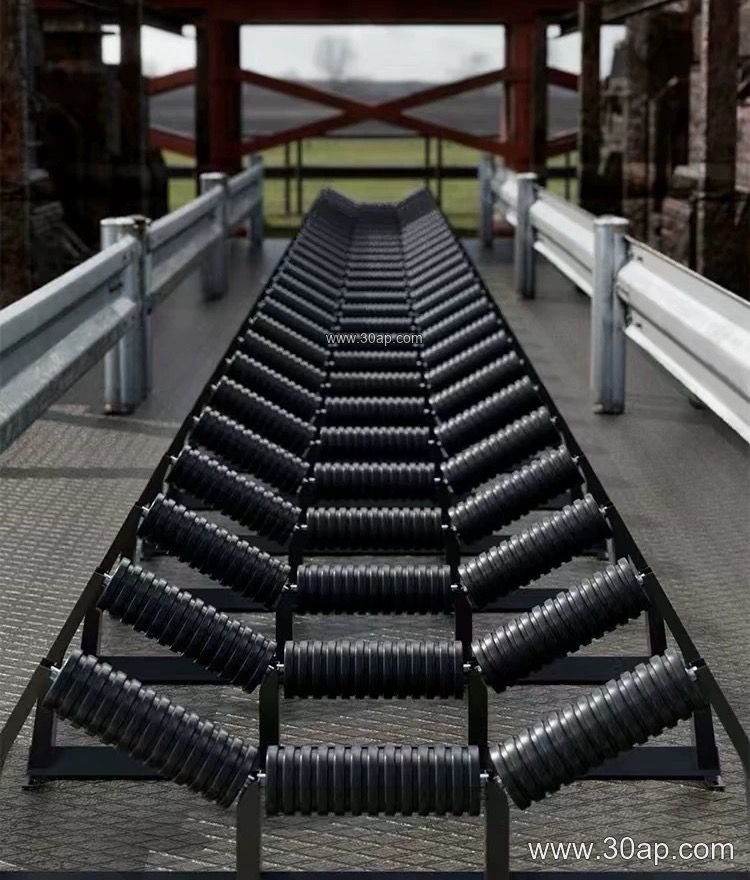
Where the Assembly Is Used
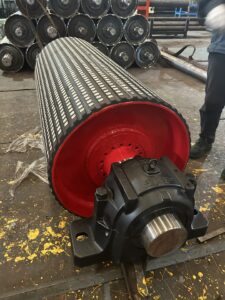
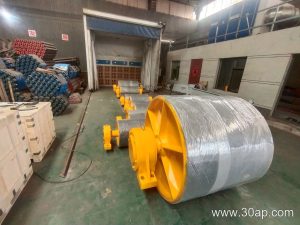
Trough idler bracket sets appear wherever a belt carries loose material. In a limestone mine or crushing and screening line, they support the belt after the crusher. In a power plant coal yard, they keep coal centered through long transfer runs. In a fertilizer or grain silo, lighter frames with smaller idlers are common. The same bracket family also works alongside a conveyor pulley at the drive or tail end, though the pulley itself is a separate component and not part of the bracket set.
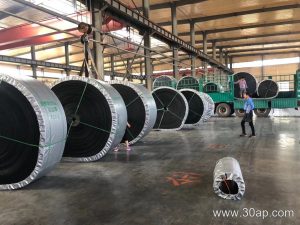
For heavy-duty mining conveyor belt duties, the bracket should be matched with abrasion resistant conveyor belt or a steel cord conveyor belt where tension and impact are high. A flame retardant conveyor belt is often specified underground, and the bracket frame should allow easy replacement without cutting the belt.
Buyer Checklist
- Confirm belt width, trough angle, and idler diameter before ordering.
- Ask whether the frame is fixed or adjustable and check the hinge quality.
- Check mounting hole spacing against the existing stringer or conveyor bracket.
- Confirm material thickness and surface treatment for dusty or wet sites.
- Match the bracket set to the idler roller type, including impact or training rollers.
For more information on trough idler bracket set options, visit goldconveyor.com. A well-chosen bracket set keeps the belt profile steady, reduces spillage, and extends idler life in mines, ports, and processing plants.