What a Guide Idler Bracket Does
A guide idler bracket is the support component that holds a guide idler in position along a conveyor’s return or carrying run, keeping the belt centered as it travels. In practice, buyers also call this part a belt guide roller bracket or a self-aligning idler support bracket, and the two names describe the same product. Its job is not to carry the full material load, but to restrain lateral drift, guide the belt edge, and hold the idler at the correct angle and height. On a quarry conveyor or a cement plant transfer line, a small tracking error can lead to edge damage, spillage, and premature wear, so this bracket often decides how smoothly the whole conveyor bracket assembly performs.
Construction and Mounting
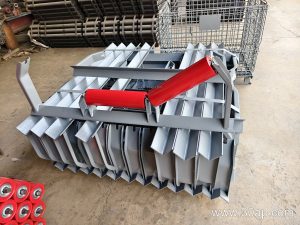
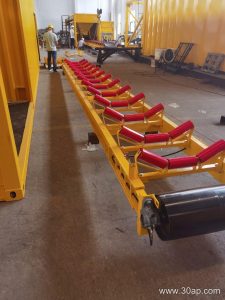
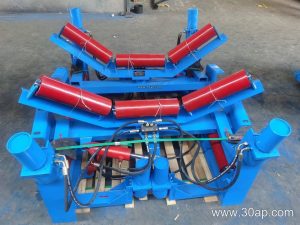
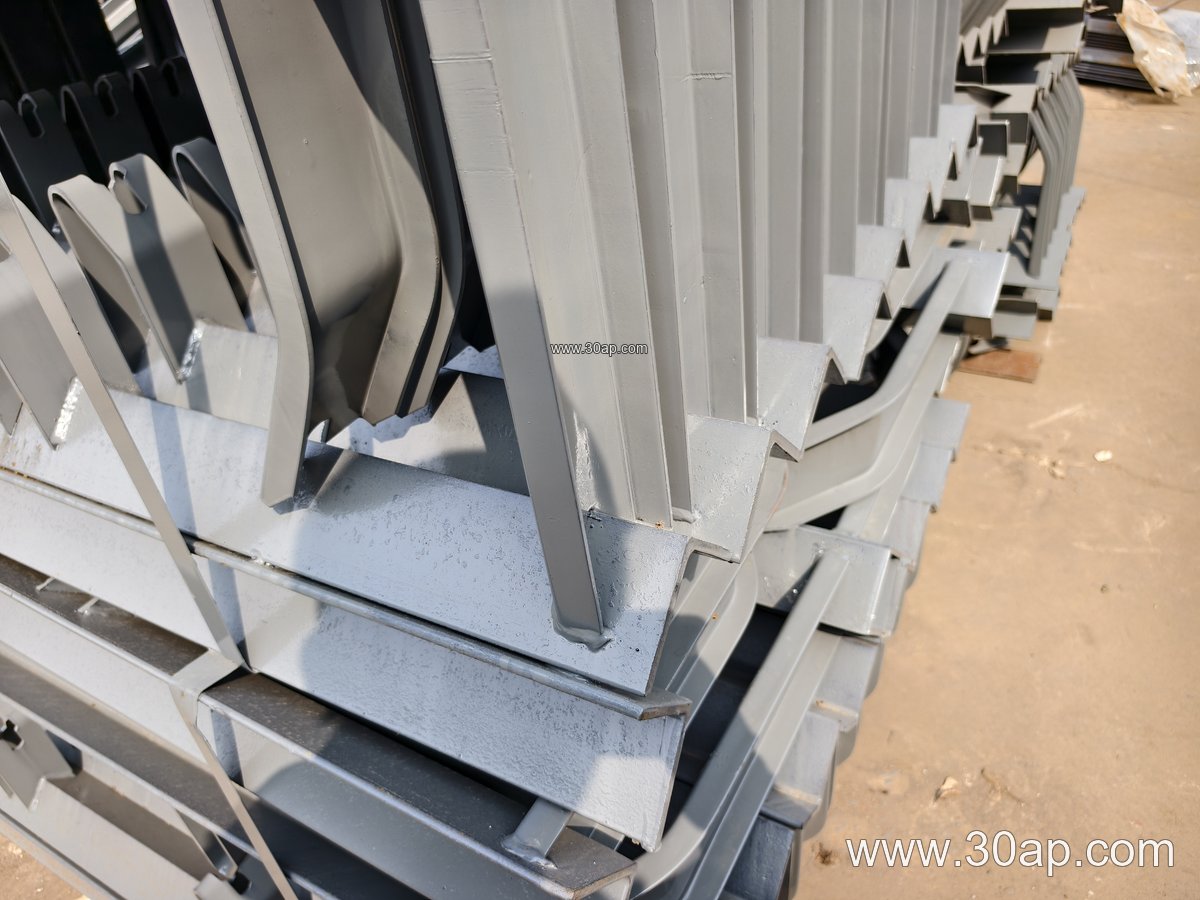
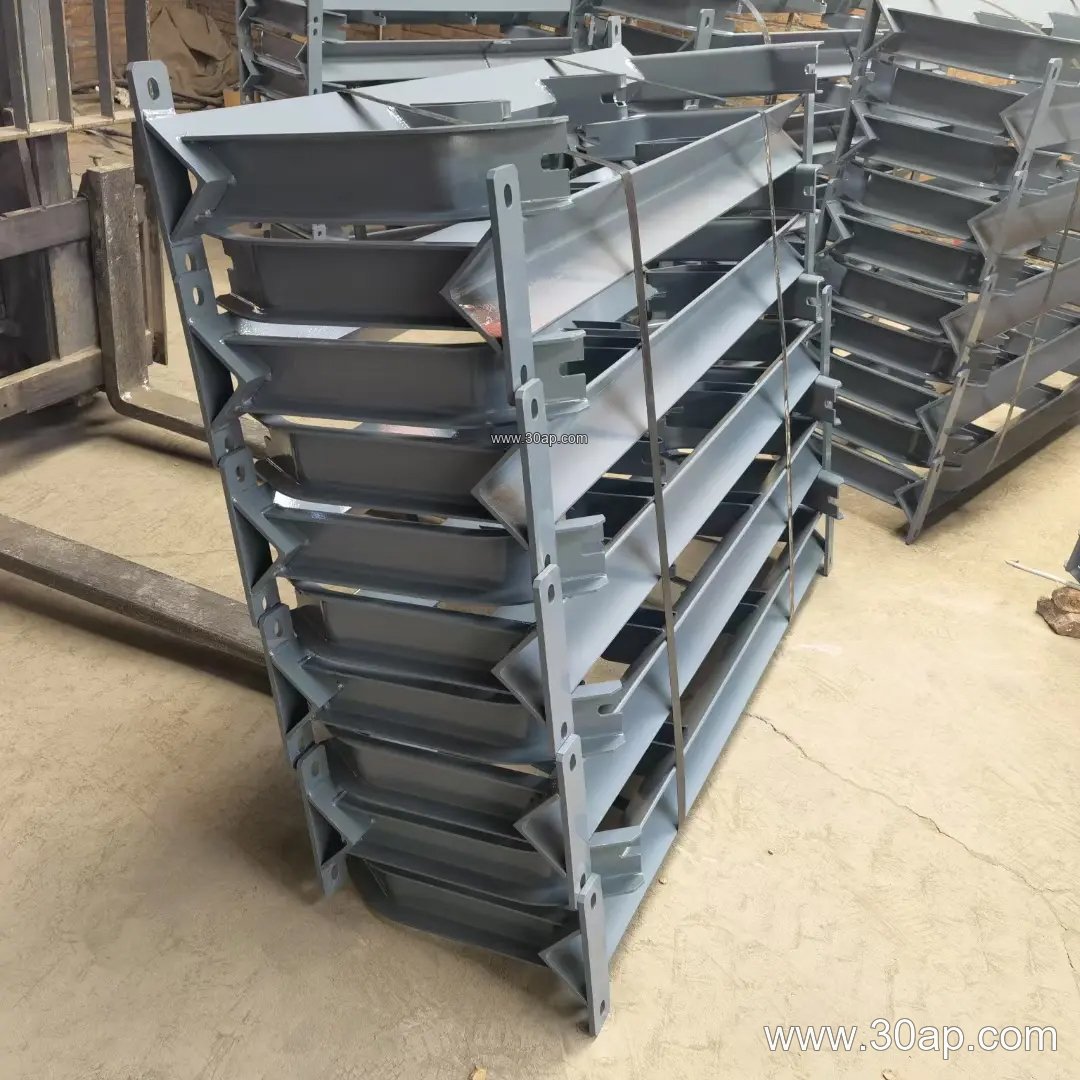
Most guide idler brackets are fabricated from angle steel, channel steel, or folded steel plate. The frame is welded or bolted, then drilled to match the mounting hole spacing of the idler shaft. Because the hole spacing and crossbeam length change with belt width and trough angle, these dimensions are usually made to order rather than fixed. A typical bracket includes a base plate for bolting to the conveyor stringer, a vertical or inclined support arm, and a slot or pivot point that allows fine adjustment of the idler position.
Mounting location matters. Guide brackets are commonly fitted just ahead of the loading point, near the transition zone, or on the return side where the belt tends to wander. They should sit square to the belt centerline, with fasteners tightened to the frame specification. Where the structure is exposed to dust and moisture, galvanizing or a suitable coating helps extend service life.
Matching the Bracket to Belt Width and Idler Diameter
Selection starts with the conveyor layout, not with a single number. Belt width, idler diameter, trough angle, and the surrounding frame all interact. The table below shows common reference combinations; these are examples, and final values follow the actual design.
| Reference | Belt Width | Trough Angle | Idler Diameter | Typical Use |
|---|---|---|---|---|
| Light duty | B500 / B650 | 20 to 30 degrees | Ø89 | Small aggregate or sand lines |
| Medium duty | B800 / B1000 | 30 to 35 degrees | Ø108 / Ø133 | Cement plant and power plant coal handling |
| Heavy duty | B1200 / B1400 | 35 to 45 degrees | Ø133 / Ø159 | Iron ore, copper ore, and primary crushing |
| Wide belt | B1600 / B1800 | 35 to 45 degrees | Ø159 / Ø194 | Port loading and high-capacity stockyards |
A wider belt does not automatically require a larger idler diameter, and one belt width can work with more than one trough angle. The bracket must simply be drilled and shaped to suit the chosen combination. Adjustable versions allow the trough angle to be set between common values such as 20, 30, 35, and 45 degrees, which is useful when a line handles different materials.
Where It Fits in Bulk Handling
In a limestone mine or a stone crushing plant, the guide bracket usually works alongside a heavy-duty conveyor belt and a set of carrying idlers, keeping the belt aligned through curves and transfer chutes. In a coal washing plant or a power station coal yard, flame retardant and anti-static belt grades are common, and the bracket must be positioned so that the guide roller does not rub the belt edge. In a fertilizer or grain silo facility, a lighter bracket with a smooth finish reduces the risk of material buildup.
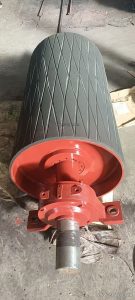
The bracket is often confused with the troughing idler support, but the two serve different purposes. A troughing bracket carries the loaded belt in a trough shape, while the guide bracket corrects tracking. Similarly, a bend pulley changes belt direction and is not a substitute for a guide bracket. Matching the right part to the right function keeps the whole conveyor bracket system efficient.
Buyer Checklist
- Confirm belt width and the idler diameter actually used, then check the bracket hole spacing against the idler shaft.
- Decide between fixed and adjustable versions; adjustable types suit lines where the trough angle may change.
- Check material and coating against the environment, especially in wash plants and coastal ports.
- Verify that the bracket clears the conveyor frame and does not interfere with the return belt or pulleys.
- Ask for a drawing showing mounting holes, crossbeam length, and angle before ordering.
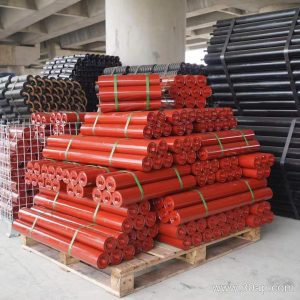
For related components, buyers often review the conveyor pulley and idler roller specifications together with the belt grade, since tracking performance depends on all three. A well-chosen guide idler bracket is a small item with a large effect on belt life and plant uptime.