What Conveyor Bracket Fabrication Covers
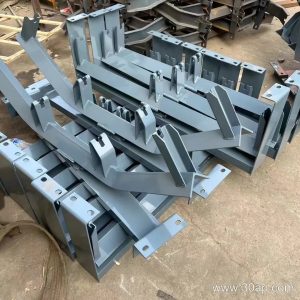
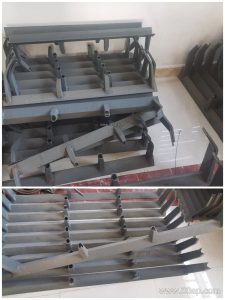
Conveyor bracket fabrication is the work of cutting, bending, drilling and welding the steel frames that hold idler rollers and shape a conveyor belt along its route. The bracket is a structural part, not a wear part, so its geometry decides how evenly the belt sits, how freely the rollers turn and how long the whole line runs between stoppages. In a quarry, a cement plant or a coal handling system, a small twist in a fabricated bracket can show up as belt misalignment hundreds of meters downstream.
Fabricators usually work from a belt width, a trough angle and a roller diameter, then produce the crossbeam, the roller seats and the mounting feet as one assembly. Common workshop materials are angle iron, channel steel and folded steel plate, chosen for stiffness rather than appearance.
How a Bracket Is Built
The process normally follows four stages. First, the crossbeam is cut to length for the specified belt width. Second, the roller mounting slots or holes are punched or drilled at the correct angle so the side rollers sit at the intended trough. Third, the feet and any adjustable arms are welded or bolted on. Finally, the frame is checked for square, dressed and coated.
- Cutting and drilling of channel or angle sections
- Bending of folded-plate brackets for lighter duty lines
- Welding of roller seats, gussets and base plates
- Dimensional check of hole spacing and trough angle
- Surface treatment suited to dusty or wet conditions
Hole spacing and crossbeam length change with belt width and trough angle, so they are set per drawing rather than taken as fixed numbers.
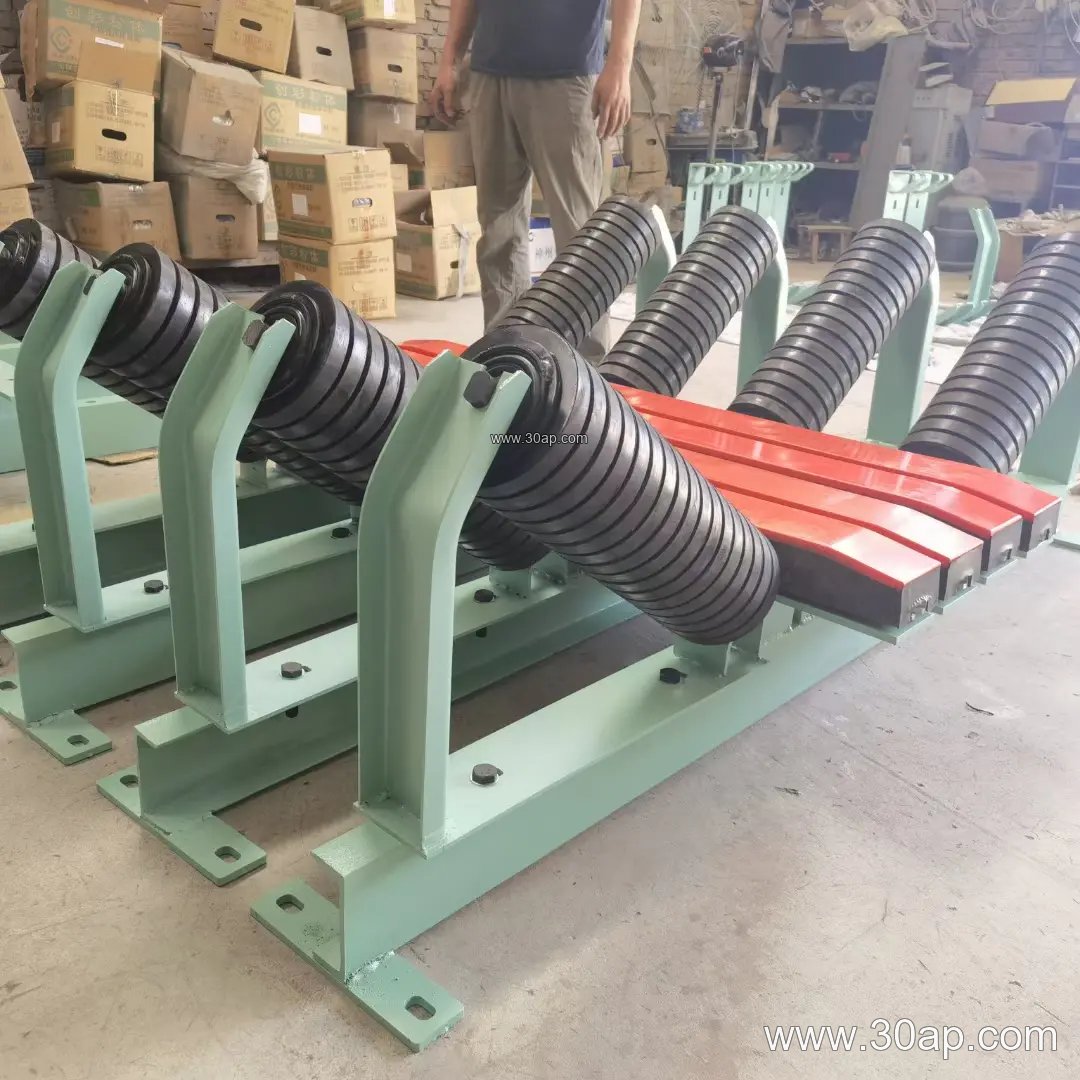
Where These Frames Are Used
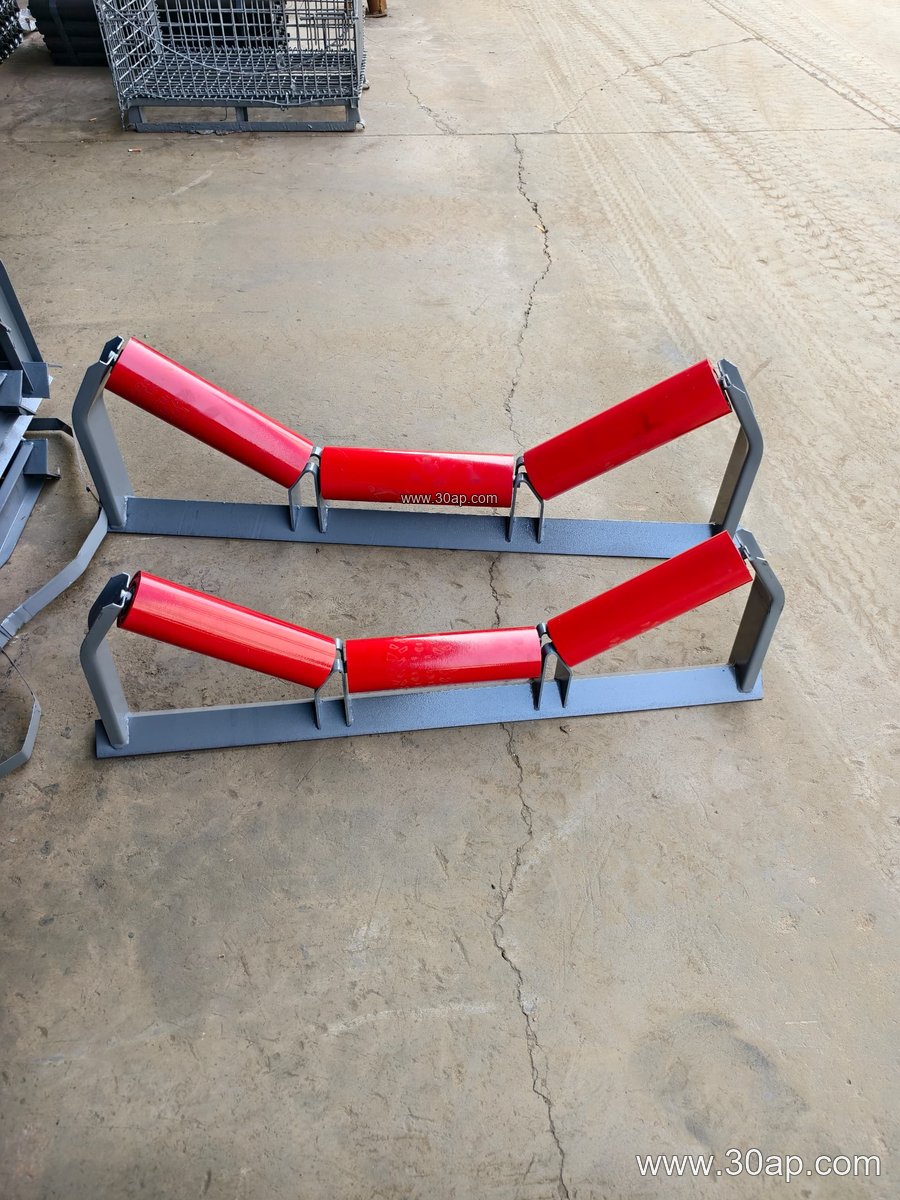
Fabricated brackets appear anywhere a conveyor belt needs support: aggregate plants, limestone mines, iron ore concentrators, power station coal yards and batching plants. On the carrying side, a trough bracket positions three rollers to cup the belt and keep bulk material centered. On the return side, a flat or V-shaped frame supports the empty belt and helps shed stray material.
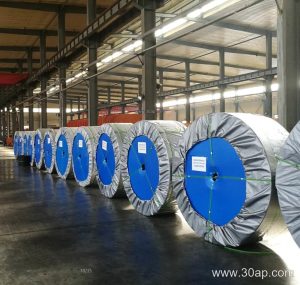
Impact zones under a crusher discharge often use a buffer bracket with rubber or spring cushioning, while long overland lines may add self-aligning frames at intervals to correct drift. A heavy-duty mining conveyor belt carrying coarse rock places higher loads on these frames than a light sand line, so plate thickness and weld size are matched to the duty.
Trough Angle and Roller Diameter Choices
The trough angle controls how much material the belt can hold and how much stress the edges see. Common values are 20, 30, 35 and 45 degrees. Adjustable brackets allow the angle to be changed on site within that range, which is useful when material characteristics shift. Forward-leaning frames, often set at about 1.5 to 2 degrees, are used to encourage self-centering.
Roller diameter is selected together with belt width and load, not in a fixed one-to-one relationship. Common roller diameters include Ø89, Ø108, Ø133, Ø159 and Ø194. Typical reference combinations might read B800 with 35 degrees and Ø108, or B1200 with 45 degrees and Ø133, but these are examples of design practice, not mandatory pairings.
| Belt Width | Typical Trough Angle | Roller Diameter Range |
|---|---|---|
| B500 to B650 | 20 to 30 degrees | Ø89 to Ø108 |
| B800 to B1000 | 30 to 35 degrees | Ø108 to Ø133 |
| B1200 to B1400 | 35 to 45 degrees | Ø133 to Ø159 |
| B1600 to B2000 | 35 to 45 degrees | Ø159 to Ø194 |
These ranges are reference data for planning and should be confirmed against the actual conveyor design.
Matching Brackets to Belt and Roller Hardware
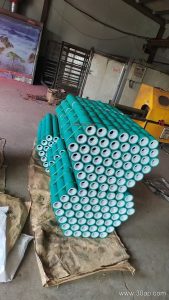
A fabricated frame only performs well when it fits the belt and rollers around it. An EP conveyor belt or a steel cord conveyor belt has different stiffness, so the trough shape that suits one may not suit the other. Skirted and corrugated sidewall belts need clearance for their raised edges, and pipe conveyor belts follow a completely different support concept.
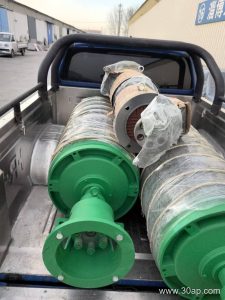
On abrasive duties such as ore conveyor belts, alignment matters because edge contact wears both belt and roller. In coal mining applications, flame retardant conveyor belt grades are paired with frames that keep the belt tracking straight to reduce frictional heat. Buyers should confirm that bracket hole patterns match the idler roller end fittings, and that the frame height suits the pulley and take-up arrangement rather than assuming interchangeability.
What Buyers Should Check Before Ordering
- Belt width, trough angle and roller diameter stated clearly on the drawing
- Material grade and plate thickness for the intended load
- Fixed or adjustable design, and the adjustment range required
- Mounting hole spacing and foot dimensions verified against the structure
- Coating or galvanizing appropriate to dust, moisture or corrosive atmosphere
- Consistency across a batch so frames can be swapped without re-drilling
Good conveyor bracket fabrication is quiet work: it does not attract attention when it is right, but every roller, belt and pulley on the line depends on it. Ordering to a clear drawing, with dimensions confirmed rather than assumed, is the surest way to keep a bulk handling system running smoothly.