What a Rubber Impact Idler Does at the Load Point
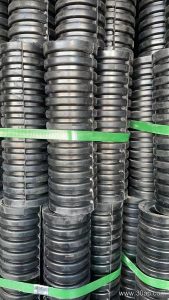
A rubber impact idler is a conveyor idler roller built with rubber rings or a rubber-covered shell, installed where material first lands on the belt. In a quarry, limestone mine, or aggregate crushing line, the drop from a crusher or screen can be severe. The rubber impact idler absorbs that energy before it reaches the conveyor belt and the idler frame. Instead of a steel shell taking the full blow, the rubber surface cushions lumps and reduces the chance of belt puncture or cover damage. This is a buffer idler, not a substitute for a drive pulley, tail pulley, or bend pulley, and it should be specified as its own item in the conveyor layout.
The same working principle applies in coal handling, cement plants, and power plant coal yards, where ROM or clinker falls through transfer chutes. The rubber rings deflect under impact and return to shape, spreading the load across several idlers in the impact bed rather than concentrating it at one point.
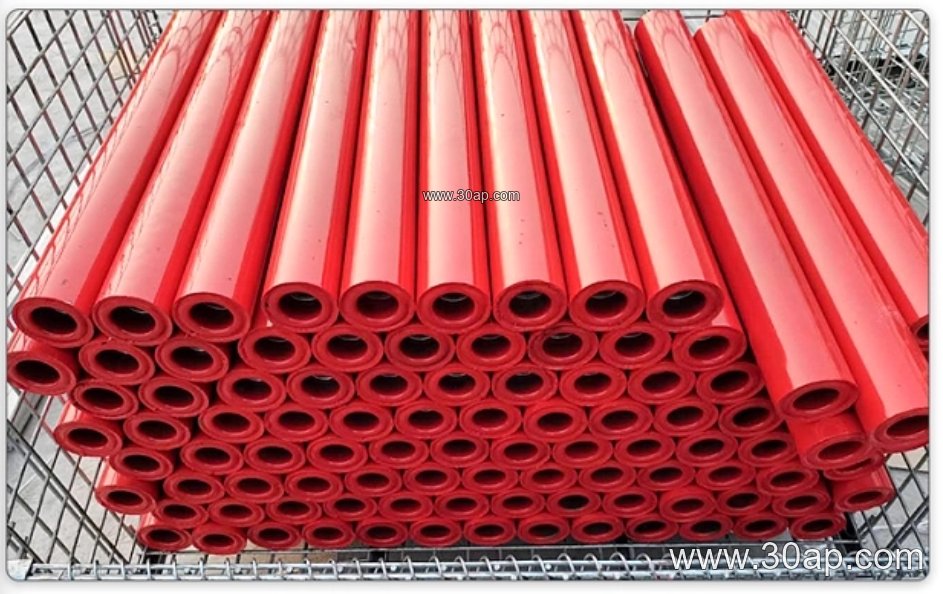
Construction and Surface Details
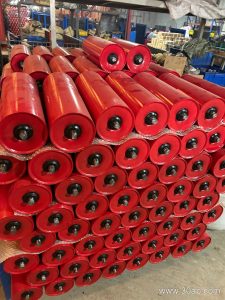
A typical rubber impact idler uses a steel tube core, a shaft with pressed bearing housings, and a set of rubber rings or a rubber sleeve. The rubber rings are spaced along the shell so that fines do not pack between them. Bearing selection follows the load and speed of the conveyor, not the belt width alone. Common bearing sizes in this family include 6204, 6205, 6305, 6306, 6308, and 6310, but the final choice depends on the idler diameter and the duty. Seals are important in dusty and wet conditions, so look for a labyrinth or multi-lip seal arrangement that keeps grit away from the bearing cavity.
The rubber itself is usually a wear-resistant compound, and in coal mining or underground coal mining conveyors it may need anti-static and flame retardant properties. Buyers should confirm the rubber grade against the site conditions rather than assuming one compound suits every transfer point.
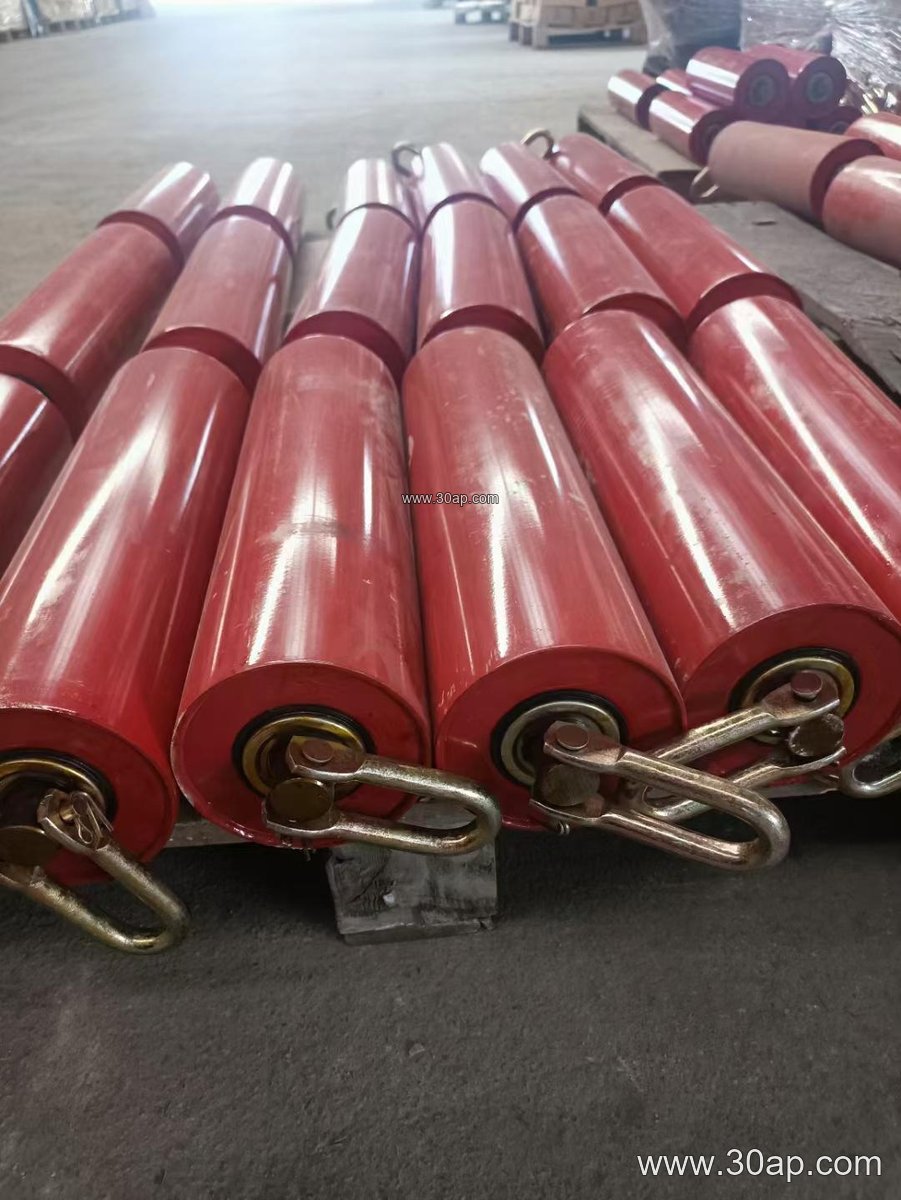
Where It Fits on the Conveyor
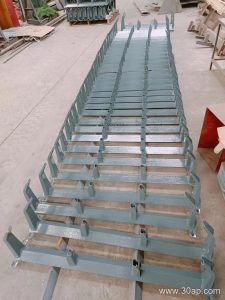
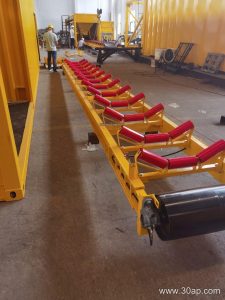
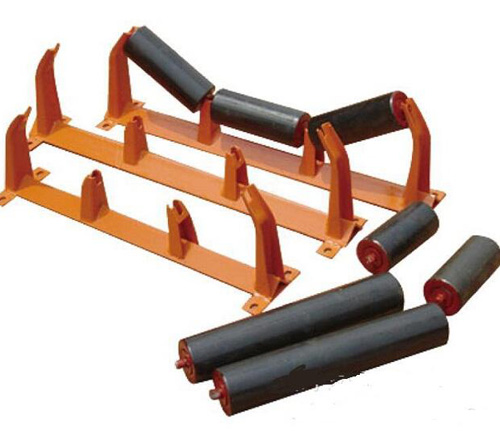
Impact idlers are placed under the loading zone, often as a group of three or more, and sometimes combined with a rubber buffer bar or impact bed. They are distinct from the carrying idler roller used along the normal run and from the return idler under the empty strand. In a three-roll trough set, the impact idlers follow the same trough angle, commonly 20, 30, 35, or 45 degrees, so the belt profile stays consistent. The side idlers and center idler may have different roll lengths, and the roll length is normally determined by belt width, trough angle, and frame design.
For example, a three-roll trough set at B800 often uses a center roll of about 315 mm, while B1000 is around 380 mm and B1200 around 465 mm. These are common references, not fixed matches; the actual roll length should come from the conveyor drawing and the bracket dimensions.
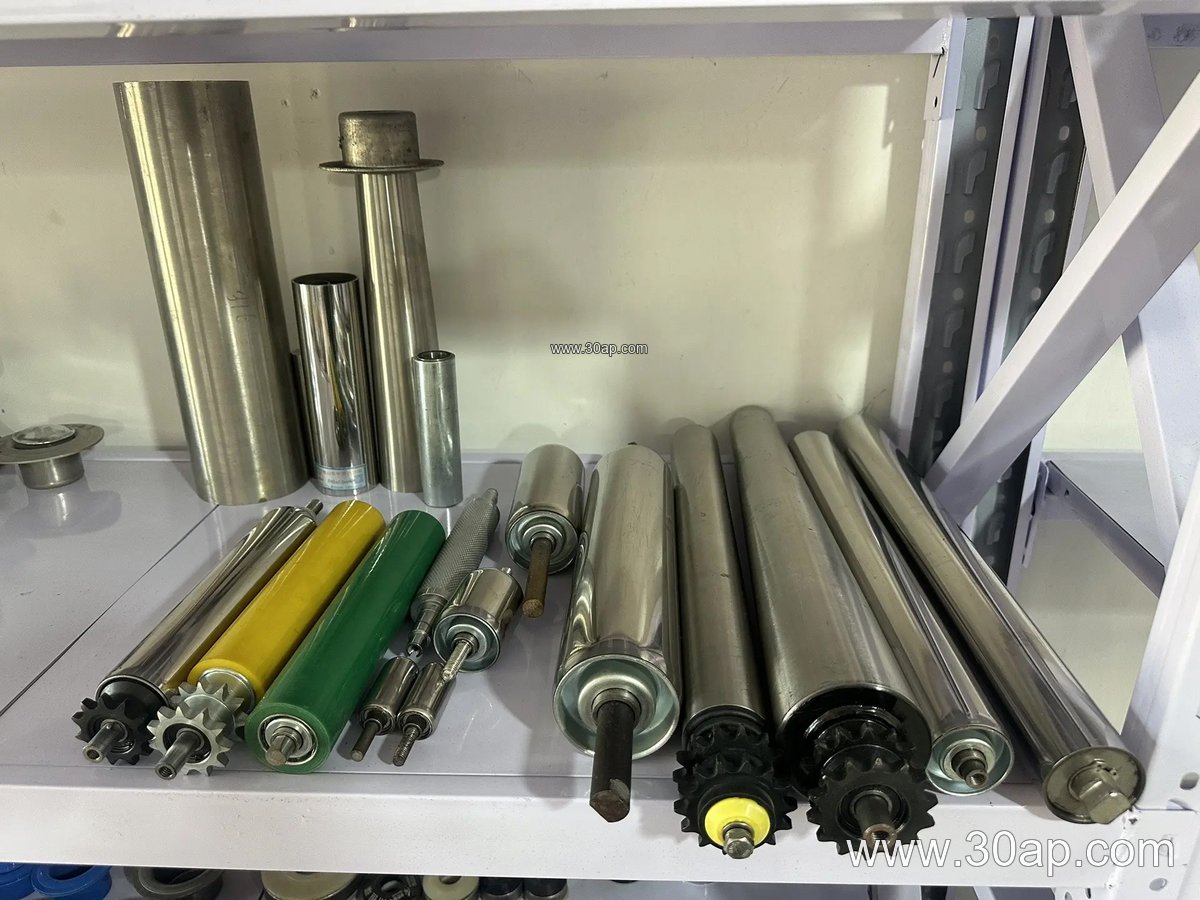
Common Sizes and Selection References
The table below lists reference data often used when specifying rubber impact idlers. Values are indicative and should be confirmed with the conveyor design.
| Item | Common reference range |
|---|---|
| Idler diameter | Ø89, Ø102, Ø108, Ø127, Ø133, Ø159, Ø178, Ø194, Ø219 mm |
| Belt width | B500, B650, B800, B1000, B1200, B1400, B1600, B1800, B2000 mm |
| Trough angle | 20°, 30°, 35°, 45° |
| Roll surface | Rubber ring, rubber sleeve, steel tube with rubber covering |
| Bearing | 6204, 6205, 6305, 6306, 6308, 6310 (selected by load and speed) |
| Roll length examples (three-roll trough) | B500 ≈ 200 mm; B650 ≈ 250 mm; B800 ≈ 315 mm; B1000 ≈ 380 mm; B1200 ≈ 465 mm; B1400 ≈ 530 mm; B1600 ≈ 600 mm; B1800 ≈ 670 mm; B2000 ≈ 750 mm |
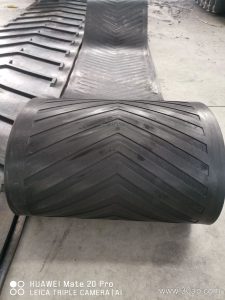
When the conveyor carries a heavy-duty mining conveyor belt or a high abrasion resistant conveyor belt, the impact zone may need a larger idler diameter and a denser ring spacing. A steel cord conveyor belt or a thick conveyor belt can tolerate more impact, but the idler still has to protect the splice and the belt cover. In aggregate and ore handling, a rubber impact idler is often paired with a skirted conveyor belt or corrugated sidewall conveyor belt at the transfer chute to contain material.
Buyer Checklist
- Confirm the belt width, trough angle, and frame bracket spacing before choosing the idler.
- Check the drop height and lump size at the load point; these drive the rubber thickness and ring count.
- Match the bearing and seal to the environment, especially in coal mining, cement, and port terminals.
- Ask for the rubber compound data if the site has oil, heat, or fire risk; an oil resistant conveyor belt or heat resistant conveyor belt may be used nearby, but the idler rubber must suit the same conditions.
- Verify that the impact idler group is specified separately from the drive pulley, tail pulley, and bend pulley in the parts list.
Rubber impact idlers are a small part of the conveyor cost but a large part of uptime at the transfer point. Getting the diameter, ring pattern, and seal right is usually more valuable than buying on price alone.