What a Conveyor Idler Frame Does
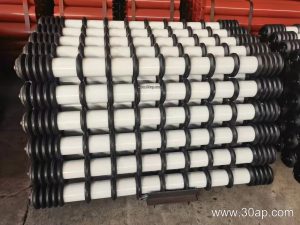
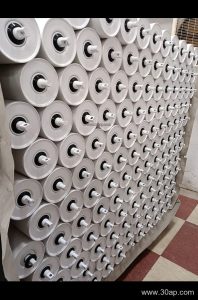
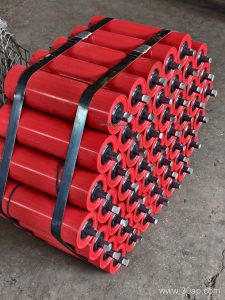
A conveyor idler frame is the structural element that holds idler rollers in the correct position under and around the conveyor belt. It is not a pulley and it is not a roller; it is the bracket or frame that carries the rollers, sets the trough angle, and keeps the belt profile stable along the carrying and return runs. In a typical bulk handling line, the frame works together with the conveyor belt, idler roller, conveyor pulley, and conveyor bracket to keep material moving without spillage or belt wander.
The frame is usually fabricated from angle steel, channel steel, or folded steel plate. Its dimensions follow the belt width and the required trough angle, so mounting hole spacing and crossbeam length are determined by design rather than by a single fixed number.
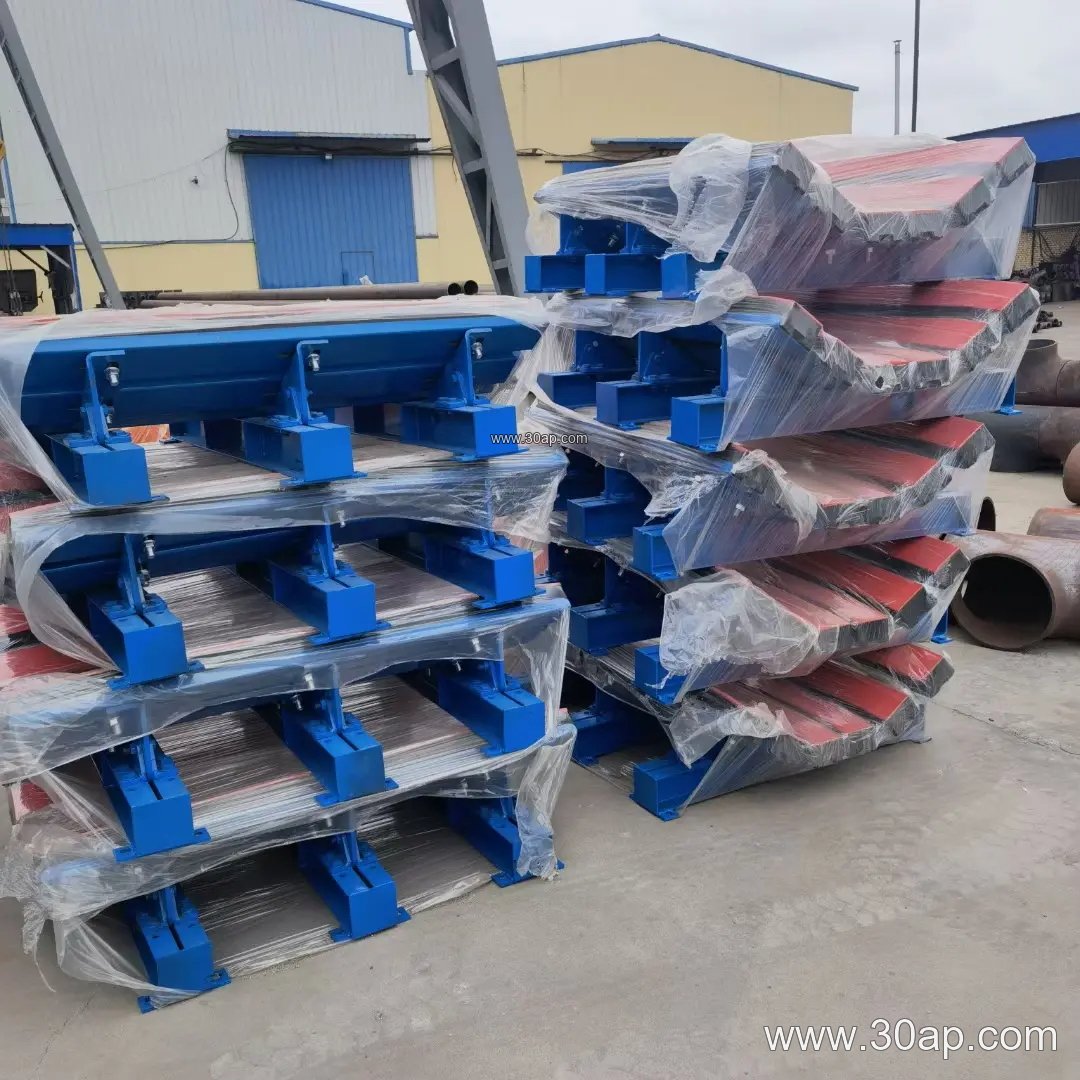
Common Frame Types and Where They Sit
Different positions on a conveyor call for different frame designs. A troughing idler frame supports the loaded side of the belt and sets the trough angle. A transition frame is placed near a pulley to guide the belt from a flat profile into a troughed one. On the return side, a flat return frame or a V-return frame supports the empty belt. Impact frames with cushioning rollers are used below loading points, while self-aligning frames help correct belt tracking. Adjustable frames allow the trough angle to be changed within a range, which is useful during commissioning or when belt conditions change.
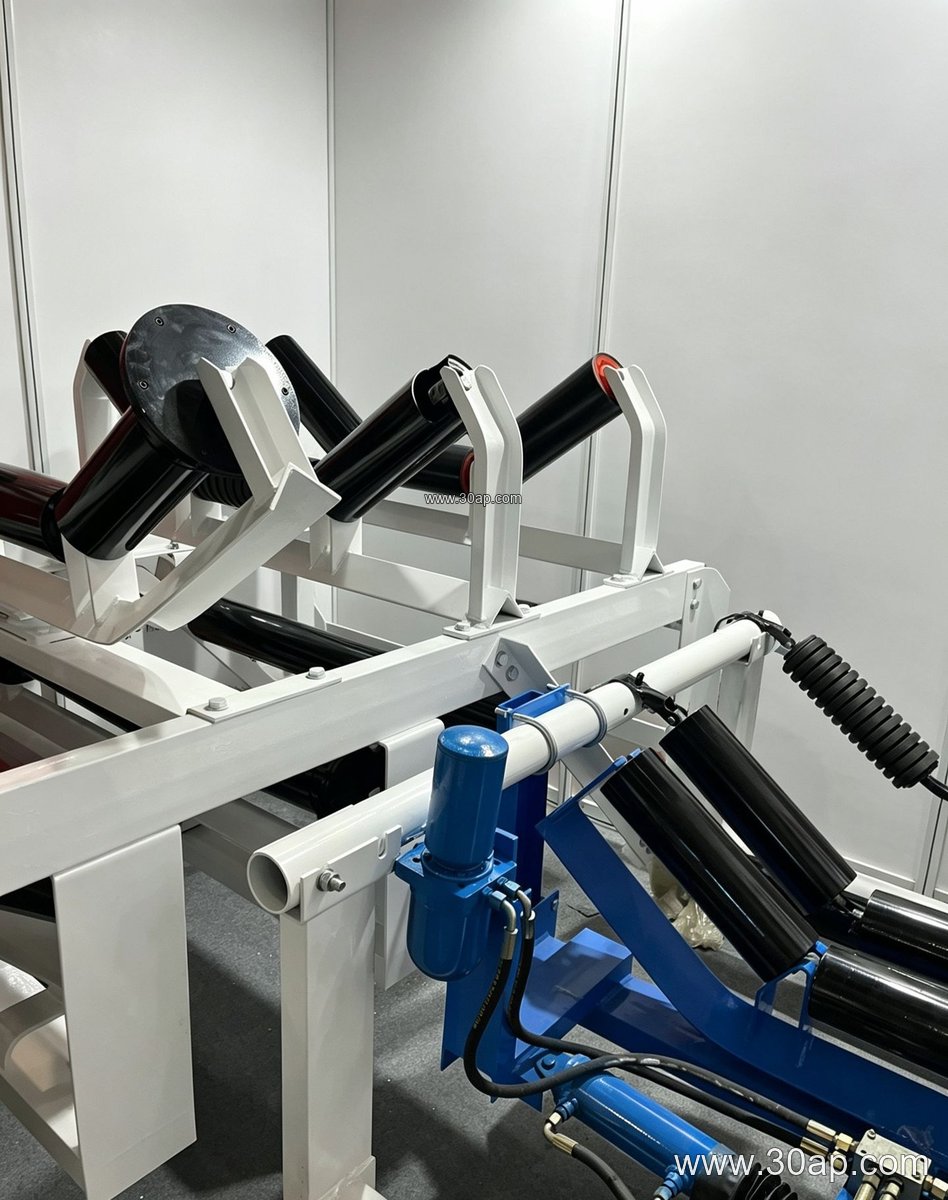
Frames are often described together with their roller diameter and belt width, for example B800, 35 degrees, Ø108, or B1200, 45 degrees, Ø133. These are reference combinations, not fixed rules; a given belt width can be paired with more than one trough angle or roller diameter depending on load and belt stiffness.
How the Frame Works with Rollers and Belt
The frame keeps the idler rollers at the correct spacing and angle so the belt forms a stable trough. On the carrying side, a 20-degree, 30-degree, or 35-degree trough is common, while 45 degrees may be used where material containment is important. Forward-leaning frames, usually around 1.5 to 2 degrees, are sometimes used to help with belt training. The frame must be aligned with the conveyor pulley and the conveyor bracket so the belt does not drift to one side.
In mining and quarry service, a heavy-duty frame may be paired with an abrasion resistant conveyor belt or a steel cord conveyor belt to handle high tonnage. In cement plants and power plant coal handling, flame retardant conveyor belt and heat resistant conveyor belt grades are often specified, and the frame must be sturdy enough to keep the idler roller in place under continuous load.
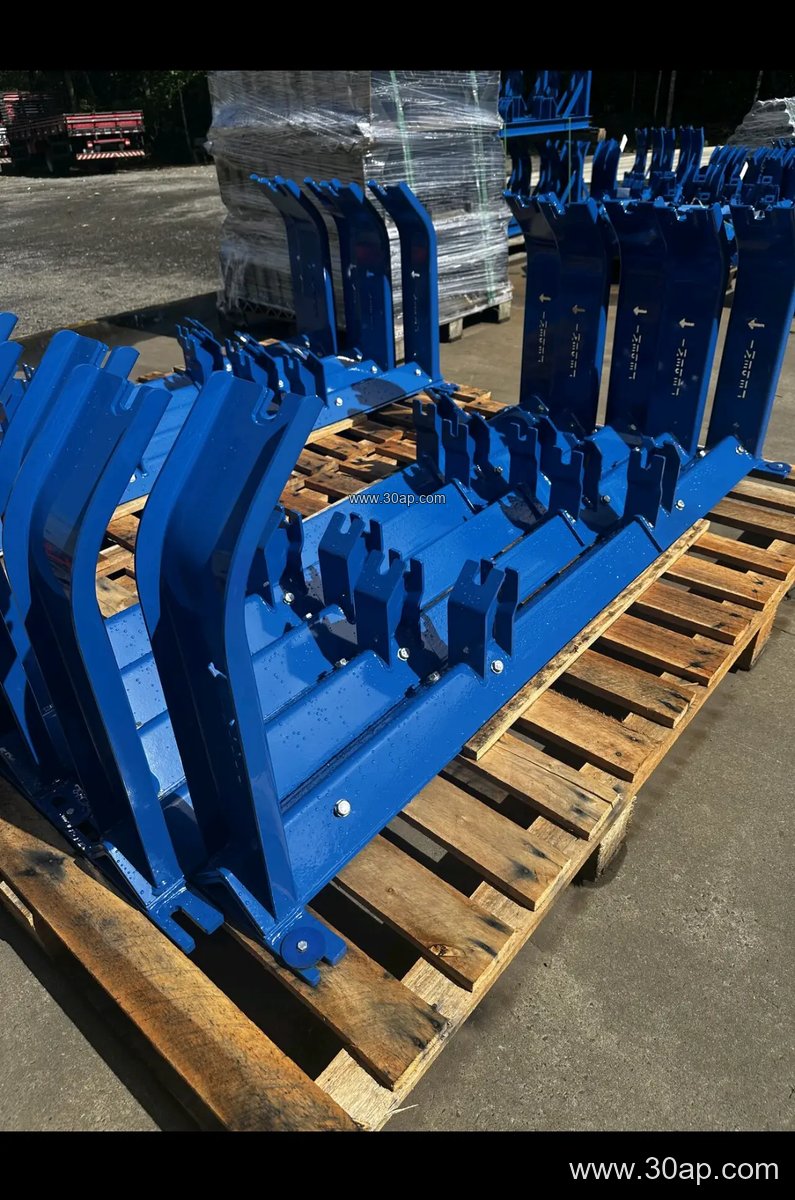
Materials, Sizes, and Selection Points
Buyers should match the frame to the belt width, roller diameter, trough angle, and load. Common belt widths include B500, B650, B800, B1000, B1200, B1400, B1600, B1800, B2000, B2200. Roller diameters such as Ø89, Ø108, Ø133, Ø159, and Ø194 are used across these widths, but the correct shaft and mounting details are determined by the conveyor designer. Frames are commonly made from angle steel, channel steel, or folded plate, and the finish should suit the environment, whether it is a wet wash plant or a dry aggregate line.
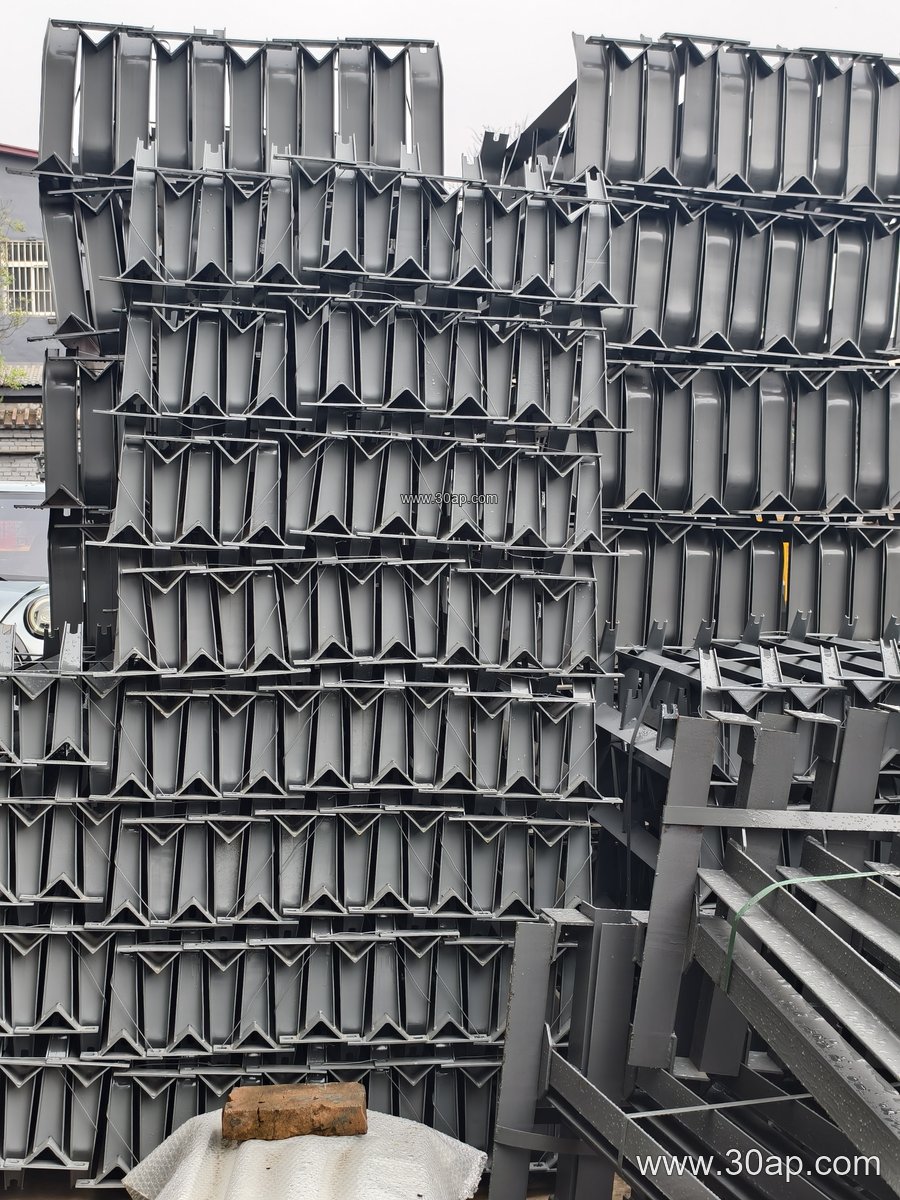
For a quarry conveyor belt or crusher conveyor belt, impact frames and self-aligning frames are often worth considering near transfer points. For a pipe conveyor belt or corrugated sidewall conveyor belt, the frame layout follows the specific belt profile and should not be copied from a standard troughed line.
Installation and Maintenance Notes
Correct installation matters as much as the frame itself. The frame should be set square to the belt centerline, with consistent height so the idler roller touches the belt evenly. Bolts should be checked after the first runs, and frames should be inspected for bending or corrosion. A misaligned frame can cause the belt to rub, which shortens the life of the conveyor belt and the idler roller. In dusty or wet conditions, keeping the frame clean helps prevent material buildup that can push the belt off track.
When replacing a frame, confirm the belt width, trough angle, roller diameter, and mounting hole pattern. Do not assume that a frame from one conveyor will fit another. For reliable support in coal mining, iron ore, gold mining, or port ship loading, the idler frame should be selected as part of the whole conveyor system, together with the conveyor pulley and the conveyor belt grade.