What a Chemical Resistant Conveyor Belt Does
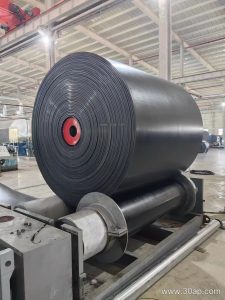
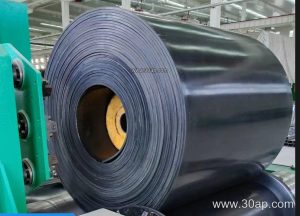
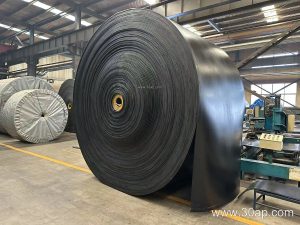
A chemical resistant conveyor belt is a fabric- or steel-reinforced rubber belt whose cover compounds and carcass are chosen to survive contact with acids, alkalis, salts, oils, and other aggressive media. In a fertilizer plant, a mineral processing line, or a wastewater sludge handling section, the belt is often the component that decides how long a whole conveyor run can stay in service. The same product is also sold as an acid and alkali resistant conveyor belt, and both names describe the same construction logic: protect the carcass, protect the bond between cover and fabric, and keep the working surface from swelling or cracking.
The belt is not a universal answer to every corrosive duty. A chemical resistant conveyor belt is usually matched to a defined family of media and a defined concentration and temperature range. Buyers should treat it as an engineered grade rather than a single catalogue item.
Construction and Compound Choices
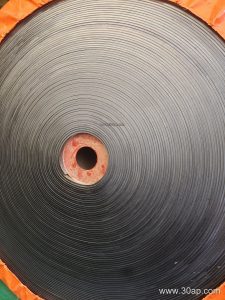
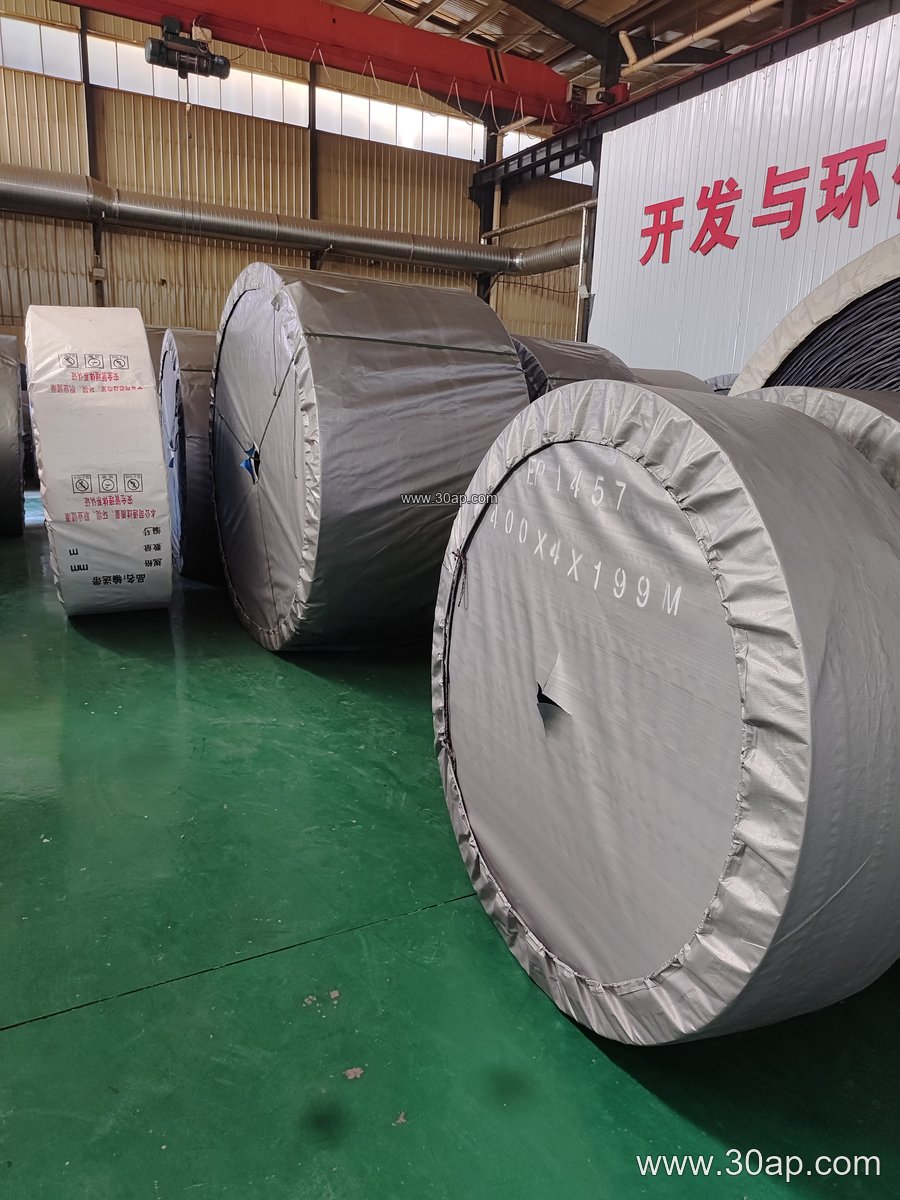
The carcass carries the tension. Common options include EP conveyor belt constructions with polyester warp and nylon weft, NN conveyor belt with nylon in both directions, and steel cord conveyor belt where very long centers or high tonnage demand low elongation. A multi-ply fabric core conveyor belt remains the practical choice for most chemical duty because the plies can be bonded with compounds selected for the medium being carried.
Cover compounds do most of the chemical work. Formulators adjust the polymer base, filler system, and cure package to resist swelling, oxidation, and hydrolysis. Cover thickness is usually described as top plus bottom, for example 4+2 mm or 6+2 mm, and the number of fabric plies commonly runs from two to six depending on the required strength class.
| Reference item | Typical range | Notes |
|---|---|---|
| Strength class | EP200 to EP1000, higher grades by design | Selected from tension calculation |
| Belt width | B500, B650, B800, B1000, B1200, B1400 | Wider widths available on request |
| Cover thickness | 3+1.5, 4+2, 5+2, 6+2, 8+3 mm | Thicker top cover extends service life |
| Carcass plies | 2 to 6 | Higher ply counts for heavier duty |
Edge construction also matters. Cut edges expose fabric to splash and fumes, so molded edges or sealed edges are often specified on belts handling wet acids or alkaline slurries.
Where These Belts Are Used
Chemical duty appears across many industries. In a phosphate or potash plant, a chemical resistant conveyor belt moves damp fertilizer granules that attack ordinary rubber. In a cement plant, it may carry kiln dust or gypsum slurries. Power plant flue gas desulfurization systems handle lime and gypsum residues that are mildly alkaline. Metal refineries and copper ore processing lines may see acid mists and leachate. Sand and gravel operations sometimes use these belts where wash water carries aggressive salts.
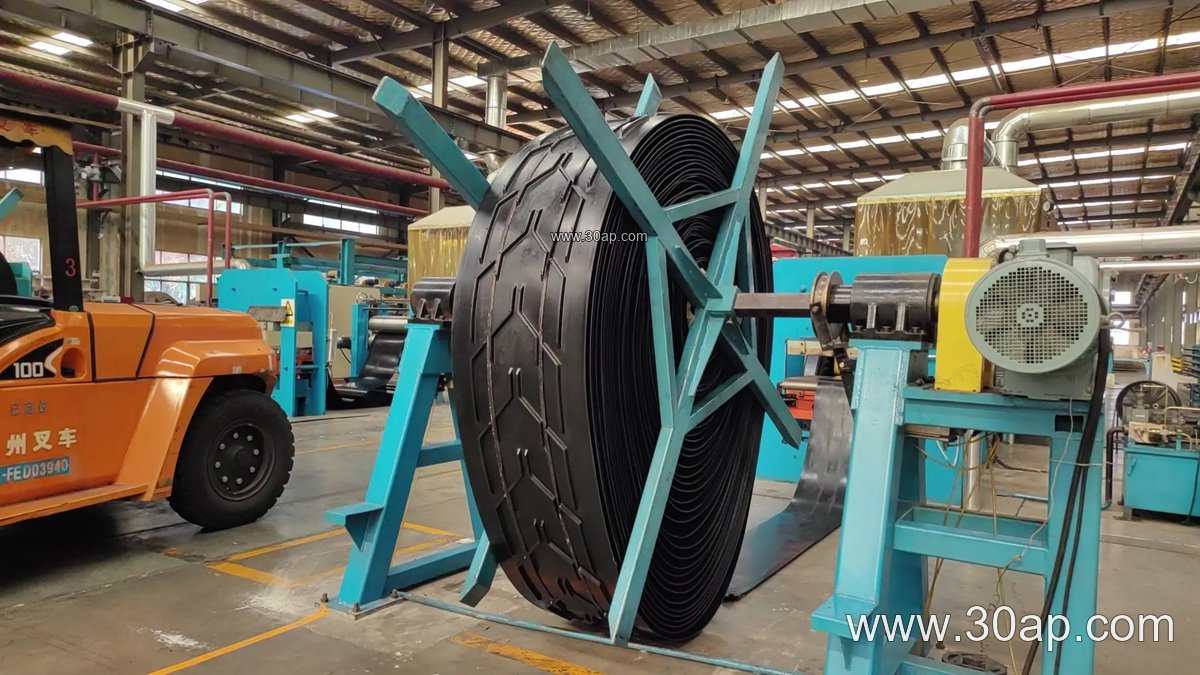
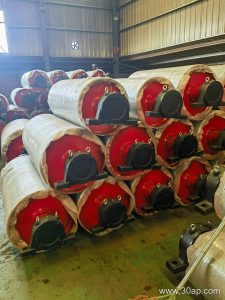
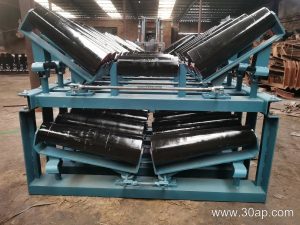
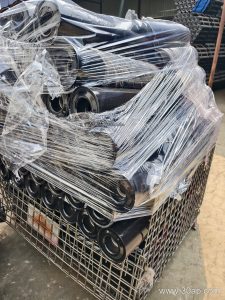
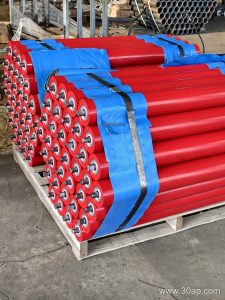
The belt usually works together with conveyor pulley, idler roller, and conveyor bracket assemblies. Corrosion protection on the frame and rolls deserves equal attention, because a belt that outlasts its supporting structure delivers little value. In coal mining and underground mining, a flame retardant conveyor belt or anti-static conveyor belt grade may be required alongside chemical resistance, and those requirements must be evaluated together rather than separately.
Specification Details Buyers Should Confirm
- Media list with concentration and temperature, not just a generic acid or alkali label.
- Required strength class and safety factor from the conveyor designer.
- Cover thickness and whether the bottom cover also needs protection.
- Edge type, splice method, and whether an endless conveyor belt is preferred.
- Any combined requirement such as oil resistant conveyor belt behavior or heat resistant conveyor belt performance.
When a duty involves both abrasion and chemical attack, an abrasion resistant conveyor belt compound may be proposed, but the buyer should ask for evidence that the compound also tolerates the specific medium. Where fine powders and fumes are present, a skirted conveyor belt or corrugated sidewall conveyor belt can reduce spillage, though the sidewall rubber must be chemically compatible as well.
Installation and Maintenance Notes
Alignment and loading conditions strongly influence life. A misaligned belt rubs its edge, opening a path for chemicals into the carcass. Keep the conveyor pulley surfaces clean and check idler roller rotation regularly, since a seized roll can abrade the cover in one spot. Inspect splices for lifted edges after the first weeks of operation and re-torque fasteners according to the splice supplier’s instructions.
Wash-down routines should use compatible cleaners. Strong solvents can attack a chemical resistant conveyor belt just as surely as the cargo does. Record cover hardness and thickness at fixed points so deterioration can be tracked over time. For long overland runs, steel cord conveyor belt grades with chemical-resistant covers may reduce the number of splices and the associated leak paths. Whatever the final selection, the belt, pulleys, idlers, and brackets should be reviewed as one system so that the chemical duty is managed from loading point to discharge.