What an Idler Bracket Does on a Conveyor
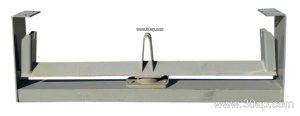
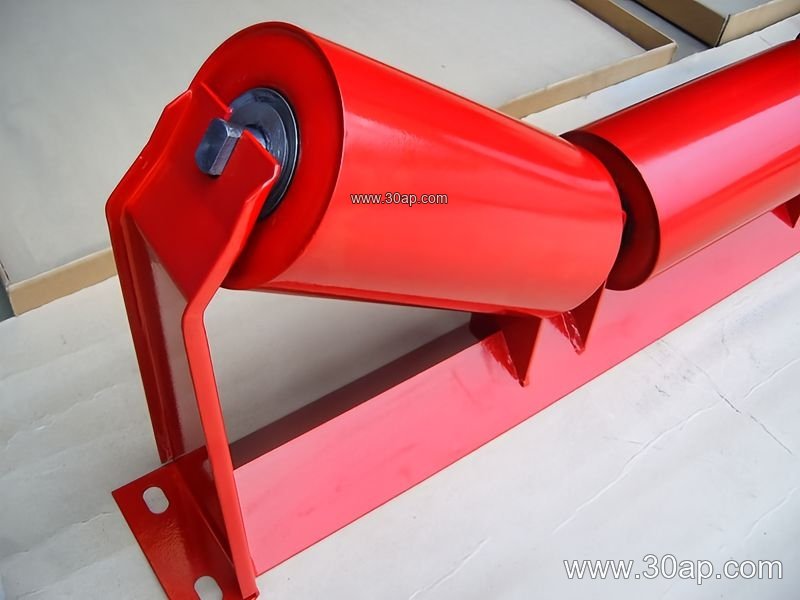
An idler bracket is the structural component that holds conveyor idlers in the correct position along the frame. It carries the idler roller, sets the trough angle of the belt, and keeps spacing consistent so the conveyor belt runs smoothly. In a typical bulk handling line, these brackets are bolted or welded to the stringer and appear in repeating stations from loading point to discharge. Whether the job is a quarry conveyor belt moving crushed rock or a cement plant conveyor handling clinker, the bracket is a small part with a large effect on tracking and wear.
Traders and plant engineers often call this part a conveyor bracket or idler support bracket. It is not a pulley component, and it should never be confused with a drive pulley, tail pulley, or bend pulley, which transmit power or change belt direction. Those parts are separate and not interchangeable with an idler bracket.
Construction and Common Forms
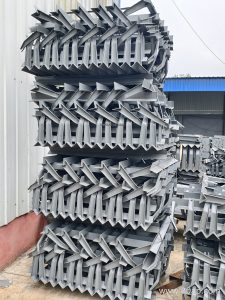
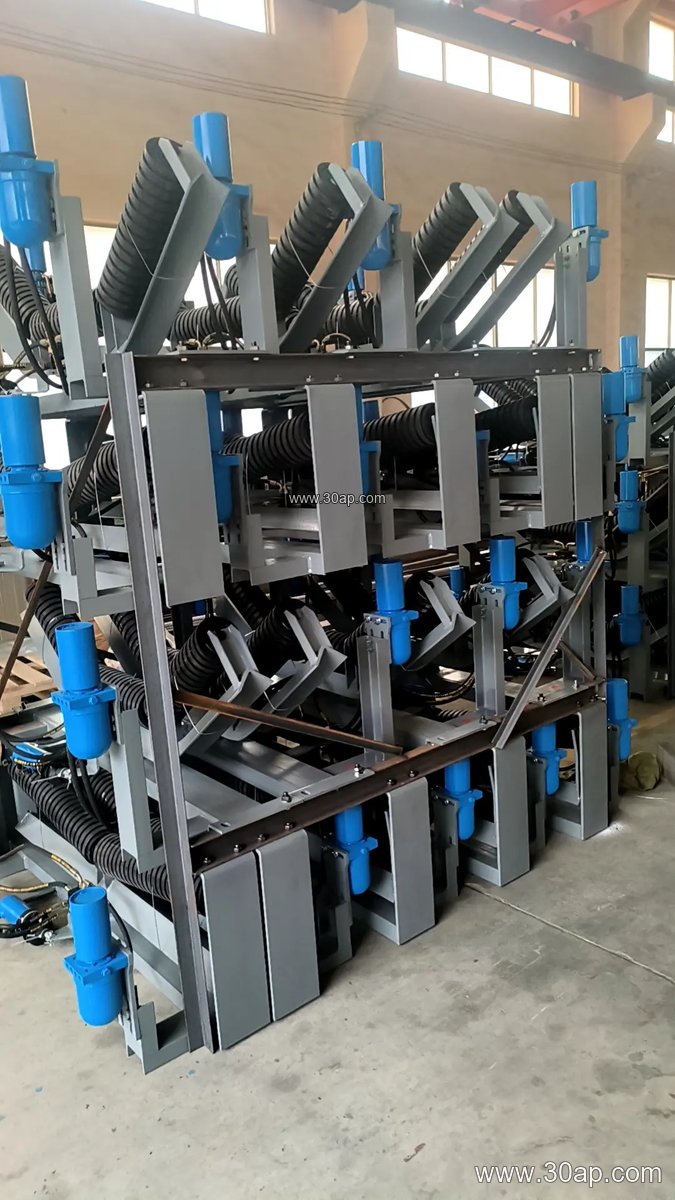
Most brackets are fabricated from angle steel, channel steel, or folded steel plate. A troughing idler bracket usually has inclined arms that position two or three idlers into a trough shape, while a return bracket supports the belt on the return strand. Common types include upper troughing brackets, transition brackets, return brackets, V-return brackets, impact brackets, self-aligning brackets, and adjustable brackets.
The adjustable version lets maintenance crews trim the trough angle in the field, which is useful when a belt shows edge running or uneven loading. Common trough angles are 20, 30, 35, and 45 degrees. Forward-leaning designs are often set at about 1.5 to 2 degrees to help self-training. Material choice and plate thickness should match the duty: heavier sections suit a heavy-duty mining conveyor belt installation, while lighter sections are adequate for a small aggregate line or a fertilizer plant.
Typical Reference Ranges
The values below are reference data, not fixed combinations. Hole spacing and crossbeam length usually change with belt width, trough angle, and frame design.
| Belt width | Common trough angle | Common idler diameter |
|---|---|---|
| B500, B650 | 20, 30 degrees | Ø89 |
| B800, B1000 | 30, 35 degrees | Ø108, Ø133 |
| B1200, B1400 | 35, 45 degrees | Ø133, Ø159 |
| B1600, B1800 | 35, 45 degrees | Ø159, Ø194 |
| B2000, B2200 | 35, 45 degrees | Ø194 |
An example combination might be B800, 35 degrees, Ø108, or B1200, 45 degrees, Ø133. No belt width is tied to a single trough angle or roller diameter; the final choice depends on load, belt stiffness, and frame layout.
Where These Brackets Are Used
In a limestone mine, the brackets under the primary belt must absorb impact from large lumps, so impact brackets with rubber rings are often placed below the loading chute. In a coal washing plant, flame retardant conveyor belt and anti-static properties matter more, and the brackets should allow easy idler replacement without cutting the belt. A power plant coal yard may use wide frames with B1800 or B2000 belts, where long brackets demand careful alignment during installation.
Smaller plants such as a concrete mixing station or a grain silo line often use B650 or B800 frames with simple fixed troughing brackets. Whatever the site, correct bracket alignment supports the idler roller, keeps the belt in contact with the pulley, and reduces spillage at transfer points.
Selection and Installation Notes
- Check that the bracket matches the stringer spacing and bolt pattern before ordering.
- Confirm the trough angle and roller diameter together, since both affect belt contact.
- Use impact brackets at load points and self-aligning brackets on long runs.
- Keep brackets square to the frame centerline; small misalignment causes belt drift.
- Choose galvanized or painted finishes where dust and moisture are persistent.
During maintenance, inspect for bent arms, loose bolts, and worn mounting holes. A distorted bracket can tilt an idler and wear the belt edge quickly. Replacing a bracket is usually faster than repairing a damaged frame, and it protects the more expensive conveyor pulley and belt.
Buyer Checklist
Before purchasing, collect the belt width, frame type, trough angle, idler diameter, and mounting dimensions. Ask for drawings showing hole centers and overall height. Confirm material grade and finish, and request samples if the batch is large. A well-specified idler bracket keeps the whole conveyor station stable, from the first idler after the tail pulley to the last one before discharge.