What a Welded Pulley Is
A welded pulley is a conveyor pulley whose shell is joined to the end discs by welding rather than by a bolted or cast construction. In a belt conveyor the pulley is the rotating drum that drives, returns, tensions, or redirects the belt, and the welded version is common in medium and heavy duty positions because the welded shell-to-disc joint can be built to suit the load. Buyers often meet the same product under the equivalent name welded conveyor pulley, and the two terms describe the same drum.
The welded pulley should not be confused with other drum positions. A drive pulley (head pulley) transmits torque to the belt, a tail pulley returns the belt at the load end, and a bend pulley changes belt direction, usually under tension. These are different duties and are not interchangeable, even though all three may be built with a welded shell.
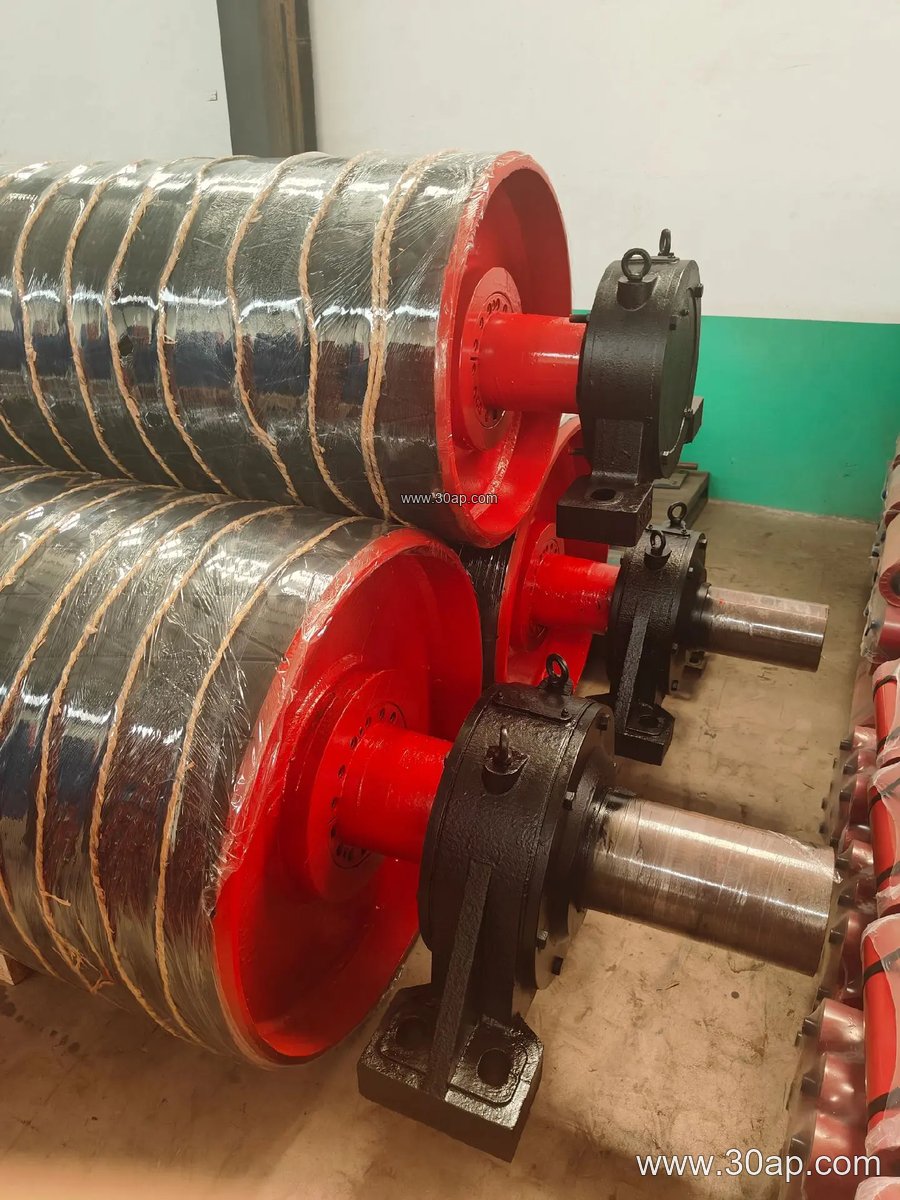
How the Drum Is Built
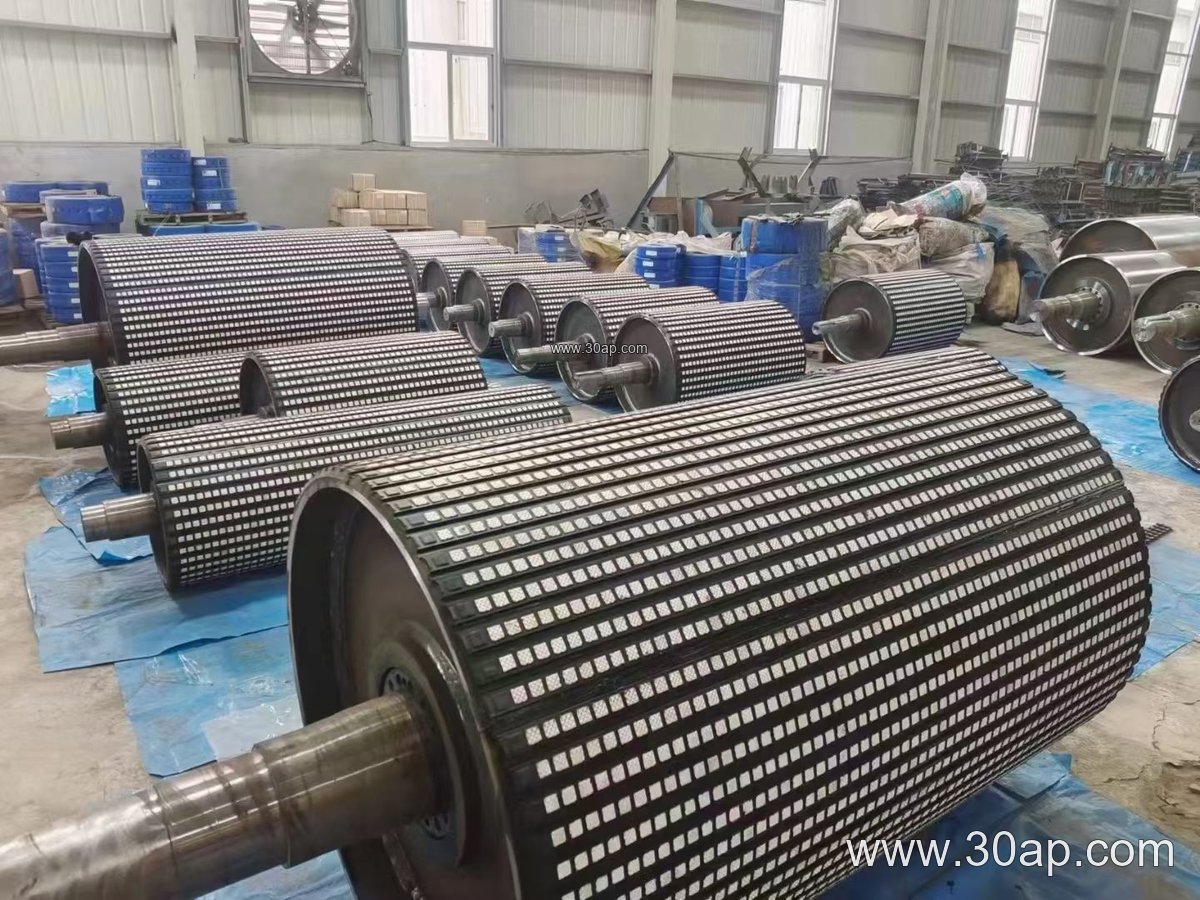
A typical welded pulley combines a rolled steel shell, two end discs, a hub at each end, and a shaft. The shell is welded to the discs, the hubs are welded or keyed to the shaft, and the assembly is machined so the running surface stays true. Lagging may then be applied to the shell to raise friction or protect the belt. Common surface forms include plain, hot vulcanized rubber, cold bonded rubber, diamond lagging, herringbone lagging, and ceramic lagging, with lagging thickness commonly 8, 10, 12, 15, or 20 mm.
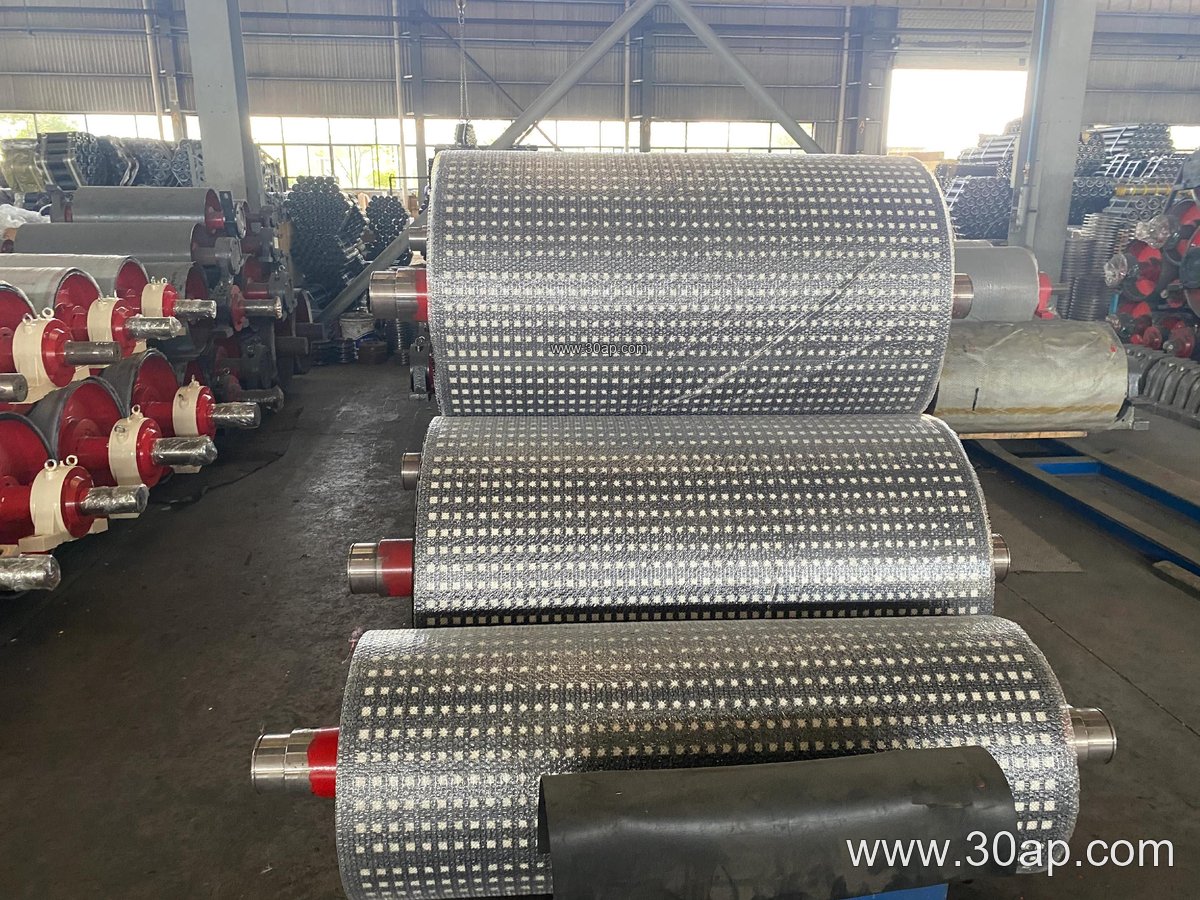
Because the joint is welded, wall thickness, weld quality, and the fit between shell and disc matter as much as the outside diameter. A drum that runs out of true will wear the belt edge and load the bearings, so machining after welding is part of the build, not an optional extra.
Where Welded Drums Are Used
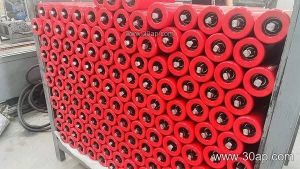
These pulleys appear wherever a conveyor moves bulk material at a steady rate. In a quarry or aggregate line they may serve as head or tail drums behind a crusher, working with an abrasion resistant conveyor belt and a bed of conveyor idler rollers. In a coal preparation plant or a power plant coal yard they often run with a flame retardant conveyor belt. In a cement plant they handle clinker and raw meal, and in a port they sit on ship loading and stockyard conveyors. A welded pulley is also found in tunnel spoil lines and in fertilizer or grain handling where dust and moisture are present.
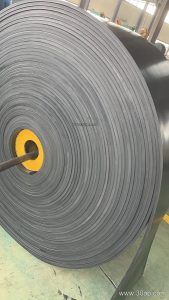
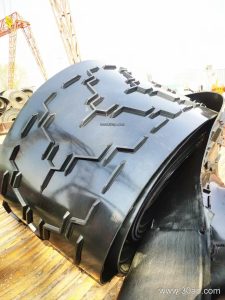
The belt type on the same conveyor changes the duty. A steel cord conveyor belt carries high tension and calls for a robust drum and shaft, while a multi-ply fabric core belt or an EP conveyor belt is more forgiving. Chevron, skirted, and corrugated sidewall belts need clear running room and well-aligned drums, and a pipe conveyor belt places its own demands on the pulleys at each end of the line.
Sizes and Common Combinations
Dimensions are set by belt width, belt tension, and the space available, not by a single fixed rule. The table below shows typical reference values; the final figures come from the conveyor design.
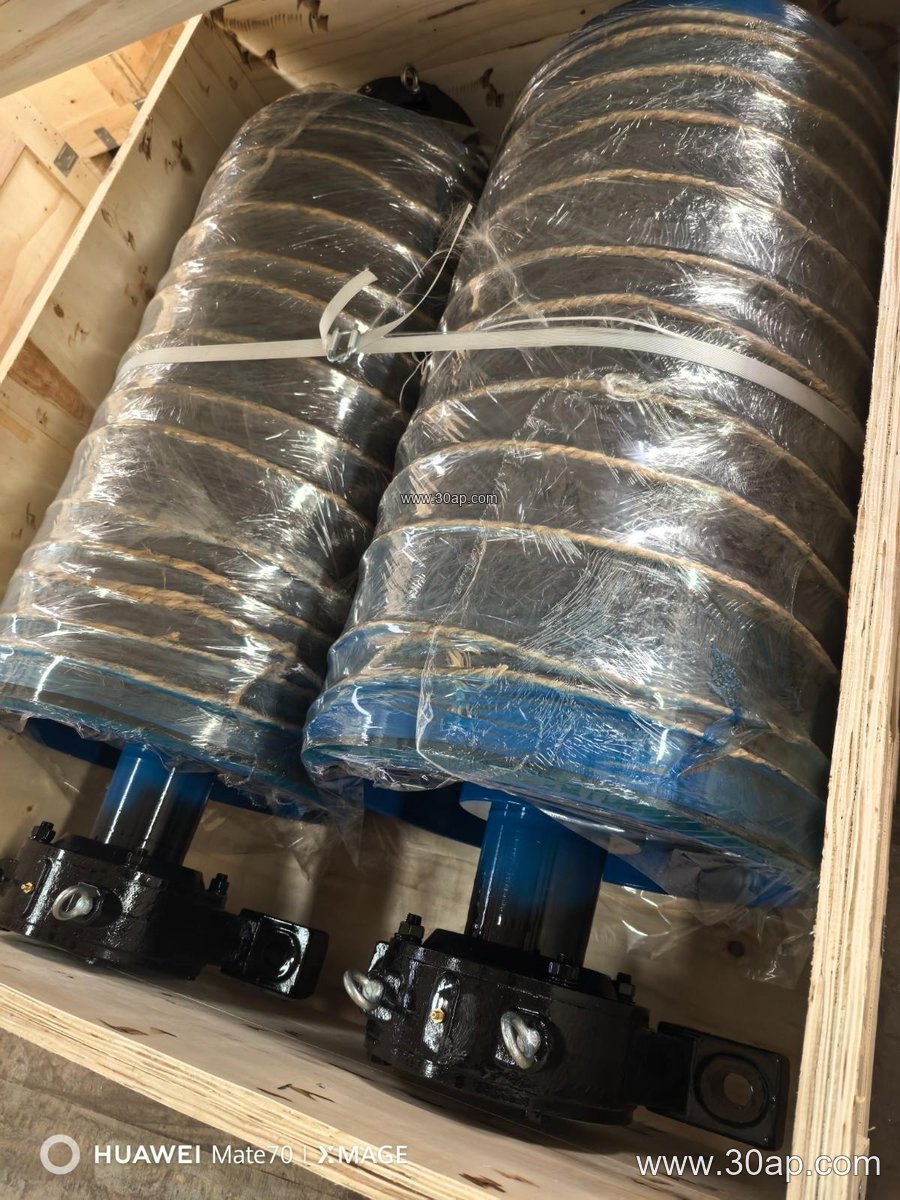
- Belt width B400 to B2400, with shell face width usually a little wider than the belt, for example B800 with about 950 mm face and B1200 with about 1400 mm face.
- Diameter commonly Ø200, Ø250, Ø315, Ø400, Ø500, Ø630, Ø800, Ø1000, Ø1250, and larger where tension requires it.
- Shaft diameter commonly Ø50 to Ø200, chosen from torque and bearing load rather than belt width alone.
- Example combinations include B800 x Ø500, B1200 x Ø1000, and B1400 x Ø800.
A wider belt does not lock the pulley to one diameter, and a given belt width does not fix the shaft size. Both are calculated from the actual duty.
What to Check Before Ordering
Confirm the pulley position first, because a drive pulley, tail pulley, and bend pulley carry different loads and often different lagging. State the belt width, belt type, and expected tension so the supplier can size the shell, discs, and shaft together. Describe the environment: a dusty quarry, a wet coal plant, and a hot cement line each call for different lagging and surface protection. Ask how the drum is balanced and machined after welding, and how the lagging is bonded.
Also check the interface with the rest of the conveyor. The drum must match the conveyor bracket, bearing housing, and take-up arrangement, and it should align with the adjacent conveyor idler rollers so the belt trains correctly. A welded pulley that fits the frame but not the belt path will still cause tracking problems.