What a Feed Point Impact Idler Does
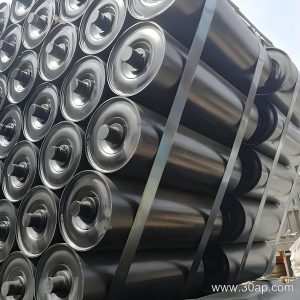
A feed point impact idler is a heavy-duty roller assembly installed directly beneath the loading zone of a conveyor belt. Its job is to absorb the energy of falling material—run-of-mine ore, crushed stone, coal, clinker, or aggregate—before that energy reaches the belt carcass and the standard carrying idlers downstream. Without this cushion, repeated impact can bruise the belt cover, loosen splices, and shorten the life of ordinary trough idlers. The impact idler is therefore a sacrificial wear component that protects the most valuable part of the system: the conveyor belt itself.
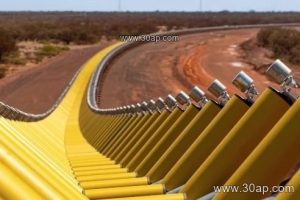
In a quarry conveyor or a coal mining conveyor, the drop height at the transfer chute is often the single most punishing point on the entire route. A well-chosen impact idler at that spot keeps the belt running flatter, reduces spillage, and lowers maintenance calls.
Construction and Surface Forms
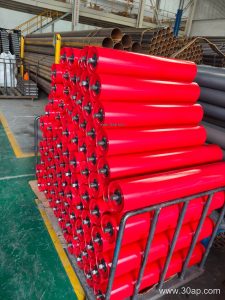
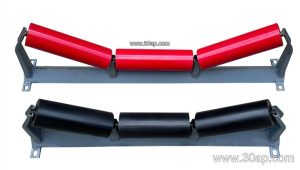
These rollers are built around a steel tube body fitted with a thick, resilient cover. The most common surface form is the rubber ring impact idler, where a series of rubber discs or a continuous rubber sleeve sits over the steel shell. The rubber deforms under load and springs back, dissipating impact energy rather than transmitting it to the bearing. Some designs use a solid rubber tyre bonded to the shell; others use replaceable rings so that worn sections can be renewed without scrapping the whole roller.
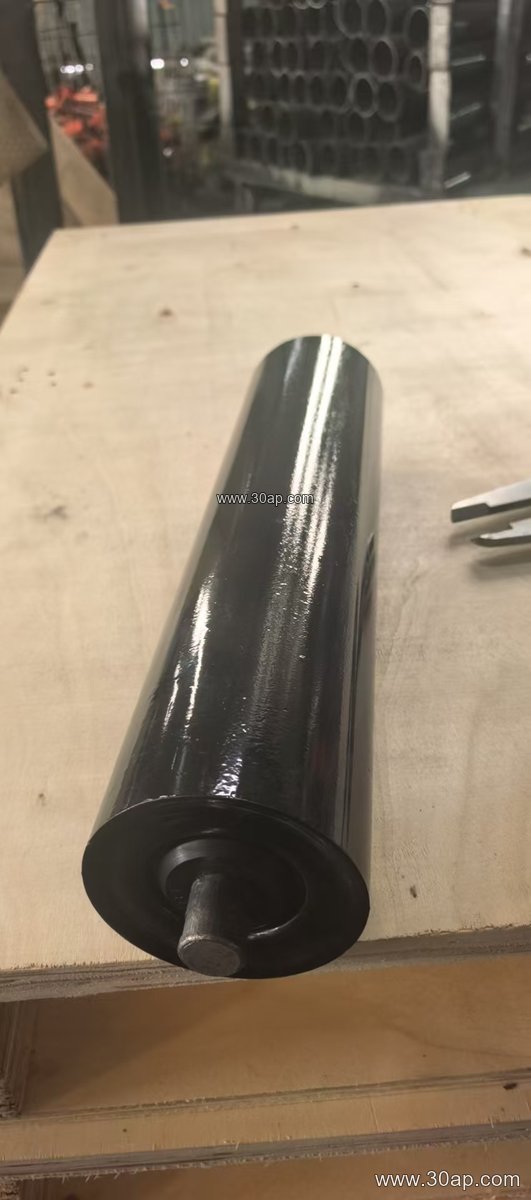
Bearing selection follows the load and speed of the conveyor rather than the belt width alone. Common bearing numbers in this family include 6205, 6305, 6306, and 6308, with larger sizes used on wider, heavier installations. Sealing is critical at the feed point because dust and fines are concentrated there; a good labyrinth or contact seal keeps grit out of the bearing cavity.
Typical reference dimensions
The table below shows common reference values only. Actual roller length, diameter, and bearing size are determined by belt width, trough angle, and the idler set configuration.
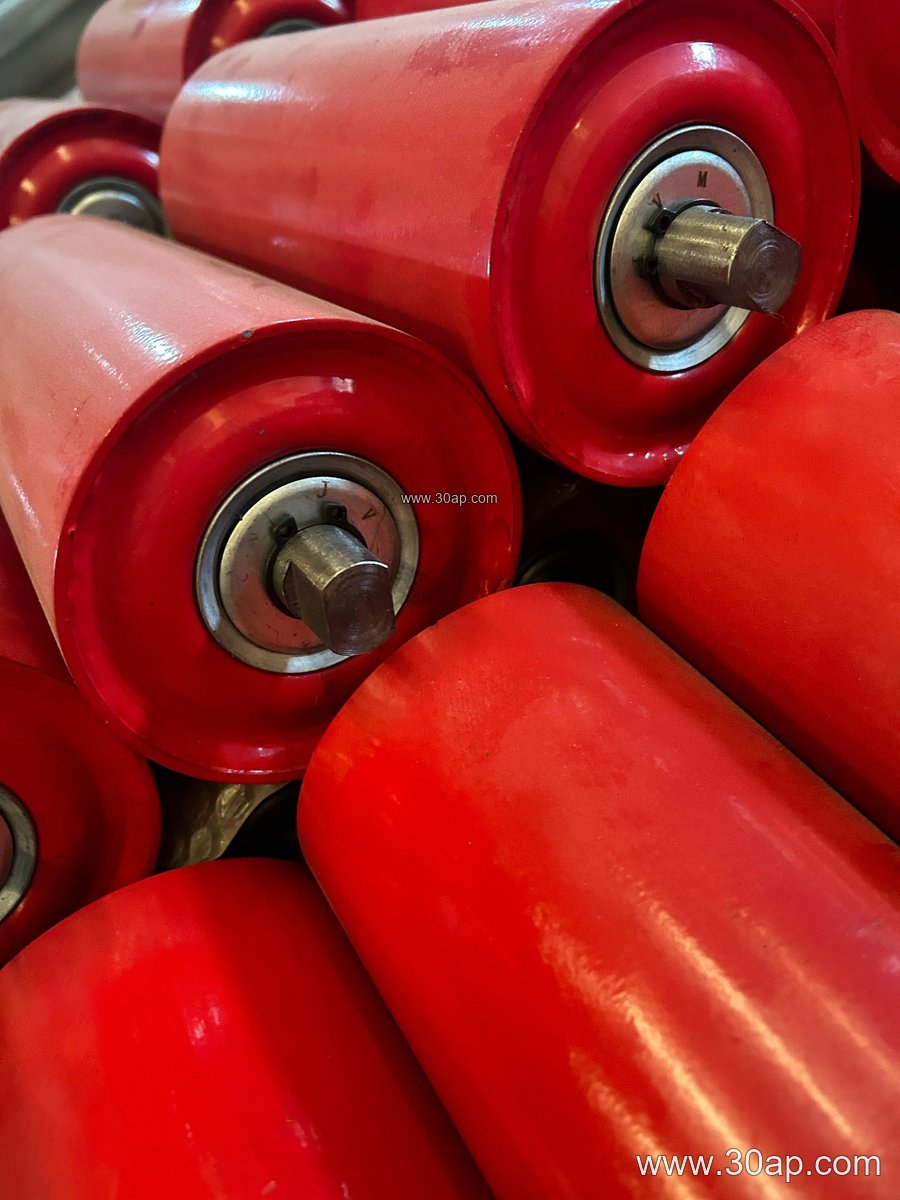
- Roller diameter: Ø89, Ø108, Ø133, Ø159, Ø178 mm
- Belt width examples: B650, B800, B1000, B1200, B1400, B1600
- Trough angle: 20°, 30°, 35°, 45°
- Set form: single roller, two-roll, three-roll trough
- Surface: rubber ring, steel tube, nylon, ceramic
For a three-roll trough set, common roller lengths are roughly 250 mm for B650, 315 mm for B800, 380 mm for B1000, 465 mm for B1200, and 530 mm for B1400. These are examples, not fixed pairings; side rollers and centre rollers often differ, and the impact idler is frequently shorter or mounted on a separate frame.
Where It Fits on the Conveyor
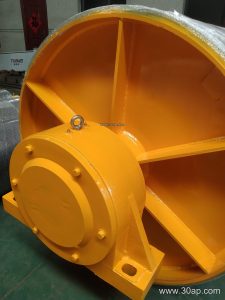
The impact idler sits in the carrying run, usually as part of a transition or buffer set just after the skirtboard. It is not a replacement for a bend pulley, drive pulley, or tail pulley—those are different components with different duties. Nor is it the same as a standard carrying idler; the impact version is distinguished by its energy-absorbing cover and often by a reinforced frame.
Typical applications include:
- Primary crushing stations in limestone and iron ore mines
- Coal handling plants and wash plants
- Cement plant clinker and raw meal transfer points
- Power plant coal yards and ship loading chutes
- Sand and aggregate lines with high drop heights
At a copper ore or gold mining operation, the impact idler is often paired with a heavy-duty mining conveyor belt or an abrasion resistant conveyor belt to handle sharp, dense material. In dusty coal service, a flame retardant conveyor belt and anti-static conveyor belt may be specified alongside, but the idler selection remains focused on impact energy and sealing.
Buyer Checklist
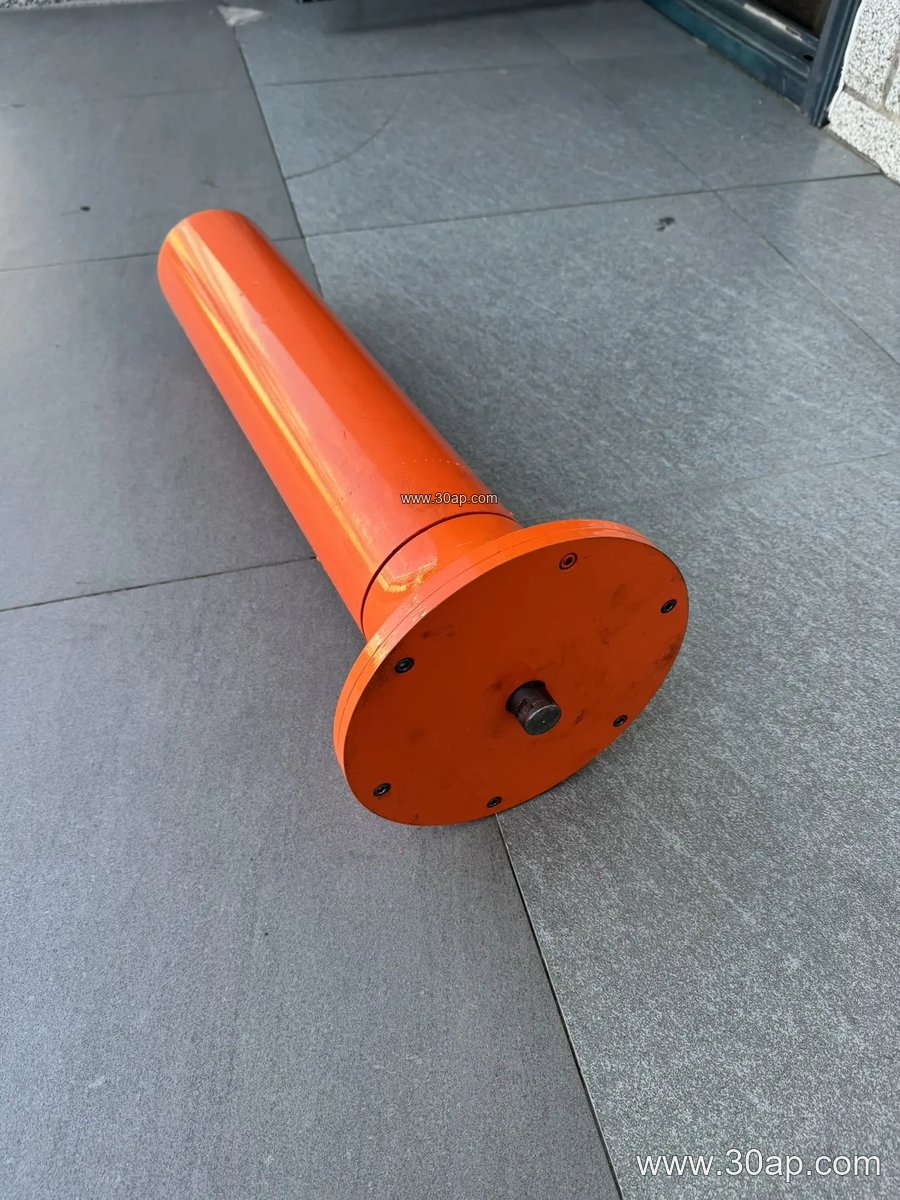
Before ordering, confirm the belt width, trough angle, and the actual drop height at the feed point. Ask for the roller diameter and bearing size that suit your load, and check whether the frame is designed for the same bracket spacing as the adjacent idlers. Review the cover hardness and ring thickness—softer rubber absorbs more energy but wears faster in abrasive service. Finally, confirm that the seal type matches the dust and moisture conditions at the transfer point.
For a quarry or cement plant, a rubber ring impact idler with a 133 mm or 159 mm diameter is a common starting point; for a port or steel plant handling dense ore, a larger 178 mm roller may be more appropriate. These are reference directions, not universal rules. The right choice comes from the conveyor design, not from a single number.
Maintenance Notes
Inspect impact idlers more often than standard carrying idlers. Look for flattened rubber rings, exposed steel shell, and grease leakage at the bearing housing. Replace worn rings before the steel body contacts the belt. Keep the skirt rubber adjusted so that material does not wedge between the chute and the roller. A small amount of attention at the feed point protects the entire conveyor line, from the tail pulley to the discharge.