What a High-Friction Lagged Pulley Does
A high-friction lagged pulley is a conveyor pulley whose shell carries a rubber or ceramic lagging layer engineered to raise the coefficient of friction between the drum face and the conveyor belt. In practice it is often called a rubber-lagged pulley or friction-lagged drum, and the purpose is simple: transmit drive torque without visible belt slip, even when the belt is damp, dusty or lightly loaded. On a crusher discharge line in a quarry, or a coal mining conveyor belt feeding a wash plant, slip at the drive end quickly turns into heat, belt wear and unplanned stops. The lagged face addresses that weak point directly.
Construction and Surface Forms
The body is usually a welded steel shell with machined end discs and a shaft sized by torque and load rather than by belt width alone. Around the shell, the friction layer may be applied in several ways:
- Hot-vulcanized rubber lagging, bonded under heat and pressure for a durable, seamless surface
- Cold-bonded rubber sheets, often chosen for field replacement
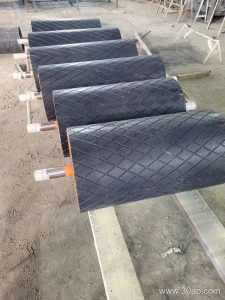
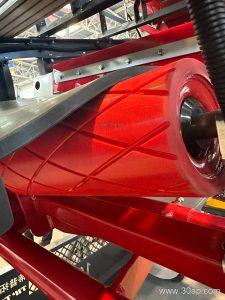
- Diamond or herringbone grooved rubber, which helps evacuate water and fines
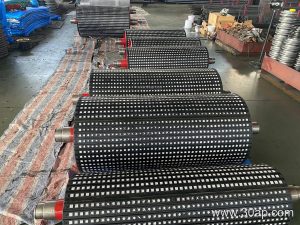
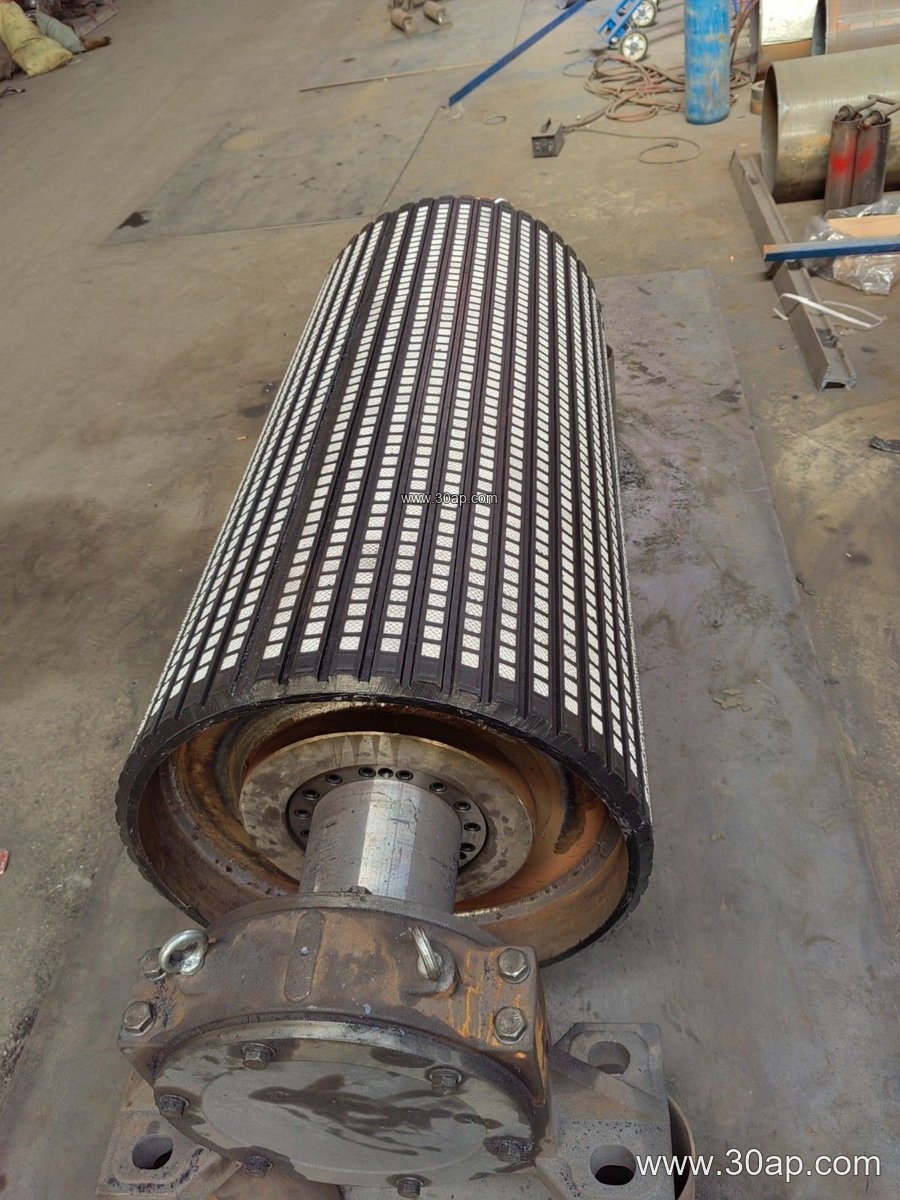
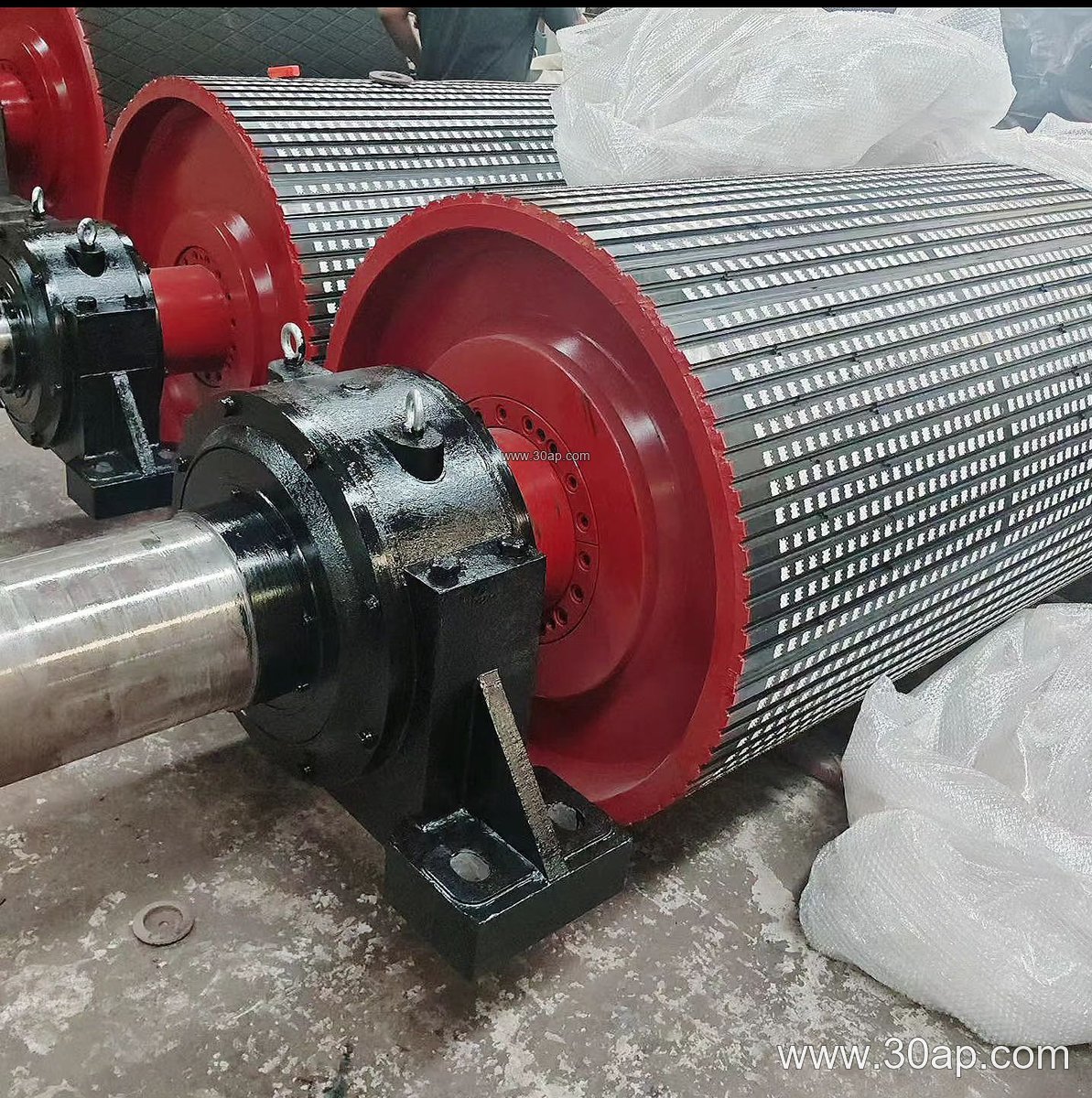
- Ceramic lagging tiles for very abrasive, wet duty on heavy-duty mining conveyor belts
- Plain flat rubber where a smooth, uniform contact face is preferred
Lagging thickness commonly ranges from 8 mm to 20 mm. Grooved patterns and ceramic tiles are most often specified where carry-back water or slurry is expected; plain surfaces suit cleaner, drier installations.
Where It Fits in the Conveyor
This drum belongs to the drive group, most often as the head or drive pulley at the discharge end. It should not be confused with a tail pulley, which mainly sets belt return tension, or with a bend pulley, which redirects the belt path. A tail pulley may also be lagged, but its friction requirement is different. In a cement plant clinker line, the high-friction lagged pulley is typically at the head, working against an abrasion resistant conveyor belt; in a power plant coal yard it may sit behind a flame retardant conveyor belt on a long inclined run. Some plants also fit a lagged friction drum at a tensioning position where extra grip helps stabilize the belt.
Typical Size Combinations
Dimensions follow the conveyor design, not a fixed formula. The table below shows common reference combinations; final values are determined by the engineer.
| Belt width | Common pulley diameter | Typical shell face | Lagging thickness |
|---|---|---|---|
| B800 | Ø500 | about 950 mm | 10–12 mm |
| B1000 | Ø630–Ø800 | about 1150 mm | 10–15 mm |
| B1200 | Ø800–Ø1000 | about 1400 mm | 12–15 mm |
| B1400 | Ø800–Ø1000 | about 1600 mm | 12–20 mm |
| B1600 | Ø1000–Ø1250 | about 1800 mm | 15–20 mm |
Shaft diameters such as Ø80, Ø100, Ø120 or Ø160 are selected from torque and bearing load, not from belt width alone. A B1200 × Ø1000 combination and a B1400 × Ø800 combination can both be reasonable depending on wrap angle and belt tension.
Buyer Checklist
Before ordering, confirm the belt type and duty: an EP conveyor belt, an NN conveyor belt with a fabric core, or a steel cord conveyor belt each behaves differently under high tension and wrap angle. Check whether the belt is a chevron conveyor belt or a corrugated sidewall conveyor belt, since raised profiles need clearance and may limit lagging pattern. Ask about the actual friction requirement, ambient conditions, and whether wash-down water is present. Specify the conveyor bracket interface and the idler roller layout near the drive so the drum alignment is correct. Finally, request the lagging material and bonding method in writing, and keep a spare lagging kit for field repair.
Maintenance Notes
Inspect the friction face for glazing, embedded stone or torn rubber, especially in sand and gravel plants and ore handling circuits. Worn grooves reduce grip long before the drum fails. Check belt tracking at the drive, clean carry-back from the return side, and verify that the conveyor pulley shaft and bearings stay within their design temperature. A well-maintained high-friction lagged pulley protects both the belt and the drive train, and it keeps the whole conveying line predictable.