What a Mining Conveyor Pulley Does
A mining conveyor pulley is the rotating drum that drives, tensions, or redirects the belt in a bulk material handling system. In hard rock mines, coal preparation plants, and aggregate quarries, these pulleys transfer power from the drive shaft to the conveyor belt and keep it tracking under heavy loads. Unlike an idler roller, which supports the belt along its carry and return runs, the pulley is a primary power and tension component. The main types include the drive pulley (also called the head pulley), the tail pulley, and the bend pulley. Each has a distinct role and should not be treated as interchangeable.
Construction and Surface Options
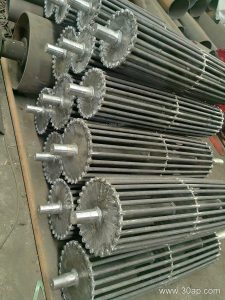
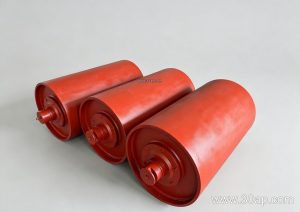
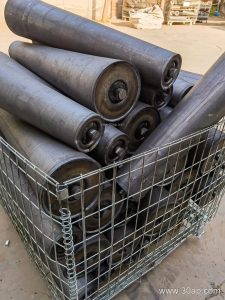
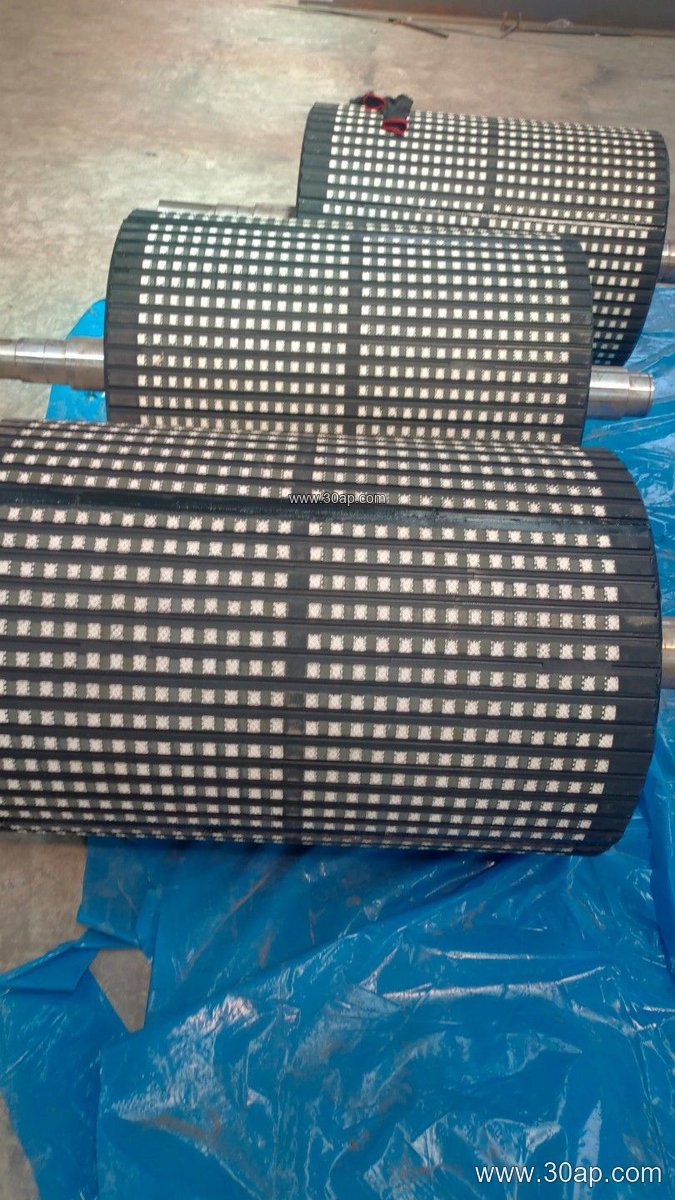
A typical mining conveyor pulley uses a welded steel drum with end discs, a shaft, and bearing housings. The shell may be plain or covered with rubber, ceramic, or other lagging to improve grip and wear life. Common surface forms include plain, cast rubber, cold-bonded rubber, hot-vulcanized rubber, diamond lagging, herringbone lagging, and ceramic lagging. Lagging thickness is often 8, 10, 12, 15, or 20 mm, depending on the duty. The pulley face width is usually slightly wider than the belt; for example, a B1200 belt often uses a pulley face around 1400 mm, and a B800 belt around 950 mm. Diameters commonly range from Ø200 to Ø1800, with shaft diameters from Ø50 to Ø200 determined by torque and load, not by belt width alone.
Where It Is Used
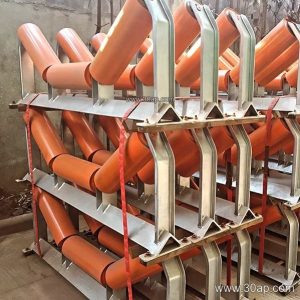
In an iron ore concentrator, a drive pulley at the head end pulls a heavy-duty conveyor belt loaded with crushed ore. In a coal washing plant, flame retardant and anti-static properties matter for underground and enclosed sections, and a tail pulley may be fitted with a self-cleaning lagging. Limestone quarries often use bend pulleys to route the belt around transfer points where space is tight. The same component appears in cement plants, power plant coal yards, and port bulk terminals. In all these settings, the pulley works together with conveyor idlers, brackets, and the belt itself to maintain stable operation.
Matching Pulley to Belt and Duty
Selecting a mining conveyor pulley starts with the belt width and the required tension. A B650 belt on a short aggregate conveyor may use a Ø400 drive pulley, while a B1400 belt on a long overland run may need a Ø800 or larger drum with a heavier shaft. The table below shows common reference combinations; these are examples, not fixed rules, and final dimensions are set by the conveyor designer.
- B500 × Ø315 – light to medium duty, tail or bend position
- B800 × Ø500 – typical drive pulley for quarry and crusher lines
- B1000 × Ø630 – medium duty, head or tension pulley
- B1200 × Ø1000 – heavy-duty drive on long conveyors
- B1400 × Ø800 – bend or tail pulley in high-tension systems
- B1600 × Ø1250 – large drive pulley for bulk terminals
When specifying, confirm the lagging type, shaft size, bearing type, and whether the pulley is a drive, tail, or bend unit. A drive pulley needs enough traction to avoid slip; a tail pulley often benefits from wing-type or self-cleaning design in wet, sticky material. Bend pulleys are usually smaller in diameter but must handle the belt path angle without excessive bending stress.
Maintenance and Buyer Checks
Routine inspection should cover lagging wear, shaft alignment, bearing temperature, and shell cracks. In abrasive service such as gold mining or copper ore handling, ceramic or thick rubber lagging can extend service life. In cold climates, cold resistant conveyor belt grades may be used, but the pulley itself should be checked for brittle lagging. Buyers should ask for the pulley’s calculated working load, the lagging specification, and the balancing grade. Do not assume that a single belt width dictates one shaft diameter; torque, belt speed, and starting conditions all influence the final design. For a complete system, coordinate the pulley with the conveyor belt, idler roller, and conveyor bracket to avoid mismatch at the transfer points.