What a Belt Conveyor Self-Aligning Idler Does
A belt conveyor self-aligning idler is a specially designed roller assembly that corrects belt misalignment as it runs, rather than relying only on a fixed frame. In a quarry conveyor or a coal mining conveyor, the belt can wander because of uneven loading, structural misalignment, or material buildup. The self-aligning idler responds to that side force and steers the belt back toward the center. It is not a drive pulley, tail pulley, or bend pulley; those components serve different functions, and none of them can replace the self-aligning idler for tracking control.
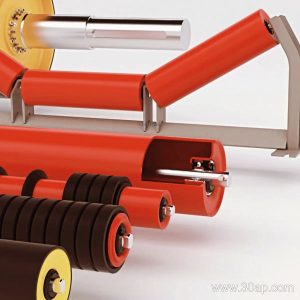
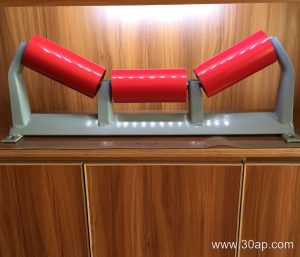
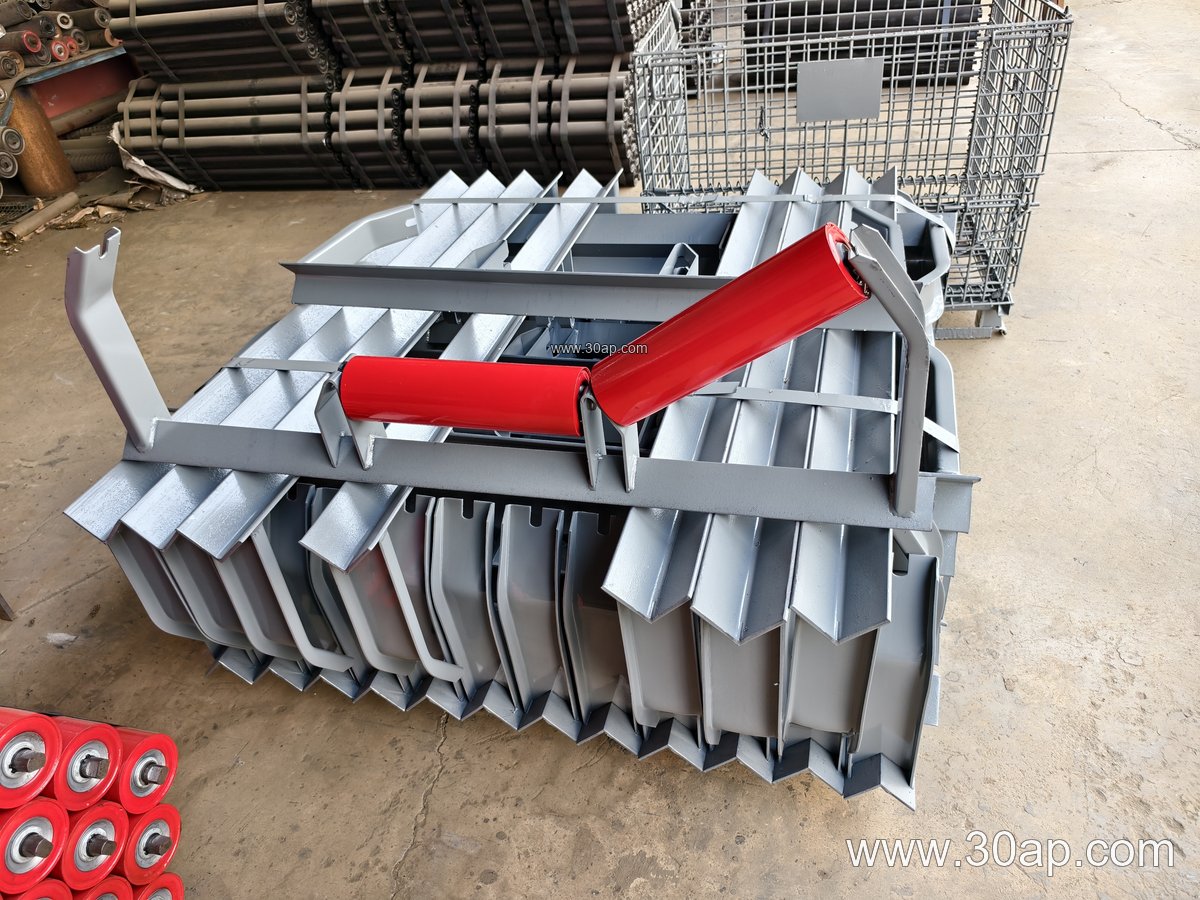
Two common designs are the friction self-aligning idler and the tapered self-aligning idler. Both work on the same principle: when the belt edges contact a roller at an angle, the roller pivots slightly and creates a correcting force. The friction type uses rubber-covered rollers to generate the turning moment, while the tapered type uses conical rollers. A third option, the return self-aligning idler, is mounted on the return strand where belt wander also causes edge damage.
Construction and Key Components
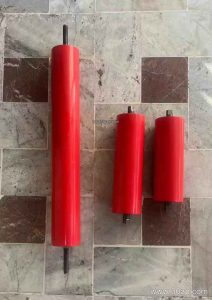
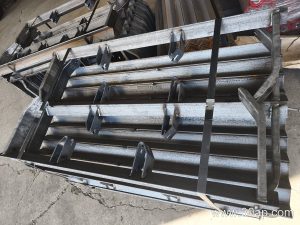
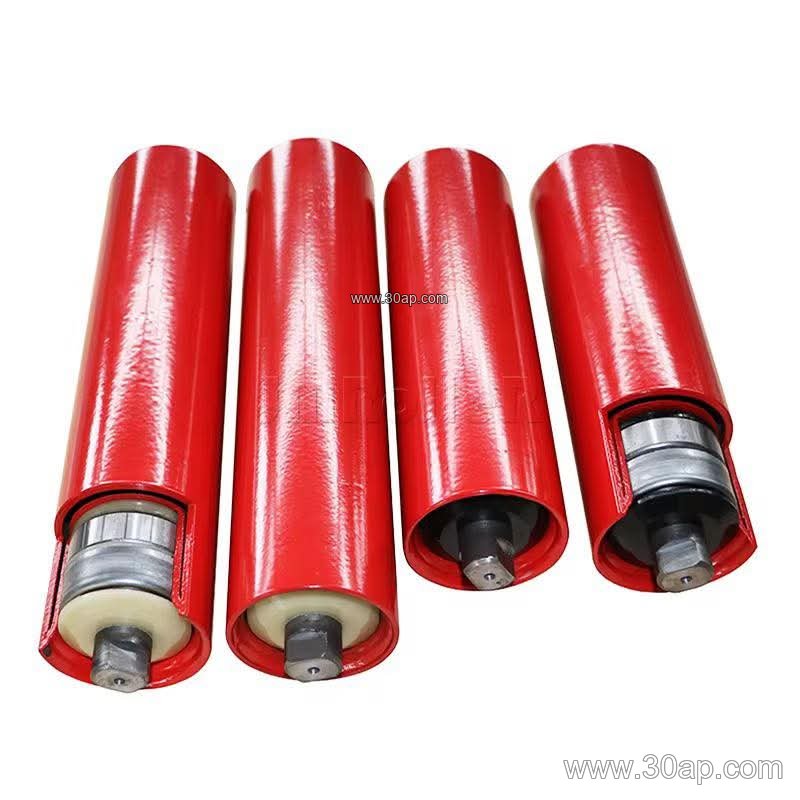
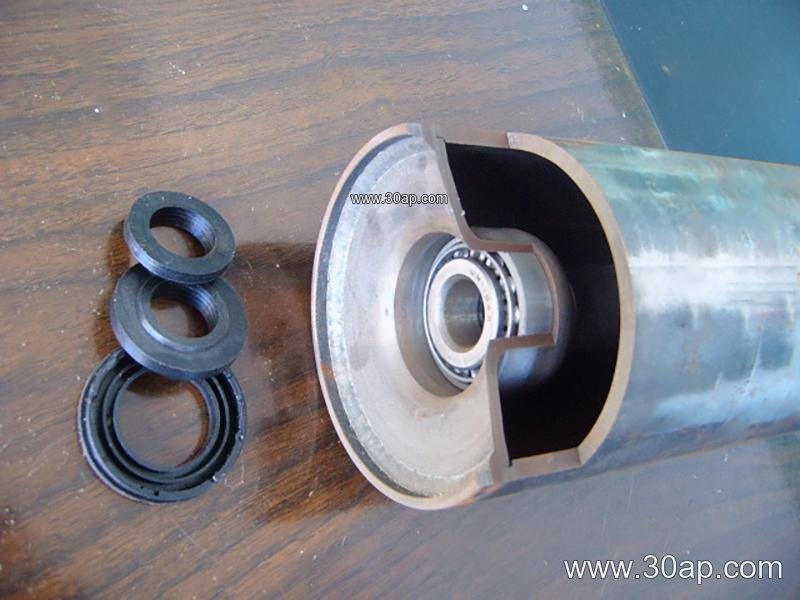
The assembly typically includes a pivoting bracket, a roller set, and sealed bearings. Roller shells are usually steel tube, and some designs add rubber rings for grip or nylon and ceramic surfaces for wear resistance. Bearings such as 6204, 6205, 6305, 6306, 6308, or 6310 are used depending on load and roller diameter. A conveyor bracket that allows rotation is essential; a rigid bracket defeats the self-aligning function.
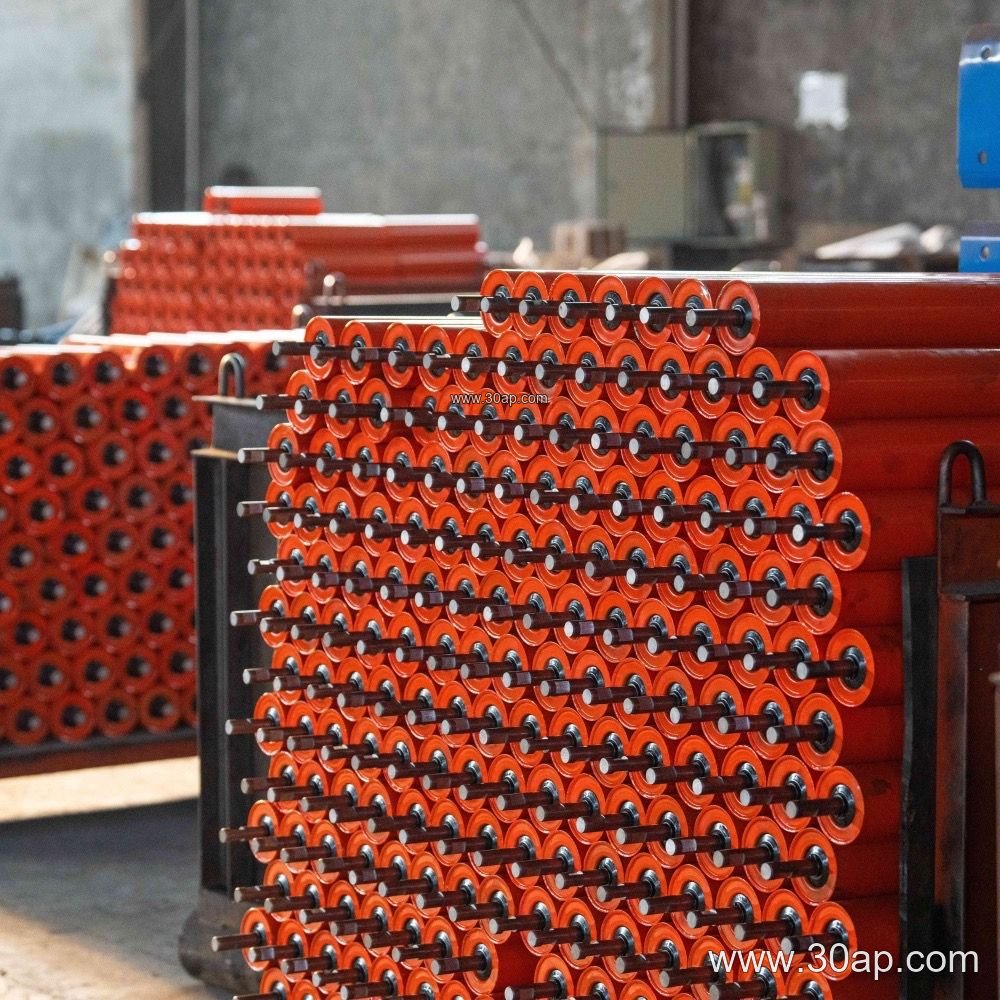
Typical roller diameters include Ø63, Ø76, Ø89, Ø102, Ø108, Ø127, Ø133, Ø159, Ø178, Ø194, and Ø219. The correct diameter is selected by belt width, load, and speed, not by belt width alone. Belt widths commonly range from B400 and B500 through B650, B800, B1000, B1200, B1400, B1600, and up to B1800, B2000, B2200, and B2400. The idler length depends on belt width, trough angle, and roller arrangement.
Common Reference Dimensions
| Belt Width | Typical Roller Length (three-roll trough) | Common Trough Angle |
|---|---|---|
| B500 | 200 mm | 20°, 30°, 35° |
| B650 | 250 mm | 20°, 30°, 35° |
| B800 | 315 mm | 30°, 35°, 45° |
| B1000 | 380 mm | 30°, 35°, 45° |
| B1200 | 465 mm | 30°, 35°, 45° |
| B1400 | 530 mm | 35°, 45° |
| B1600 | 600 mm | 35°, 45° |
| B1800 | 670 mm | 35°, 45° |
| B2000 | 750 mm | 35°, 45° |
These are common examples, not fixed combinations. Side rollers and center rollers can differ in length, and a forward tilt of about 1.5° to 2° is sometimes used on self-aligning or training idlers to improve response.
Where It Is Used
Self-aligning idlers are found in bulk material handling where belt wander is costly. In a limestone quarry or aggregate conveyor line, they protect the belt edges from rubbing the frame. In a coal mining conveyor or underground mining conveyor, they help keep the belt centered under uneven load. They are also used in cement plants, power plant coal handling, steel plants, port ship loading, and crushing and screening circuits. The idler works with the conveyor belt, not against it, and pairs with the conveyor pulley and conveyor bracket to form a stable running system.
Different belt types place different demands on tracking. A heavy-duty mining conveyor belt or steel cord conveyor belt may need robust self-aligning idlers with larger roller diameters, while an EP conveyor belt or NN conveyor belt on a shorter line may use standard sizes. Abrasion resistant conveyor belt and heat resistant conveyor belt applications may require roller surfaces that tolerate dust and temperature. The self-aligning idler itself does not replace the belt specification; it supports it.
What Buyers Should Check
- Confirm belt width, trough angle, and whether the idler is for the carrying or return strand.
- Match roller diameter to load and speed, not to belt width alone.
- Check bearing size and sealing arrangement for dusty or wet conditions.
- Verify that the bracket allows free pivoting and that the pivot axis is correctly positioned.
- Ask for the roller length and frame dimensions rather than assuming a standard.
- Consider the belt type, such as flame retardant conveyor belt in underground coal mining or oil resistant conveyor belt in recycling, when selecting roller surface and seals.
Regular inspection of the pivot, bearing seals, and roller surface keeps the self-aligning idler effective. A worn or seized idler can cause the belt to mistrack, so replacement should be planned with the same attention as conveyor pulley maintenance.