What a Steel Pulley Does on a Conveyor
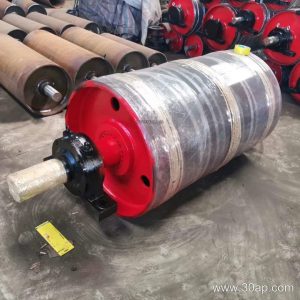
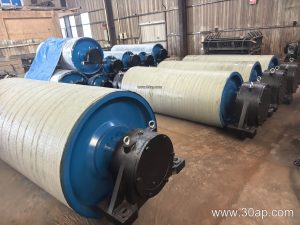
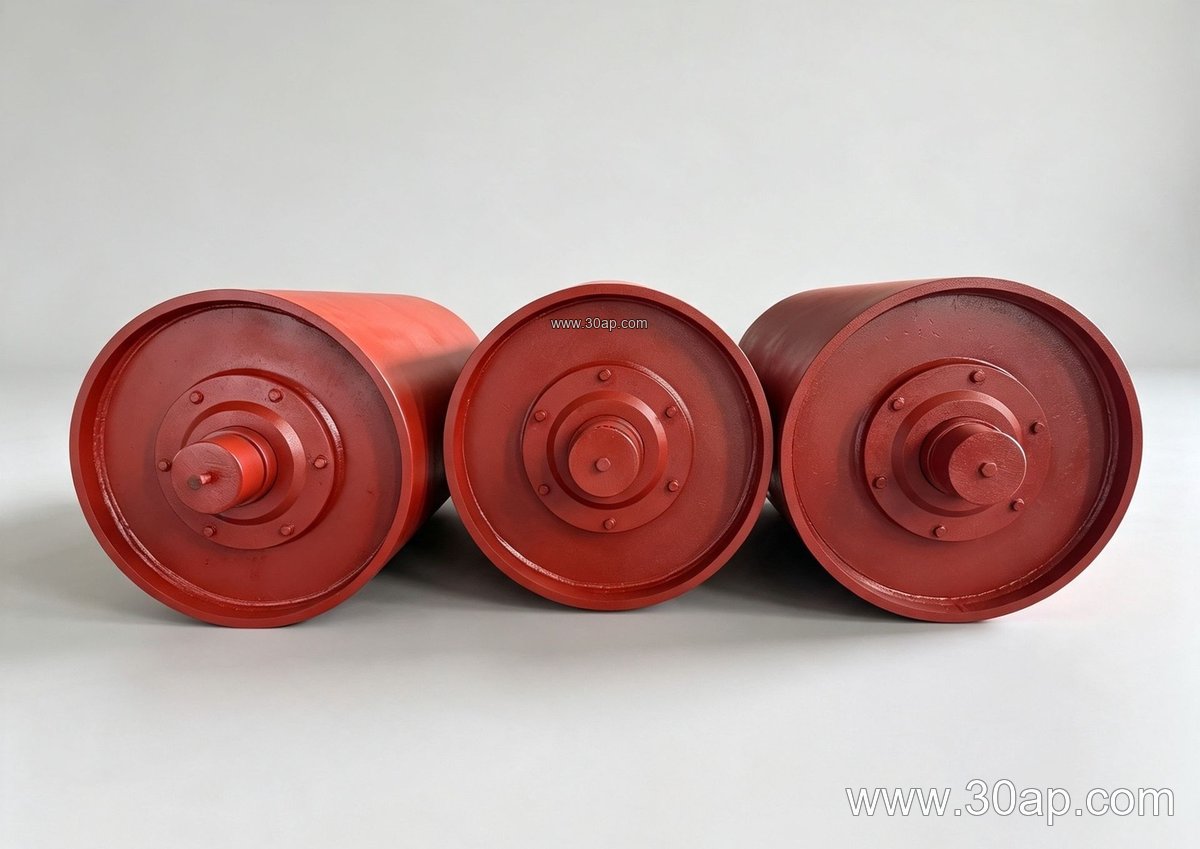
A steel pulley is the rotating drum that carries and guides the conveyor belt at the ends of a conveyor frame. It is usually built as a welded steel shell with shaft, hub, bearing housings and a machined surface, and it may be supplied bare or with a rubber lagging. In a quarry or a cement plant, the same component appears in several positions, and the position decides how it should be specified. A drive pulley transmits torque to the belt, a tail pulley returns the belt at the loading end, and a bend pulley changes direction without driving. These are different duties, so a drive pulley and a bend pulley are not interchangeable even when their shell diameters match.
Construction and Surface Options
The shell is normally rolled and welded steel plate, with end discs welded to the shaft hubs. Bearings sit in housings that can be bolted or welded to the frame. Surface treatment is a major selection point: plain finished shells suit light duty and some return positions, while rubber lagging improves grip and reduces slip on the drive side. Common lagging methods include cold bonded rubber, hot vulcanized rubber and cast rubber, and the pattern may be diamond, herringbone or ceramic. Lagging thickness is often 8, 10, 12, 15 or 20 mm depending on the load and belt tension. The pulley face width is generally a little wider than the belt, for example a B800 belt may run on a face around 950 mm and a B1200 belt on a face around 1400 mm. These are reference values, not a fixed rule that ties one belt width to one drum diameter.
Where Steel Pulleys Are Used
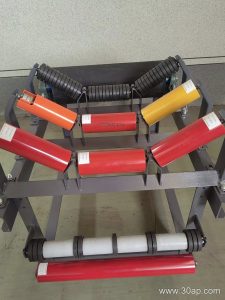
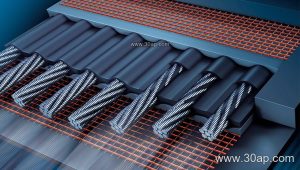
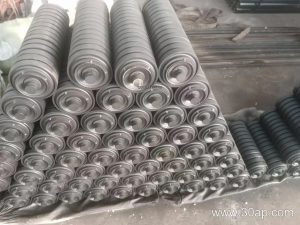
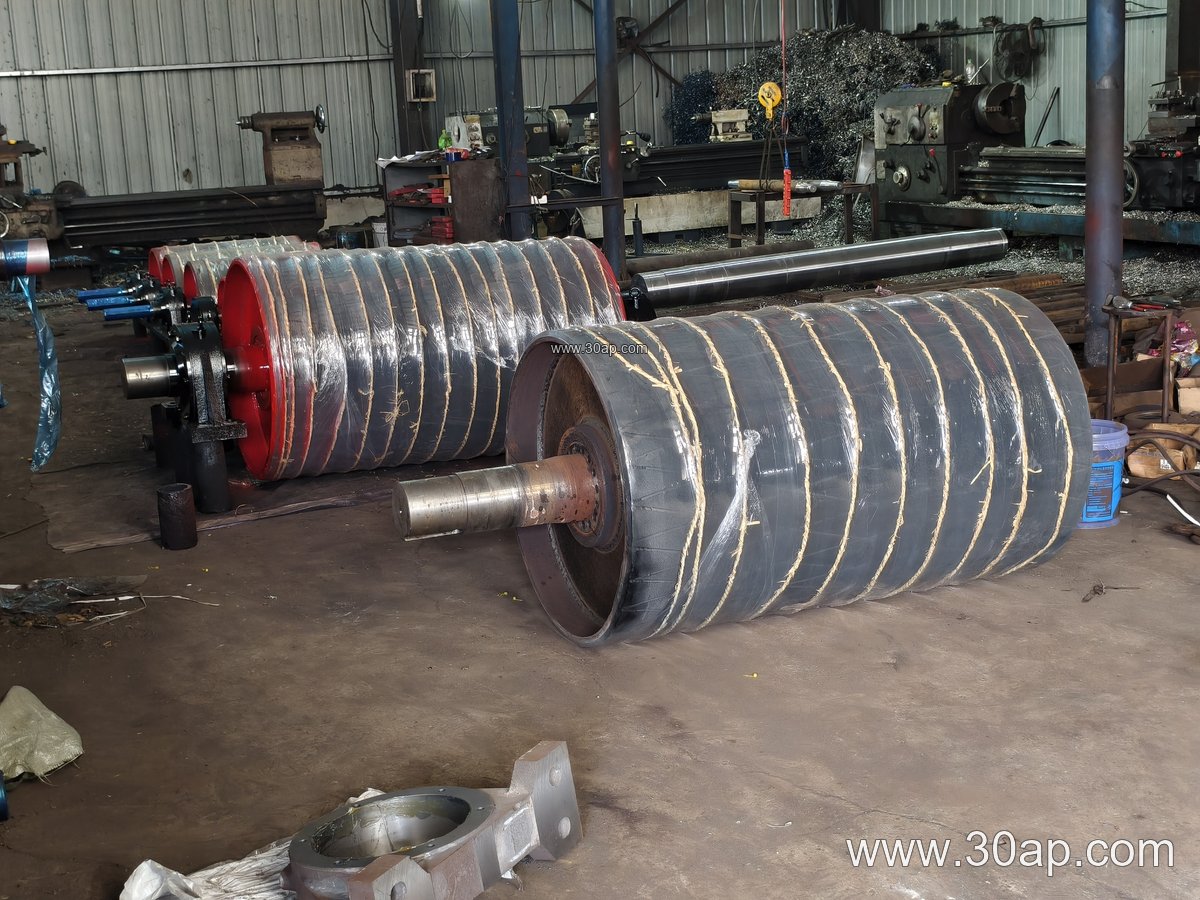
Bulk handling lines in aggregate plants, limestone mines, coal preparation plants and power station coal yards rely on these drums at every transfer point. A typical quarry line pairs a heavy-duty steel pulley at the head with a tail pulley, several bend pulleys and a take-up pulley, while the belt runs over troughing idlers and returns over a flat return idler roller. The drum must match the belt construction, because a steel cord conveyor belt and a fabric core conveyor belt behave differently under tension. Where the belt carries wet or oily material, an oil resistant conveyor belt or a heat resistant conveyor belt may be used, and the pulley lagging should be chosen with the same operating conditions in mind. In dusty cement plants, sealing and bearing protection matter as much as shell thickness.
Common Dimensions and Combinations
Belt widths and drum diameters are selected together with the conveyor design, not from a single lookup table. The table below shows typical reference ranges that help a buyer frame a request.
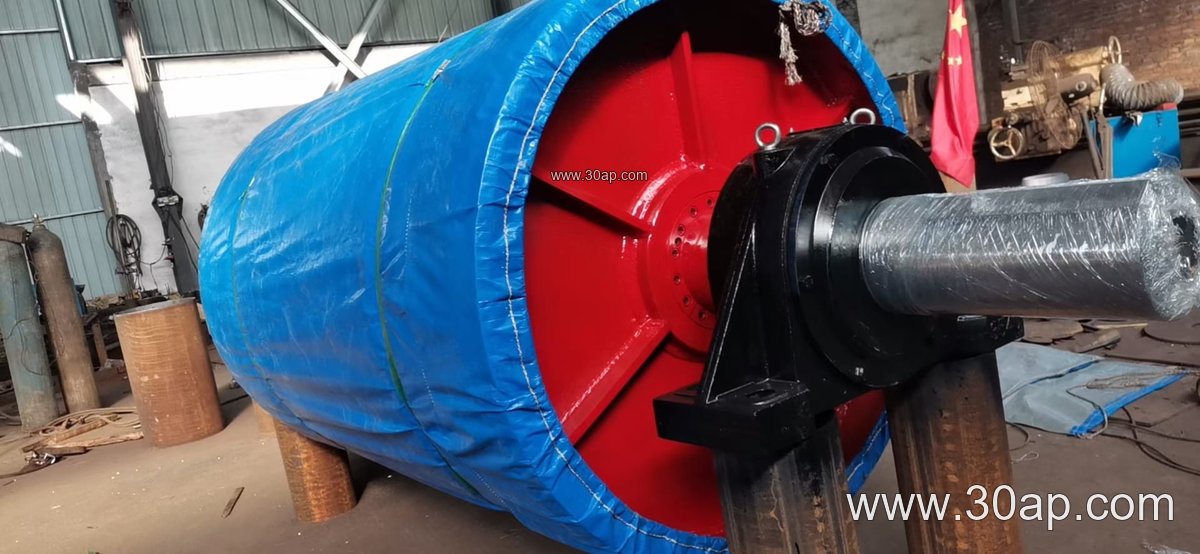
- Belt width B400 to B2400, with B500, B650, B800, B1000, B1200, B1400 and B1600 among the common sizes.
- Shell diameter from around Ø200 to Ø1800, including Ø315, Ø400, Ø500, Ø630, Ø800, Ø1000 and Ø1250.
- Shaft diameter commonly Ø50 to Ø200, set by torque and radial load rather than by belt width alone.
- Face width usually wider than the belt, such as B650 with about 750 mm, B1000 with about 1150 mm, and B1400 with about 1600 mm.
Useful combinations such as B800 x Ø500, B1200 x Ø1000 or B1400 x Ø800 are common in project discussions, but each must be checked against belt tension, speed and the load on the shaft.
Buyer Checklist
Before ordering, confirm the pulley position, the belt width and type, the required shell diameter, the shaft size and the lagging specification. Check whether the drum will be mounted with a conveyor bracket or a bolted bearing housing, and confirm the take-up arrangement, since a tension pulley needs travel room. Ask how the pulley will be balanced and whether the surface should be plain, diamond lagged or ceramic lagged. For abrasive ore lines, the wear life of the shell and lagging often matters more than a small difference in diameter. Matching the drum to the belt, the idler roller set and the frame keeps the whole conveyor stable. More details on steel pulley options can be reviewed at www.example.com/steel-pulley before a final selection is made.
Maintenance Notes
Inspect lagging wear, check bearing temperature and listen for unusual noise during scheduled stops. Keep the belt tracking straight, because a misaligned belt loads the drum edge and shortens lagging life. Replace worn lagging before it exposes the shell, and keep the area around the tail pulley clear of spillage so the belt does not ride on material. A steel pulley that is correctly sized and maintained will usually outlast several belt cycles in a sand and gravel line or a cement clinker operation.