What a Q235 Conveyor Bracket Does on a Belt Conveyor
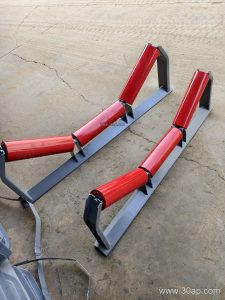
A Q235 conveyor bracket is the steel support that holds a conveyor idler roller in the correct position under or over the conveyor belt. It is often called a conveyor idler bracket or idler frame, and its job is simple but critical: keep the roller at the right height, angle, and spacing so the belt runs smoothly without spillage, mistracking, or excess wear. In a quarry, cement plant, or coal handling system, hundreds of these brackets work together to form the carrying and return runs of the conveyor.
The Q235 designation refers to the steel grade — a common carbon structural steel with good weldability and adequate strength for general conveyor framing. Brackets are typically fabricated from angle steel, channel steel, or bent steel plate, then drilled or punched for mounting bolts. The result is a rigid, corrosion-resistant support that can be produced in large quantities and adapted to different belt widths and trough angles.
How the Bracket Is Built and Where It Sits
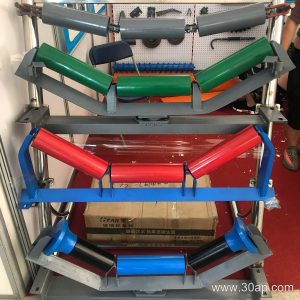
Most Q235 conveyor brackets fall into two functional groups: carrying-side brackets and return-side brackets. Carrying brackets hold the troughing idlers that shape the belt into a trough, while return brackets support the lower run of the belt. Common types include trough bracket sets, transition brackets near the pulleys, V-return brackets, and impact brackets under loading points. Adjustable brackets allow the trough angle to be changed on site, which helps when fine-tuning belt capacity or correcting belt tracking.
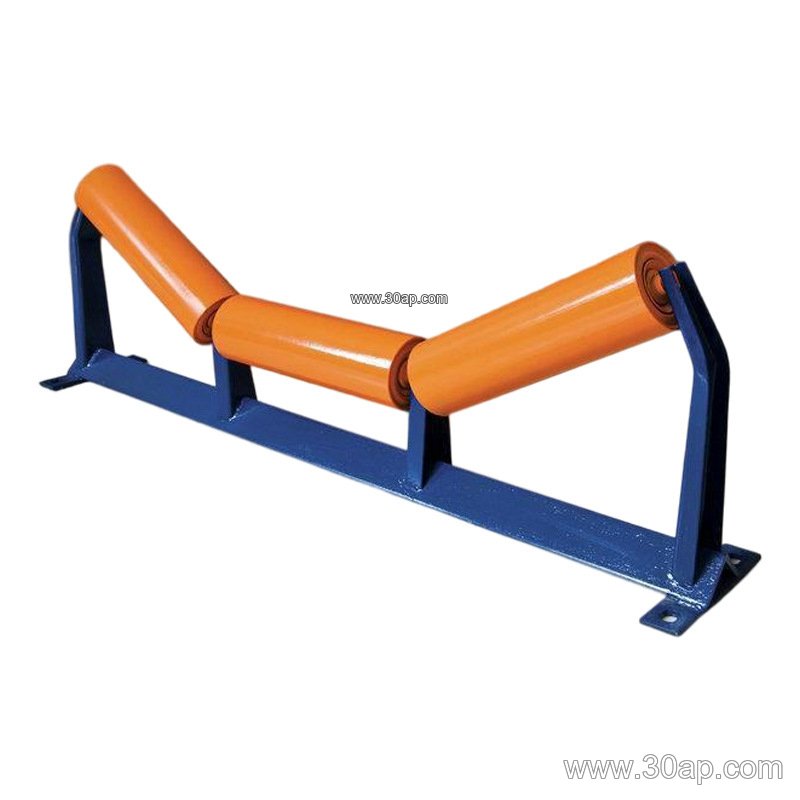
Fabrication usually involves cutting, bending, and welding Q235 steel into a frame with pre-drilled holes for the idler shaft. The bracket must align with the conveyor stringer or frame, and the mounting hole spacing depends on the belt width, trough angle, and roller diameter — it is not a fixed number. A well-built bracket keeps the idler roller perpendicular to the belt path, which reduces edge wear and prolongs the life of the conveyor belt.
Matching Bracket, Roller, and Belt Width
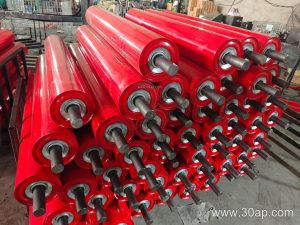
Selecting a Q235 conveyor bracket starts with the belt width and the idler diameter. Common belt widths include B500, B650, B800, B1000, and B1200, with wider sizes such as B1400 and B1600 used in high-capacity mining and port applications. Roller diameters such as Ø89, Ø108, Ø133, and Ø159 are matched to the load and belt speed, but there is no single rule that ties one belt width to one roller diameter. The bracket must be designed to accept the chosen roller and to hold the specified trough angle.
Trough angles of 20, 30, 35, and 45 degrees are common; a 35-degree trough with Ø108 rollers is a typical combination for medium-duty aggregate conveyors, while a 45-degree trough may suit fine materials that need a deeper belt profile. Adjustable brackets let maintenance teams change the trough angle within a range without replacing the whole frame. For transition zones near the head or tail pulley, a transition bracket helps the belt change from troughed to flat without stress concentration.
Applications Across Bulk Handling Industries
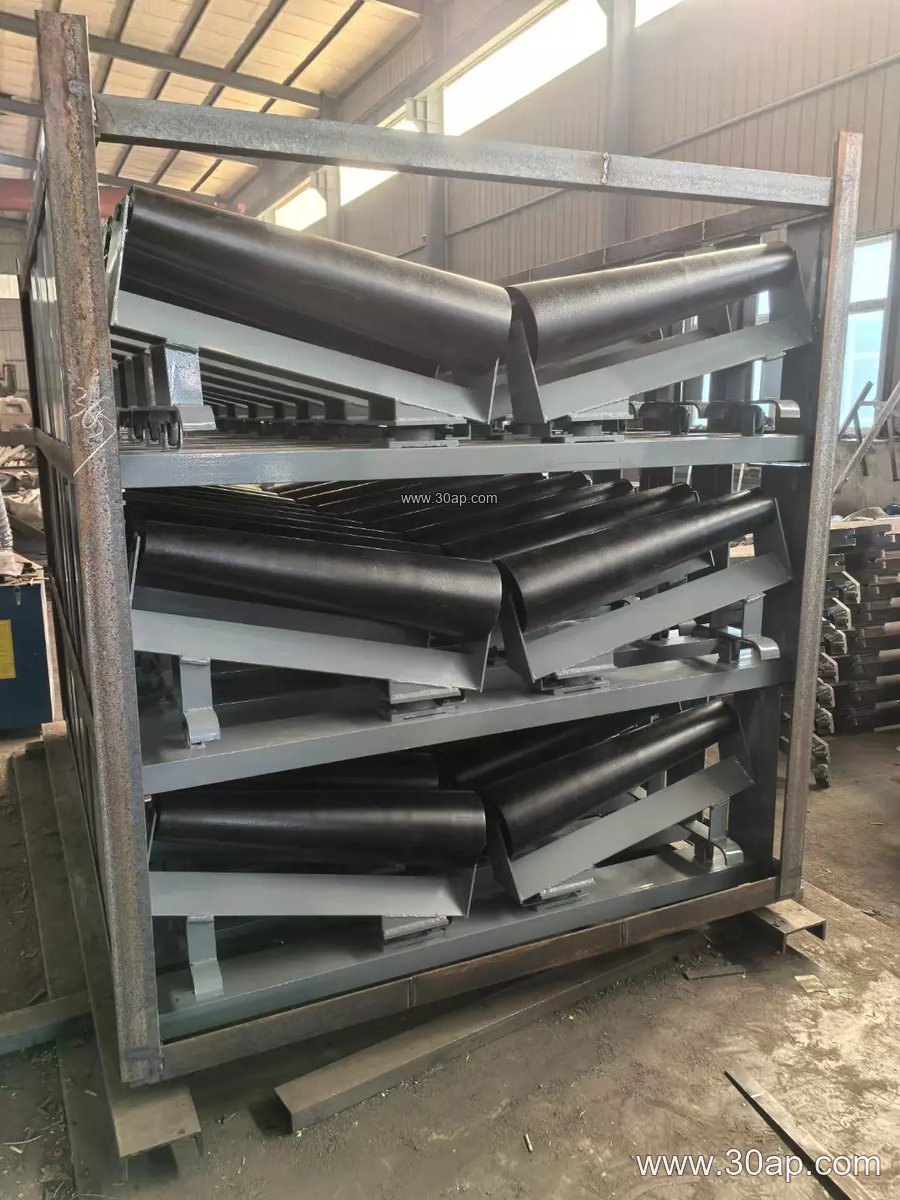
Q235 conveyor brackets appear wherever belt conveyors move bulk materials. In a limestone quarry or sand and gravel line, they support the troughing idlers under crusher discharge belts and screen feed belts. In a coal washing plant or power station coal yard, they carry the belt that feeds the boiler or stockpile. Cement plants use them on clinker and raw meal conveyors, while steel mills and sintering plants rely on them in high-temperature and dusty conditions. Port terminals and ship loaders also use heavy-duty brackets on long overland conveyors.
Because the bracket is part of the idler assembly, its condition affects the whole conveyor. A bent or misaligned bracket can cause the belt to mistrack, damage the edge of a rubber conveyor belt, or overload the roller bearings. In dusty environments such as a coal mining conveyor system, brackets should be inspected for corrosion and loose bolts during routine maintenance.
Buyer Checklist for Q235 Conveyor Brackets
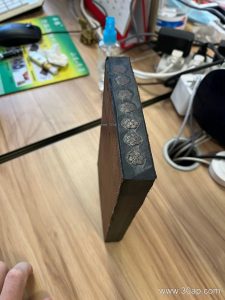
Before ordering, confirm the belt width, the idler roller diameter, and the required trough angle. Ask for the bracket drawing that shows mounting hole spacing and overall height, since these dimensions vary with the conveyor design. Check the steel grade and surface treatment — painted or galvanized finishes are common for outdoor installations. For impact zones, specify a reinforced bracket that can absorb loading shocks. If the conveyor uses a steel cord conveyor belt or a heavy-duty fabric core belt, the bracket must be strong enough for the associated idler load. Finally, confirm that the bracket is compatible with the conveyor stringer spacing and that spare parts are available for future maintenance.