What a Heavy-Duty Ceramic Lagged Pulley Does
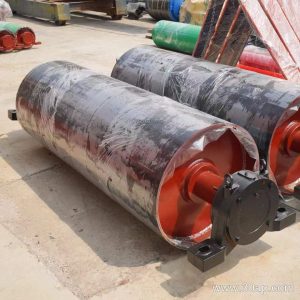
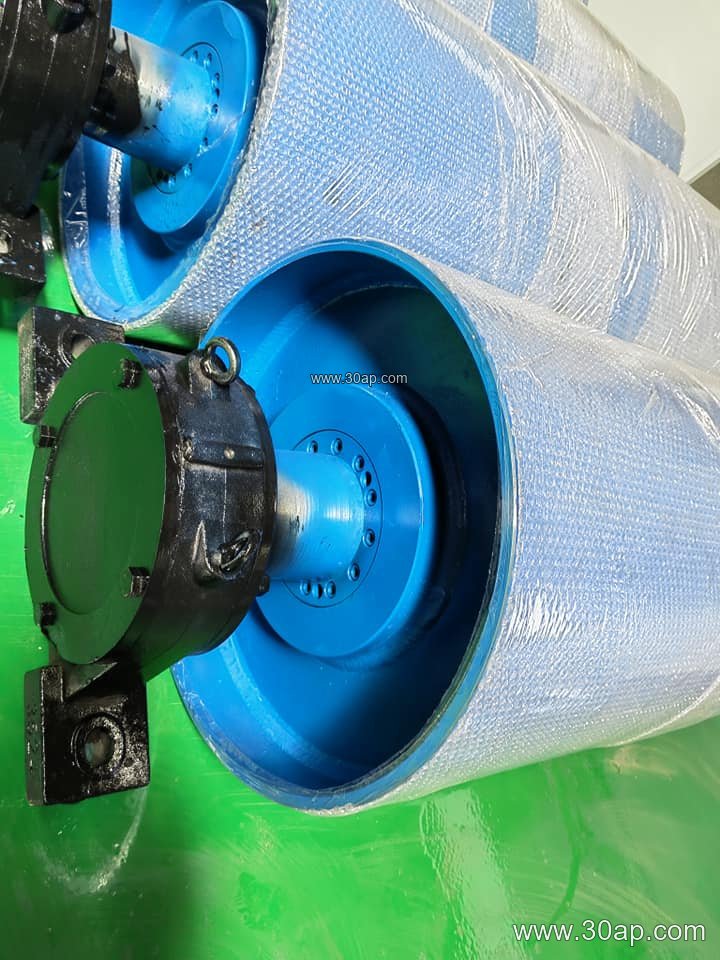
A heavy-duty ceramic lagged pulley is a conveyor pulley whose shell is covered with ceramic tiles set in a rubber or polymer backing. The ceramic surface is there to grip the conveyor belt under load, and the heavy-duty build is aimed at drive positions where torque, dust, and abrasive material put constant stress on the lagging. In a quarry, a limestone mine, or a crushing and screening line, this pulley is usually the one that keeps the belt from slipping when the load is at its heaviest.
The same product is also called a ceramic lagged conveyor pulley or a ceramic-lagged drive drum, depending on the plant’s naming habit. These are accurate equivalents for the same item, not different pulley types.
How the Ceramic Surface Is Built
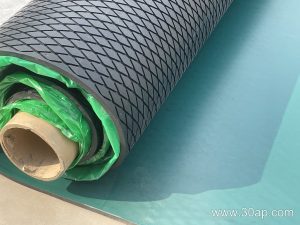
The ceramic tiles are bonded to the pulley shell with a rubber or polymer layer, and the tile pattern is arranged so that water, fines, and slurry can escape from under the belt. A heavy-duty version typically uses a thicker backing, a stronger bond, and a shell that can carry high torque without deflection. The result is a surface that resists polishing and glazing, which is what happens to plain rubber lagging when fine abrasive material works across it day after day.
Ceramic lagging is not the right answer for every position. A bend pulley or a tail pulley often runs with less wrap angle and less slip risk, and a plain rubber or grooved lagging may be enough. Ceramic is chosen where grip is critical and wear is aggressive.
Where It Fits in the Conveyor
This pulley belongs at drive and head positions on heavy conveyors. Typical settings include:
- Aggregate and quarry lines moving crushed rock from the primary crusher
- Limestone and cement plant raw material or clinker transport
- Coal handling at power plants and wash plants
- Iron ore and copper ore conveyors with wet, gritty conditions
- Port bulk terminals loading and unloading abrasive cargo
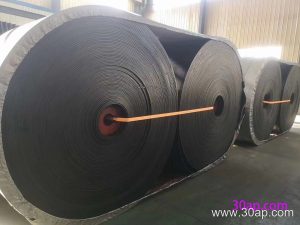
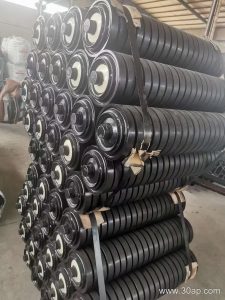
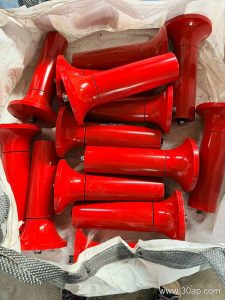
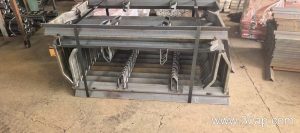
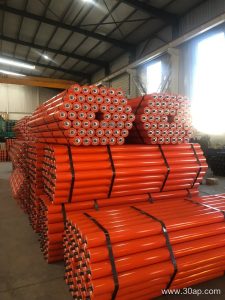
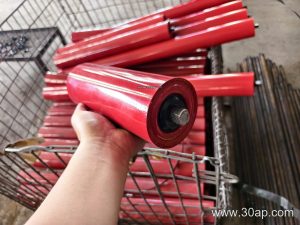
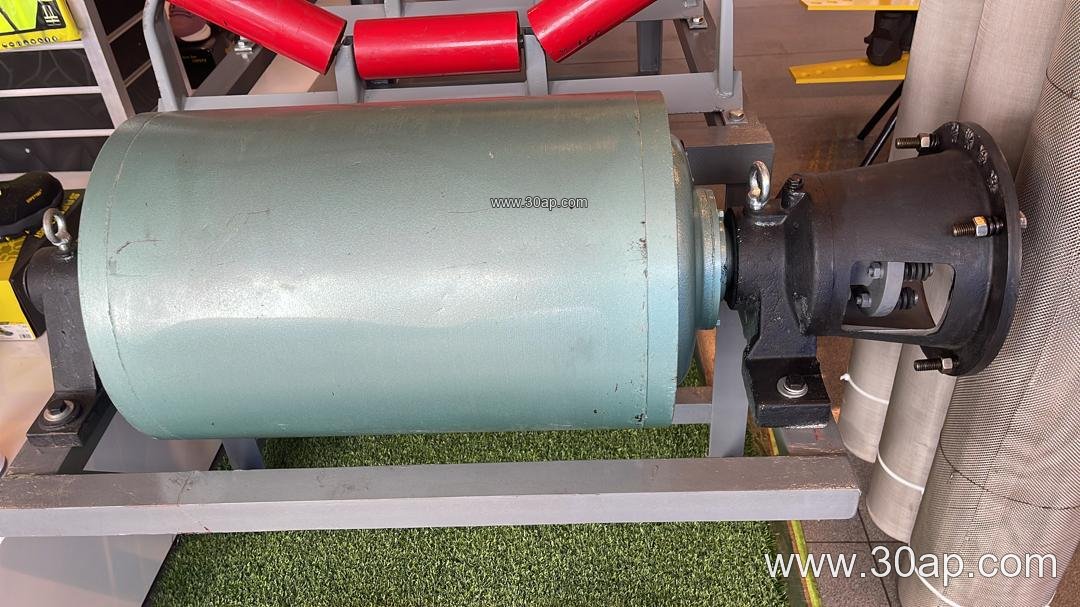
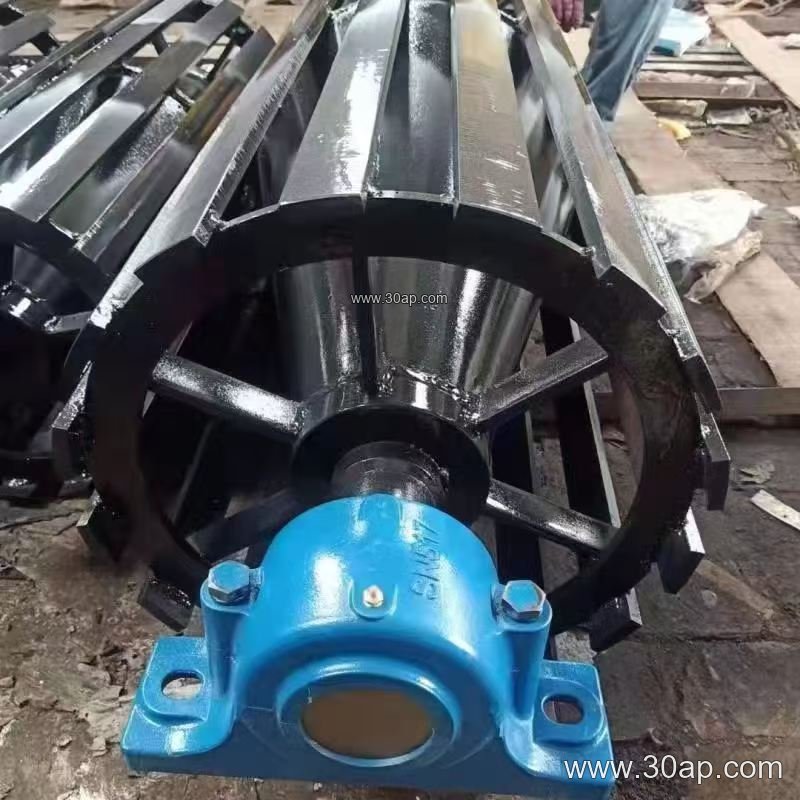
At these points the pulley works together with the conveyor belt, the conveyor pulley set, and the conveyor bracket that holds the shaft in line. A poorly aligned bracket or a worn idler roller nearby can shorten lagging life, so the whole conveyor layout matters.
Matching the Pulley to the Belt
Belt width and pulley diameter are chosen together, not one from the other. A B800 belt may run on a Ø500 pulley in one conveyor and a Ø630 pulley in another, depending on tension and wrap angle. Common combinations include B800 × Ø500, B1200 × Ø1000, and B1400 × Ø800, but these are examples, not fixed rules. Shaft diameter is set by torque and load, not by belt width alone.
| Belt width | Typical pulley face width | Example diameter range |
|---|---|---|
| B500 | about 600 mm | Ø250 to Ø400 |
| B650 | about 750 mm | Ø315 to Ø500 |
| B800 | about 950 mm | Ø400 to Ø630 |
| B1000 | about 1150 mm | Ø500 to Ø800 |
| B1200 | about 1400 mm | Ø630 to Ø1000 |
| B1400 | about 1600 mm | Ø800 to Ø1250 |
Lagging thickness is commonly 8, 10, 12, 15, or 20 mm. Thicker lagging suits high-torque drives, while thinner lagging may be enough on shorter conveyors.
Buyer Notes Before Ordering
Give the supplier the belt width, the pulley position, the expected belt tension, and the material being carried. State whether the conveyor uses an EP conveyor belt, an NN conveyor belt, or a steel cord conveyor belt, because tension behavior differs. A heavy-duty mining conveyor belt running on a ceramic lagged drive pulley will need a shell and shaft sized for the load, not a catalog default.
Ask about tile retention, backing hardness, and how the lagging is applied. Also confirm the pulley face width, shaft diameter, and bearing arrangement against the conveyor bracket drawing. For wet or dusty service, check that the ceramic pattern allows drainage and self-cleaning. Where the belt carries hot material, note that ceramic lagging and heat do not always mix well, so discuss the duty with the supplier first.
Finally, plan maintenance. Inspect the ceramic tiles for chipping and the bond line for lifting, and check belt tracking at the same time. A ceramic lagged pulley that is correctly sized and properly installed will outlast several sets of plain rubber lagging in abrasive service, but it still needs routine attention like every other conveyor pulley.