What an EP Conveyor Belt Is
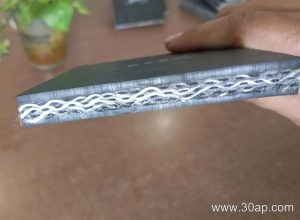
An EP Conveyor Belt is a fabric-core rubber belt built around polyester warp and nylon weft cords, usually abbreviated as EP or polyester-nylon. The carcass gives the belt its tensile strength and elongation behavior, while the rubber covers protect the fabric from abrasion, moisture, heat, and oils. In many plants the same product is simply called an EP rubber conveyor belt or a polyester-nylon belt, and buyers often treat EP Conveyor Belt and EP Fabric Core Conveyor Belt as one family of products with different strength grades.
Compared with a plain cotton or light fabric belt, the EP carcass stretches less under load and resists fatigue at the splice. That is why it appears in long overland lines, stockyard conveyors, and transfer points in mines, coal preparation plants, cement works, power stations, and aggregate yards.
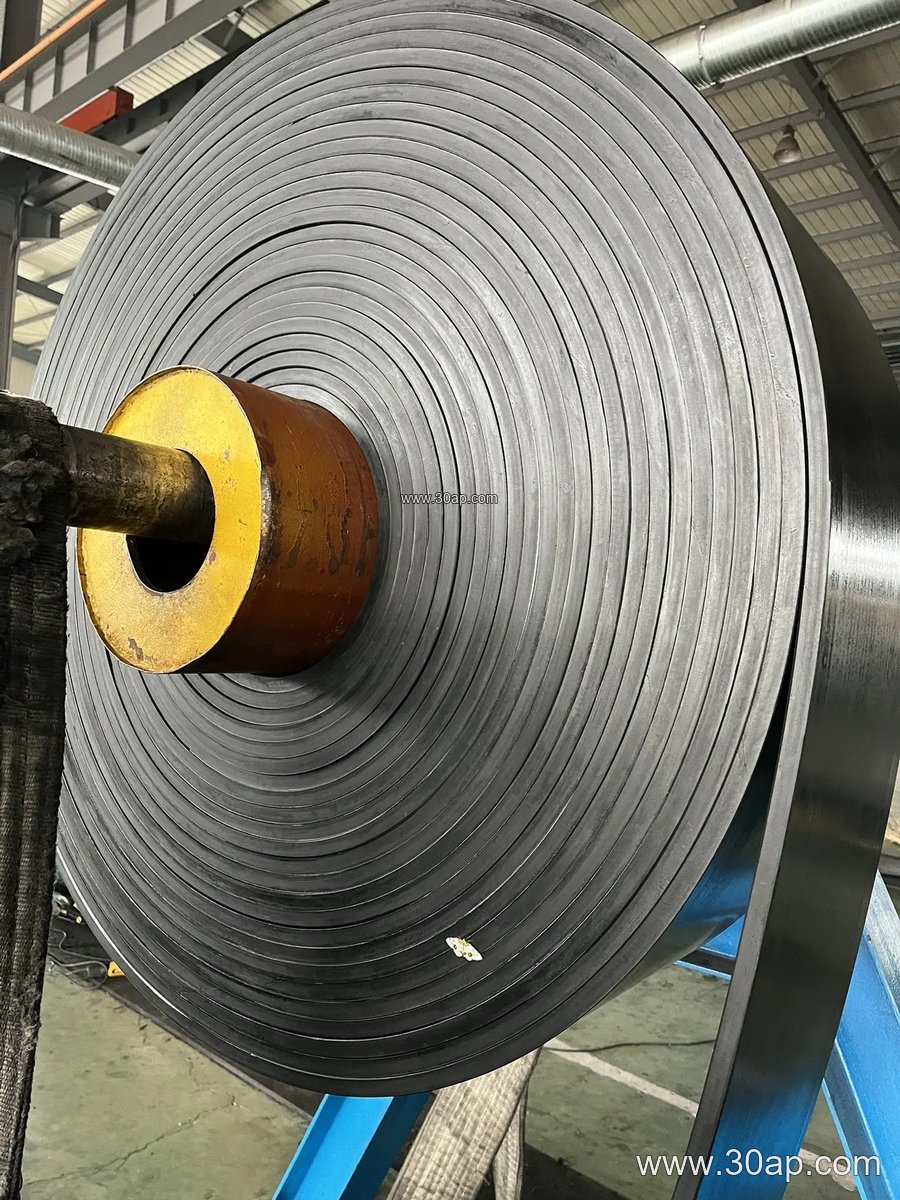
Construction and Cover Options
A typical belt has a top cover, a fabric core of several plies, and a bottom cover. The cover compound and thickness are chosen for the duty. Common cover combinations include 3+1.5 mm, 4+2 mm, 5+2 mm, 6+2 mm, and 8+3 mm, and the carcass is usually 2 to 6 plies depending on the required strength. A buyer may also ask for an abrasion resistant conveyor belt for sharp crushed stone, a heat resistant conveyor belt near clinker or sinter, a flame retardant conveyor belt or fire resistant conveyor belt for underground coal mining, and an oil resistant or cold resistant grade where the environment demands it.
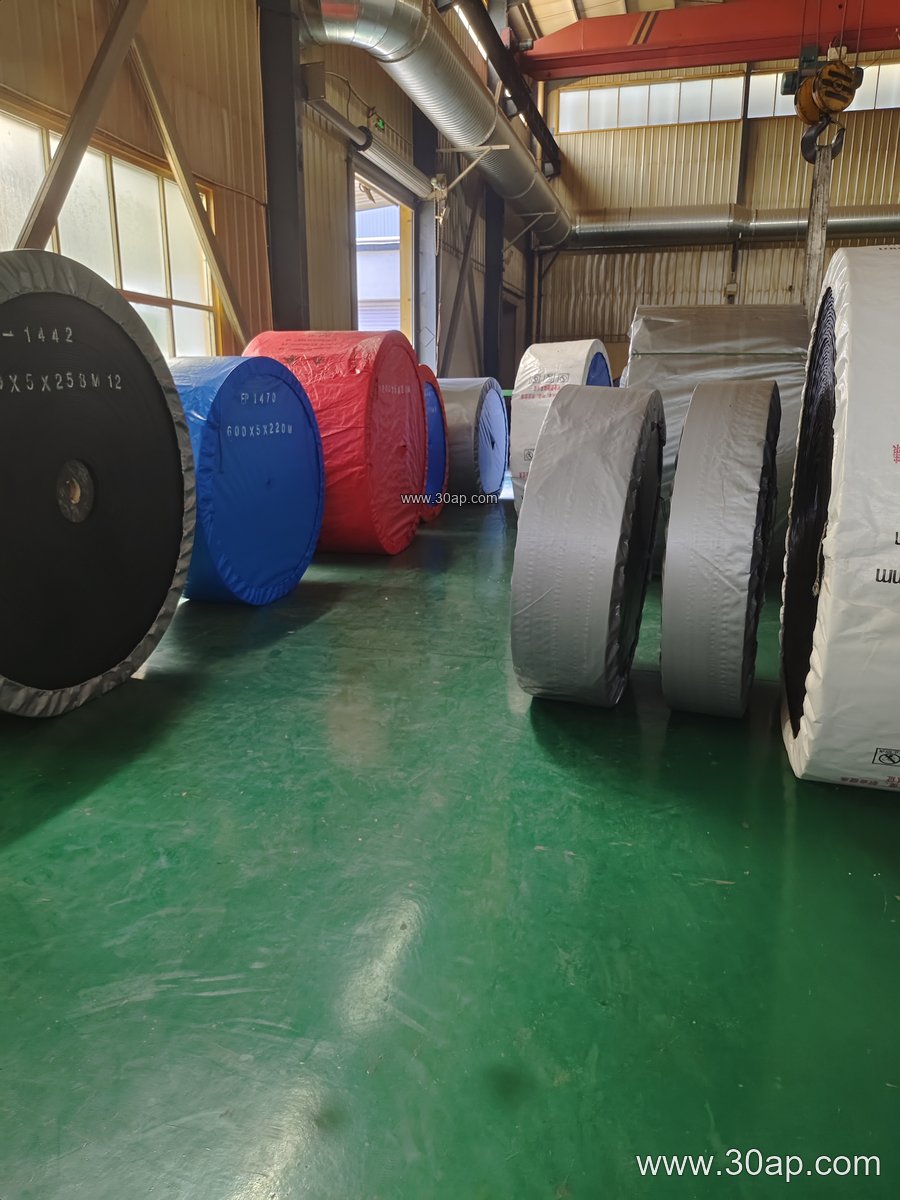
Surface forms stay separate from the core type. A chevron conveyor belt adds raised ribs to control material on an incline, while a corrugated sidewall belt with cleats handles steep, confined paths. These are design variants, not substitutes for the EP carcass itself.
Strength Grades and Common Sizes
EP belts are normally ordered by nominal tensile strength per unit width. The table below lists reference grades and typical dimensions; actual values are confirmed by the manufacturer and by the conveyor design.
| Property | Common reference range |
|---|---|
| Strength grade | EP200, EP315, EP400, EP500, EP630, EP800, EP1000, EP1250, EP1600, EP2000 |
| Belt width | B500, B650, B800, B1000, B1200, B1400, B1600, B1800, B2000 |
| Carcass plies | Usually 2 to 6 |
| Cover thickness | 3+1.5, 4+2, 5+2, 6+2, 8+3 mm |
| Example designation | EP1000 1200mm belt, EP1250 1800mm belt |
These grades and widths are reference data, not a fixed catalogue. A 1200 mm belt can run on different pulley diameters depending on the troughing angle, load, and shaft design, so the pulley and the belt are always matched by the conveyor engineer rather than by one rule.
Where It Fits in the Plant
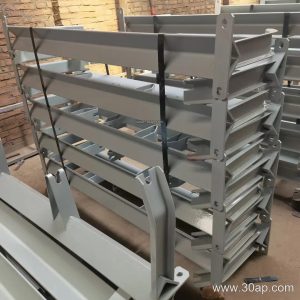
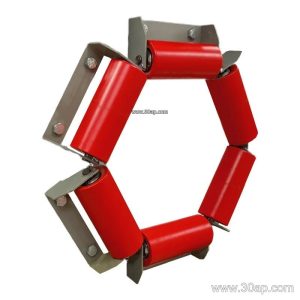
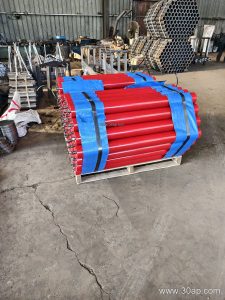
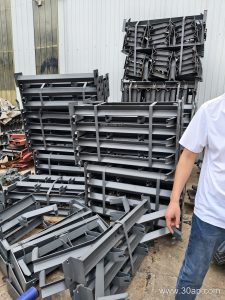
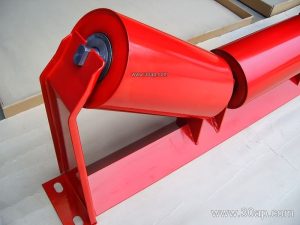
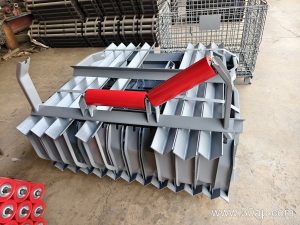
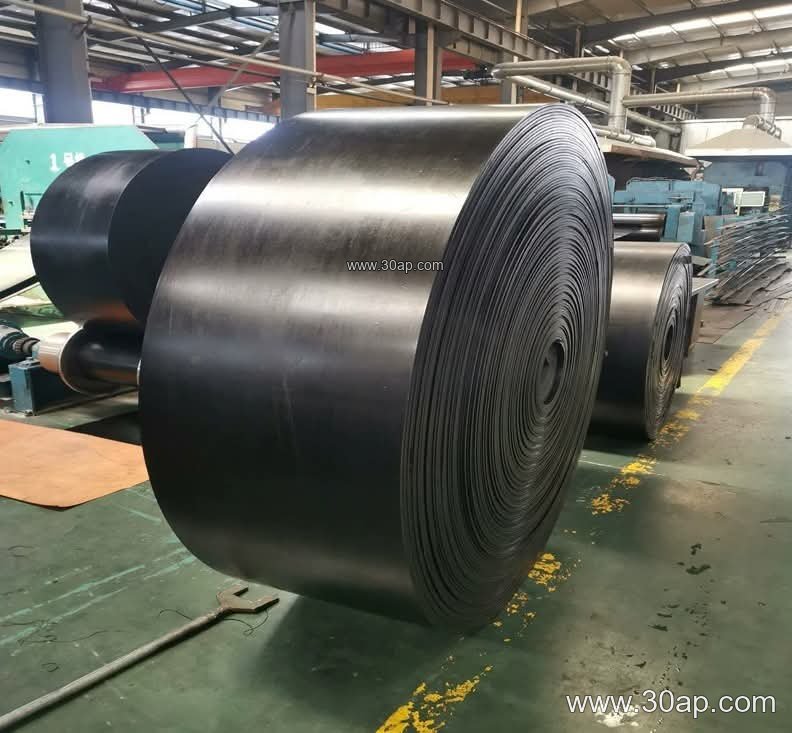
In a quarry or sand making plant, an EP belt often carries crushed rock from the crusher to the screening tower. In a coal mining conveyor line it may be specified as a flame retardant grade, and in a cement plant the heat resistant version can serve clinker transport. Ports and ship loading systems use wide belts for bulk material, while recycling and construction sites rely on cut-resistant covers. Supporting hardware matters just as much: idler rollers set the trough shape, a conveyor pulley at the drive and tail ends transfers power and keeps tracking, and each conveyor bracket holds the frame steady. A well-aligned idler roller and a properly lagged conveyor pulley extend belt life more than a higher strength grade alone.
Selection and Maintenance Notes
- Match the strength grade to the calculated tension, not to the widest belt available.
- Choose the cover compound for the dominant risk: abrasion, heat, oil, flame, or cold.
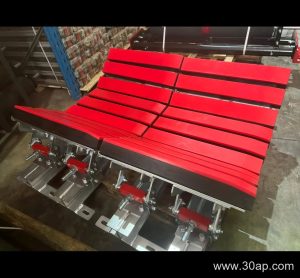
- Keep impact points supported so sharp lumps do not cut the carcass.
- Check splice quality and pulley lagging during planned shutdowns.
- Store belts away from sunlight and ozone, and roll them correctly to avoid edge damage.
For a second line or a different duty, an NN conveyor belt or a steel cord conveyor belt may be compared during engineering review, but the EP construction remains the reference point here. A practical inquiry should state the material, lump size, capacity, incline, ambient temperature, and available width so the supplier can propose a suitable EP Conveyor Belt grade.