What the Feed-End Pulley Does
The feed-end pulley is the tail pulley located at the loading point of a conveyor, where bulk material first lands on the belt. Its main job is to support and guide the returning belt as it enters the carrying run, helping maintain tension and alignment before the belt receives its load. In a typical conveyor layout, this pulley sits opposite the drive pulley and is often mounted on a tensioning carriage so that belt slack can be taken up as the system stretches during operation.
Because it works directly under the material feed, the pulley must handle dust, fines, and occasional impact. In a quarry or aggregate line, for example, the feed-end pulley may be exposed to sharp rock fragments and abrasive sand, while in a coal mining conveyor it can face fine coal dust and moisture. These conditions influence both the pulley construction and the surface finish selected for the belt contact face.
Construction and Key Components
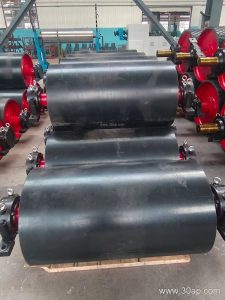
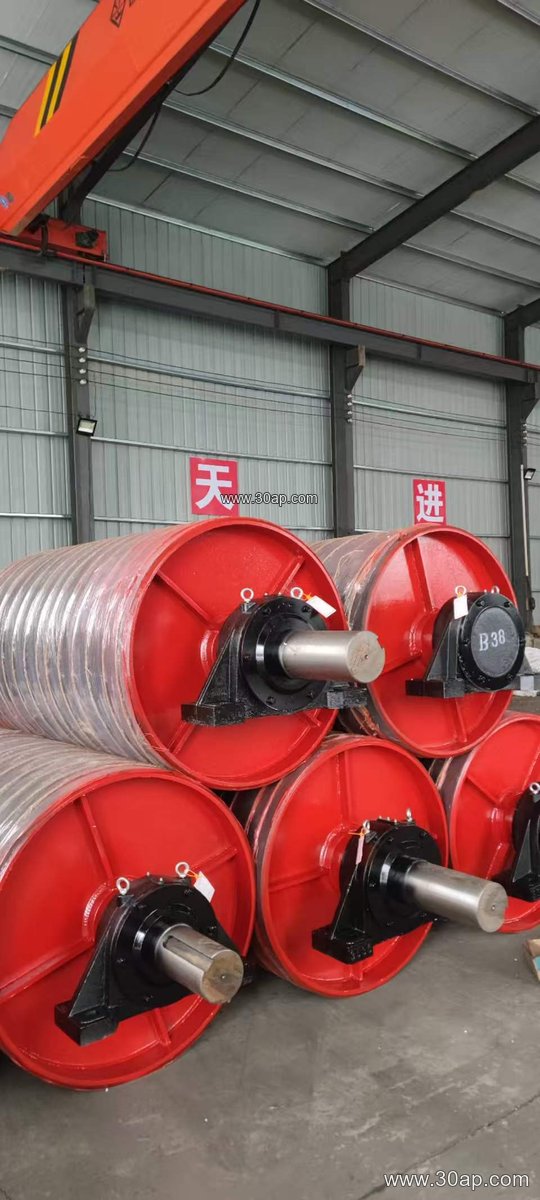
A feed-end pulley is built around a steel drum with welded end discs and a shaft that transmits the belt tension to the conveyor frame. The drum shell is usually machined or rolled to a true cylindrical shape, and the shaft is sized according to the torque and radial load rather than the belt width alone. Common shaft diameters include Ø80, Ø100, Ø120, Ø140, and Ø160 mm, with larger sizes used for heavy-duty mining conveyors. The pulley body may be supplied with a plain surface or with a rubber or ceramic lagging to improve grip and reduce belt slip.
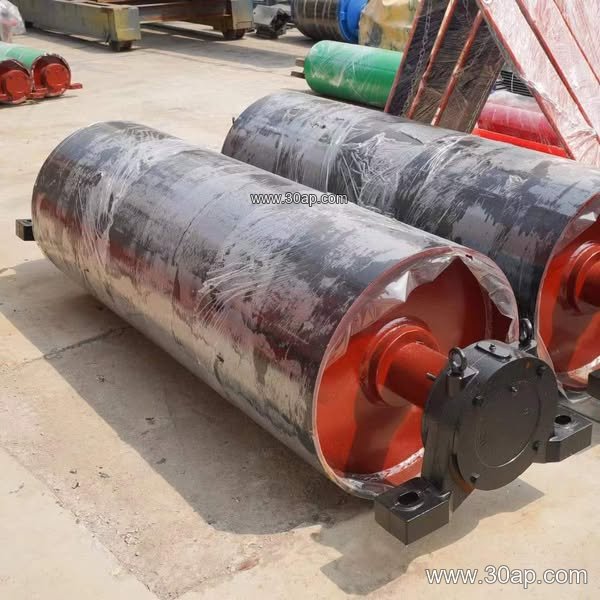
Bearings are typically mounted in plummer blocks or flange housings at each end of the shaft. Since the feed-end pulley often operates in a dusty environment, effective sealing is important to keep grit away from the bearing surfaces. Many designs include a labyrinth seal or a grease-purged housing to extend service life between maintenance intervals.
Common Sizes and Surface Options
The pulley diameter and face width are matched to the conveyor belt width and the required wrap angle. The table below lists typical combinations used in bulk material handling; these are reference values, not fixed rules, and final dimensions should be confirmed by the conveyor designer.
| Belt Width (mm) | Typical Pulley Face Width (mm) | Common Diameter Range (mm) |
|---|---|---|
| B500 | 600 | Ø250 – Ø400 |
| B650 | 750 | Ø315 – Ø500 |
| B800 | 950 | Ø400 – Ø630 |
| B1000 | 1150 | Ø500 – Ø800 |
| B1200 | 1400 | Ø630 – Ø1000 |
| B1400 | 1600 | Ø800 – Ø1250 |
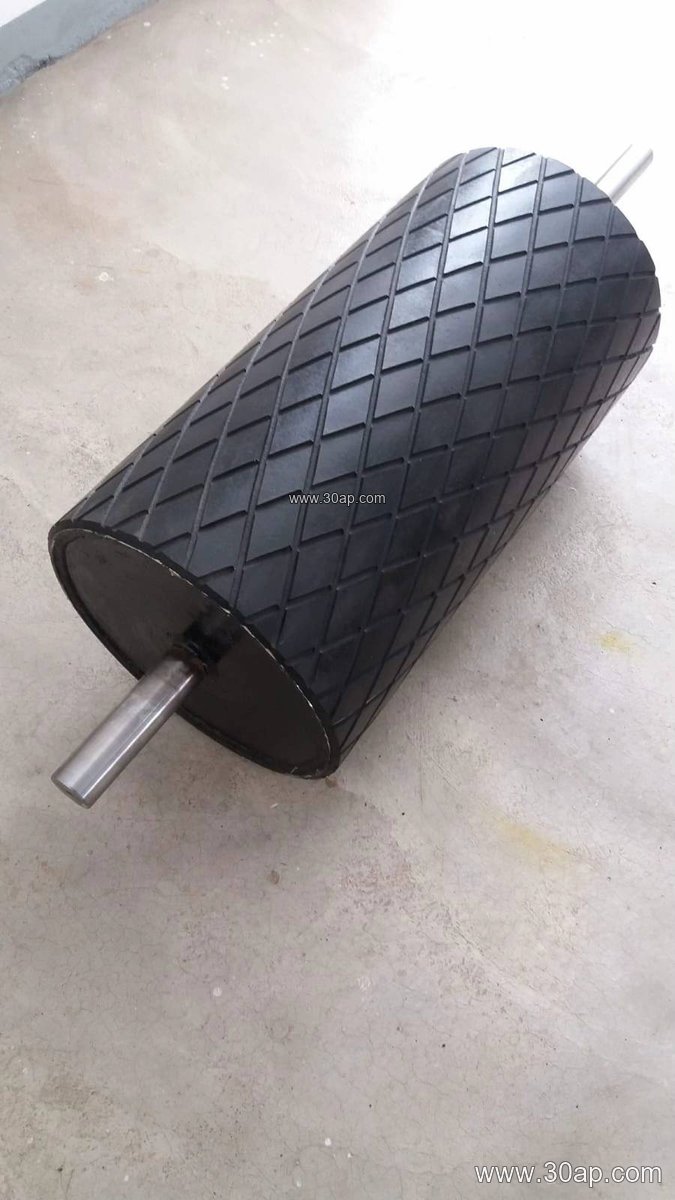
Surface treatment on the feed-end pulley can be plain, rubber-lagged, or ceramic-lagged. Rubber lagging in 8, 10, 12, 15, or 20 mm thickness is common for general bulk handling, while ceramic lagging may be chosen where abrasive material and wet conditions increase the risk of belt slip. A diamond or herringbone pattern can help channel water away from the contact area, but the pattern should be selected to suit the belt cover rather than as a universal solution.
Where It Fits in the Conveyor Layout
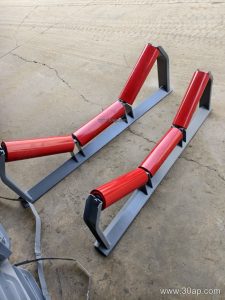
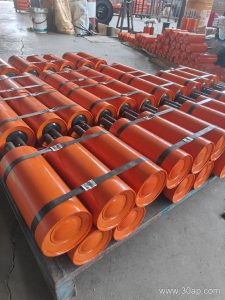
The feed-end pulley is most often found at the tail end of a conveyor that receives material from a crusher, screen, or transfer chute. In a stone crushing plant, it may be positioned under a feed hopper where the belt is loaded with aggregate. In a cement plant, it can be part of a clinker or limestone conveyor, and in a power plant it may handle coal before the belt carries the fuel to the boiler bunkers. The pulley works together with conveyor idlers and the conveyor bracket system to keep the belt tracking correctly under load.
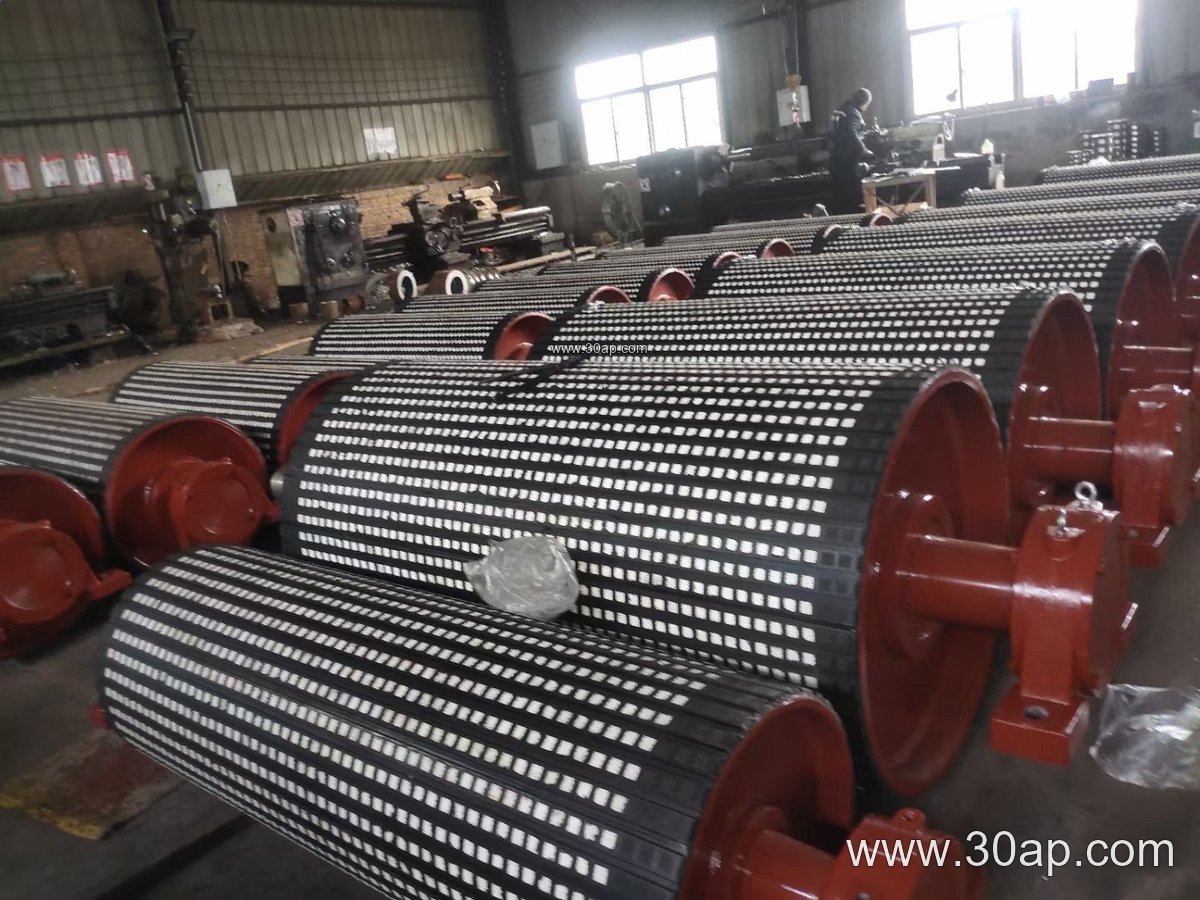
Unlike the drive pulley, which transmits power, or a bend pulley, which changes belt direction without driving, the feed-end pulley primarily supports and tensions the belt at the loading zone. This distinction matters when specifying spare parts, because a drive pulley and a tail pulley are not interchangeable even if their dimensions appear similar.
Buyer Checklist for Feed-End Pulley Selection
- Confirm the belt width and the required pulley face width; the face is usually wider than the belt, for example B800 with a 950 mm face.
- Check the calculated belt tension and torque to determine the shaft diameter; do not assume a shaft size from belt width alone.
- Select the lagging type and thickness based on material abrasiveness, moisture, and whether the pulley is in a dusty or wet location.
- Review the bearing housing and sealing arrangement for the specific environment, especially in coal mining or quarry conveyors.
- Verify the mounting position and tensioning method, as many feed-end pulleys are mounted on a movable take-up carriage.
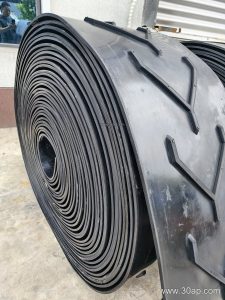
- Consider the conveyor belt type in use, such as an EP conveyor belt or steel cord conveyor belt, because belt stiffness and cover hardness affect the required pulley diameter and lagging choice.
For abrasive bulk materials, an abrasion resistant conveyor belt or a heavy-duty mining conveyor belt often runs alongside a lagged feed-end pulley to maintain traction. In coal mining applications, flame retardant conveyor belt grades are frequently specified together with well-sealed pulleys to reduce fire risk. The pulley itself should be selected as part of the whole conveyor system, not as an isolated component.
Maintenance Notes
Regular inspection of the feed-end pulley includes checking lagging wear, verifying that the pulley turns freely, and greasing the bearings at the recommended intervals. Any buildup of material on the pulley face should be removed, as it can cause belt misalignment and premature wear. When replacing lagging, the pulley should be cleaned and the new rubber or ceramic surface bonded according to the supplier’s instructions. Keeping the pulley aligned with the conveyor frame and the idler roller train helps extend belt life and reduces edge damage.