What a Four-Roll Idler Bracket Does
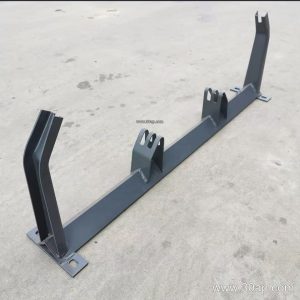
A four-roll idler bracket is the steel support assembly that holds four idler rollers in a trough-shaped arrangement under the carrying run of a conveyor belt. Instead of the common three-roll trough set, this bracket spreads the belt across four contact points, which can suit wide belts, heavy loads, or lines where belt training and load distribution matter. In a cement plant or a limestone quarry, the difference is often visible in how evenly the belt sits and how quietly the rollers turn.
The same product is also called a four-roller idler support frame or a four-idler bracket. It belongs to the troughing bracket family, but it is not a transition bracket, a return bracket, or a self-aligning bracket, even though those may appear on the same conveyor structure.
Construction and Mounting
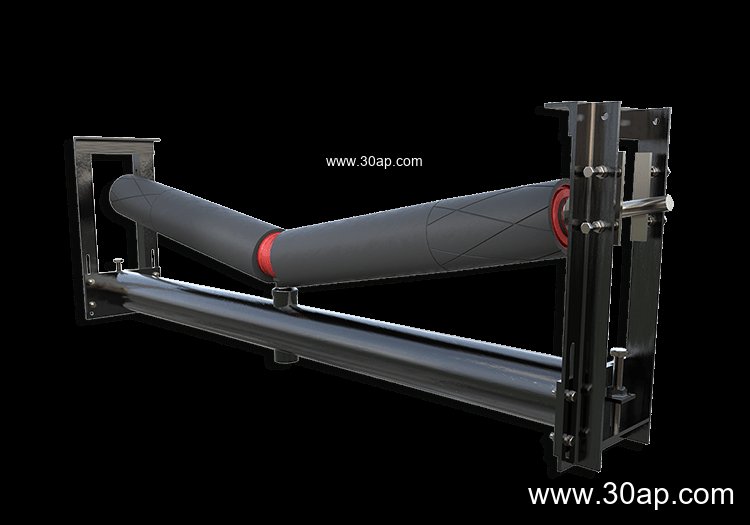
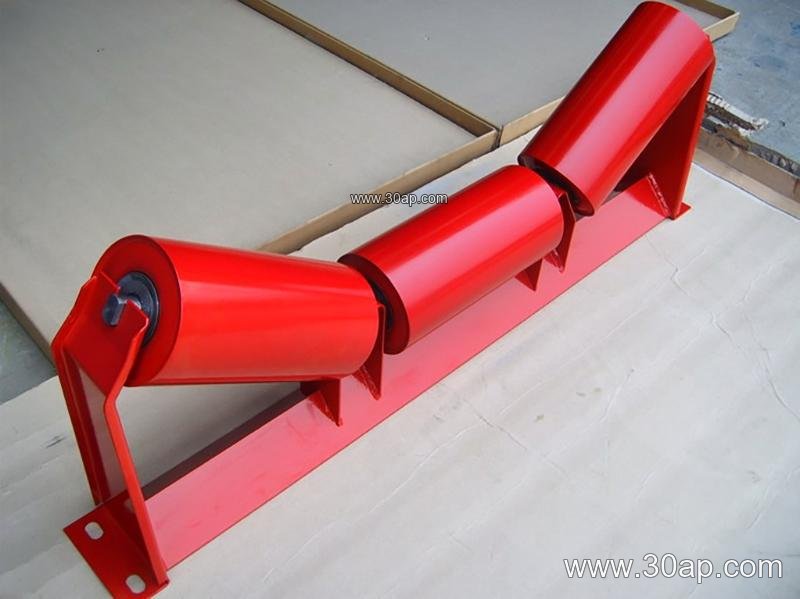
Most four-roll idler brackets are fabricated from angle steel, channel steel, or bent steel plate. The frame carries fixed or adjustable idler seats, and the side rolls are set at a trough angle while the two inner rolls share the center load. A four-roll layout is often chosen where a three-roll set would leave the belt too flat in the middle or would concentrate impact in one area.
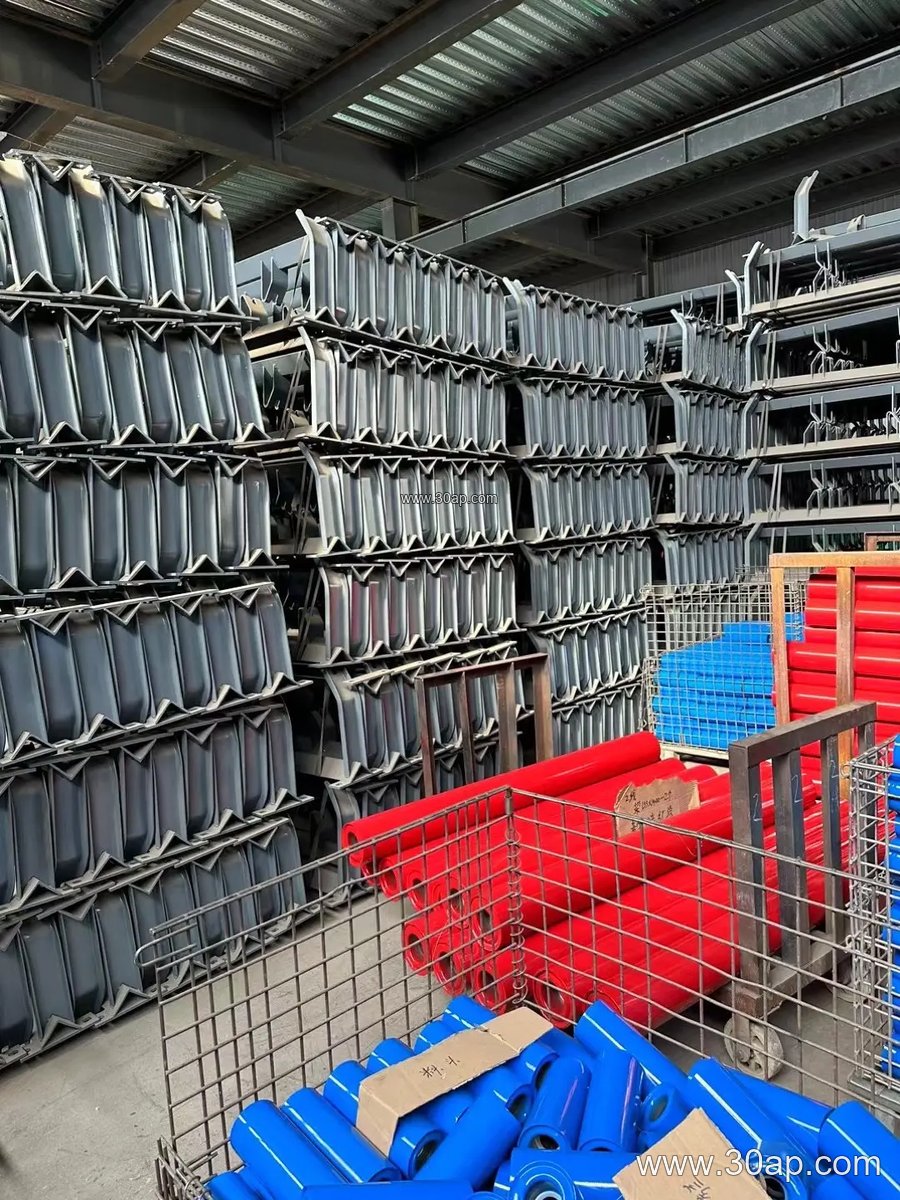
Typical structural details include:
- Welded or bolted frame with drilled mounting holes
- Roller seats positioned to match the chosen trough angle
- Reinforced center section for impact zones
- Optional adjustable seats for field tuning
Installation height, hole spacing, and crossbeam length are determined by belt width, trough angle, and the roller diameter used, so these values should be confirmed against the conveyor drawing rather than assumed.
Where It Fits in the Conveyor
The bracket sits on the carrying side, usually between the tail pulley area and the head pulley, and repeats along the line at a spacing set by the conveyor designer. It is common in stone crushing plants, aggregate yards, and power plant coal handling, where a heavy-duty conveyor belt runs at high tonnage. On a long overland line carrying iron ore or copper ore, the four-roll arrangement can help keep a wide belt stable through curves and load changes.
It also appears in fertilizer and grain silo systems, though there the belt and roller materials are often chosen for cleanliness and low dust. When the belt is a flame retardant conveyor belt or a heat resistant conveyor belt, the bracket still does the same mechanical job, but roller clearance and frame condition deserve closer checks.
Matching Bracket, Belt, and Roller
The bracket does not work alone. Belt width, roller diameter, and trough angle form a set. A B800 belt might run with Ø89 or Ø108 rollers at 30 or 35 degrees, while a B1200 line may use Ø133 rollers at 35 or 45 degrees. Wider belts such as B1400 or B1600 often call for larger rollers and a stronger frame. These are common reference combinations, not fixed rules, and the final choice follows the conveyor design.
| Reference Item | Common Range | Note |
|---|---|---|
| Belt width | B500 to B2200 | Frame length follows belt width |
| Trough angle | 20, 30, 35, 45 degrees | Adjustable brackets can change angle |
| Roller diameter | Ø89, Ø108, Ø133, Ø159, Ø194 | Selected with load and belt speed |
| Material | Angle steel, channel steel, bent plate | Coating depends on site conditions |
For a fabric core conveyor belt such as an EP conveyor belt or NN conveyor belt, the bracket mainly affects belt support and training. For a steel cord conveyor belt, the frame must be stiff enough to keep the idler rollers aligned, because misalignment on a high-tension belt wears both belt and rollers quickly. A rubber conveyor belt in a quarry may face sharp rock, so impact-resistant idler seats and a sturdy center section are worth discussing with the supplier.
Buyer Checklist
Before ordering, confirm the belt width, the required trough angle, the roller diameter, and the mounting hole pattern. Ask whether the bracket is fixed or adjustable, and check the frame material and surface treatment for the site. In a coal mining conveyor or an underground mining conveyor, flame retardant and anti-static properties of nearby components may matter, but the bracket itself should be specified by strength, fit, and corrosion protection.
Also check compatibility with the existing conveyor pulley height and with the idler roller series already in use. A bracket that fits the belt but not the roller shaft is a costly mismatch. Spare parts planning should include the bracket seats and fasteners, not only the rollers.
For buyers sourcing complete conveyor components, it helps to compare the four-roll idler bracket with the standard three-roll trough bracket and choose based on belt width, load, and maintenance access. The right frame keeps the belt supported, the rollers turning freely, and the whole conveyor line running with less downtime.