What a Guide Idler Bracket Does on a Conveyor
A guide idler bracket is the mounting component that holds a guide (training) idler in the correct position relative to the conveyor belt, keeping the belt centred as it runs. In practice, the bracket locates the idler so that its roller contacts the belt edge or surface at the angle the design requires, and it transfers the resulting side loads into the conveyor frame. On a coal handling line, a quarry conveyor or a cement plant transfer point, a small misalignment at this bracket can quickly become edge damage, spillage and uneven wear, so the part deserves more attention than its simple shape suggests.
The bracket works together with the belt, the conveyor pulley and the rest of the idler roller set. It is not a drive pulley, a tail pulley or a bend pulley, and it should never be treated as one. Those components transmit power and change belt direction; the guide idler bracket only positions a training idler. Confusing the two in a purchase enquiry is a common source of wrong parts.
Construction and Typical Materials
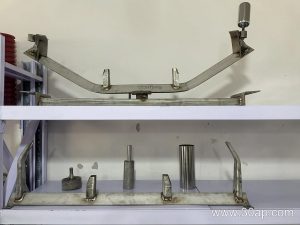
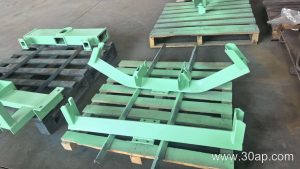
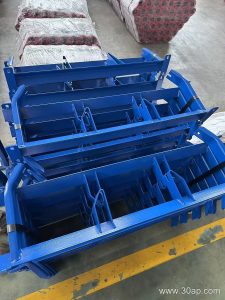
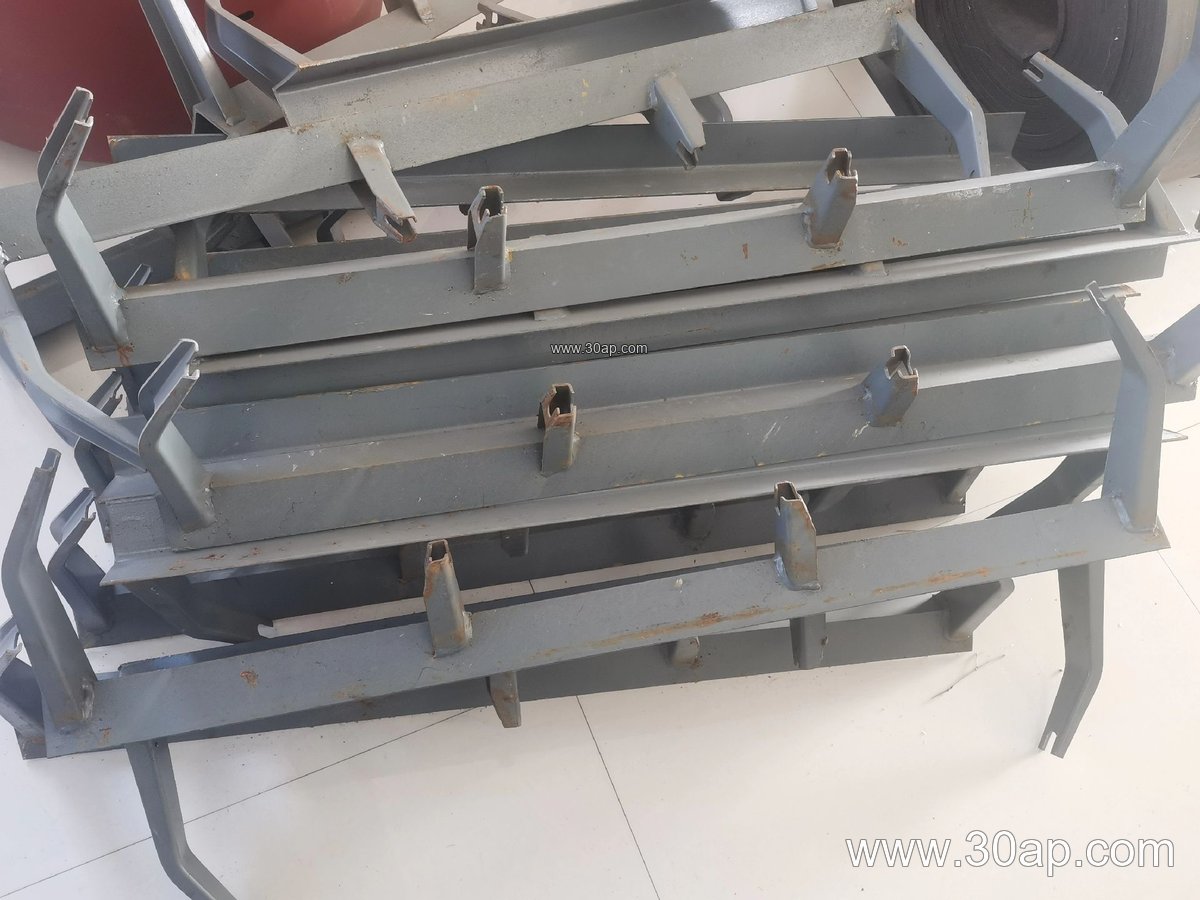
Most guide idler brackets are fabricated from angle steel, channel steel or folded steel plate, then drilled or punched for the idler shaft and the frame bolts. A well-made bracket keeps the idler axis square to the belt path, so the training action stays predictable. Welds should be continuous at load points, and the mounting face should be flat enough that the bracket does not rock when bolted down.
Designs vary by duty. Fixed guide brackets suit stable, well-aligned installations, while adjustable versions allow the guide idler position to be fine-tuned after commissioning or after the belt has taken its permanent stretch. Adjustment slots are useful on long overland lines and on mobile crushing plants where the frame is not perfectly rigid.
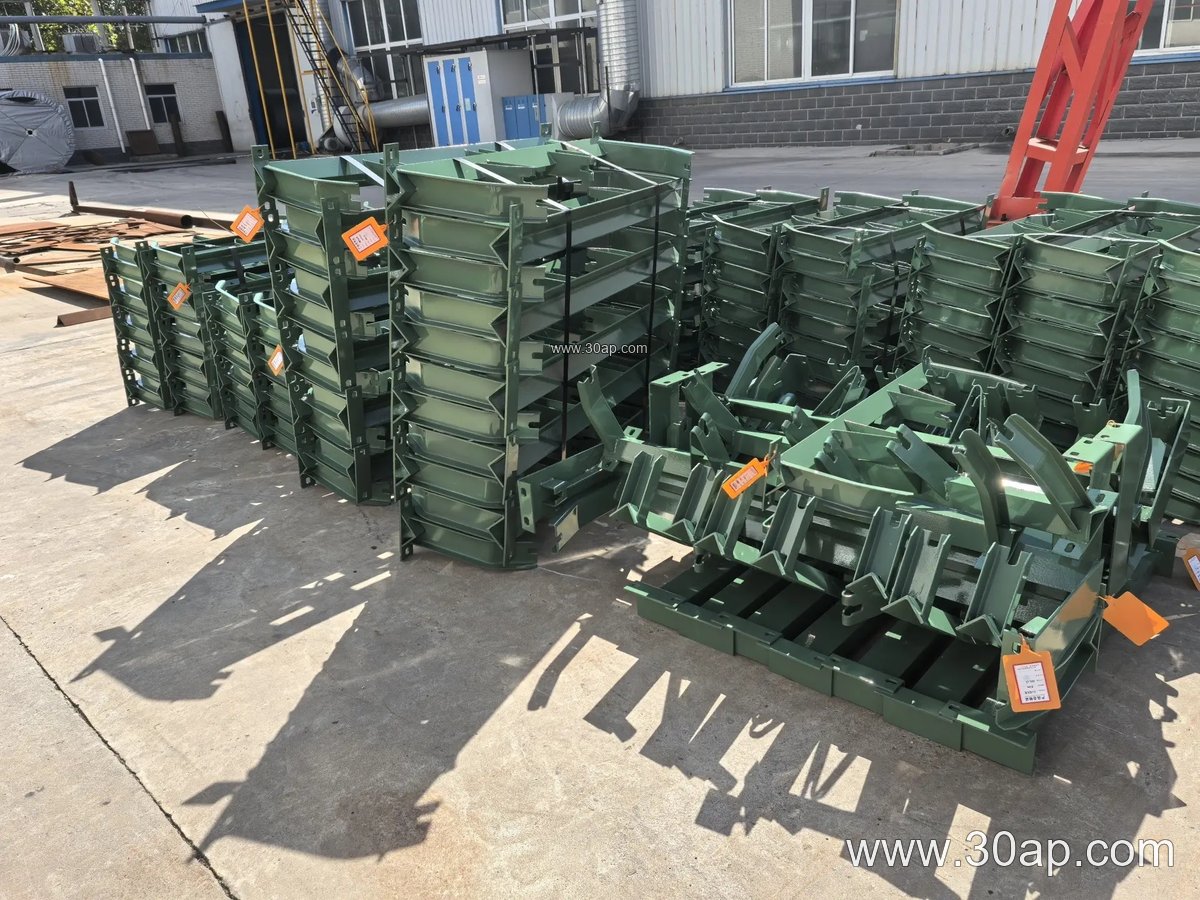
- Fabricated angle or channel frame bracket for general duty
- Folded plate bracket for lighter, cleaner profiles
- Slotted adjustable bracket for field alignment
- Heavy fabricated bracket for high-tension mainlines
Where It Fits in the Conveyor Layout
Guide idler brackets are usually placed just ahead of the loading point, on the return run near the tail, and at intervals along sections where the belt tends to wander. In a coal preparation plant or a power station coal yard they are often found on the inclined sections and after curves. In an aggregate or sand making line they appear where the belt receives uneven feed from a crusher. On a port ship loading conveyor they help hold the belt steady on long exposed runs.
The bracket is normally matched to the belt width and idler diameter used on that frame. Common belt widths include B500, B650, B800, B1000, B1200 and B1400, with larger frames available for B1600 up to B2200. Idler diameters typically fall in the Ø89, Ø108, Ø133, Ø159 and Ø194 range. Trough angles of 20, 30, 35 and 45 degrees are common on carrying idlers, but the guide bracket itself is usually set to a specific training position rather than a trough angle. Mounting hole spacing and beam length change with belt width and frame design, so these should always be confirmed against the actual conveyor drawing rather than assumed from the belt width alone.
Matching the Bracket to Belt and Idler
Selection starts with the belt. A heavy-duty mining conveyor belt or a steel cord conveyor belt running at high tension needs a stiffer bracket than a light fabric core belt on a short transfer conveyor. Abrasion resistant conveyor belt, heat resistant conveyor belt and flame retardant conveyor belt grades all behave differently at the edges, and the guide idler should not press harder than necessary on any of them. On a coal mining conveyor belt with a flame retardant cover, for example, excessive side force from a badly set bracket can wear through the cover quickly.
The idler diameter must match the bracket’s shaft opening and height. A B800 frame with Ø108 idlers needs a different bracket from a B1200 frame with Ø133 idlers, and the two should not be mixed. For reference, typical arrangements might look like this:
| Belt Width | Typical Idler Diameter | Bracket Note |
|---|---|---|
| B500 / B650 | Ø89 | Light frame, fixed or slotted |
| B800 / B1000 | Ø108 | General duty, adjustable option |
| B1200 / B1400 | Ø133 | Heavier fabricated bracket |
| B1600 / B1800 | Ø159 | High-tension mainline design |
| B2000 / B2200 | Ø194 | Heavy frame, confirm by drawing |
These are reference combinations only. The correct set is always the one on the conveyor general arrangement drawing, and a single belt width can be supplied with more than one idler diameter depending on load and speed.
What Buyers Should Check Before Ordering
- Belt width and frame drawing number, not just the belt size
- Idler shaft diameter, shaft length and flat position
- Bracket material and finish, especially for wet or dusty service
- Whether adjustment slots are needed for field alignment
- Bolt hole pattern and clearance to the conveyor bracket and frame
- Compatibility with the existing idler roller and conveyor pulley layout
For anyone sourcing conveyor components, it also helps to review the whole assembly: belt grade, idler roller spacing and conveyor bracket condition. A guide idler bracket that is correct on paper but bolted to a distorted frame will still let the belt wander. Buyers working with bulk material conveyor belt systems in mining, cement, steel or port applications should request a dimensioned drawing and confirm the fit before shipment. More component guidance is available at beltconveyorparts.com for conveyor belt, idler and pulley selection.