What a Striped Lagged Pulley Is
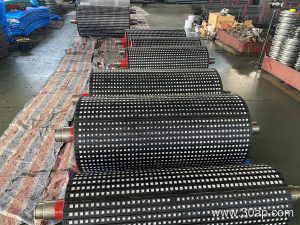
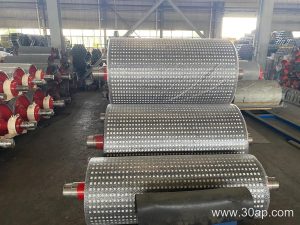
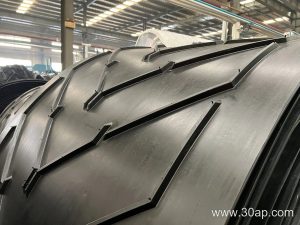
A striped lagged pulley is a conveyor pulley whose shell carries a rubber or ceramic lagging with a striped pattern rather than a plain smooth cover. The stripes can be parallel bands, diamond blocks or herringbone ribs, and the purpose is always the same: to raise the friction coefficient between the pulley face and the Rubber Conveyor Belt while letting water, dust and fines escape from the contact zone. In a quarry or a coal handling plant, that escape path matters, because a smooth wet pulley can slip long before the belt is fully loaded.
The product is also called a grooved lagging pulley or a ribbed lagging drum, and those names describe the same component. It is not a substitute for a drive pulley, a tail pulley or a bend pulley; it is a surface form that can be applied to those positions where extra grip or self-cleaning is needed.
How the Striped Surface Is Built
The base is a welded steel shell, machined and balanced, fitted with a shaft, hubs and bearing housings. Lagging is then bonded to the shell in one of three common ways: hot vulcanised rubber, cold bonded rubber, or ceramic tiles set in a rubber matrix. The striped pattern is either moulded into the rubber during vulcanisation or cut afterwards.
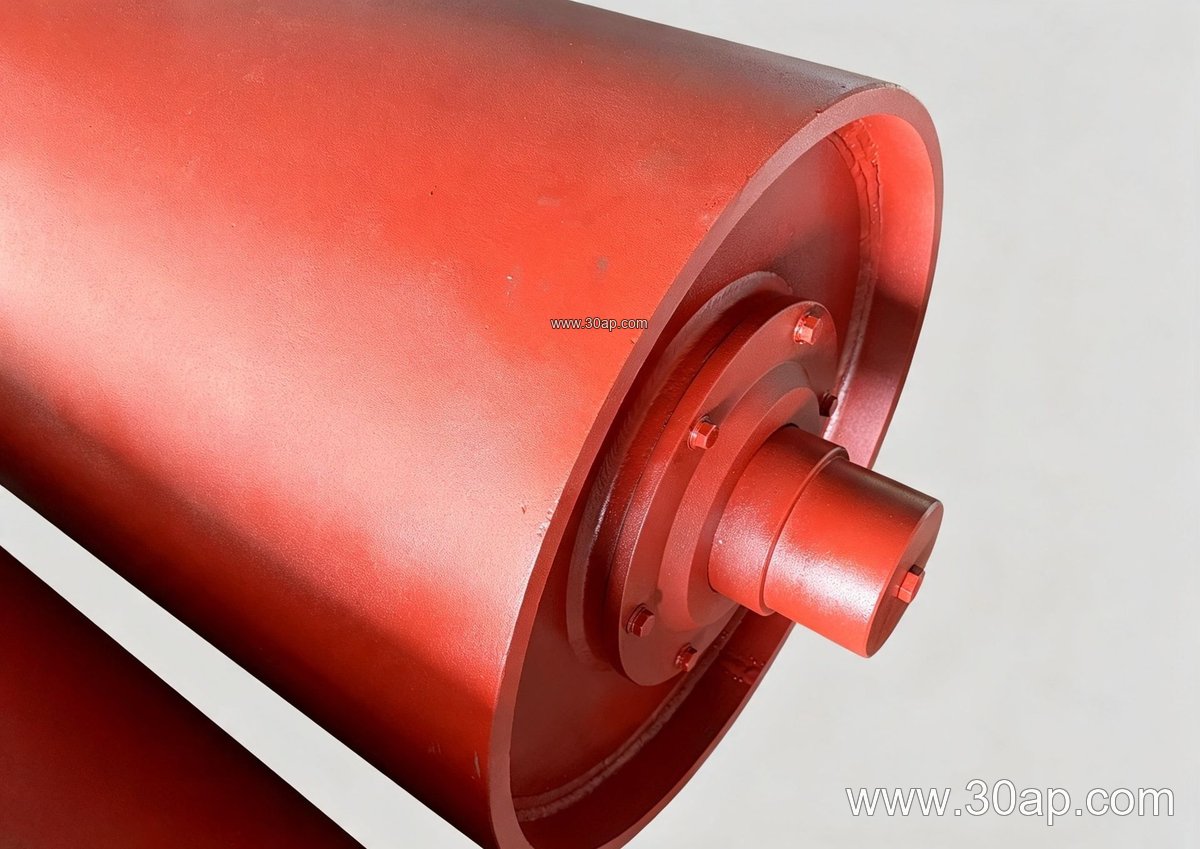
- Stripe depth and pitch are chosen so the belt does not bridge the grooves.
- Rubber lagging is usually 8, 10, 12, 15 or 20 mm thick, with thicker covers used on heavily loaded drives.
- Ceramic striped lagging gives higher grip in wet, gritty service but costs more and is heavier.
- Edge stripes are often left plain to protect the belt edge.
Because the grooves open to the side, the pulley throws off water instead of carrying it around. This is why striped lagging appears on drives that run outdoors, in wash-down areas, or after a wet screening stage.
Where the Pulley Fits on the Conveyor
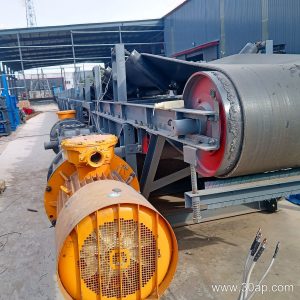
The most common location is the head or drive position, where the full belt tension and motor torque pass through the shell. A striped lagged drive pulley reduces slip on start-up, which is useful on a Mining Conveyor Belt carrying lump ore or on a Crusher Conveyor Belt that starts under load.
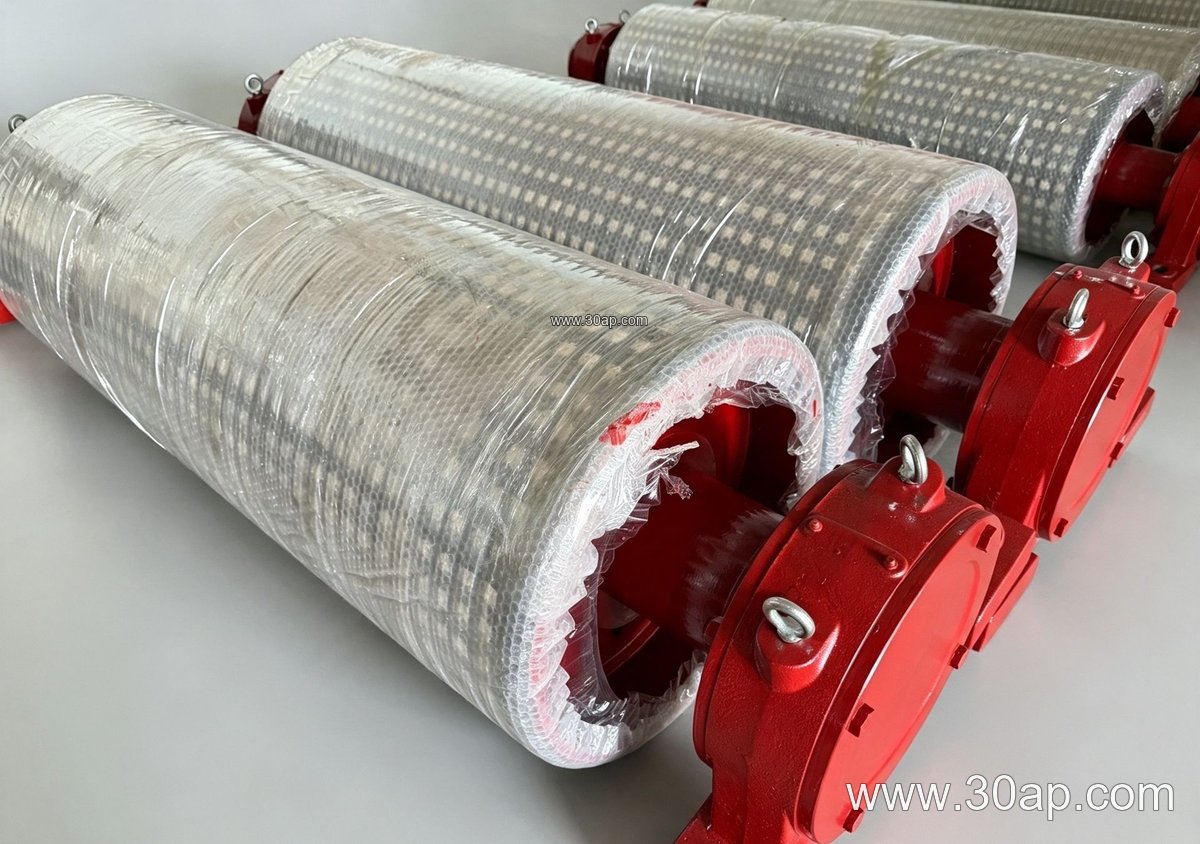
The same surface is also seen on tail pulleys in muddy conditions and on bend or snub pulleys where fines build up. In a coal preparation plant, a striped tail pulley helps shed slurry before it packs into the boot. In a cement plant, a striped bend pulley in the clinker circuit keeps dust from polishing the face. Note that a bend pulley only changes belt direction and carries far less torque than a drive pulley, so the lagging thickness and pattern are usually lighter there.
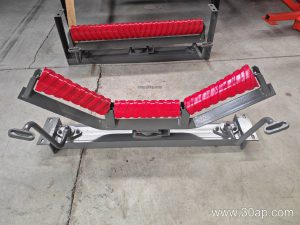
Typical matching hardware includes the conveyor bracket, bearing housings, and the idler roller set on the carrying side. The pulley must be aligned with the frame so the belt tracks centrally across the striped face.
Sizes and Combinations Buyers Commonly Ask About
Dimensions follow the conveyor design, not a fixed table. The shell face is normally wider than the belt, and the diameter is set by the required torque, belt speed and wrap angle. The values below are reference ranges only.
| Belt width | Typical face width | Example diameter |
|---|---|---|
| B500 | about 600 mm | Ø320 |
| B650 | about 750 mm | Ø400 |
| B800 | about 950 mm | Ø500 |
| B1000 | about 1150 mm | Ø630 |
| B1200 | about 1400 mm | Ø800 or Ø1000 |
| B1400 | about 1600 mm | Ø800 or Ø1000 |
| B1600 | about 1800 mm | Ø1000 or Ø1250 |
| B1800 | about 2000 mm | Ø1250 |
Shaft diameter is calculated from torque and bearing load, not taken from belt width. Common shaft sizes run from Ø50 up to Ø200 mm depending on the duty.
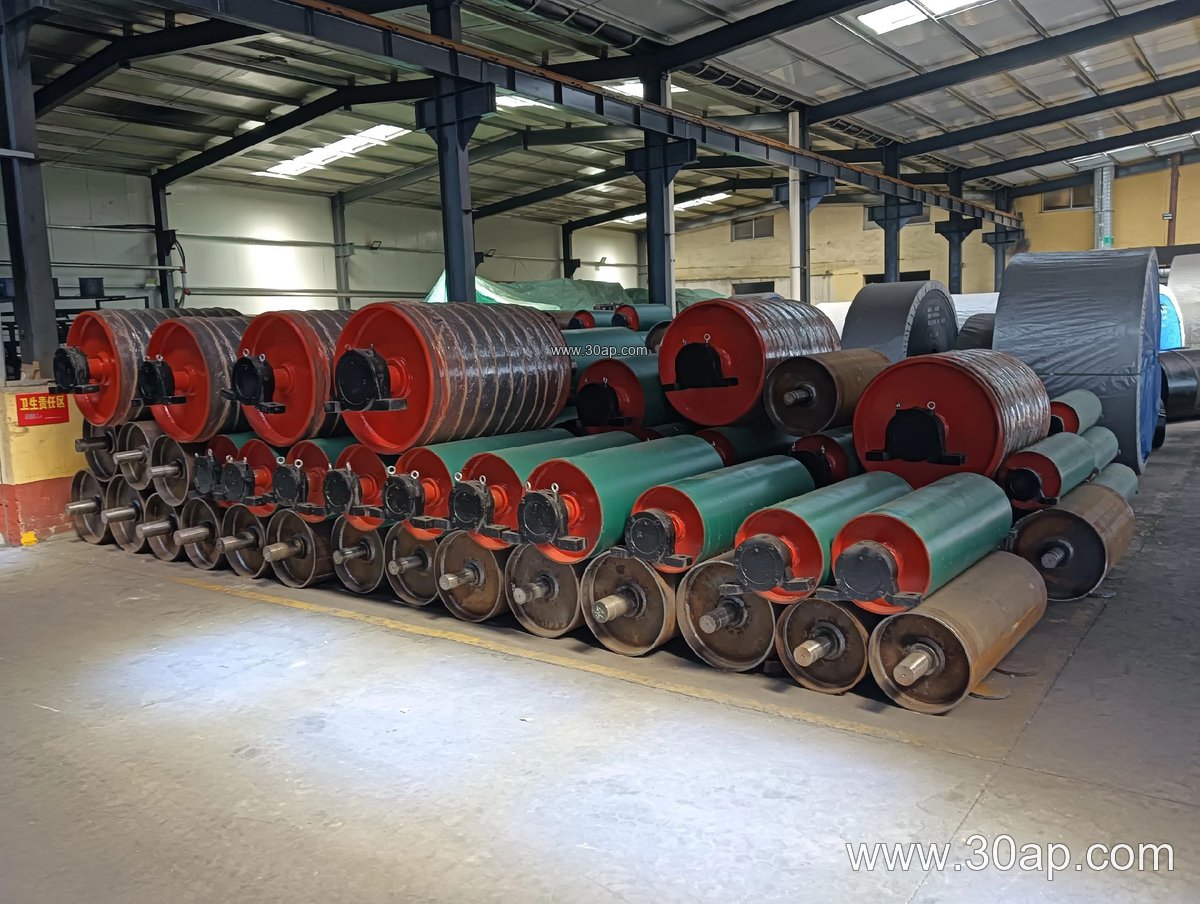
What to Check Before Ordering
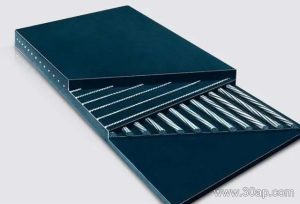
Start with the belt specification. A heavy Steel Cord Conveyor Belt or a multi-ply Fabric Core Conveyor Belt transfers different loads to the pulley face, and the lagging hardness should suit the cover compound. A soft rubber lagging grips an abrasive Abrasion Resistant Conveyor Belt well, while a hard, thin cover may suit a high-tension steel cord line.
- Confirm position: drive, tail, bend, snub or take-up.
- State belt width, pulley diameter, face width and shaft size.
- Specify lagging type, pattern and thickness.
- Describe the environment: wet, dusty, oily, or high temperature.
- Ask for dynamic balance and run-out tolerance for high-speed drives.
Striped lagging is not automatic on every pulley. On a clean, dry, low-tension tail position, a plain or diamond cover may be enough. The striped form earns its place where slip risk or carry-back is real.
Maintenance Notes
Inspect the stripe grooves at each shutdown. Packed material in the grooves cancels the self-cleaning benefit and can cause uneven wear. Check bond lines for lifting, especially on cold bonded covers, and re-torque bearing housing bolts after the first weeks of running. Keep the belt tracking straight so the stripes wear evenly across the face.