What a Vertical Idler Bracket Does on a Conveyor
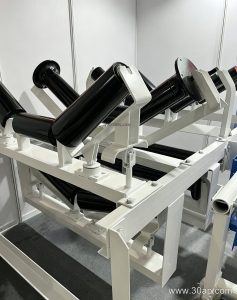
A vertical idler bracket is a support component that holds an idler roller in a near-vertical or steeply inclined position, usually on the return side or at a transition zone of a belt conveyor. Rather than carrying the belt on a flat or troughed path, this bracket guides the belt edge or the return strand so that the idler contacts the belt at a controlled angle. In heavy material handling, the part is often simply called a vertical bracket or a vertical idler support, and it is frequently grouped with other conveyor brackets that make up the idler station.
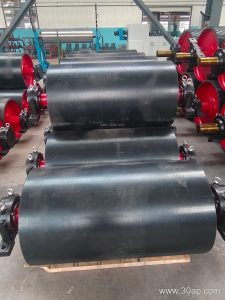
The bracket is not a pulley and should not be confused with a drive pulley, tail pulley or bend pulley. Those components transmit power or change the belt path. The vertical idler bracket only positions an idler roller, yet its alignment has a direct effect on belt tracking, edge wear and the service life of a rubber conveyor belt.
Construction and Mounting Details
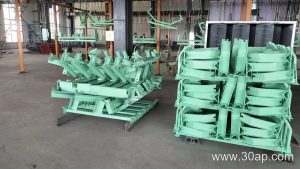
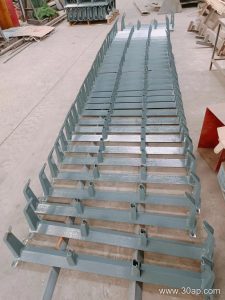
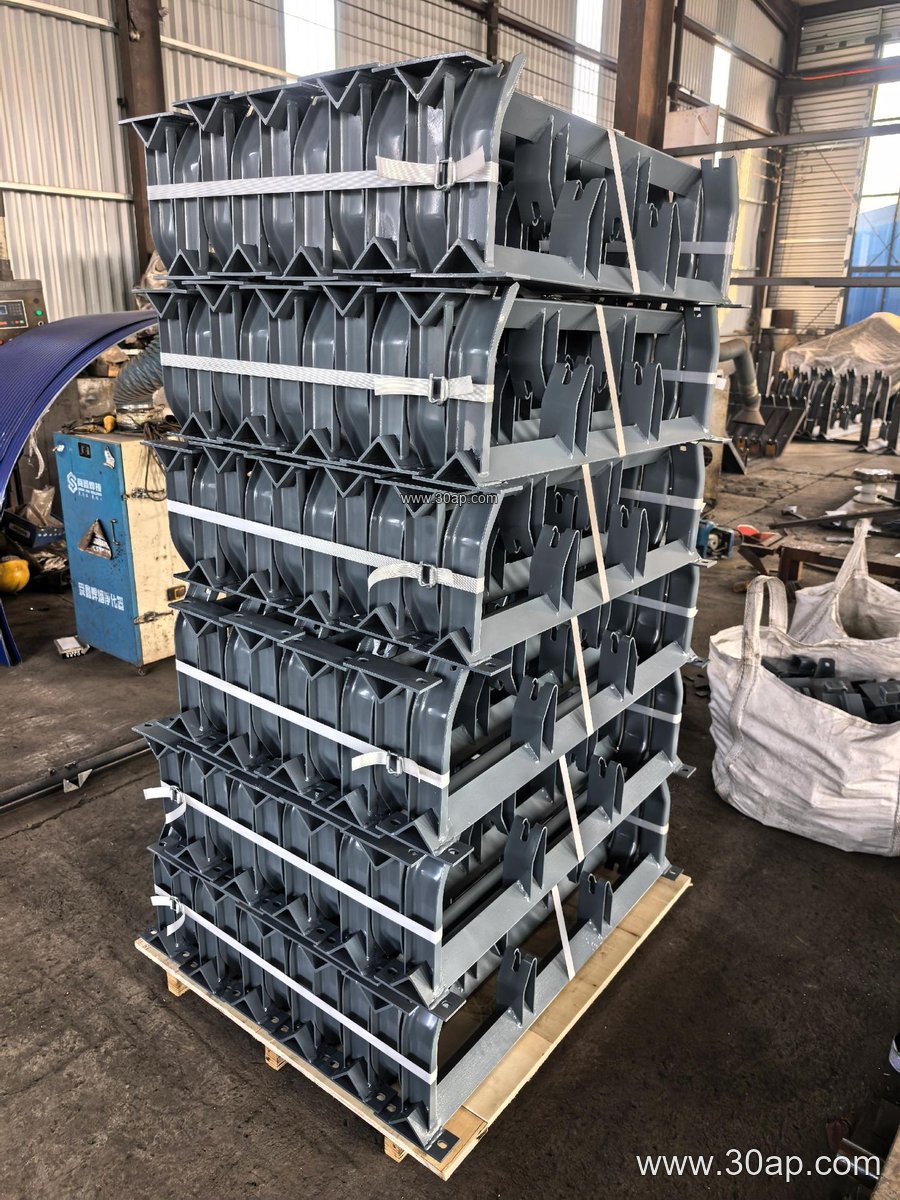
Most vertical idler brackets are fabricated from angle steel, channel steel or folded steel plate. The frame is welded or bolted, then drilled with mounting holes that match the conveyor stringer or the cross beam. Because the bracket must resist vibration and occasional impact, the weld quality and the thickness of the base plate matter as much as the paint finish.
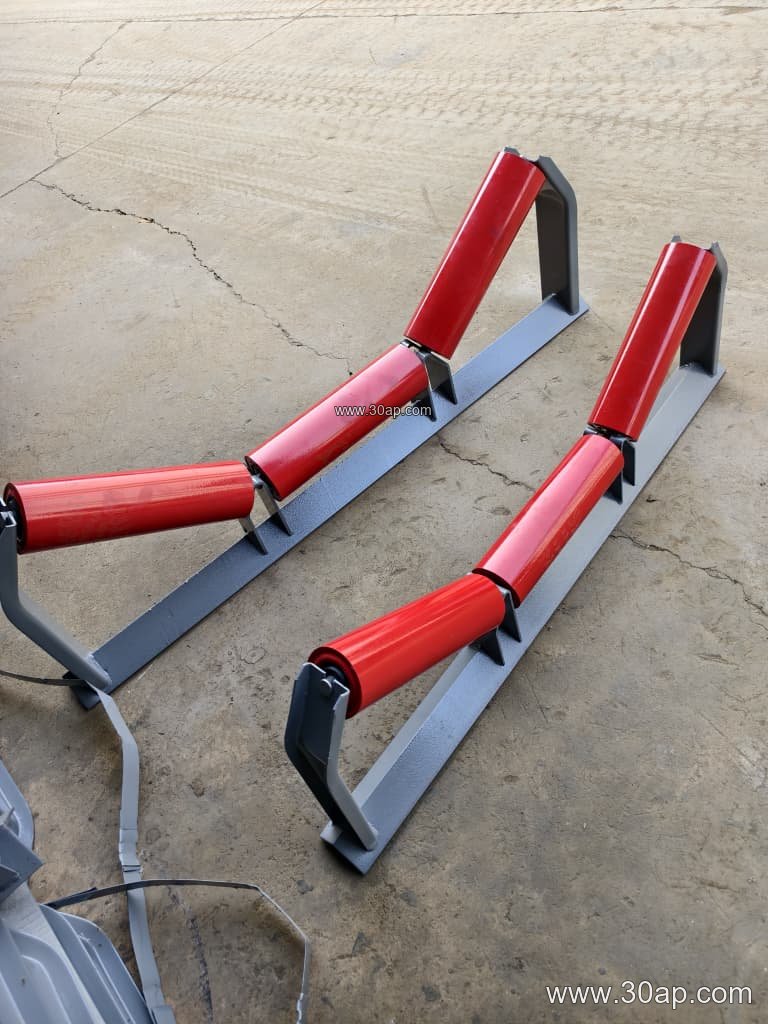
Common configurations include:
- Fixed vertical brackets welded or bolted to the conveyor frame
- Adjustable brackets with slotted holes for fine tracking correction
- Brackets with a reinforced gusset for high-load return positions
- Bolt-on designs that allow replacement without cutting the frame
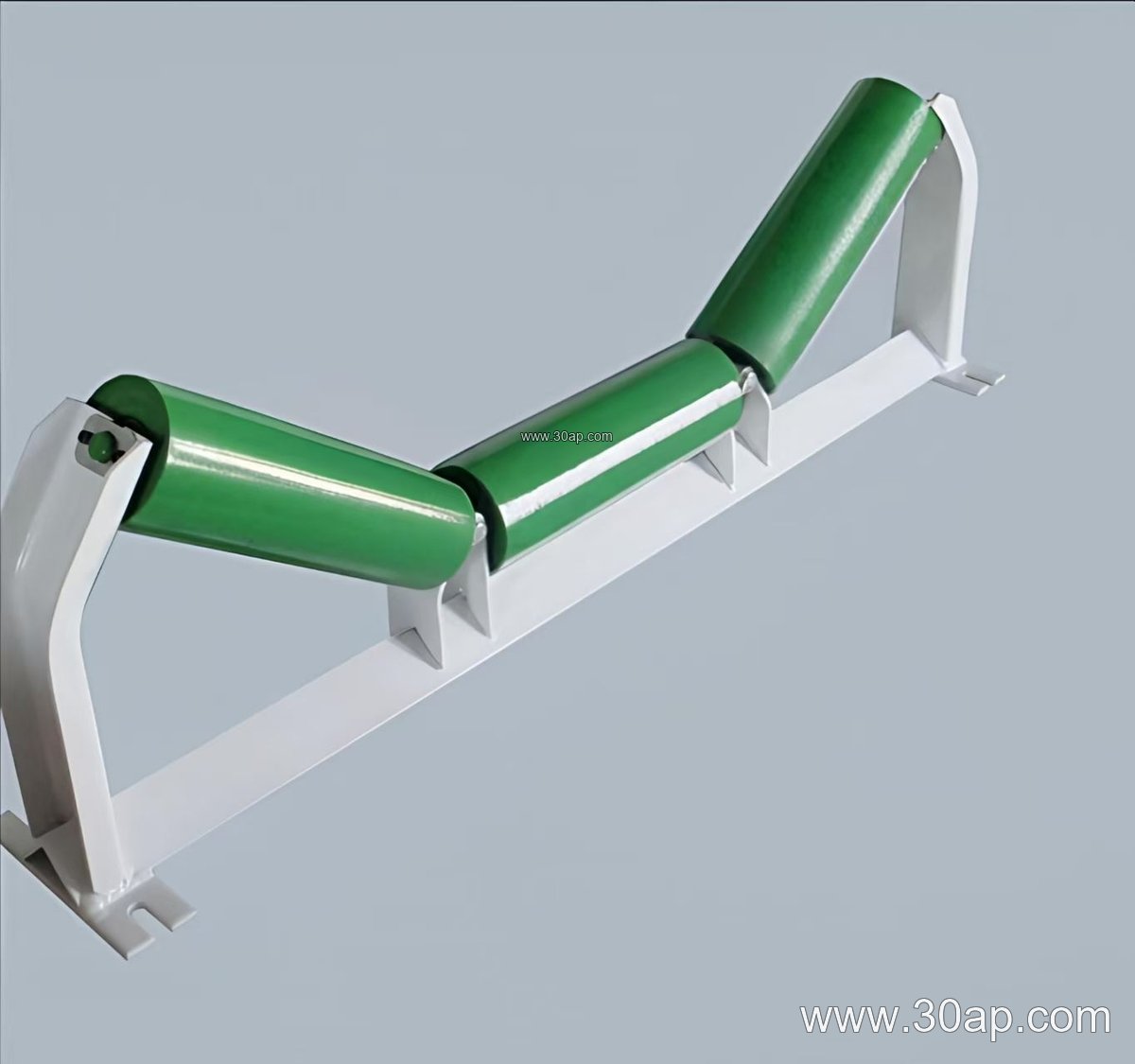
Mounting hole spacing and cross beam length are determined by belt width, trough angle and the idler diameter specified in the conveyor design. They are not universal figures, so a buyer should always confirm the interface dimensions before ordering.
Where Vertical Brackets Are Used
These brackets appear in quarry and aggregate lines, in cement plants, in power plant coal handling, and in iron ore or limestone operations. They are also found in crushing and screening circuits where the belt must be guided around tight transfer points. In a typical aggregate conveyor, a vertical idler bracket may sit near the tail area to keep the return belt centered before it enters the next idler station.
When the material is abrasive, pairing the bracket with a well-chosen abrasion resistant conveyor belt reduces edge damage. In dusty coal mining conveyors, a flame retardant conveyor belt and correctly aligned brackets work together to limit misalignment and spillage. For long overland lines carrying bulk material, the bracket layout is usually reviewed together with the idler roller spacing and the conveyor pulley arrangement.
Matching Bracket, Belt Width and Idler Diameter
Selection starts with the belt width and the idler diameter already used on the conveyor. Reference values often seen in design documents include B500 to B2200 belt widths, trough angles of 20, 30, 35 and 45 degrees, and idler diameters such as Ø89, Ø108, Ø133, Ø159 and Ø194. A 1.5 to 2 degree forward tilt is sometimes applied to self-aligning idler brackets.
Typical reference combinations are shown below. These are examples for orientation, not fixed rules.
| Belt width | Trough angle | Idler diameter | Typical use |
|---|---|---|---|
| B650 | 30 degrees | Ø89 | Light aggregate line |
| B800 | 35 degrees | Ø108 | Quarry transfer |
| B1000 | 35 degrees | Ø133 | Cement plant clinker |
| B1200 | 45 degrees | Ø133 | Coal handling |
| B1400 | 35 degrees | Ø159 | Iron ore conveyor |
| B1600 | 45 degrees | Ø159 | Heavy bulk material |
| B1800 | 35 degrees | Ø194 | Large port conveyor |
A single belt width can be matched with more than one trough angle and more than one idler diameter, depending on load, speed and belt stiffness. The shaft diameter should come from the idler manufacturer data, not from the belt width alone.
Buyer Checklist and Maintenance Notes
Before ordering a vertical idler bracket, confirm the belt width, the existing idler roller diameter, the mounting hole pattern and the required trough angle. Ask whether the bracket is fixed or adjustable, and check the material and surface treatment for the site conditions. For dusty or corrosive locations, a galvanized or heavily painted finish is often preferred.
During operation, inspect the bracket for loose bolts, bent arms and worn mounting holes. A bracket that has shifted can push the belt against the frame, causing edge damage that is far more expensive than the bracket itself. Keep spare brackets for the most heavily loaded stations, and check alignment after any idler roller replacement.
Related equipment on the same conveyor, such as the conveyor pulley, the conveyor belt and each idler roller, should be reviewed as one system. A small correction at the vertical idler bracket often improves tracking across the whole conveyor line.