What a Belt Conveyor Idler Frame Does
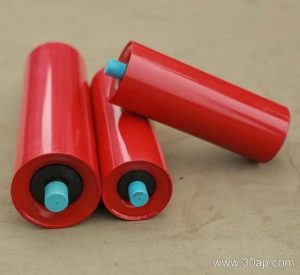
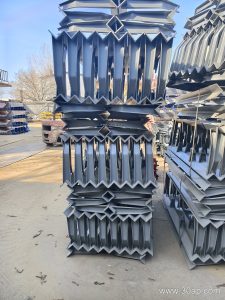
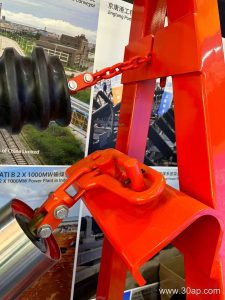
A belt conveyor idler frame is the steel structure that holds the idler rollers in position along the carrying and return sides of a conveyor. Sometimes called a conveyor idler bracket or idler support frame, it keeps each roller at the correct angle and spacing so the conveyor belt runs smoothly under load. Without a rigid, well-aligned frame, even good rollers will drift, the belt will mistrack, and spillage will increase.
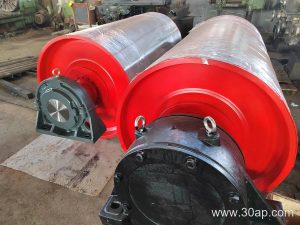
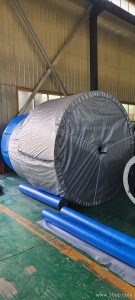
The frame works together with the conveyor belt, the idler roller, and the conveyor pulley at each end of the system. Drive, tail, and bend pulleys each have their own function and are not interchangeable with idler frames; the frame is a separate support component that carries the belt between those pulleys.
How the Frame Is Built
Most frames are fabricated from angle steel, channel steel, or folded steel plate. The crossbeam length and mounting hole spacing are determined by belt width and trough angle, so they are not fixed numbers. A typical frame includes:
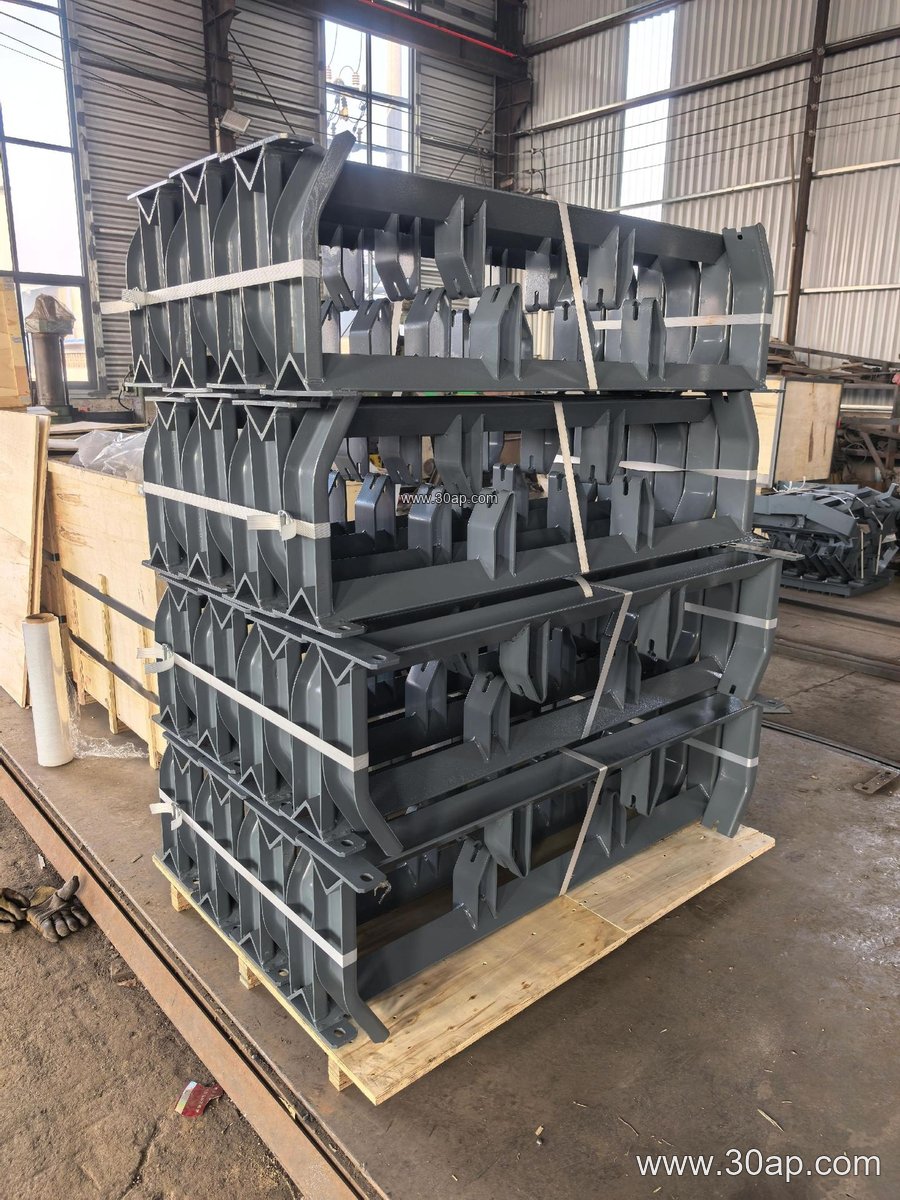
- A crossbeam that spans the conveyor structure
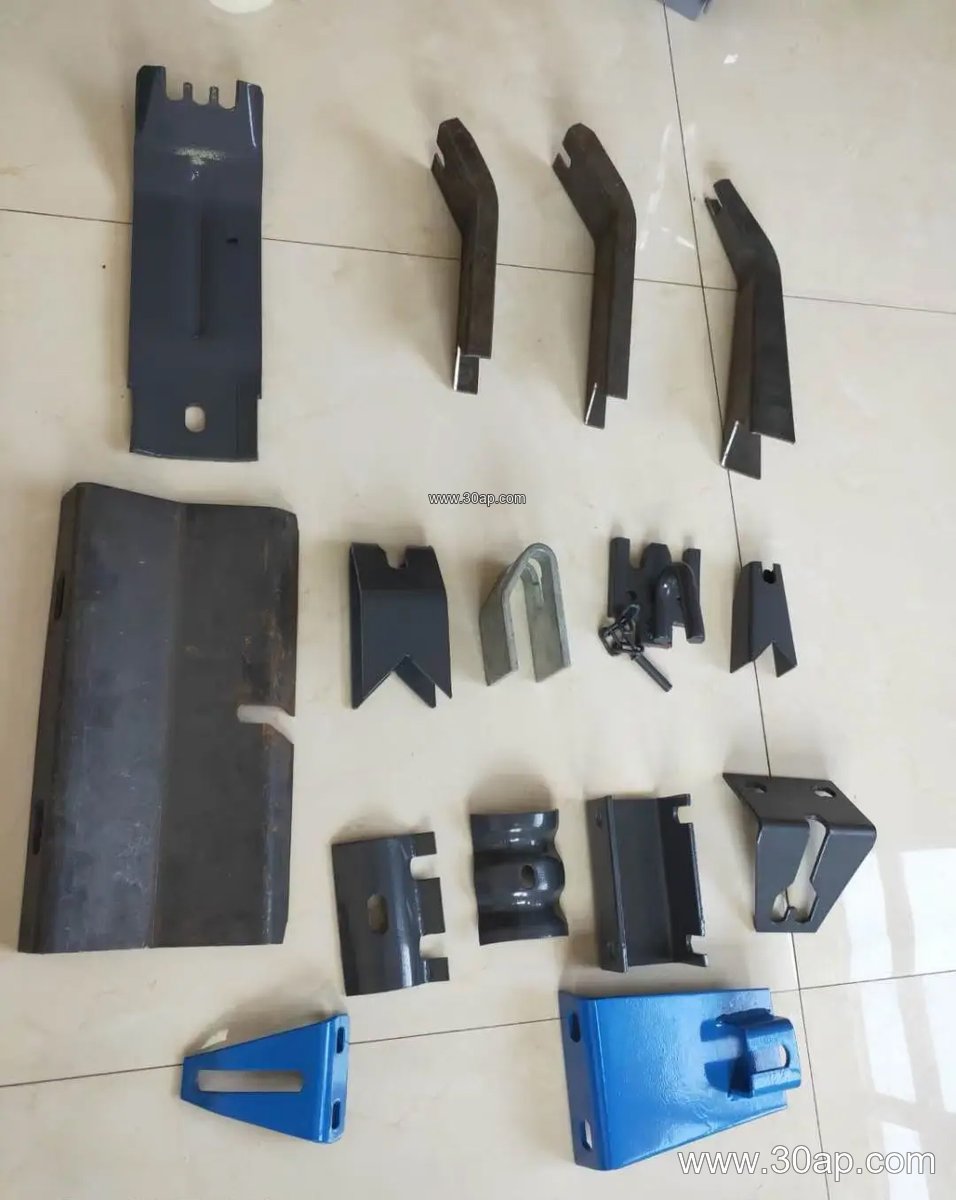
- Brackets or seats that locate each idler roller
- Mounting holes for bolting to the stringer or conveyor bracket
- Reinforcement at the joints for impact and vibration resistance
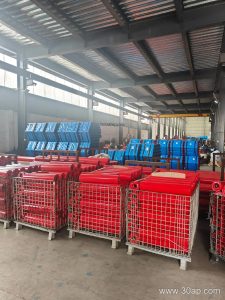
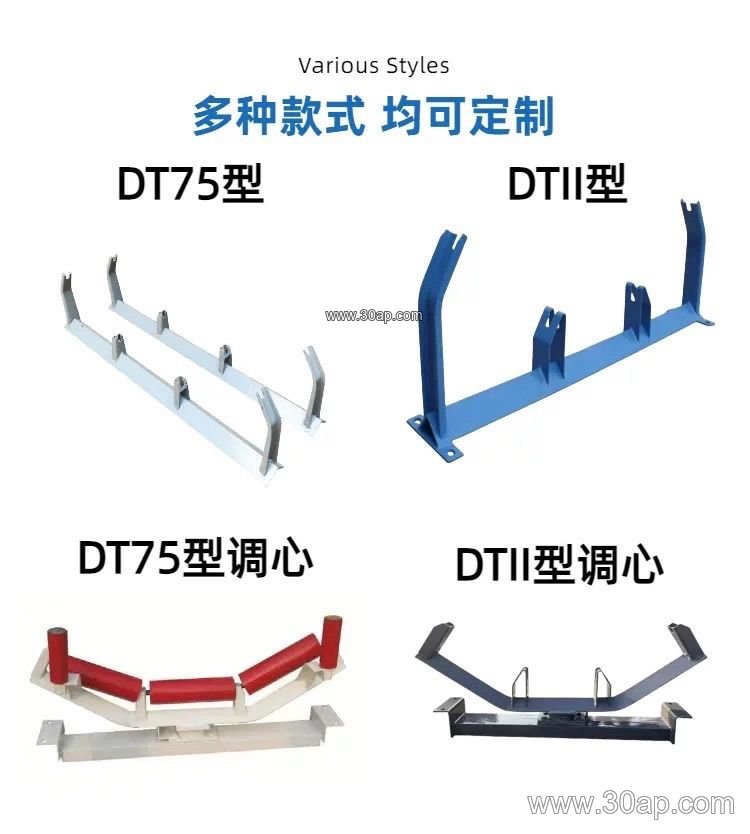
Common frame types include trough frames, transition frames, return frames, V-return frames, impact frames, self-aligning frames, and adjustable frames. Each type has a specific position on the conveyor and should not be swapped for another without checking the belt path.
Trough Angle, Belt Width, and Roller Diameter
Trough angle affects how much material the belt can carry and how the belt sits on the rollers. Common angles are 20, 30, 35, and 45 degrees. Adjustable frames allow the angle to be changed within a range, while fixed frames are built for one angle. Forward tilt of about 1.5 to 2 degrees is sometimes used on carrying frames to help belt tracking.
Belt width and roller diameter are selected together with the conveyor design. Common belt widths include B500, B650, B800, B1000, B1200, B1400, B1600, B1800, B2000, and B2200. Common roller diameters include Ø89, Ø108, Ø133, Ø159, and Ø194. A combination such as B800 with 35 degrees and Ø108, or B1200 with 45 degrees and Ø133, is common in bulk handling, but no single belt width is limited to one angle or one roller diameter.
| Frame Type | Typical Position | Common Belt Width | Common Roller Diameter |
|---|---|---|---|
| Trough frame | Carrying side | B500 to B2200 | Ø89 to Ø194 |
| Transition frame | Near pulleys | B650 to B1800 | Ø108 to Ø159 |
| Impact frame | Load point | B800 to B2000 | Ø108 to Ø194 |
| V-return frame | Return side | B650 to B1600 | Ø89 to Ø133 |
| Adjustable frame | Carrying side | B500 to B1400 | Ø89 to Ø133 |
Values above are common references. Actual mounting dimensions are set by the conveyor design, not by belt width alone.
Where These Frames Are Used
Idler frames appear in almost every bulk handling line. In a limestone quarry or crushing and screening plant, impact frames sit under the crusher discharge to absorb falling rock. In a coal handling system or power plant coal yard, flame retardant and anti-static belt grades are common, and the frames must be aligned carefully to avoid belt edge wear. Cement plants, steel sintering lines, and port ship loaders also rely on sturdy frames to keep long conveyors tracking.
Belt selection and frame selection go together. A heavy-duty mining conveyor belt or an abrasion resistant conveyor belt may need wider rollers and stronger frames than a light duty line. Where belts such as EP conveyor belt, NN conveyor belt, or steel cord conveyor belt are used, the frame must match the belt stiffness and load. In food or fertilizer plants, a food grade conveyor belt or chemical resistant conveyor belt may run on stainless or coated frames, and the frame surface should be checked for corrosion resistance.
What Buyers Should Check
- Confirm the belt width, trough angle, and roller diameter as a set, not separately.
- Ask for the mounting hole spacing and crossbeam length for the specific conveyor structure.
- Match frame type to position: trough, transition, impact, return, or self-aligning.
- Check material thickness and coating for the environment, especially in washdown or corrosive areas.
- Confirm that frames work with the existing conveyor bracket and stringer layout.
A well-chosen idler frame keeps the belt supported, reduces roller wear, and helps the whole conveyor run with less maintenance. Buyers who compare frame type, dimensions, and belt duty together usually avoid costly rework later.