What a Port Conveyor Pulley Does
A port conveyor pulley is the rotating cylindrical component that drives, redirects, or tensions the conveyor belt in a bulk terminal handling system. Unlike a carrying idler roller, which supports the belt along its route, the pulley transmits torque or changes belt direction at key points in the conveyor structure. In a ship loading or unloading line, a single port conveyor pulley failure can interrupt the entire material flow, so the component is usually specified with more attention to duty cycle, corrosion exposure, and belt tension than a general-purpose pulley.
The same assembly is also called a conveyor drum or belt pulley in terminal documentation. Drive pulleys, tail pulleys, and bend pulleys are distinct subtypes, and each has its own design logic; they are not interchangeable terms even though they share a common cylindrical body.
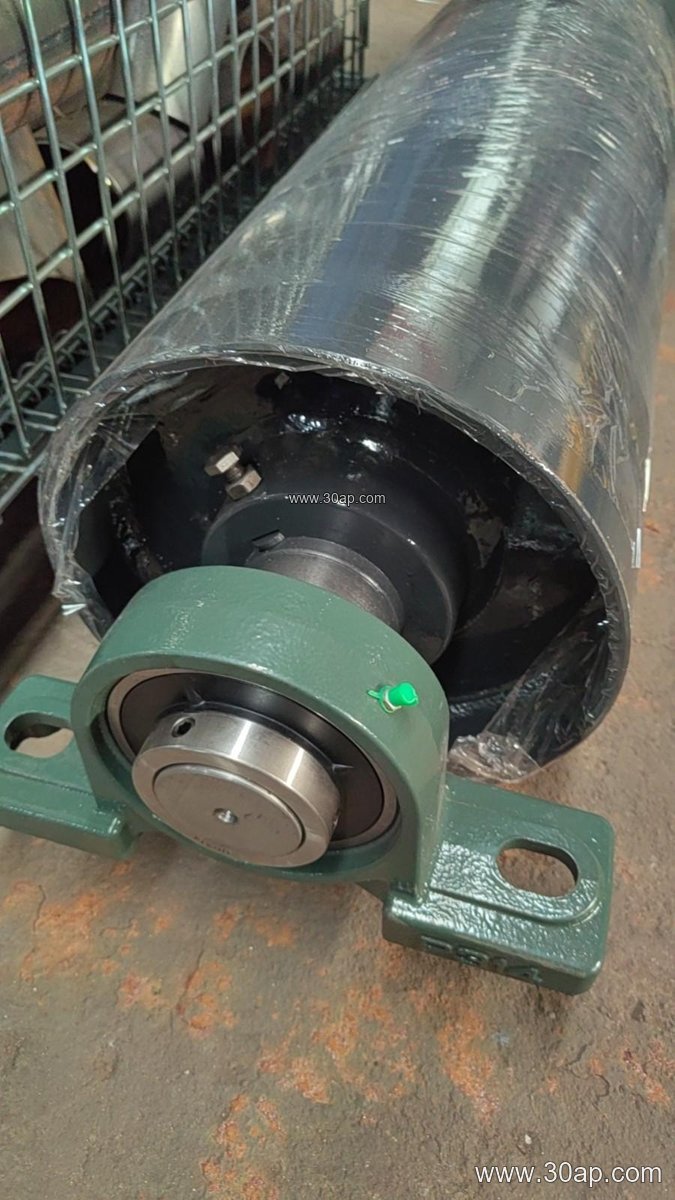
Construction Details and Surface Options
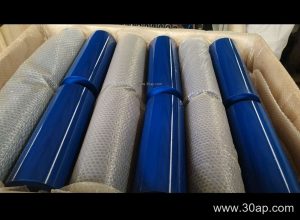
A typical port conveyor pulley consists of a welded steel shell, end discs, a shaft, bearing housings, and a lagging layer. The shell diameter and face width are matched to the belt width and the required torque. Lagging improves grip and protects the shell from abrasive cargo such as iron ore or limestone dust.
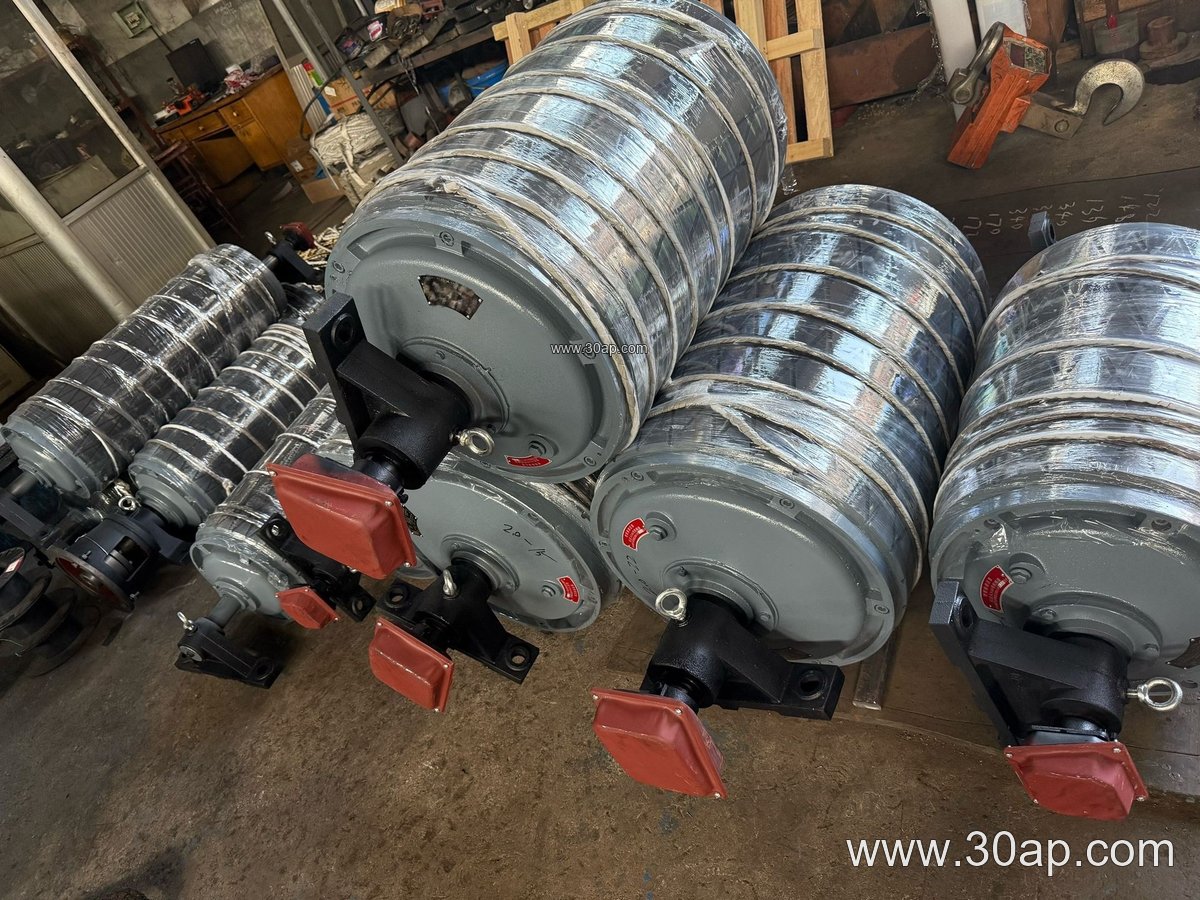
- Plain surface for light-duty redirects where slip is not a concern
- Diamond lagging for general drive grip in damp port air
- Herringbone lagging for better self-cleaning on wet bulk cargo
- Ceramic lagging for high-torque drives handling abrasive ore
- Hot vulcanized rubber for heavy-duty drive pulleys with long service intervals
Lagging thickness commonly falls in the 8 to 20 mm range depending on the drive duty. A B1200 × Ø1000 drive pulley may carry 12 mm diamond lagging, while a B800 × Ø500 tail pulley often uses a thinner plain or rubber sheet. These combinations are examples, not fixed rules.
Matching Pulley to Belt Width and Shaft Load
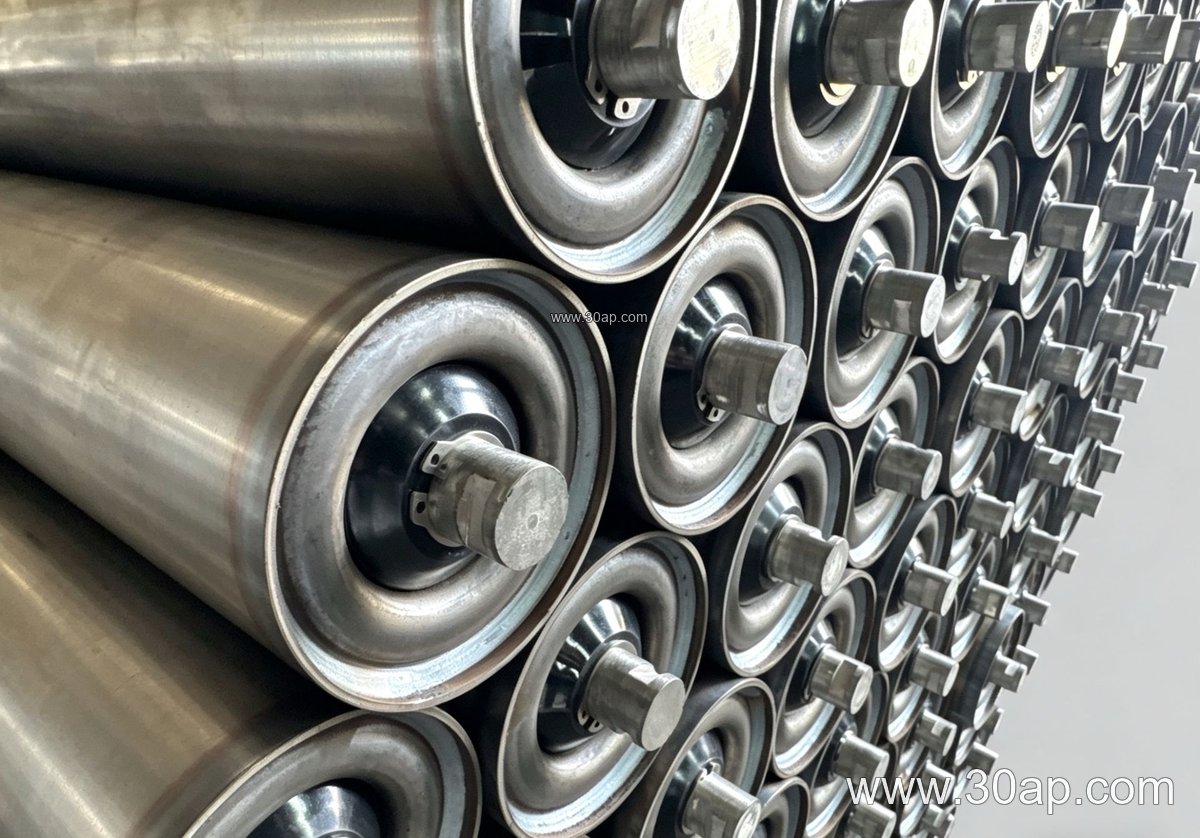
Pulley face width usually exceeds belt width so the belt can track without edge contact. Common references include B650 with a roughly 750 mm face, B1000 with about 1150 mm, and B1400 with around 1600 mm. These are starting references; the final face width should follow the conveyor design and the belt manufacturer’s tracking allowance.
Shaft diameter is determined by torque and radial load, not by belt width alone. Typical shaft sizes range from Ø50 to Ø200, and a B1200 drive pulley may use a larger shaft than a B1400 bend pulley if the drive torque is higher. Buyers should ask for the calculated shaft load rather than accepting a shaft size selected only from belt width.
| Reference | Typical range | Note |
|---|---|---|
| Shell diameter | Ø200 to Ø1800 | Selected by belt tension and wrap angle |
| Face width | 500 mm to 2200 mm | Usually wider than the belt |
| Shaft diameter | Ø50 to Ø200 | Based on torque and bearing load |
| Lagging thickness | 8, 10, 12, 15, 20 mm | Depends on grip and abrasion |
Where It Fits in a Port Terminal
In a coal or ore terminal, the head or drive pulley sits at the discharge end and pulls the loaded belt. The tail pulley at the loading point redirects the return side, and bend or take-up pulleys manage tension along the route. A ship loader conveyor may use a compact bend pulley to route the belt around a boom pivot, while a stockyard conveyor uses a larger drive pulley for long-distance haulage.
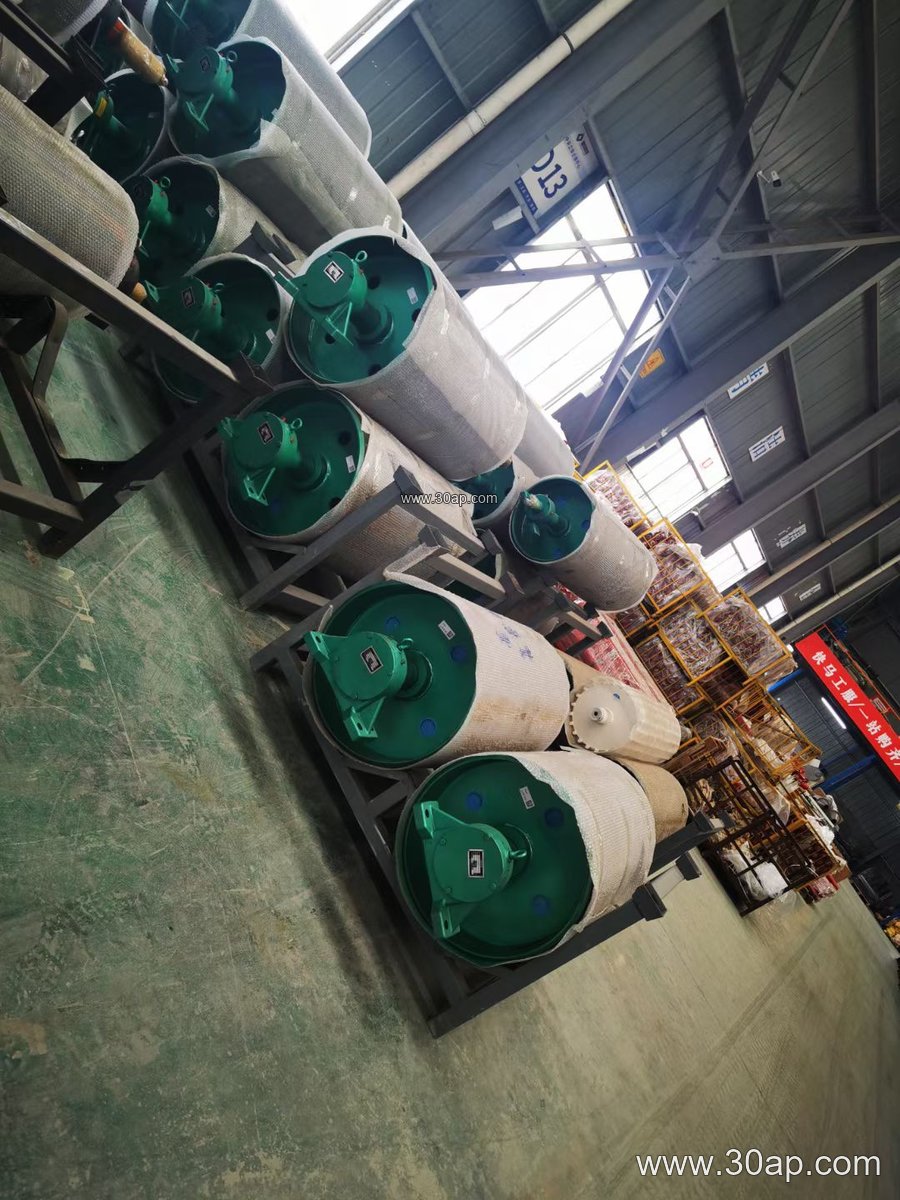
The pulley works together with the conveyor belt, conveyor bracket frames, and idler rollers. In dusty or salt-air environments, sealed bearing housings and corrosion-resistant coatings matter as much as the lagging pattern.
Buyer Checklist Before Ordering
- Confirm the pulley role: drive, tail, bend, take-up, or snub
- Provide belt width, belt type, and maximum operating tension
- State the lagging preference and thickness
- Specify shaft diameter from calculated torque, not from belt width
- Check bearing type, sealing, and lubrication access
- Confirm face width and allowable overhang
For terminals handling abrasive cargo, an abrasion resistant conveyor belt paired with ceramic-lagged drive pulleys often extends service life. In coal handling, a flame retardant conveyor belt and fire resistant conveyor belt specification should be matched with pulley lagging that does not retain heat. A steel cord conveyor belt or EP conveyor belt with high tension may require a larger shell diameter to reduce bending stress. Buyers can review pulley and belt combinations at rubber-conveyor-belt.com and check related drum options at conveyor-pulley.com before finalizing a terminal specification.