What a Self-Aligning Idler Bracket Does
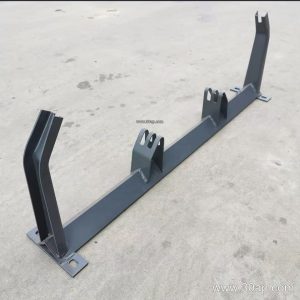
A self-aligning idler bracket is the mounting frame that holds a training idler assembly and lets it pivot so the belt can be steered back to center. Instead of fixing the roller rigidly to the conveyor stringer, this bracket sits on a vertical pivot or a pair of swivel points, so when the belt drifts sideways the idler tilts and produces a small correcting force. Operators in quarries, cement plants and coal-fired power stations often call it a self-tracking idler frame or training idler bracket, and the name refers to the same component: a pivoting support for a self-aligning idler roller.
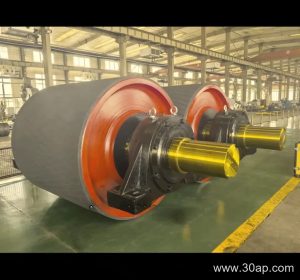
It is not a drive pulley, tail pulley or bend pulley, and it should not be confused with a plain fixed troughing bracket. Its job is lateral guidance, not power transmission or belt tensioning.
How the Bracket Is Built
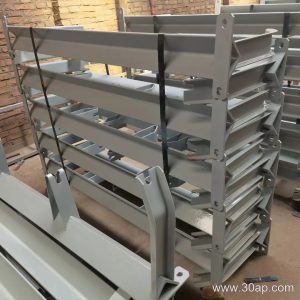
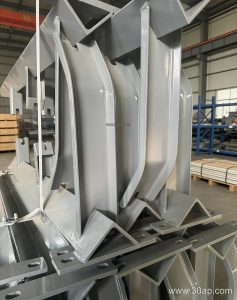
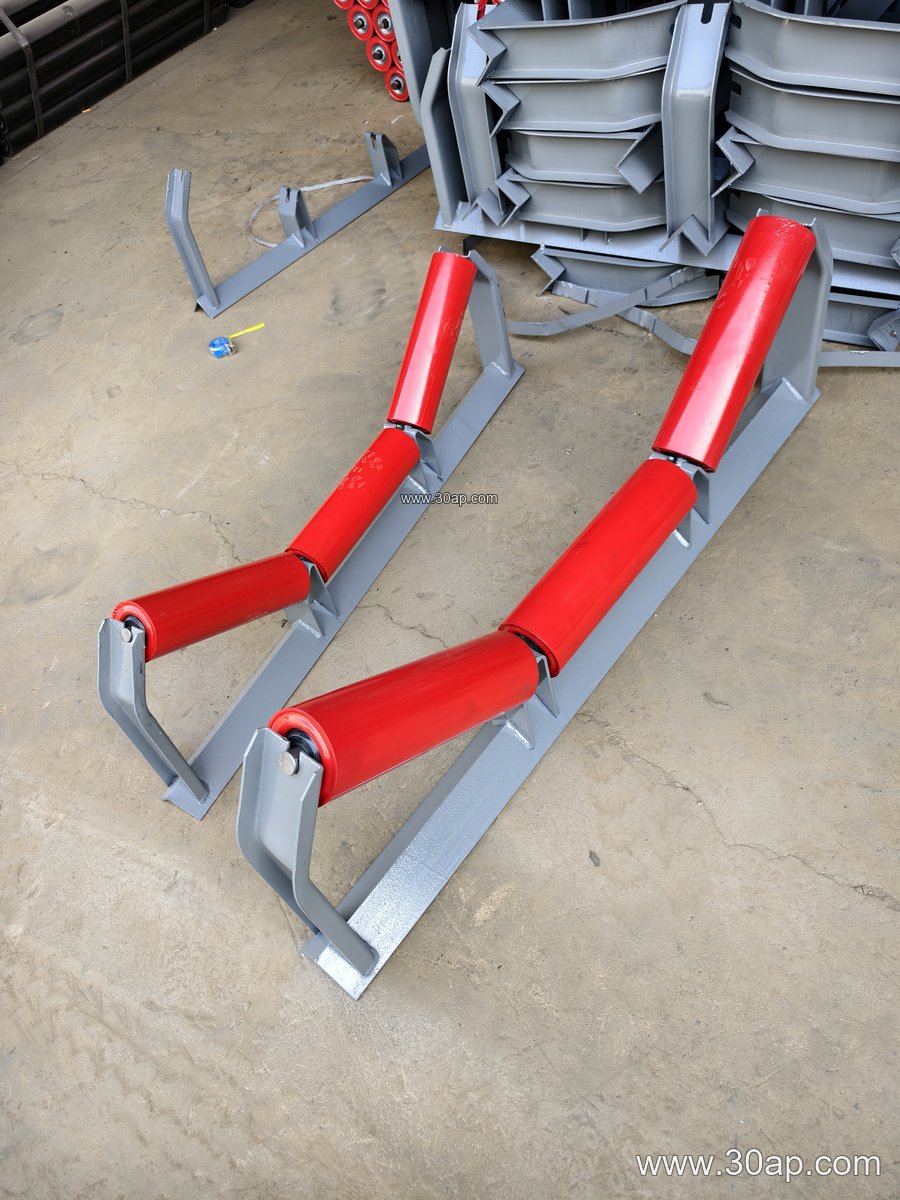
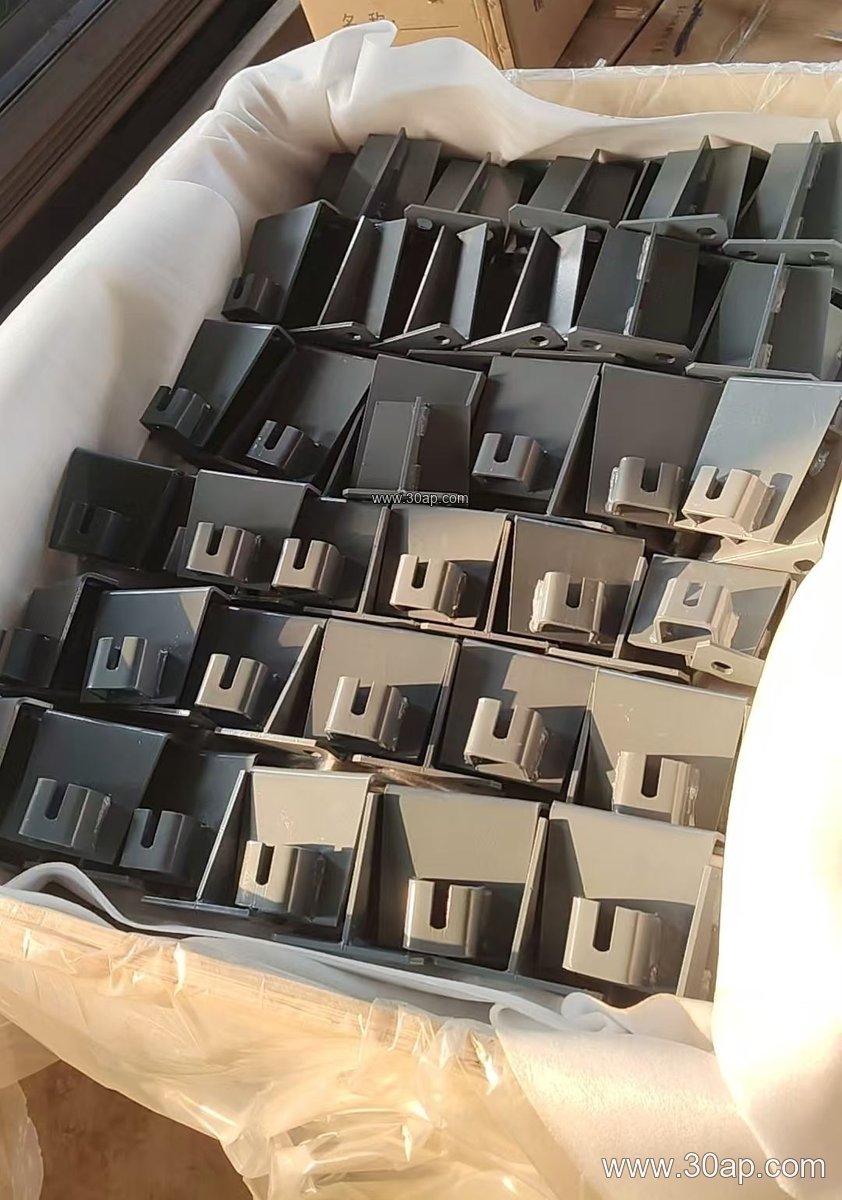
Most units are fabricated from angle steel, channel steel or folded steel plate, then welded into a crossbeam with two or more idler seats. The frame carries a pivot shaft, bushings or a bearing housing at the center, and often a pair of limit stops that keep the swing angle within a safe range. On some designs a small forward lead of about 1.5 to 2 degrees is built in so the idler responds early to misalignment. Surface finish is usually painted or galvanized, and the pivot area may be fitted with a grease nipple for periodic lubrication.
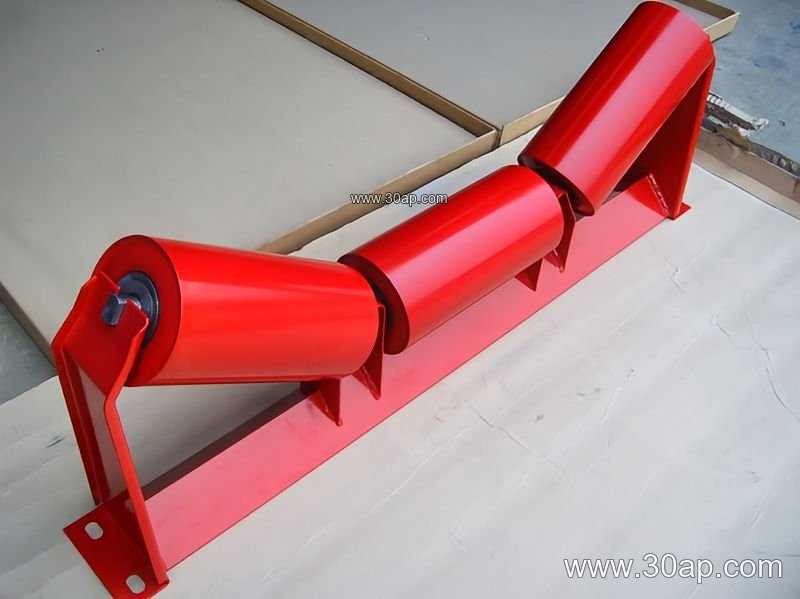
The bracket is matched to the idler it carries. Common roller diameters include Ø89, Ø108, Ø133, Ø159 and Ø194, and the seat spacing and crossbeam length change with belt width and trough angle rather than following one fixed number.
Where It Fits on the Conveyor
Training brackets are usually placed on the carrying side a short distance after the loading point, and on the return side ahead of the tail pulley. In a limestone quarry or a crushing and screening line, a self-aligning bracket after the crusher discharge helps the belt recover from impact-induced wander. In a power plant coal handling system, the same bracket on the return strand reduces edge wear caused by off-center running. Sand and gravel plants, iron ore concentrators and fertilizer granulation lines use them in similar positions.
They work together with the conveyor belt, the idler roller set, the conveyor pulley and the conveyor bracket that supports the rest of the run. A self-aligning bracket cannot correct a badly loaded belt on its own; skirted loading chutes, plows and proper pulley alignment still matter.
Common Configurations and Reference Dimensions
The table below lists typical combinations seen in catalogues and design drawings. Treat the values as reference data, not as verified universal specifications or a supply promise.
| Belt width | Trough angle | Idler diameter | Typical use |
|---|---|---|---|
| B500 | 20° or 30° | Ø89 | Light aggregate lines |
| B650 | 30° | Ø89 or Ø108 | Sand and gravel conveyors |
| B800 | 35° | Ø108 | Quarry and cement plant belts |
| B1000 | 35° or 45° | Ø133 | Coal handling, ore transport |
| B1200 | 45° | Ø133 or Ø159 | Heavy-duty mining conveyors |
| B1400 | 35° or 45° | Ø159 | Power plant coal lines |
| B1600 to B2000 | 35° to 45° | Ø159 or Ø194 | High-capacity bulk terminals |
Adjustable versions allow the trough angle to be changed among 20, 30, 35 and 45 degrees on site. Fixed versions are welded at one angle and are cheaper but less flexible. A forward-leaning bracket is a separate variant used mainly for belt training rather than for changing trough geometry.
Buyer Checklist
- Confirm belt width, trough angle and roller diameter before ordering; a B800 frame will not accept a Ø194 roller seat without redesign.
- State whether the bracket is for the carrying side or the return side, since return brackets are often flat or V-shaped and the pivot layout differs.
- Check the mounting hole spacing on the stringer and the crossbeam length, because both follow belt width and trough angle.
- Ask about the pivot bearing type and whether grease access is provided.
- Match the bracket to the belt in service. A heavy-duty mining conveyor belt or an abrasion resistant conveyor belt on a high-tonnage ore line loads the frame differently from a light EP conveyor belt on a packing line.
- For underground coal mining conveyors, confirm that any flame retardant conveyor belt specification is met by the belt, and that the bracket material suits the environment.
- Keep spare pivot pins and bushings on hand; these wear first.
Installation and Maintenance Notes
Mount the bracket square to the belt centerline and check that the pivot swings freely before tensioning. A bracket that binds will act like a fixed frame and may worsen drift. After the first weeks of operation, recheck bolt torque, clean material build-up from the pivot area and confirm that the training idler still returns to neutral. On belts carrying wet or sticky material, build-up around the pivot is the most common cause of poor tracking.
Used with a correctly loaded belt and a straight conveyor structure, a self-aligning idler bracket is a low-cost way to extend belt edge life and reduce spillage in quarry, cement, steel plant and port conveyor systems. For matching belts and rollers, buyers can review options such as rubber conveyor belt, steel cord conveyor belt, chevron conveyor belt, heat resistant conveyor belt and flame retardant conveyor belt at beltconveyorpro.com, and idler and bracket ranges at idlerconveyor.com.