What a Highly Wear-Resistant Idler Does on the Line
A highly wear-resistant idler is a conveyor roller engineered for the punishing parts of a bulk handling circuit, where grit, lumps and constant abrasion eat through ordinary rollers. Instead of treating the roller as a simple rotating tube, this design focuses on the surfaces and seals that fail first: the shell, the end caps and the bearing housing. In a quarry, a limestone mine or a sand and aggregate line, a standard roller may last months, while a properly built abrasion-focused idler can hold its profile far longer. The goal is not just longer life, but steadier belt tracking and fewer stoppages.
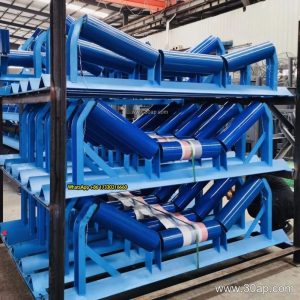
The idler works alongside the conveyor belt, the conveyor pulley and the conveyor bracket, but its own job is to support the belt and the load with low rolling resistance. When the shell wears thin or the seal lets fines in, friction rises and the belt starts to drag. That is why buyers in cement plants, coal washing plants and power plant coal yards pay close attention to this component.
How the Wear-Resistant Idler Is Built
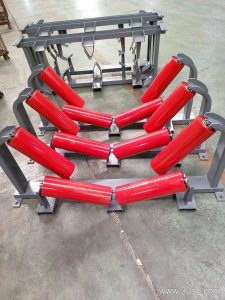
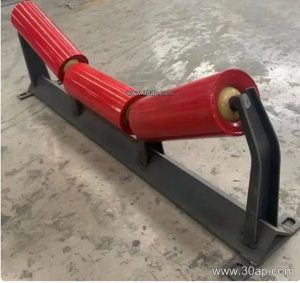
Most units start with a steel tube shell. To resist abrasion, the shell may be thicker than a standard tube, or it may carry a rubber ring, nylon sleeve or ceramic tile surface. Rubber-ring缓冲托辊 style rollers are common at transfer points, while ceramic-faced rollers suit fine, sharp material that acts like sandpaper. The shaft is machined and fitted with sealed bearings, usually deep-groove ball bearings such as 6204, 6205, 6305, 6306, 6308 or 6310, selected according to load and speed rather than a single fixed rule.
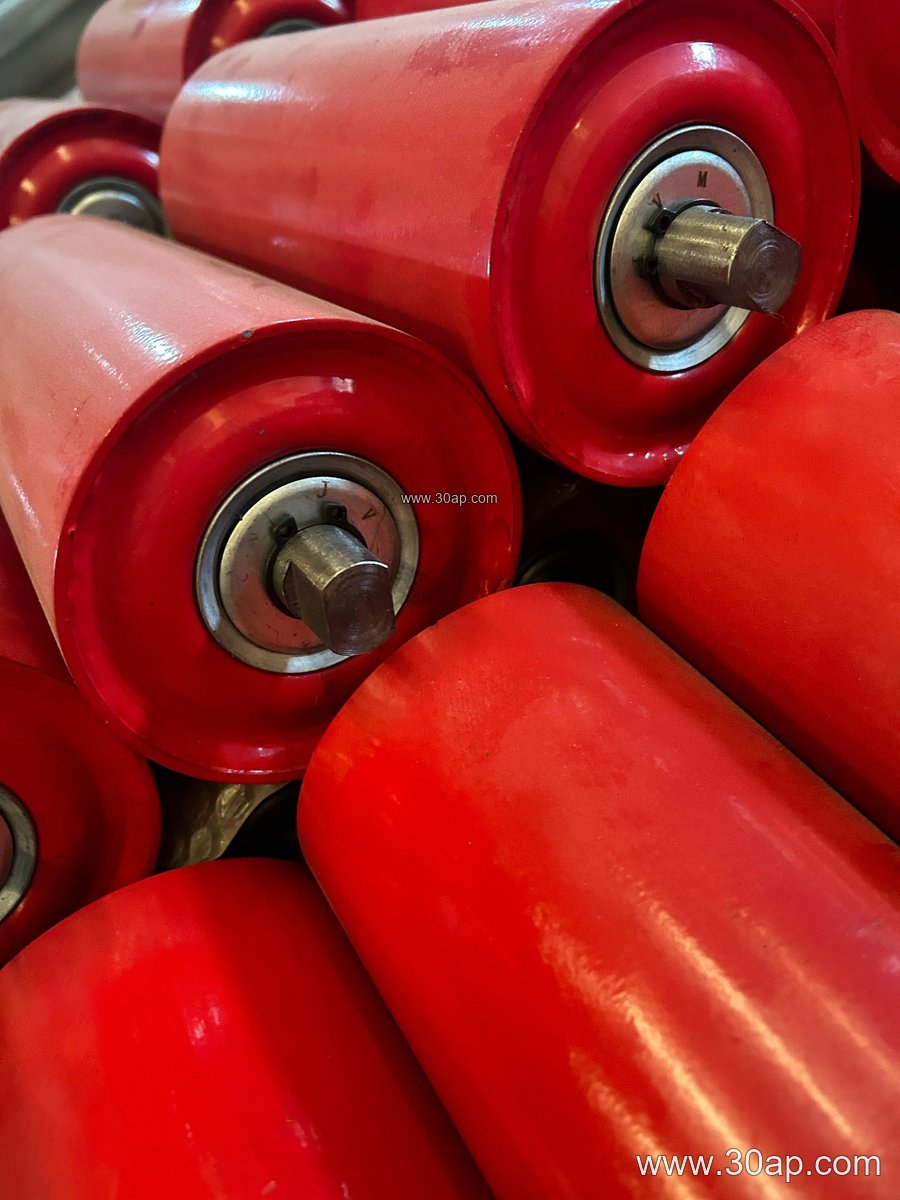
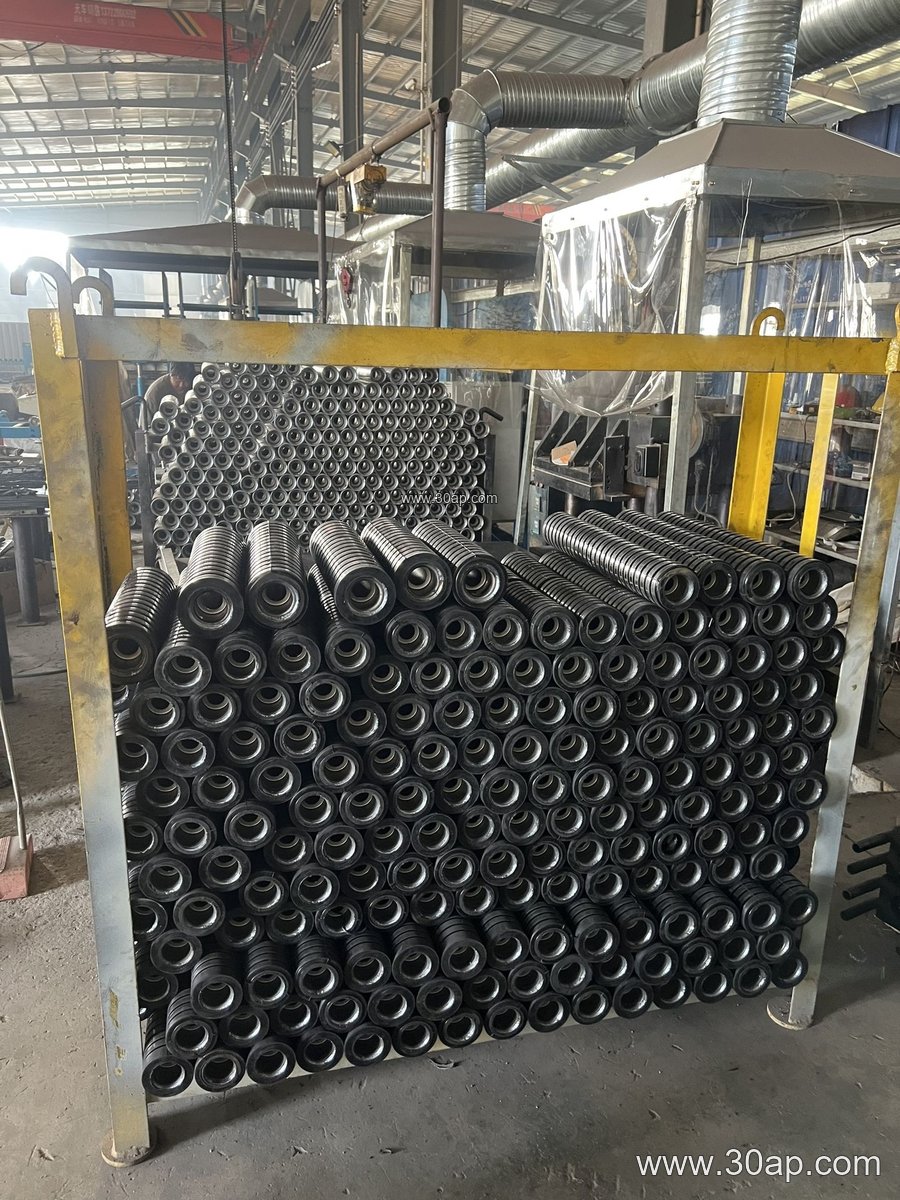
Sealing is where many cheap rollers lose the battle. A good wear-resistant idler uses a multi-stage labyrinth seal, often with a grease-filled cavity, to keep dust out and grease in. End caps are welded or press-fitted with care so the tube stays concentric; an out-of-round shell causes vibration and shortens bearing life. Surface treatment, such as painting or galvanizing, helps in wet or corrosive areas but does not replace a proper seal.
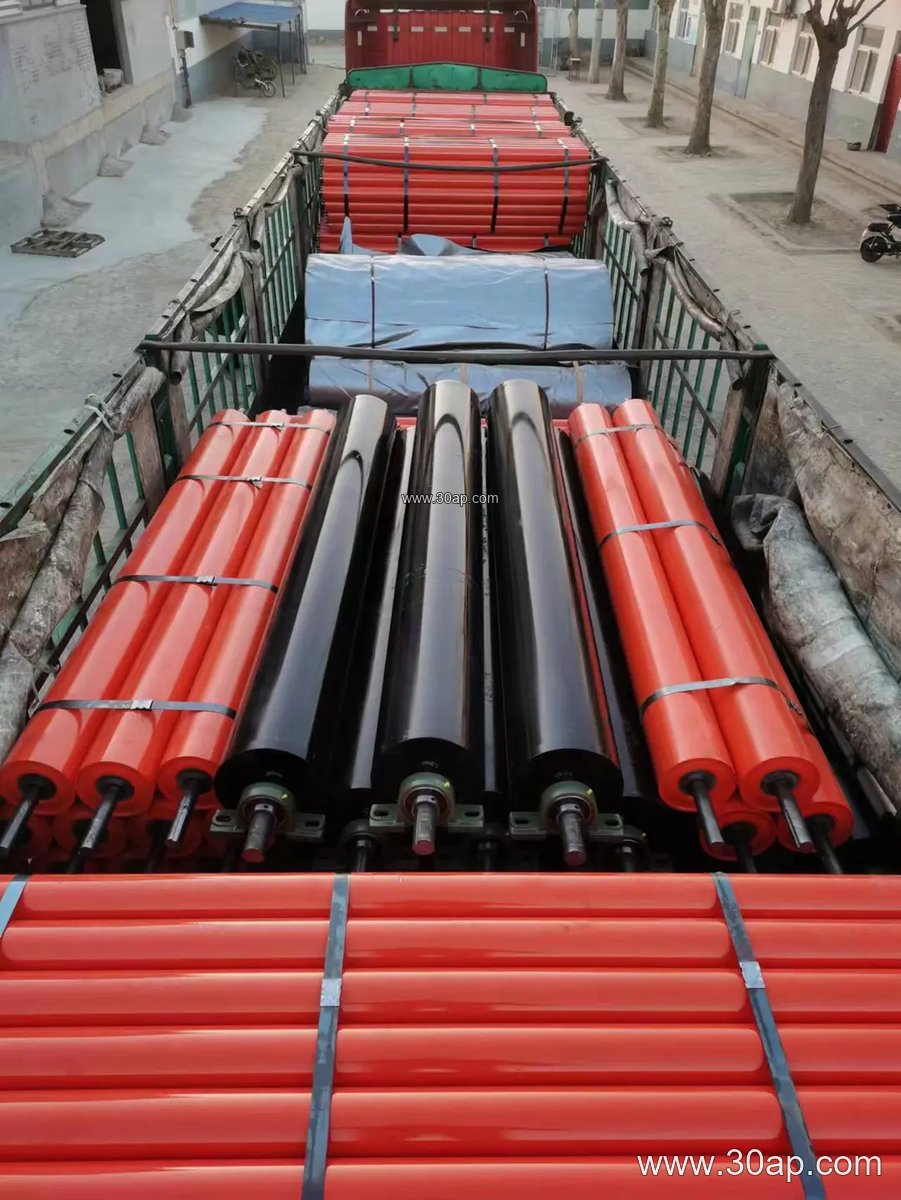
- Shell: thick steel tube, rubber ring, nylon or ceramic
- Bearing: 6204 to 6310 range, chosen by load and speed
- Seal: labyrinth type with grease retention
- Shaft: machined carbon steel, flat or threaded ends
Common Sizes and Arrangements
Diameter and length follow the belt width, the trough angle and the frame design. Common roller diameters include Ø63, Ø76, Ø89, Ø102, Ø108, Ø127, Ø133, Ø159, Ø178, Ø194 and Ø219 mm. Belt widths range from B400 up to B2400, and the roller length changes with the trough arrangement. For a three-roll troughing set, typical roller lengths are roughly 200 mm at B500, 250 mm at B650, 315 mm at B800, 380 mm at B1000, 465 mm at B1200, 530 mm at B1400, 600 mm at B1600, 670 mm at B1800 and 750 mm at B2000. These are common examples, not fixed pairings; side rollers and centre rollers can differ.
| Item | Common Range | Note |
|---|---|---|
| Roller diameter | Ø63 to Ø219 mm | Selected by load and belt speed |
| Belt width | B400 to B2400 | Roller length follows frame design |
| Trough angle | 20°, 30°, 35°, 45° | Affects material cross-section |
| Bearing | 6204, 6205, 6305, 6306, 6308, 6310 | Matched to duty, not to one diameter |
| Surface | Steel, nylon, ceramic, rubber ring | Chosen for the abrasive type |
For a highly wear-resistant idler, the surface form matters as much as the size. A rubber-ring roller absorbs impact at a crusher discharge, while a ceramic-faced roller resists sliding abrasion on a long overland run. Trough angles of 20° to 45° change how the load sits, and a 35° set is common in many aggregate lines.
Where These Idlers Earn Their Keep
The hardest duties usually appear at transfer points and crusher discharges. In a stone crushing plant, a rubber-ring impact idler under the chute cushions falling rock before it reaches the conveyor belt. In an iron ore or copper ore terminal, ceramic or thick-wall rollers handle sharp, heavy lumps. Coal mining conveyors, including underground coal mining conveyor belt systems, need flame retardant and anti-static properties in the belt itself, and the rollers must survive coal dust and moisture. Cement plants face fine, alkaline dust that attacks seals, so a well-sealed wear-resistant roller is a practical choice.
Other settings include power plant coal handling, port ship loading lines, steel plant sinter conveyors and fertilizer or grain facilities where a food grade conveyor belt may run alongside standard rollers. In each case, the idler is part of a system that includes the conveyor pulley at the drive, tail and bend positions, plus the conveyor bracket that holds the frame. Drive, tail and bend pulleys are not interchangeable, and the same is true of troughing, return and impact idlers; each has its own place.
What Buyers Should Check Before Ordering
Start with the material: lump size, moisture, temperature and chemical content decide whether a rubber, nylon or ceramic surface is right. Then confirm the belt width, trough angle and roller length against the actual frame drawing, since a B800 line does not automatically dictate one shaft diameter. Ask about bearing brand or grade, seal type and shell wall thickness. For a highly wear-resistant idler, a thicker shell or a hard facing is only useful if the seal and bearing are equally robust. Also check the shaft end form and the mounting method used by the conveyor bracket.
- Match surface material to the abrasive and impact level
- Confirm roller length and diameter from the frame drawing
- Verify seal design and bearing clearance
- Check shaft ends and bracket fit
- Keep spare rollers for high-wear transfer points
Routine inspection pays off. A roller that stops turning or runs hot should be replaced before it damages the conveyor belt. Listening for squeaks and checking for material buildup around the seal are simple habits that extend service life. Used well, the wear-resistant idler is a small part that keeps a large material handling line moving.