What the Idler Frame Does on a Conveying Line
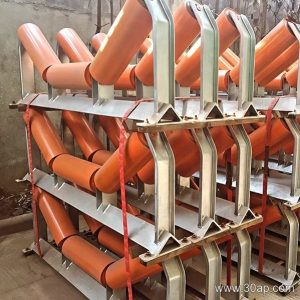
A belt conveyor idler frame is the steel structure that holds the idler rollers at the correct position under or over the conveyor belt. On the carrying side, it sets the trough angle that shapes the belt into a channel for bulk material; on the return side, it supports the empty belt and helps keep it tracking. In a quarry, a cement plant, or a power plant coal yard, this frame is a small part of the total cost but a large part of daily reliability. A loose or misaligned frame quickly shows up as belt edge wear, spillage, and noisy rollers.
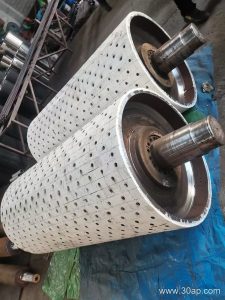
The frame is often called a conveyor idler support or idler bracket assembly, and it works together with the conveyor bracket, the conveyor pulley at the drive and tail ends, and the belt itself. It does not tension the belt or drive it; those jobs belong to the pulleys and take-up system.
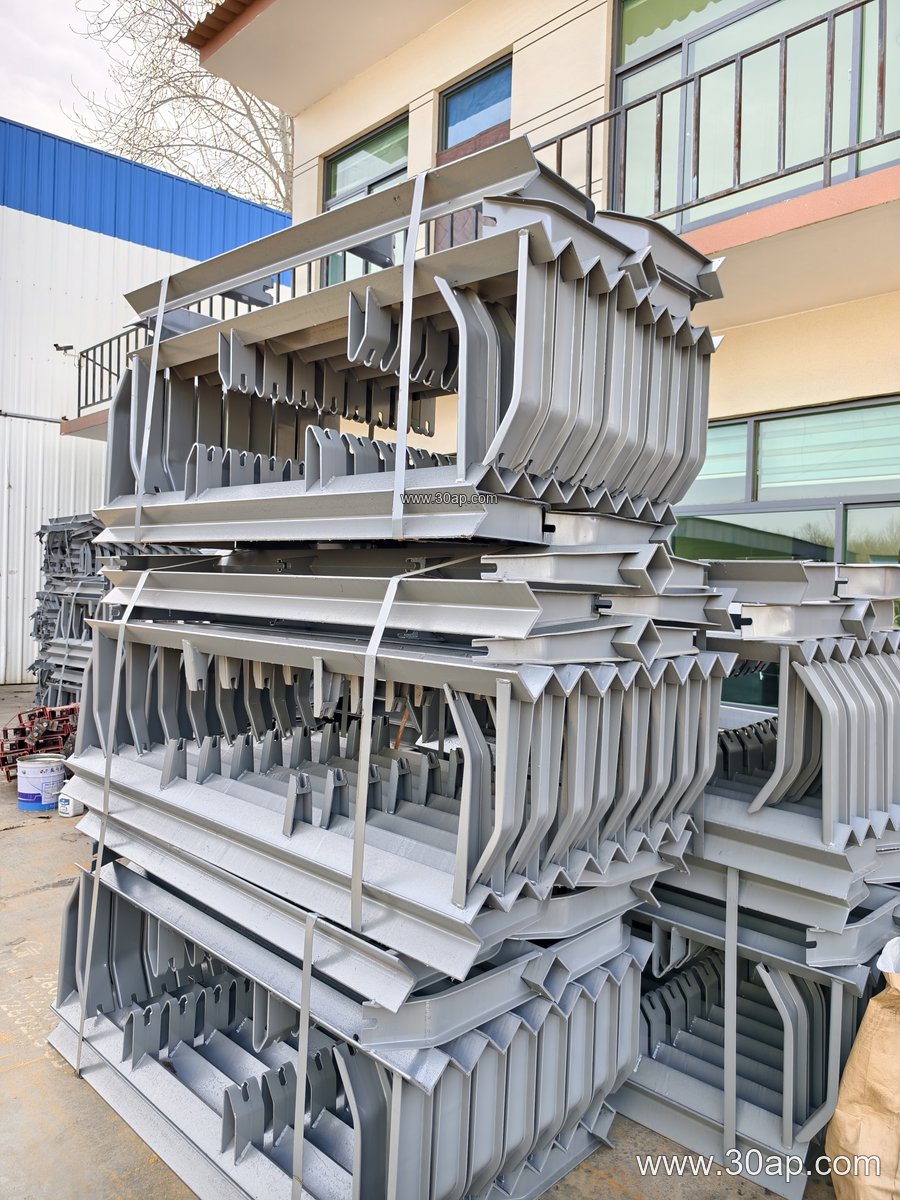
How the Frame Is Built
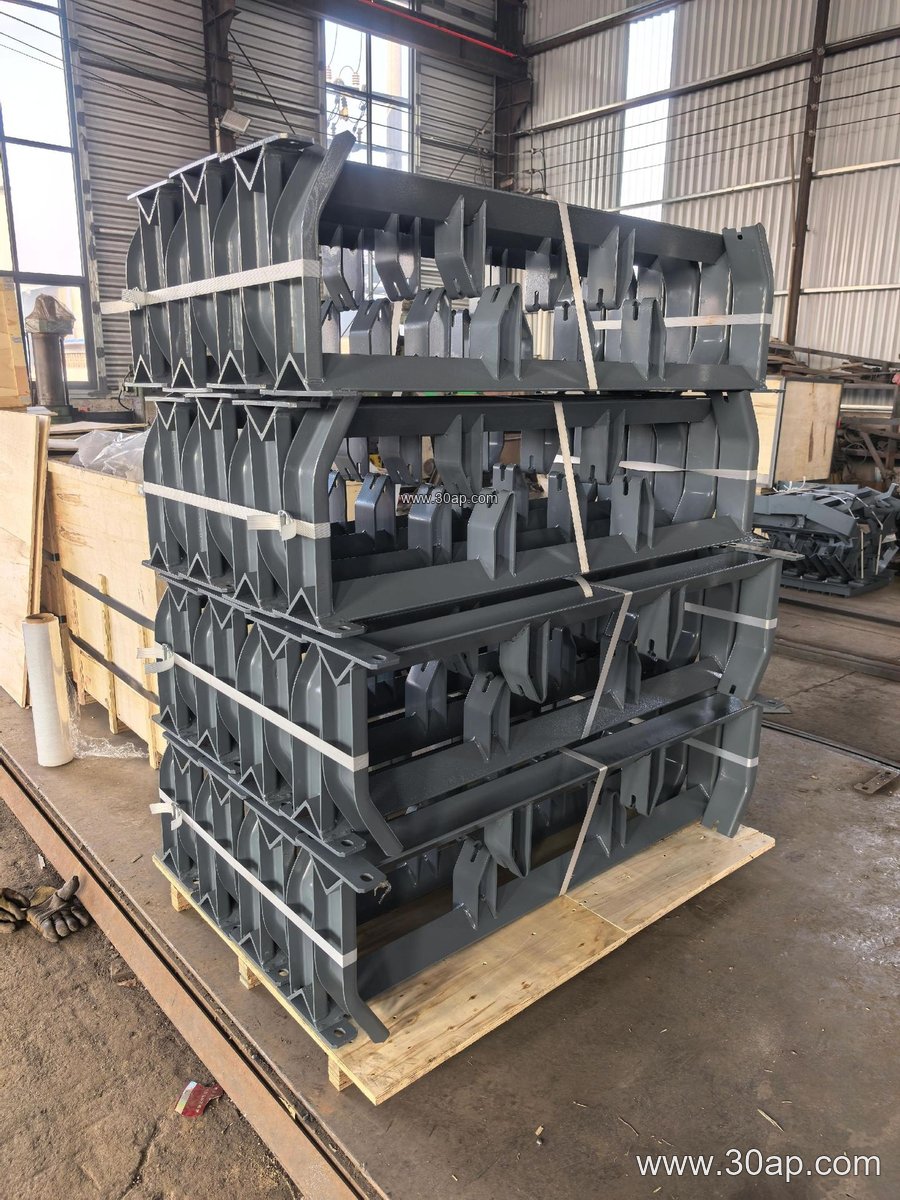
Most frames are fabricated from angle steel, channel steel, or folded steel plate. The cross beam carries the idler mounting slots or hooks, and the end legs bolt to the conveyor stringer. Holes and beam length change with belt width, trough angle, and roller diameter, so a frame is normally made to match a specific conveyor design rather than treated as a universal part.
Common forms include:
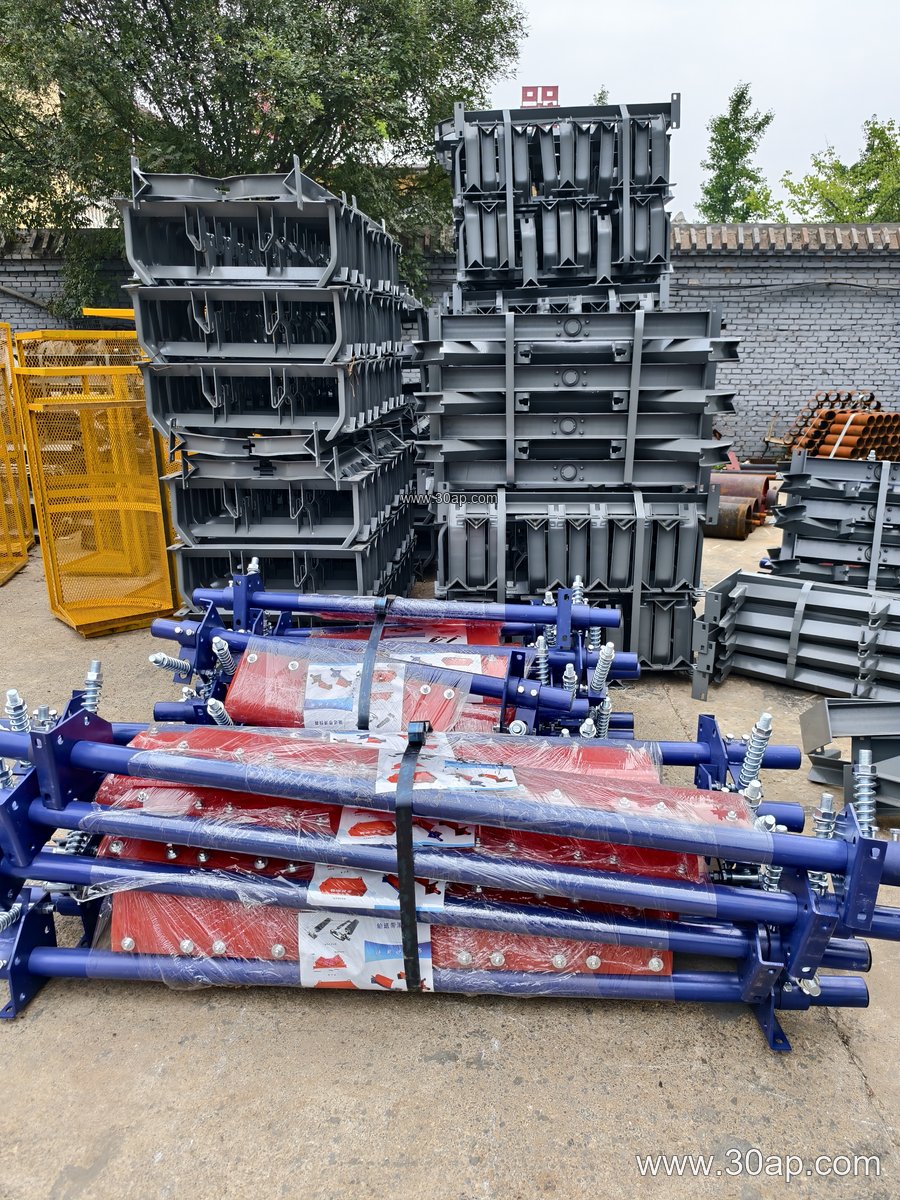
- Troughing frames on the carrying side, usually with three idlers
- Transition frames near pulleys, where the belt changes from flat to troughed
- Return frames and V-return frames under the empty belt
- Impact frames with cushioning rollers at loading points
- Self-aligning and forward-leaning frames for tracking control
- Suspended and adjustable frames for special layouts
Adjustable frames allow the trough angle to be set between positions such as 20, 30, 35, and 45 degrees. Forward-leaning designs are commonly set at about 1.5 to 2 degrees to help the belt stay centered.
Matching Belt Width, Trough Angle, and Roller Diameter
Belt width is the starting point for frame selection. A B650 line may use 30-degree troughing with Ø89 rollers, while a B1200 conveyor in a crusher discharge area often runs 35 or 45 degrees with Ø133 rollers. Heavier lines at B1600 or B1800 may use Ø159 or Ø194 rollers. These are typical combinations, not fixed rules: the right choice depends on material lump size, belt speed, load, and the conveyor designer’s calculation.
| Parameter | Common reference values |
|---|---|
| Belt width | B500, B650, B800, B1000, B1200, B1400, B1600, B1800, B2000, B2200 |
| Trough angle | 20, 30, 35, 45 degrees; adjustable within range |
| Roller diameter | Ø89, Ø108, Ø133, Ø159, Ø194 |
| Frame material | Angle steel, channel steel, folded steel plate |
Installation hole spacing and cross beam length are determined by the belt width and trough angle, so they should be confirmed against the conveyor drawing before ordering.
Where These Frames Are Used
In a limestone quarry or a sand and aggregate line, troughing frames carry crushed rock from the crusher to the screening plant, where impact frames protect the belt at the transfer point. In a coal-fired power plant, return frames and self-aligning frames keep the empty belt steady on long coal conveyors. The same hardware appears in iron ore handling, fertilizer plants, and tunnel spoil removal. The frame must suit the belt it supports, whether that is an abrasion resistant conveyor belt in a quarry or a flame retardant conveyor belt underground.
Buyer Checklist
- Confirm belt width, trough angle, and roller diameter as a set, not separately.
- Check the mounting hole pattern against the existing stringer.
- Specify the material and finish for wet, dusty, or corrosive conditions.
- Ask whether the frame is fixed or adjustable if future angle changes are likely.
- Keep spare frames at transfer points, where impact damage is most common.
Well-chosen idler frames reduce belt edge damage and roller failure, and they make routine maintenance faster. For conveyors handling EP conveyor belt or steel cord conveyor belt, frame alignment is one of the simplest ways to protect the belt investment.