What a Belt Conveyor Idler Frame Does
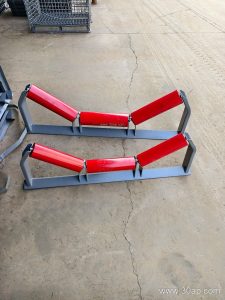
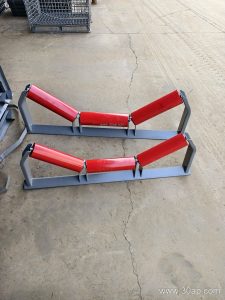
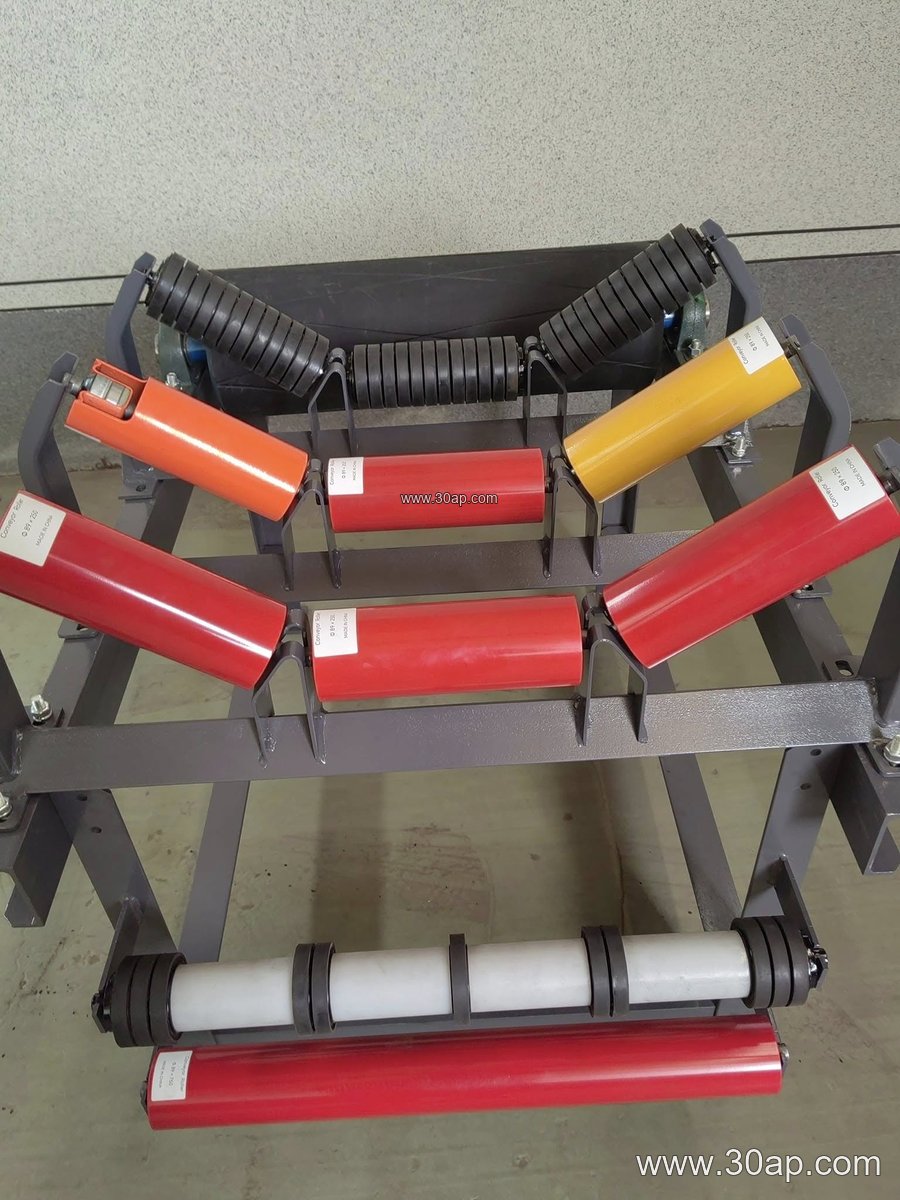
A belt conveyor idler frame is the structural component that holds idler rollers in the correct position under or above the conveyor belt. It carries the load of the belt, the material, and the rollers themselves, transferring that force into the conveyor stringer or supporting structure. On a quarry conveyor or a cement plant transfer line, the idler frame is easy to overlook, yet it sets the belt profile, controls belt tracking, and influences how evenly the belt wears.
The frame is often called a conveyor idler bracket or idler support frame. These names describe the same item: a fabricated steel assembly that positions rollers at the required trough angle and spacing. It should not be confused with a conveyor pulley, since drive, tail, and bend pulleys have completely different roles at the ends of the conveyor.
How the Frame Is Built
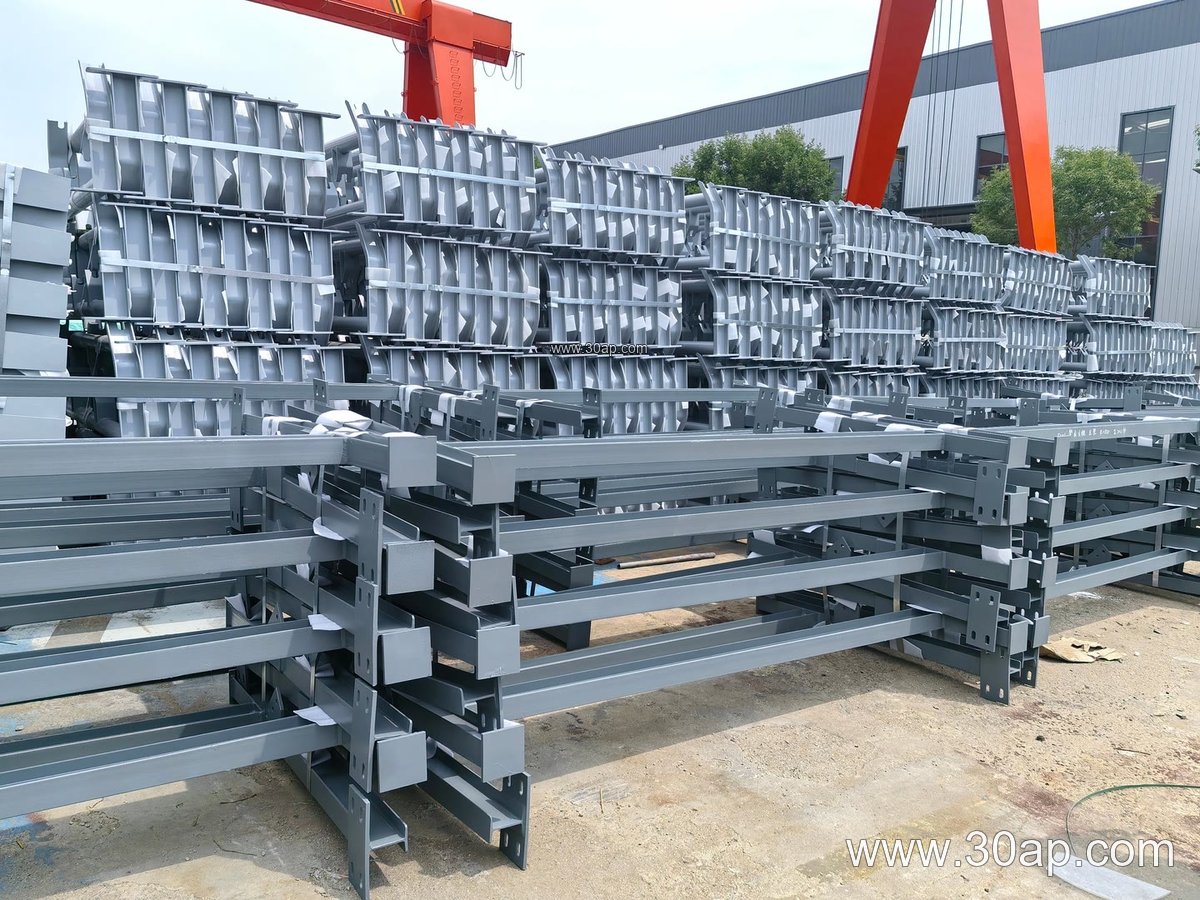
Most frames are fabricated from angle steel, channel steel, or folded steel plate. The material choice depends on load, corrosion exposure, and the surrounding environment. In a coal mining conveyor line, frames may need extra stiffness and protection against dust and moisture. In a port or ship loading system, salt air may push designers toward heavier sections or surface protection.
Key structural details include:
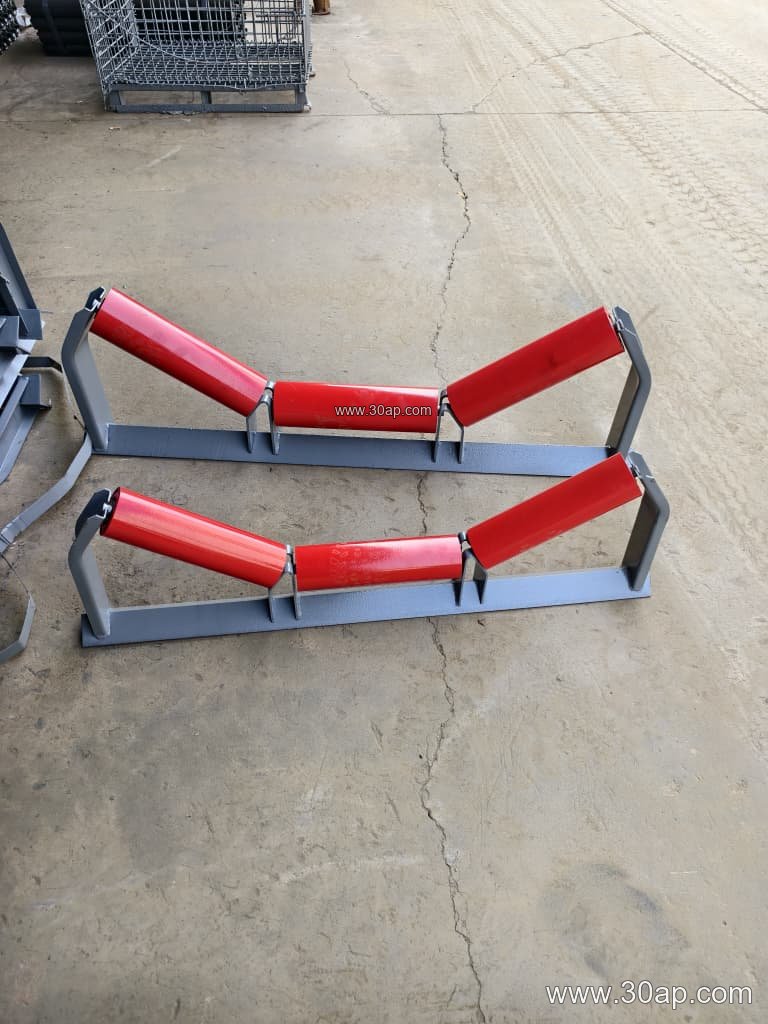
- Cross beam length and mounting hole spacing, which follow belt width and trough angle.
- Roller cradle positions that hold each idler roller at the intended angle.
- Connection points to the stringer, usually bolted for field replacement.
- Reinforcement at loaded points, especially on impact and transition frames.
Frames are commonly supplied as fixed or adjustable designs. An adjustable frame allows the trough angle to be set within a range, which helps during commissioning or when belt conditions change. Common trough angles include 20, 30, 35, and 45 degrees.
Matching Frame, Belt Width, and Roller Diameter
There is no single rule that ties one belt width to one roller diameter or one trough angle. A B800 frame may be used with different roller diameters depending on load and belt speed, while a B1200 or B1400 conveyor may use larger rollers for heavier bulk material. Typical roller diameters include Ø89, Ø108, Ø133, Ø159, and Ø194. The frame drawing should confirm the actual combination.
| Frame Reference | Belt Width | Trough Angle | Typical Roller Diameter |
|---|---|---|---|
| Upper trough frame | B500 to B800 | 20 to 35 degrees | Ø89 to Ø108 |
| Upper trough frame | B1000 to B1400 | 30 to 45 degrees | Ø108 to Ø159 |
| Transition frame | B800 to B1600 | 20 to 35 degrees | Ø108 to Ø159 |
| Return flat frame | B650 to B1200 | Flat | Ø89 to Ø133 |
| V-return frame | B800 to B1600 | V-shaped return | Ø108 to Ø159 |
These values are common references, not fixed supply promises. Mounting hole spacing and beam length change with belt width and trough angle, so buyers should always work from the conveyor layout drawing.
Where It Fits in the Conveyor
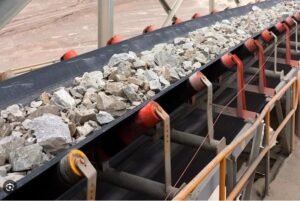
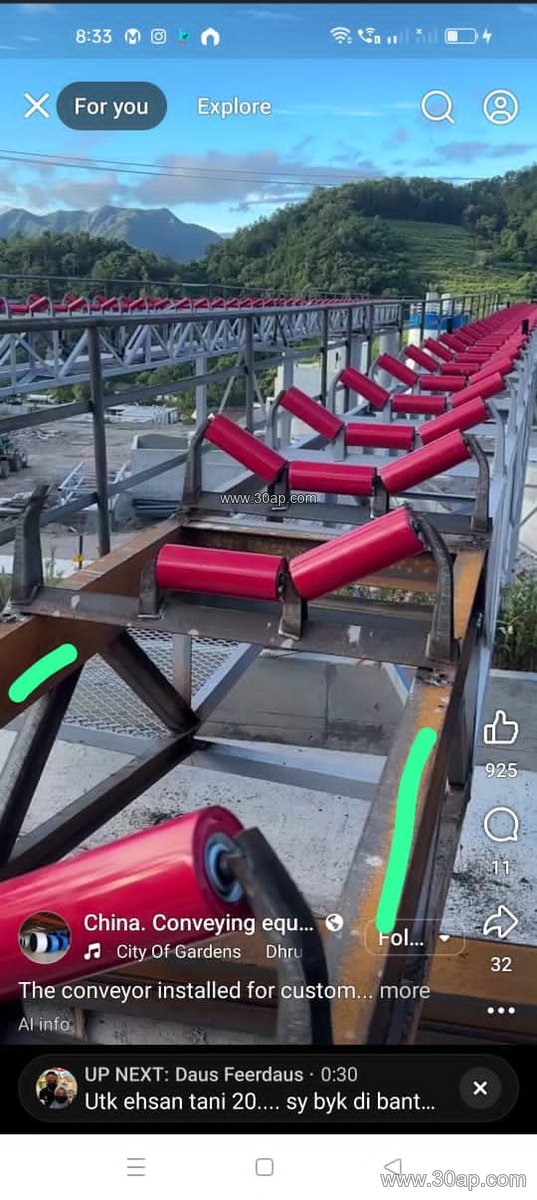
Upper trough frames support the carrying side of the belt and are the most visible part of the system. Return frames support the belt on its way back. Transition frames sit near the head or tail and gradually change the belt from flat to troughed. Impact frames are placed under loading points in a crusher discharge or a bulk material transfer chute.
Tracking frames, including forward-leaning and self-aligning designs, help keep the belt centered. A forward lean of about 1.5 to 2 degrees is common on certain carrying frames. These frames work together with the conveyor belt, idler roller, and conveyor pulley to keep the line running straight.
Buyer Checklist
- Confirm belt width and required trough angle before ordering.
- Check the roller diameter and the frame cradle dimensions together.
- Match the frame material to the site: dust, moisture, heat, or abrasive material.
- Ask whether adjustable frames are needed for future angle changes.
- Review the connection detail to the stringer and the bolt spacing.
For a coal mining conveyor belt or a quarry conveyor belt carrying heavy rock, the idler frame should be sized for impact and load, not only for belt width. On the return side, a V-return frame can help with belt training and material spillage. In a cement plant or power plant coal handling system, dusty conditions make inspection and replacement access important.
Frames should be checked for loose bolts, bent beams, and worn roller seats during routine maintenance. Replacing a damaged frame before it misaligns the belt can prevent edge damage and extend the life of the conveyor belt. For more details on compatible belt and roller options, visit www.beltconveyoridler.com to review related conveyor components.