What a Belt Anti-Misalignment Idler Does
A belt anti-misalignment idler is a self-correcting carrying or return roller designed to keep a conveyor belt centered on its path. When a belt begins to drift toward one side, this idler responds by steering it back. On a quarry conveyor, a cement plant raw-material line or a power plant coal handling system, that small correction prevents edge damage, spillage and unexpected downtime. The device is also called a self-aligning idler or training idler, and those names describe the same product.
It is not a substitute for a drive pulley, tail pulley or bend pulley, which transmit power and set belt tension. The anti-misalignment idler works as a tracking accessory mounted along the carrying or return run, often in pairs or groups at intervals chosen by the conveyor designer.
How the Idler Is Built
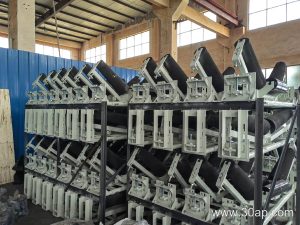
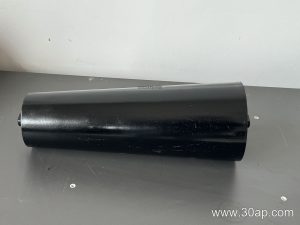
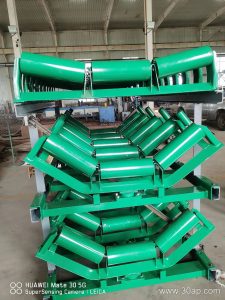
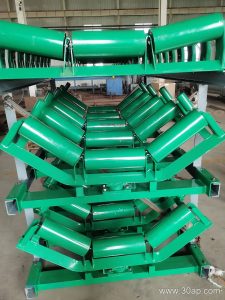
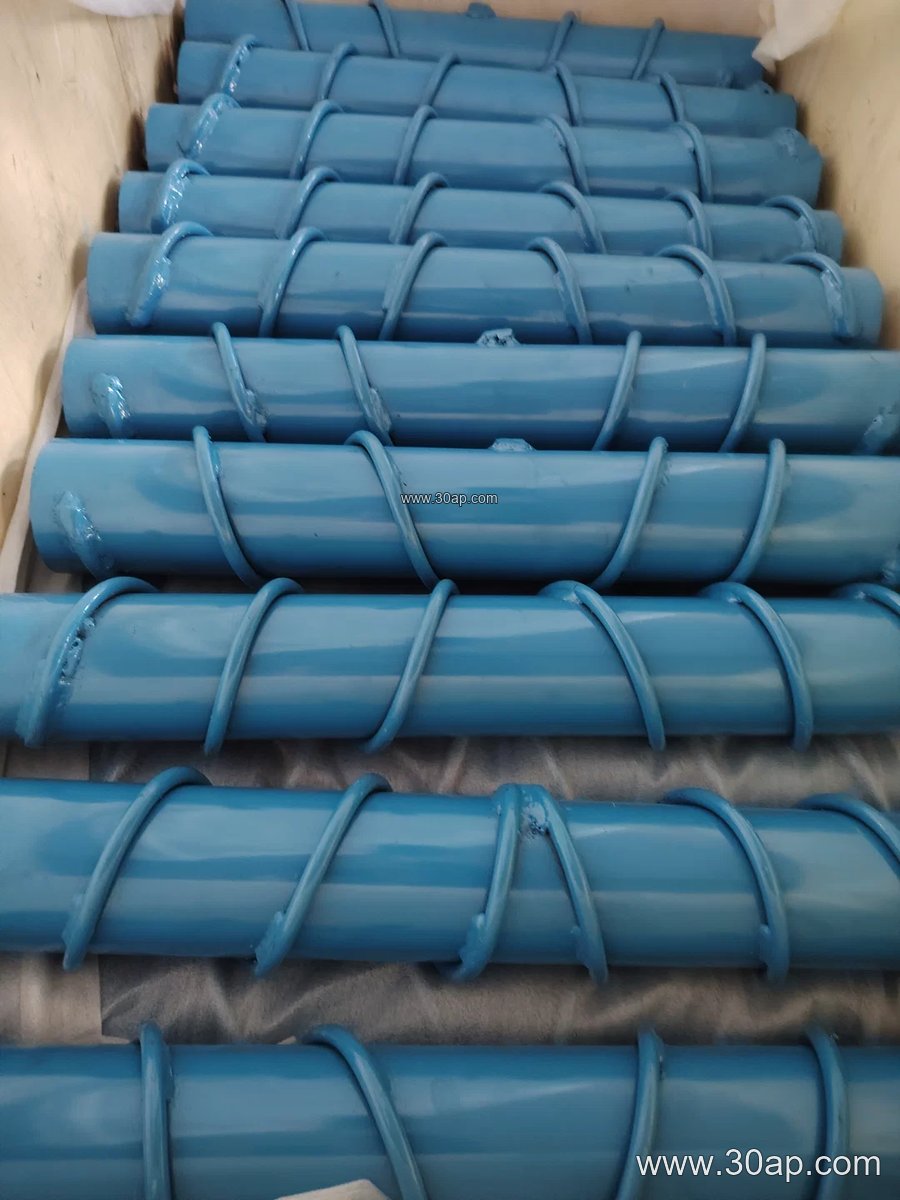
A typical unit combines a roller shell, bearing housings, a shaft and a pivoting frame. The frame allows the roller set to rotate slightly in the horizontal plane, while edge guide rollers or a vertical pivot sense belt wander. Friction and conical designs use different sensing methods, but the goal is the same: a small angular change produces a lateral force that nudges the belt back toward the centerline.
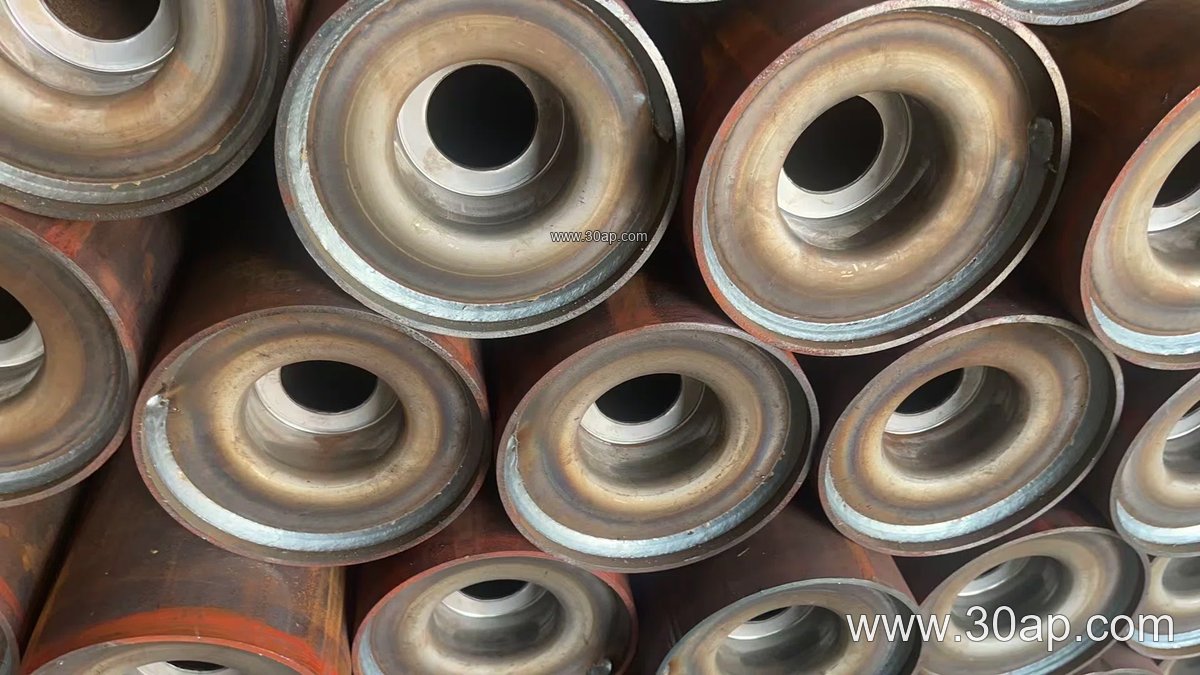
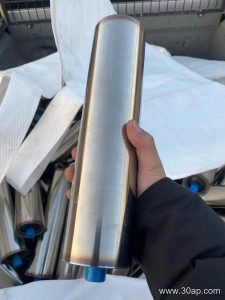
- Roller shell in steel tube, nylon or rubber-covered form
- Sealed bearings, commonly 6204, 6205, 6305, 6306 or 6308 depending on load and roll diameter
- Pivot bracket with adjustable stop or linkage
- Edge rollers or sensing arms on friction and conical versions
Shell diameters follow the same range used across conveyor idlers, such as Ø89, Ø108, Ø133 or Ø159, while roll length is set by belt width, trough angle and the idler arrangement. Sealing quality matters in dusty locations, because grit entering a bearing quickly turns a tracking aid into a maintenance item.
Where It Fits on the Conveyor
Training idlers are commonly placed after the loading point, before the head pulley, on long straight sections and on the return strand. In a limestone mine or a crushing and screening plant, material impact and off-center loading are frequent causes of belt wander, so a belt anti-misalignment idler near the chute outlet earns its place. In a steel plant sinter line or a port ship-loading conveyor, wind and uneven tension can also push a belt sideways.
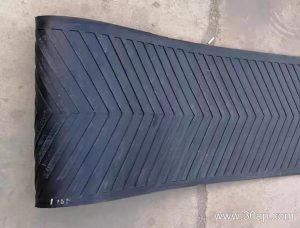
The idler is often used alongside a conveyor bracket, an idler roller set and the conveyor pulley assembly. It should be matched to the belt construction in service. A heavy steel cord conveyor belt on an ore conveyor may need a sturdier frame than a lighter EP conveyor belt on a packaging line, and a thick abrasion resistant conveyor belt in a gravel pit calls for rollers that can tolerate grit and shock.
Common Configurations and Reference Dimensions
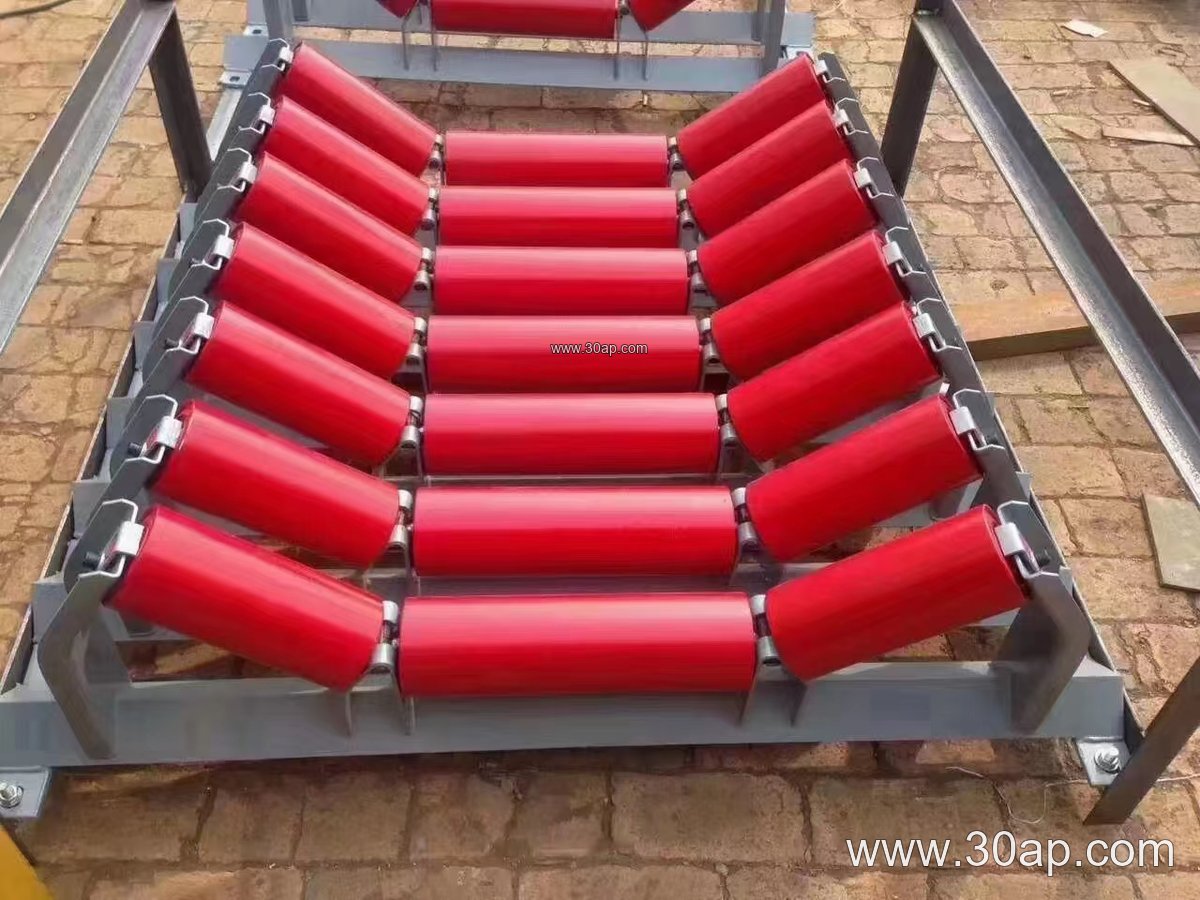
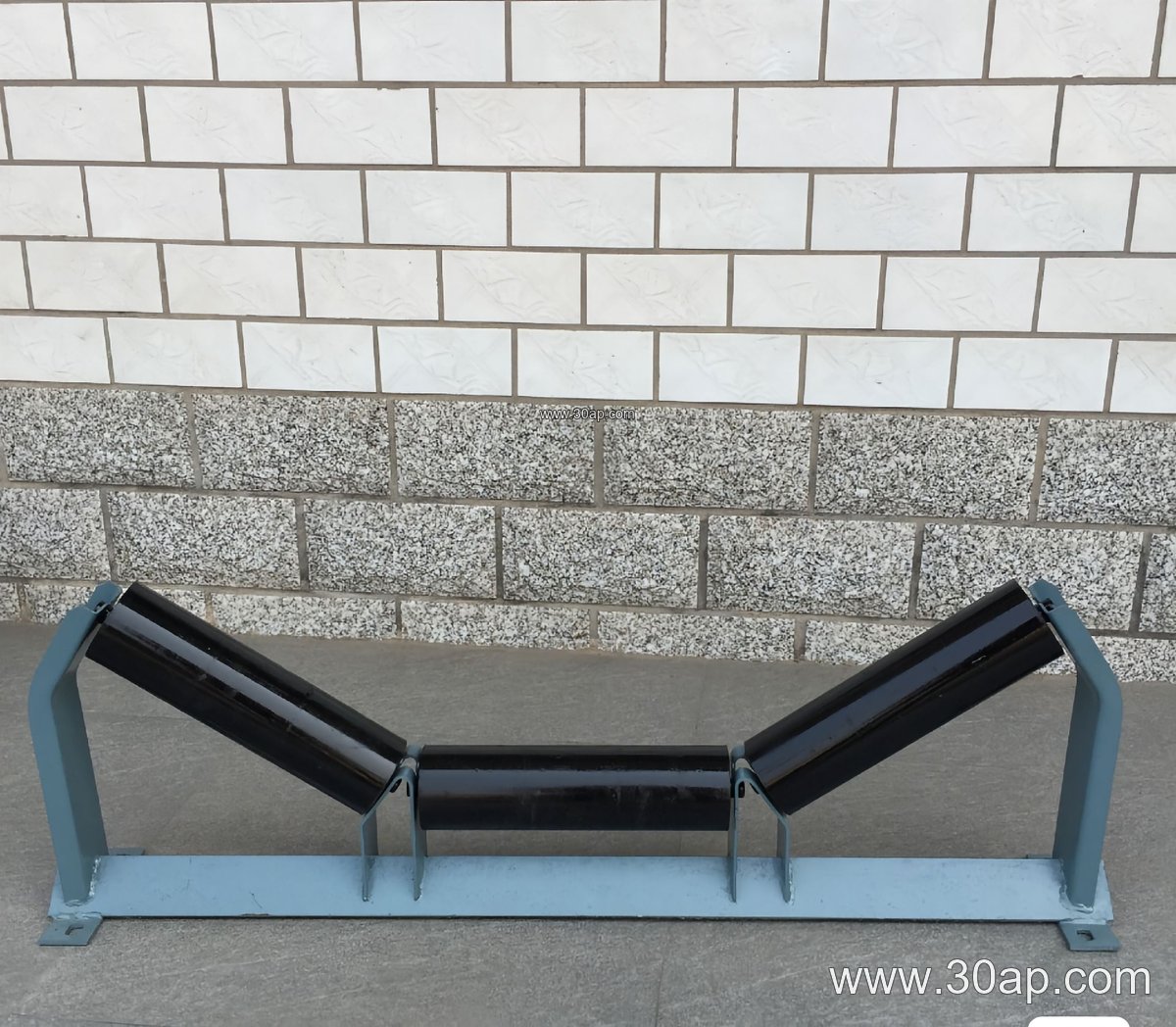
Anti-misalignment idlers appear as two-roll V-type return units, three-roll troughing units and flat return designs. Trough angles of 20, 30, 35 and 45 degrees are common, and a slight forward tilt of about 1.5 to 2 degrees is sometimes used on training rollers. The table below gives reference values only; final selection depends on belt width, load, speed and frame design.
| Reference item | Typical range or example |
|---|---|
| Roll diameter | Ø63, Ø76, Ø89, Ø102, Ø108, Ø127, Ø133, Ø159, Ø178, Ø194, Ø219 |
| Belt width | B400, B500, B650, B800, B1000, B1200, B1400, B1600, B1800, B2000 |
| Example roll length, three-roll trough | about 200 mm at B500; 315 mm at B800; 465 mm at B1200; 600 mm at B1600 |
| Trough angle | 20°, 30°, 35°, 45° |
| Bearing examples | 6204, 6205, 6305, 6306, 6308, 6310 |
Side rolls and center rolls can differ in length, so a single figure should not be treated as a fixed rule. Likewise, no belt width dictates one pulley diameter, and shaft size must be confirmed from the actual load calculation rather than guessed from belt width.
Buyer Checklist
Before ordering, confirm the belt width, trough angle, mounting position, roll diameter and bearing type, and state whether the unit is for the carrying or return side. Ask how the pivot is adjusted and whether edge rollers are included. Check that the frame suits the conveyor bracket already installed. For dusty or wet service, specify sealed bearings and a corrosion-resistant finish. Where a flame retardant conveyor belt or heat resistant conveyor belt is used, keep the idler’s temperature and material limits in mind.
Finally, plan periodic inspection: a training idler that is misadjusted, worn or jammed can itself become a source of belt damage. Correct installation, free pivoting and clean rollers keep the belt anti-misalignment idler doing its quiet job on mines, cement lines and bulk terminals alike.