What a Belt Conveyor Trough Idler Does
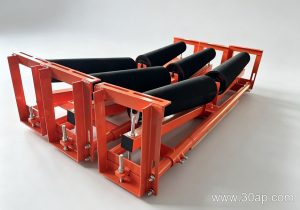
A belt conveyor trough idler is the assembly of rollers that supports the carrying side of a conveyor belt and shapes it into a trough. This three-roll arrangement, usually set at a 20, 30, 35, or 45 degree trough angle, keeps bulk material centered and reduces spillage on the load run. In a quarry, limestone mine, or cement plant, the trough idler set is the workhorse component that carries the weight of stone, clinker, or aggregate day after day. The same troughing idler design appears in power plant coal handling, steel mill sinter lines, and port ship-loading conveyors where reliable belt support is critical.
Construction and Common Configurations
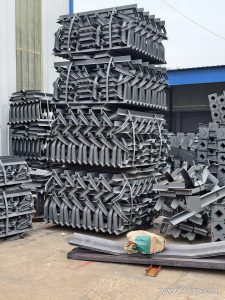
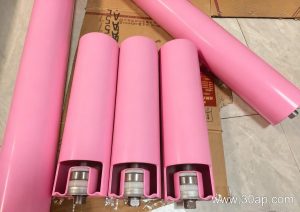
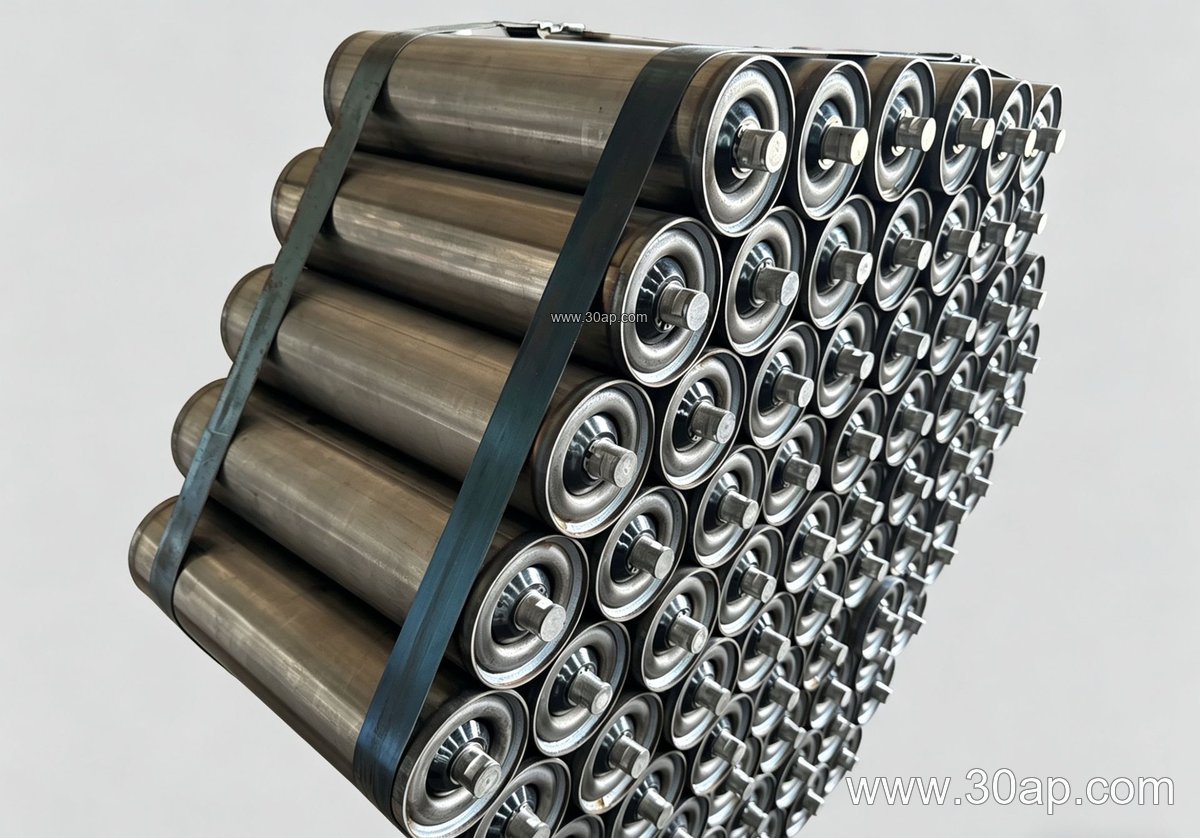
A typical trough idler consists of three idler rollers mounted in a steel frame or conveyor bracket. The center roll is horizontal, while the two side rolls are inclined to form the trough. Roller shells are often made of steel tube, nylon, or ceramic, and rubber rings may be added for impact absorption. Bearing sizes such as 6204, 6205, 6305, 6306, 6308, or 6310 are matched to the load and speed requirements, not to a single roller diameter. Common roller diameters include Ø63, Ø76, Ø89, Ø102, Ø108, Ø127, Ø133, Ø159, Ø178, Ø194, and Ø219 mm. The correct roll length depends on belt width, trough angle, and the specific idler arrangement; for a three-roll trough set, typical roll lengths are roughly 200 mm for B500, 250 mm for B650, 315 mm for B800, 380 mm for B1000, 465 mm for B1200, 530 mm for B1400, 600 mm for B1600, 670 mm for B1800, and 750 mm for B2000. These are common examples, and side rolls may differ from the center roll.
Key dimensions at a glance
| Parameter | Common range or example |
|---|---|
| Roller diameter | Ø63 to Ø219 mm |
| Belt width | B400 to B2400 mm |
| Trough angle | 20°, 30°, 35°, 45° |
| Bearing | 6204, 6205, 6305, 6306, 6308, 6310 |
| Roll surface | Steel tube, nylon, ceramic, rubber rings |
For reference, a 1200mm wide conveyor belt running at a 35 degree trough angle might use a trough idler set with 465 mm rolls and Ø127 mm rollers, but final selection should always follow the conveyor design. A heavy-duty mining conveyor belt or steel cord conveyor belt may call for larger rollers and heavier frames than a lighter aggregate conveyor belt.
Where Trough Idlers Are Used
You will find belt conveyor trough idlers in almost any bulk material handling operation. In a sand and gravel plant, they support the crusher conveyor belt and keep material from rolling off. In a coal mining conveyor system, trough idlers carry the coal mining conveyor belt through transfer points and long overland runs. Cement plants rely on them for clinker and raw meal transport, while power plants use them on coal conveyors feeding boilers. The same component appears in fertilizer plants, grain terminals, and tunnel muck removal lines. When the belt is a pipe conveyor belt or a corrugated sidewall conveyor belt, the trough idler design may change, but the basic function of supporting and shaping the belt remains.
Selection and Maintenance Notes
Buyers should consider belt width, trough angle, material lump size, and operating environment. Abrasive materials such as iron ore or copper ore may require abrasion resistant conveyor belt and robust roller shells. High temperature applications, such as cement clinker or sinter, may need heat resistant conveyor belt and idlers with suitable bearing clearance. In cold climates, a cold resistant conveyor belt paired with properly sealed idlers helps avoid startup problems. Flame retardant conveyor belt is common in underground coal mining, and the trough idler frames should be compatible with the conveyor bracket and structure.
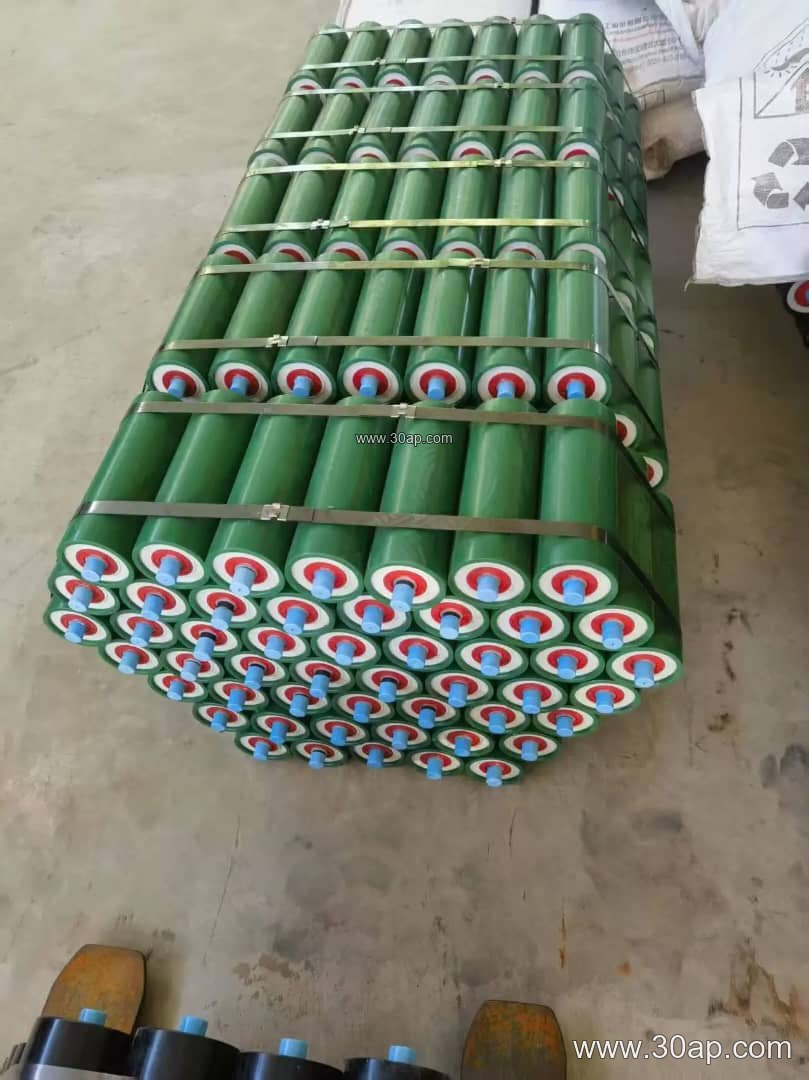
Maintenance checks include roller rotation, bearing noise, shell wear, and frame alignment. A seized roller can damage the conveyor belt quickly, so spare trough idler sets should be kept on hand. Lubrication practices vary by bearing type and seal design; sealed-for-life bearings are common in dusty quarry and mining environments. Always confirm roller diameter, roll length, and bearing size against the original conveyor specification rather than assuming one belt width matches one roller size.
Buyer Checklist
- Confirm belt width and trough angle before ordering trough idler sets.
- Match roller diameter and bearing size to the load and speed, not to belt width alone.
- Choose roller surface and seal type for the environment: dust, water, heat, or oil.
- Check frame dimensions and mounting holes against the existing conveyor bracket.
- Keep a small stock of spare idler rollers and frames for critical conveyors.
Whether the plant handles limestone, coal, clinker, or iron ore, the belt conveyor trough idler remains a simple but vital part of the conveyor system. Getting the specifications right at the buying stage pays off in longer belt life and fewer unplanned stops.