What an Adjustable Conveyor Bracket Does
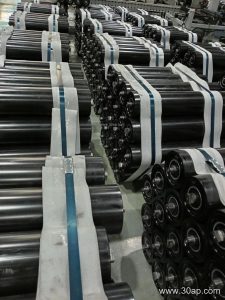
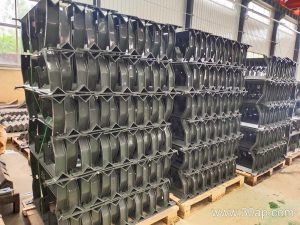
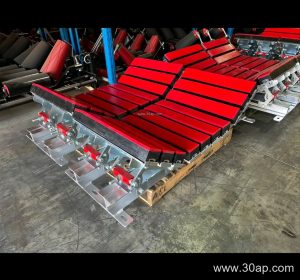
An adjustable conveyor bracket is the support component that holds idler rollers at a chosen trough angle while allowing that angle to be changed after installation. Instead of welding a fixed frame at one profile, the adjustable bracket uses slotted or pivoting mounting points so maintenance crews can reset the trough shape when the conveyed material, belt condition, or operating load changes. On a quarry conveyor line or a cement plant transfer point, this flexibility keeps the belt centered and reduces spillage without replacing the whole idler frame.
The same product is often called an adjustable idler bracket or adjustable roller support bracket. It is a bracket, not a pulley: drive pulleys, tail pulleys, and bend pulleys remain separate components with their own mounting arrangements.
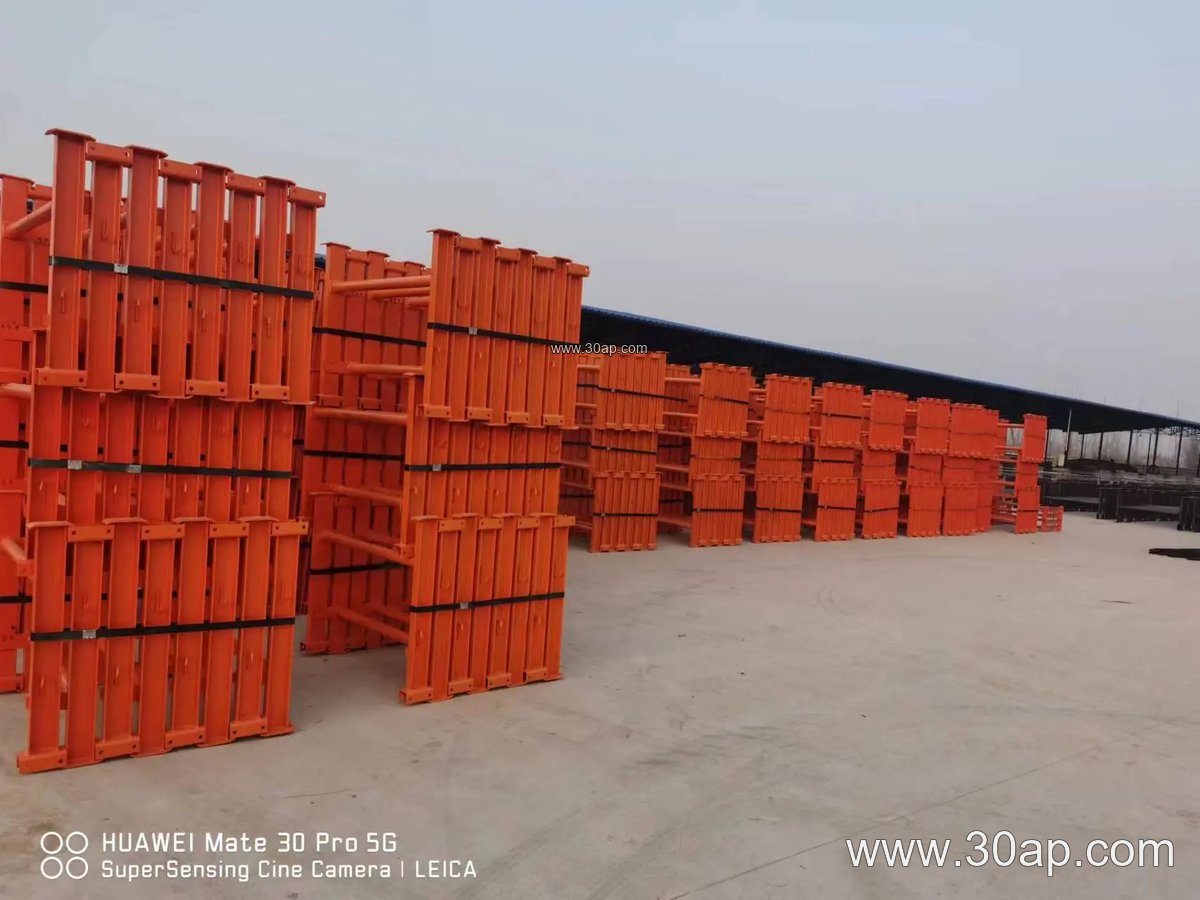
Construction and Adjustment Method
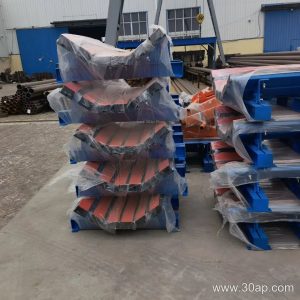
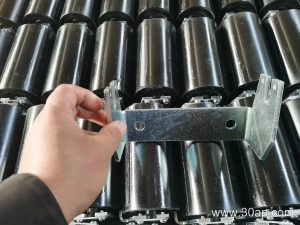
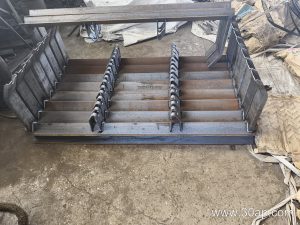
Most units are fabricated from angle steel, channel steel, or bent steel plate. The frame carries the mounting holes for the carrying idlers, and the adjustable feature comes from slotted holes, hinged arms, or a pivoting saddle that locks into position with bolts. Common trough angles include 20, 30, 35, and 45 degrees, and a single adjustable bracket can typically be set anywhere within that working range rather than being limited to one profile.
Belt width and roller diameter guide the frame dimensions. Typical combinations look like B800 with 35 degrees and Ø108 rollers, B1200 with 45 degrees and Ø133 rollers, or B650 with 30 degrees and Ø89 rollers. These are reference examples, not fixed pairings; hole spacing and crossbeam length should be confirmed against the actual conveyor design. Forward tilt of roughly 1.5 to 2 degrees is sometimes built into the mounting position to help with belt training.
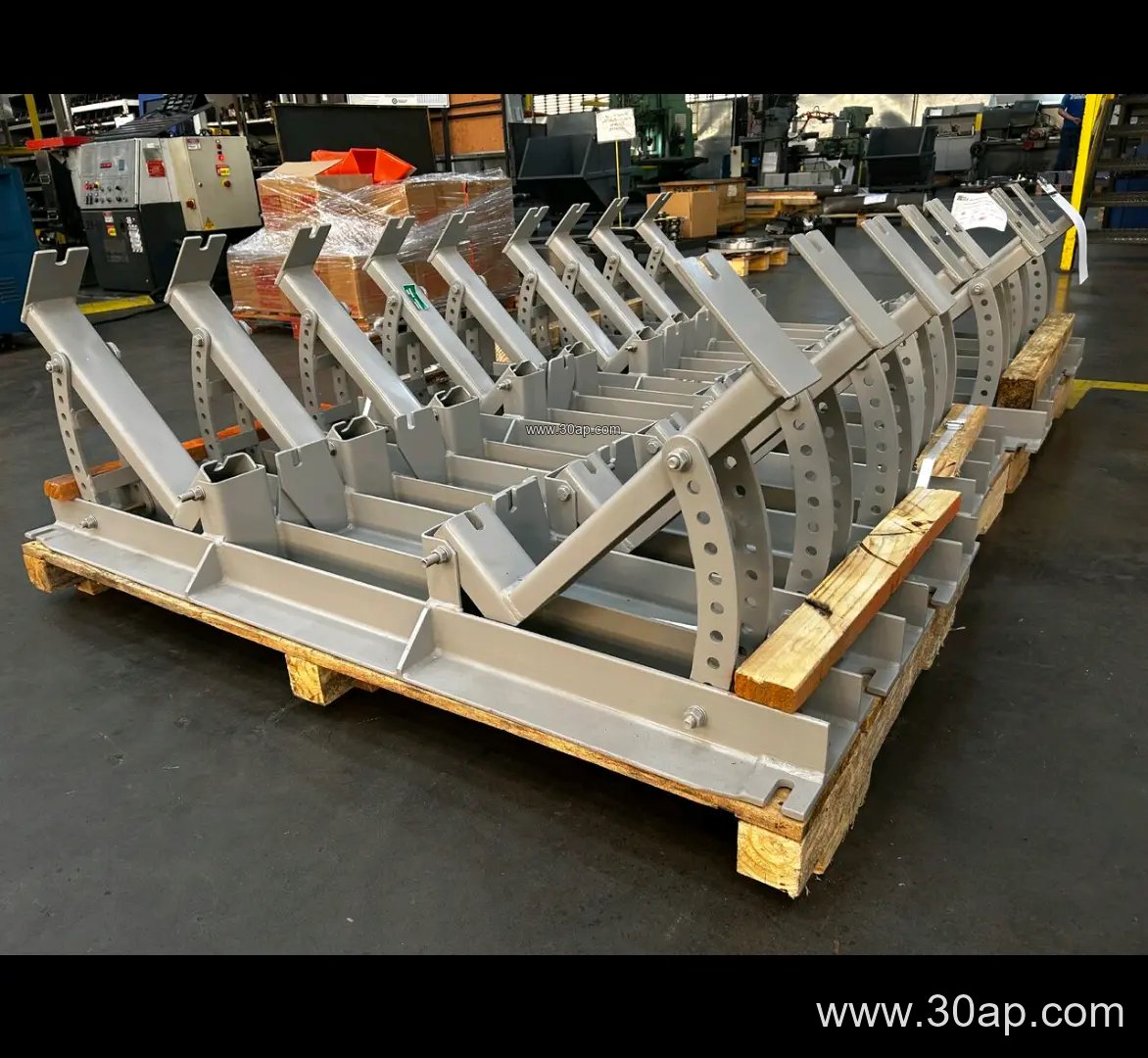
Where It Fits on the Conveyor
The adjustable bracket is most often used in the carrying run, where it supports troughing idlers and sets the belt profile. It can also appear at transition zones between the tail pulley and the first full trough set, where the belt must change shape gradually. In a coal handling plant or a power plant coal yard, operators may tighten the trough angle to contain a wider load, then relax it when belt wear or material changes call for a gentler profile.
It works alongside the conveyor belt, idler roller, and conveyor pulley rather than replacing them. A skirted conveyor belt or corrugated sidewall conveyor belt may need a different trough setting than a flat EP conveyor belt, and the adjustable bracket makes that change possible without cutting steel.
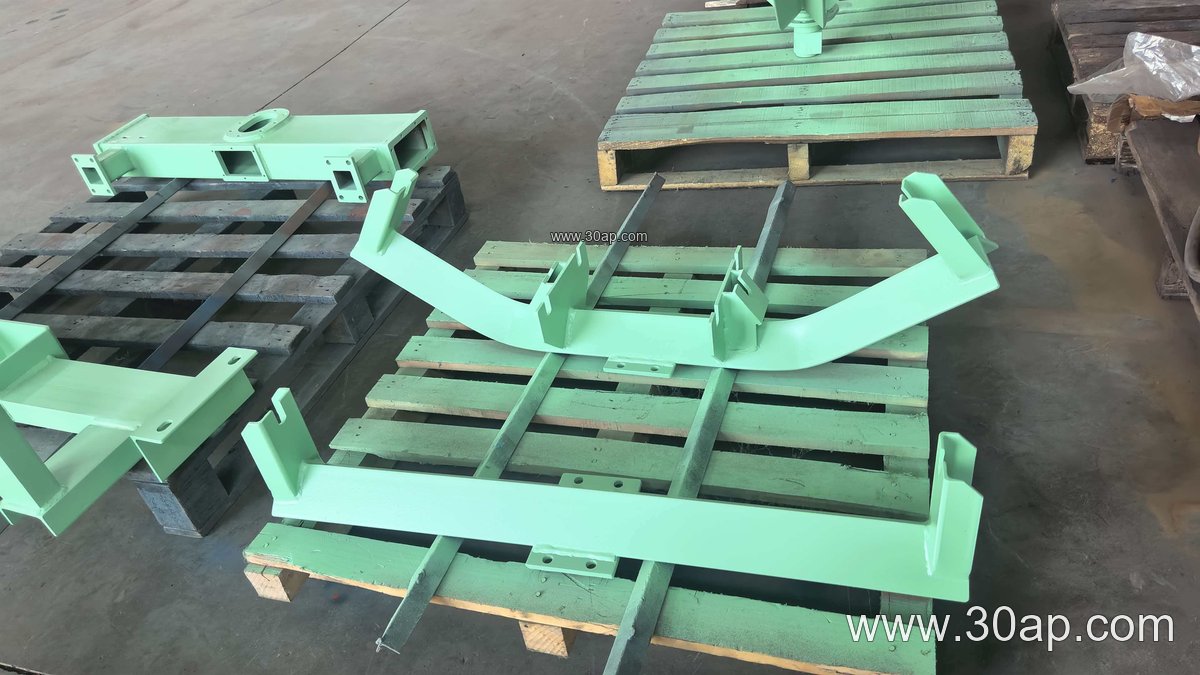
Selection Points for Buyers
- Confirm belt width and idler diameter before ordering, since frame length and hole patterns follow these dimensions.
- State the required trough angle range and whether forward tilt is needed.
- Check the mounting interface with the existing conveyor stringer or frame.
- Match material thickness to the duty: heavier channel or plate for high-tonnage ore and aggregate lines, lighter angle for moderate service.
- Confirm bolt grade and locking method so the setting does not drift under vibration.
Buyers serving iron ore, limestone, sand and gravel, or fertilizer handling should describe the material and belt type clearly. A heavy-duty mining conveyor belt running at high tonnage may call for a stiffer bracket than a food grade conveyor belt on a light line.
Installation and Maintenance Notes
Set the bracket to the design trough angle, tighten the locking bolts to the specified torque, and check alignment against the adjacent idler sets. After the first few days of running, recheck the bolts, because vibration can loosen a slotted connection. Inspect for bent arms, elongated slots, and corrosion at the pivot points, especially in wash-down or coastal environments. Replacing a worn bracket early protects the conveyor belt from edge damage and helps the idler roller run true.
For more on matching brackets with rollers and belts, see the conveyor bracket and conveyor pulley pages at beltconveyorparts.com, or review idler roller options at idler-roller.com before finalizing the frame layout.