What a Friction Self-Aligning Idler Does
A friction self-aligning idler is a specially designed conveyor idler that uses the friction between the rotating roller and the belt to automatically correct belt misalignment. Unlike fixed trough idlers, this self-aligning roller pivots on a vertical axis, allowing it to steer the belt back to the center when it starts to drift. This automatic correction reduces spillage, edge damage, and downtime, making it a valuable component in bulk material handling systems. In many plants, a single friction self-aligning idler can replace manual tracking adjustments and improve overall conveyor reliability.
Construction and Working Principle
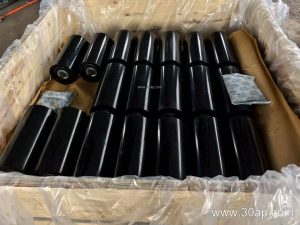
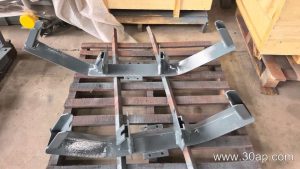
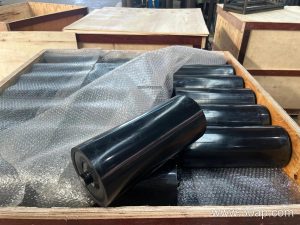
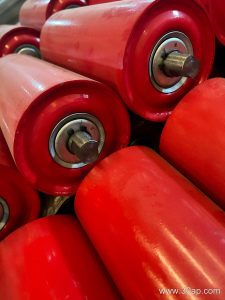
The friction self-aligning idler typically consists of a sturdy steel frame, one or more rollers mounted on a pivot base, and a friction mechanism that senses belt deviation. When the belt contacts the roller unevenly, the friction force generates a turning moment that rotates the idler assembly slightly. This angular change creates a steering effect on the belt, guiding it back to the correct path. Common roller diameters for this type include Ø89, Ø108, Ø127, and Ø133 mm, with bearing sizes such as 6204, 6205, or 6305 depending on the load. The roller surface may be plain steel or covered with rubber to increase friction and protect the belt.
Key Features and Benefits
- Automatic belt tracking without external power or sensors
- Reduced belt edge damage and material spillage
- Simple mechanical design with few wear parts
- Easy installation on new or existing conveyors
- Compatible with a wide range of belt widths and speeds
Because the friction self-aligning idler responds instantly to misalignment, it helps extend the service life of the conveyor belt and minimizes maintenance interventions. It is especially useful in installations where the belt is prone to wander due to uneven loading, off-center feeding, or structural misalignment.
Where Friction Self-Aligning Idlers Are Used
These idlers are commonly found in quarry and aggregate operations, as well as in cement plants. In a quarry, they help keep the belt centered on the return side after the discharge point, reducing spillage of crushed stone. In cement plants, they are often installed on long transfer conveyors where belt wander can cause dust emission and material loss. Other industries such as power plants, steel mills, and coal preparation plants also benefit from friction self-aligning idlers, particularly on conveyors carrying abrasive or heavy loads.
Selection and Sizing Guidelines
Choosing the right friction self-aligning idler involves matching the roller diameter and bearing capacity to the belt width and load. The table below shows typical roller lengths for three-roll troughing sets, which can serve as a reference. Note that these are common examples, not fixed rules; side rollers and center rollers may differ, and the final dimensions should be confirmed with the conveyor design.
| Belt Width | Typical Roller Length (mm) | Common Roller Diameter (mm) |
|---|---|---|
| B500 | 200 | Ø89, Ø108 |
| B650 | 250 | Ø89, Ø108 |
| B800 | 315 | Ø108, Ø127 |
| B1000 | 380 | Ø108, Ø133 |
| B1200 | 465 | Ø127, Ø133 |
| B1400 | 530 | Ø133, Ø159 |
| B1600 | 600 | Ø133, Ø159 |
| B1800 | 670 | Ø159, Ø178 |
| B2000 | 750 | Ø178, Ø194 |
For heavy-duty applications, such as those handling iron ore or copper ore, a larger roller diameter like Ø194 or Ø219 mm may be used, paired with bearings such as 6308 or 6310. The belt width also influences the choice of idler: narrower belts like 650mm or 800mm often use smaller diameters, while wide belts of 1800mm or 2000mm require larger, more robust rollers. Always consider the belt speed, material weight, and environmental conditions when selecting a friction self-aligning idler.
Maintenance and Best Practices
Regular inspection of the friction self-aligning idler is important to ensure its continued effectiveness. Check for free rotation of the roller, wear on the friction surfaces, and secure mounting of the pivot base. Lubricate bearings according to the manufacturer’s schedule, and replace any roller that shows excessive play or surface damage. Keep the area around the idler clean to prevent material buildup that could interfere with the self-aligning action. When used with abrasive materials, consider idlers with rubber or ceramic lagging to extend service life.
In summary, the friction self-aligning idler is a practical solution for maintaining belt alignment in demanding conveyor systems. By understanding its construction, typical applications, and selection criteria, operators can improve conveyor performance and reduce maintenance costs.