What a Herringbone Grooved Lagged Pulley Does
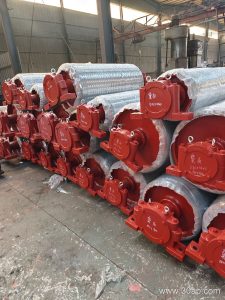
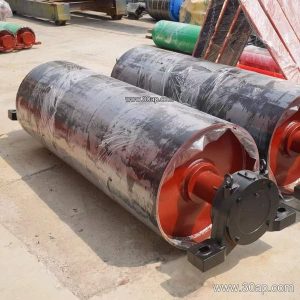
A herringbone grooved lagged pulley is a conveyor pulley whose rubber lagging carries a V-shaped groove pattern. The grooves follow a herringbone layout, meeting at the centre of the shell and running outward toward both edges. This design is used where the pulley must transmit torque to the conveyor belt with less risk of slip, especially when the belt surface may be wet, dusty, or carrying fines. In bulk handling circuits, the pulley is often the head or drive pulley that pulls the loaded belt, but the same groove pattern can appear on other pulley positions when extra traction is needed.
The herringbone groove is not the same as a plain diamond lagging. The chevron-shaped channels help water and loose material escape from under the belt instead of being trapped between belt and lagging. That makes the herringbone grooved lagged pulley a practical choice in washing plants, aggregate lines, and cement plants where spillage and moisture are common. It is also used in power plant coal handling and in some quarry conveyor systems where the belt needs a reliable grip on the drive pulley.
Construction and Groove Details
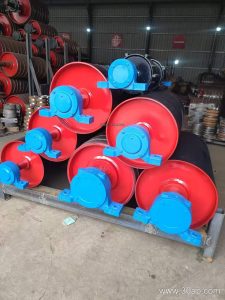
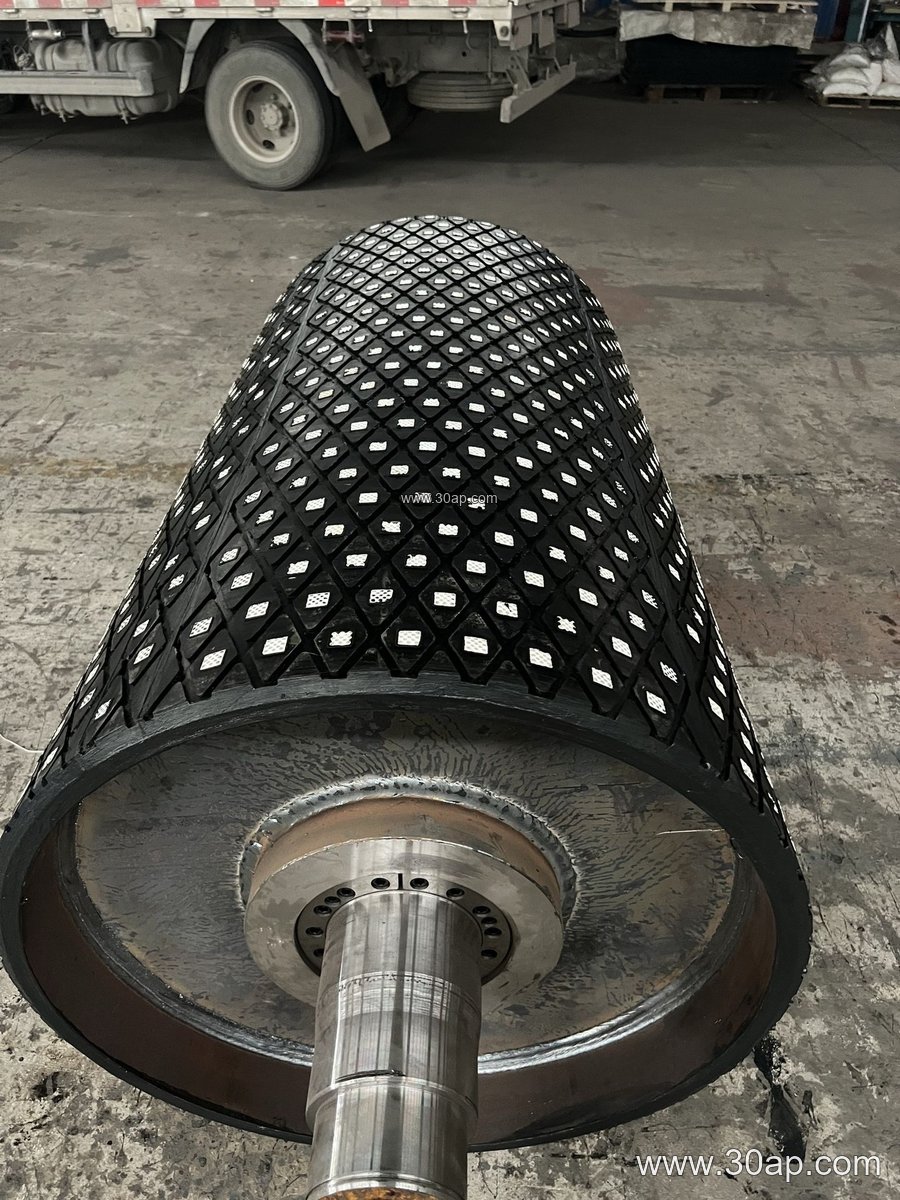
The pulley body is usually a welded steel shell with end discs and a shaft. Lagging is applied to the shell surface, and the grooves are cut or moulded into the rubber. Common lagging thicknesses are 8, 10, 12, 15, and 20 mm, with the groove depth and pitch chosen to suit the belt and the duty. The rubber compound can be selected for abrasion resistance, oil resistance, or flame retardant properties depending on the site. In coal mining and underground coal mining conveyor systems, flame retardant lagging is often specified, while iron ore and copper ore operations may favour high abrasion resistant rubber.
The groove pattern itself is the defining feature. Herringbone grooves are arranged in a chevron that points in the direction of belt travel or opposite to it, depending on the design intent. The pattern helps to centralise the belt and reduce the chance of material building up on the pulley face. A herringbone grooved lagged pulley is therefore not just a smooth drum with rubber; the groove geometry is part of the traction and cleaning function.
Where It Fits in a Conveyor
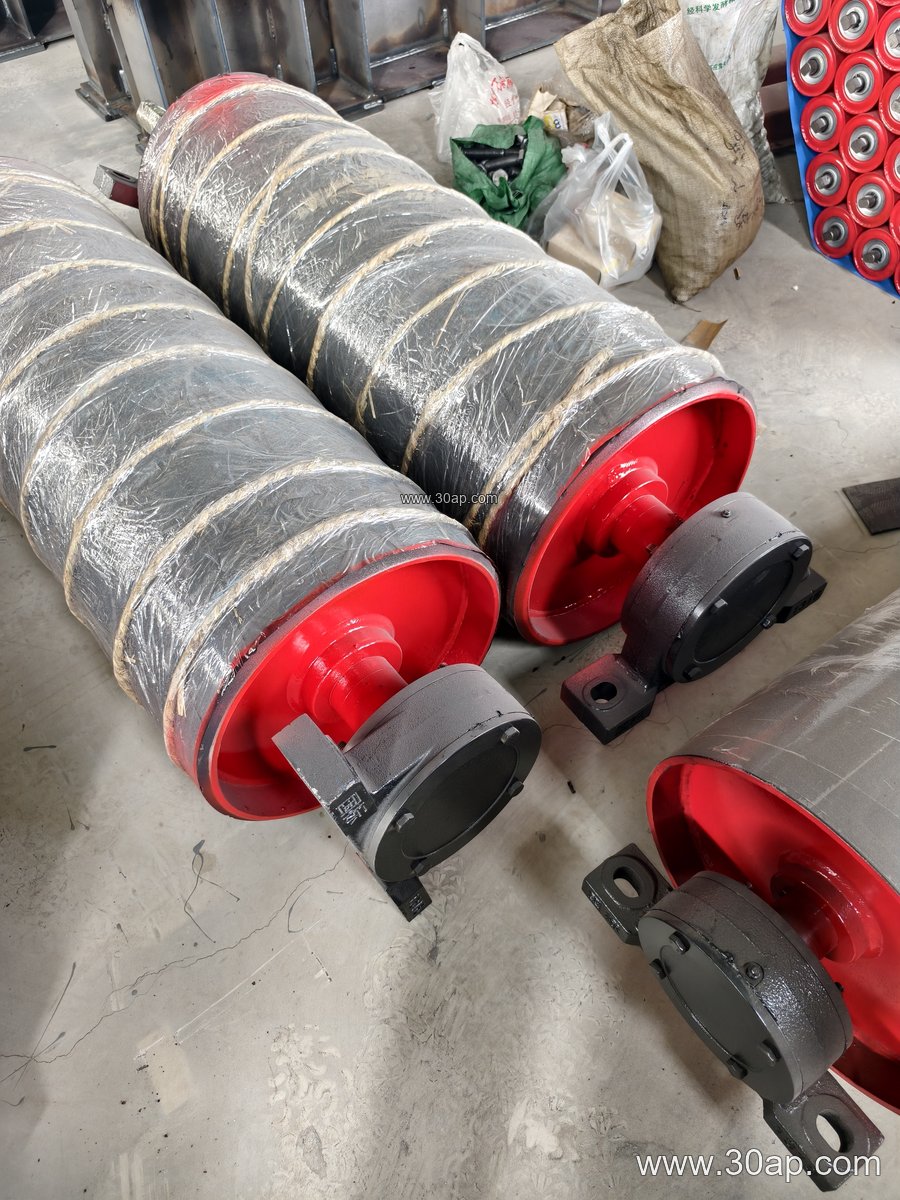
This pulley type is most often found at the drive position, where the conveyor belt wraps the pulley and the motor transmits power through the shaft. It can also be used as a tail pulley or bend pulley in circuits where belt slippage is a concern, but the drive duty is the main reason to choose the herringbone groove. In a typical stone crushing plant, the belt carrying crushed rock from the crusher to the screen may use a herringbone grooved lagged pulley at the head. In a cement plant, the clinker conveyor may use one where dust and heat are present, provided the lagging compound is selected for the temperature.
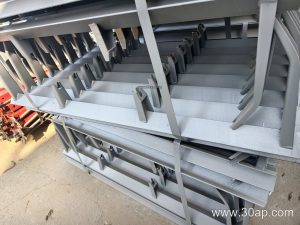
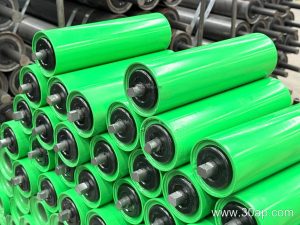
The pulley works together with the conveyor belt, idler roller, and conveyor bracket. The bracket and bearing housing must be aligned so the belt tracks correctly; a grooved lagging cannot compensate for poor alignment. The belt itself should be suitable for the load and the environment. For example, an EP conveyor belt or a steel cord conveyor belt may be used on the same conveyor, but the pulley lagging and groove pattern should be matched to the belt cover and the material carried. A rough top belt or a chevron conveyor belt may need a different groove approach than a smooth EP belt.
Common Sizes and Configurations
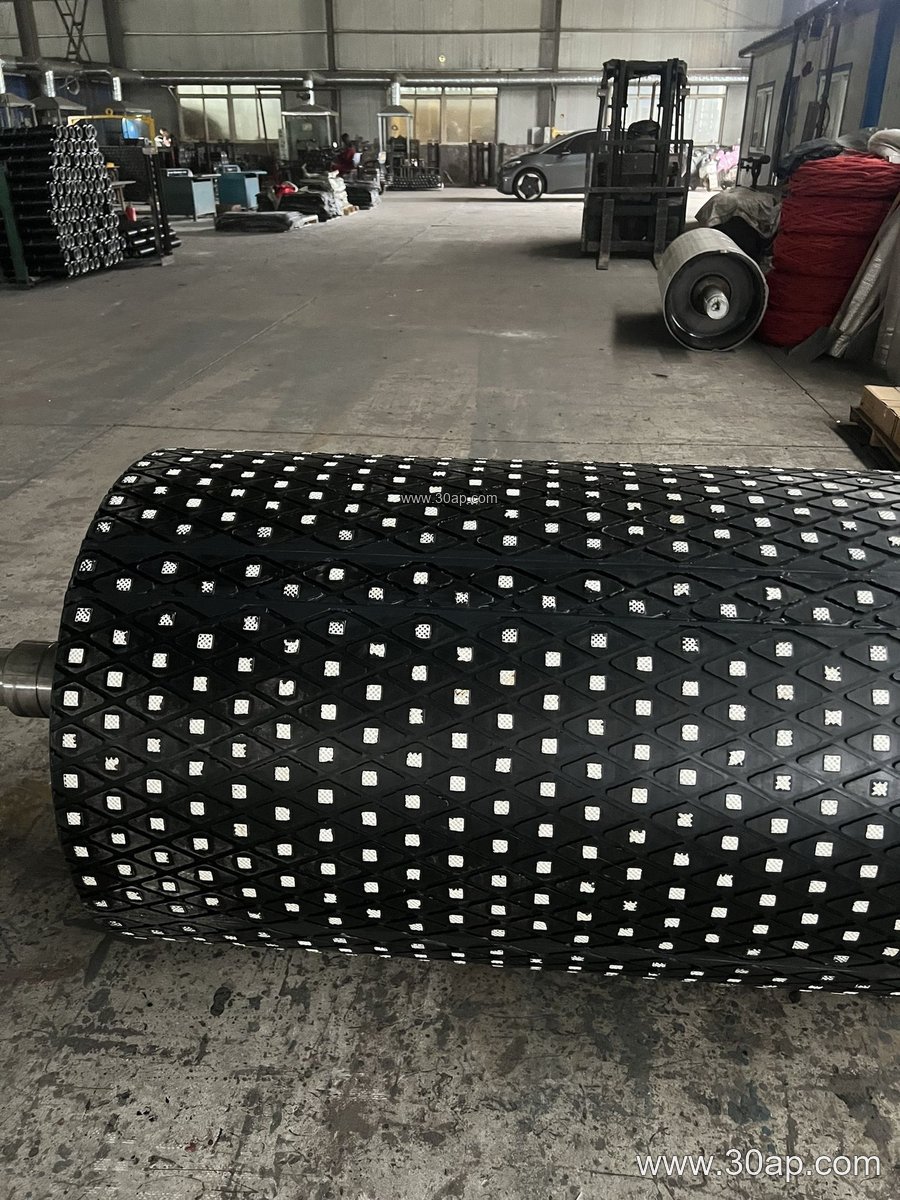
Herringbone grooved lagged pulleys are made in a range of diameters and face widths. The table below shows common reference combinations, not fixed rules. A belt width does not dictate a single pulley diameter; the diameter is chosen from belt tension, shaft load, and the space available.
| Belt width reference | Typical pulley face width | Example diameter range |
|---|---|---|
| B500 | about 600 mm | Ø250 to Ø400 |
| B650 | about 750 mm | Ø315 to Ø500 |
| B800 | about 950 mm | Ø400 to Ø630 |
| B1000 | about 1150 mm | Ø500 to Ø800 |
| B1200 | about 1400 mm | Ø630 to Ø1000 |
| B1400 | about 1600 mm | Ø800 to Ø1250 |
Shaft diameters are usually in the range of Ø50 to Ø200 mm, determined by torque and load rather than belt width alone. A B800 × Ø500 pulley and a B1200 × Ø1000 pulley are both plausible, but they serve different tension requirements. The lagging thickness and groove depth should be stated on the drawing, along with the rubber grade. For harsh conditions, a herringbone grooved lagged pulley may be supplied with 12 mm or 15 mm lagging and a high abrasion resistant compound.
Buyer Checklist
- Confirm the pulley position: drive, tail, bend, or take-up. A herringbone grooved lagged pulley is most common on the drive, but other positions may use a different surface form.
- State the belt width and the required face width. The pulley face is usually wider than the belt, for example about 1400 mm for a B1200 belt.
- Provide the calculated shaft load and torque so the shaft diameter and bearing size can be checked.
- Specify the lagging compound and thickness. Flame retardant and anti-static grades are available for underground coal mining and other hazardous areas.
- Describe the material and conditions: wet, oily, abrasive, or high temperature. This affects the choice between herringbone grooved lagging and plain or diamond lagging.
- Check that the conveyor bracket and idler roller arrangement allow correct belt tracking. The pulley cannot correct a misaligned frame.
For conveyors carrying heavy bulk material, the pulley should be matched to the belt type, whether that is a multi-ply fabric core conveyor belt, an EP conveyor belt, or a steel cord conveyor belt. The same applies to special belts such as a heat resistant conveyor belt or an oil resistant conveyor belt; the lagging must tolerate the same environment. A herringbone grooved lagged pulley is a focused solution for traction and water shedding, not a universal replacement for every pulley in the plant.