What a Stone Conveyor Pulley Does
A stone conveyor pulley is the cylindrical rotating component that carries and drives the conveyor belt at key points along a stone crushing or aggregate handling line. In a quarry or sand and gravel plant, the pulley is not a passive part; it transfers torque to the belt, sets the belt path, and helps keep the belt tracking straight under heavy, abrasive loads. Buyers often call this component a conveyor drum, which is an accurate equivalent name for the same product. This article looks at construction, surface options, typical positions, and the points to check when ordering.
Construction and Key Dimensions
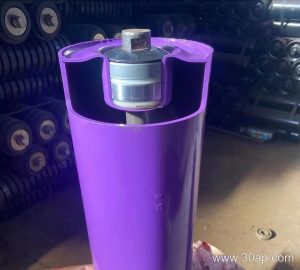
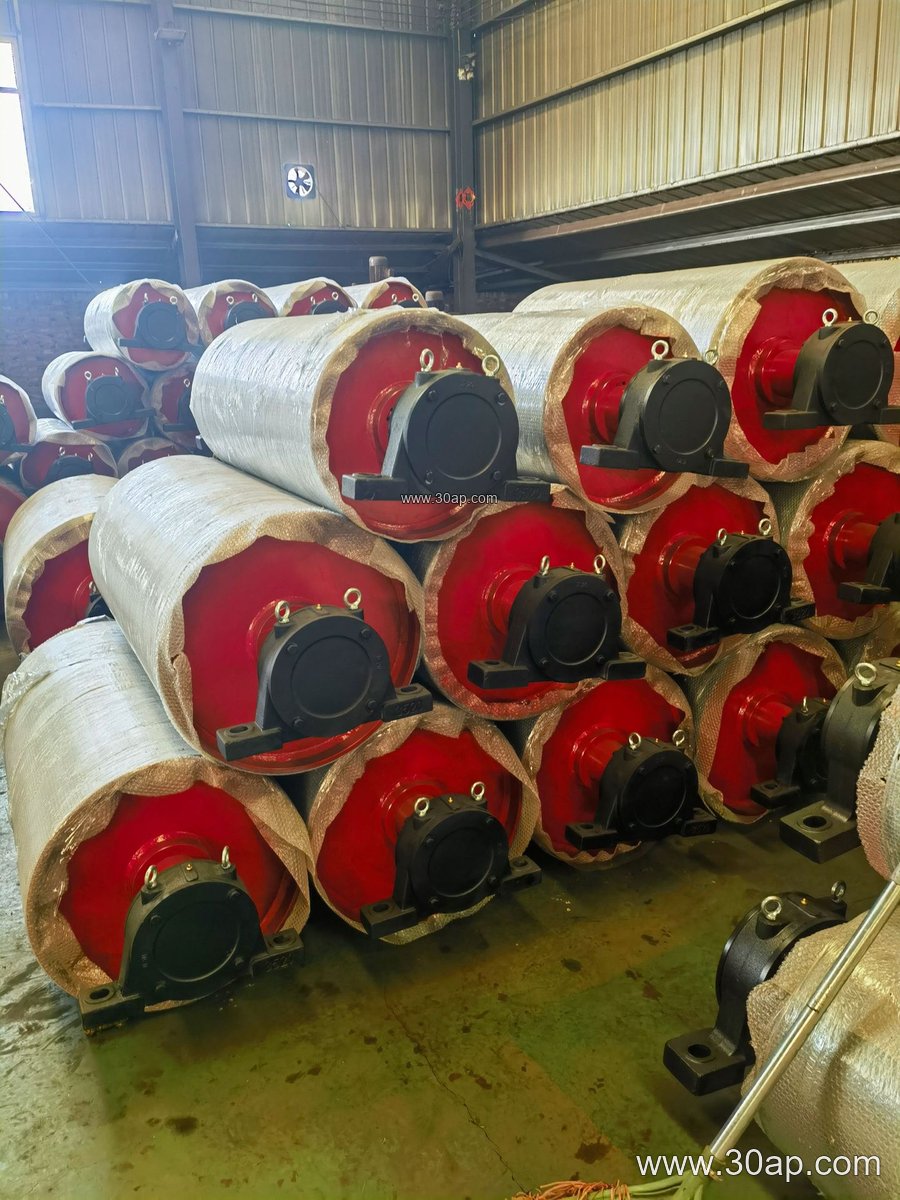
Most stone conveyor pulleys are built from a fabricated steel shell with welded end discs and a through shaft, or from a rolled shell with hubs and a shaft. The shell is machined or ground to keep the surface concentric with the shaft, because runout causes belt tracking problems and premature wear on the conveyor belt. Bearings sit in housings or pillow blocks, and the pulley is fixed to the conveyor bracket through the shaft ends.
Dimensional choices follow belt width, load, and torque rather than a single fixed rule. Common shell diameters include Ø200, Ø250, Ø315, Ø400, Ø500, Ø630, Ø800, Ø1000, Ø1250, Ø1400, Ø1600, and Ø1800. Face width is usually a little wider than the belt: for example, B800 often pairs with a face around 950 mm, B1000 with about 1150 mm, and B1400 with about 1600 mm. Shaft diameters such as Ø80, Ø100, Ø120, Ø160, or Ø200 are determined by torque and bearing load, not by belt width alone.
Surface Forms and Their Uses
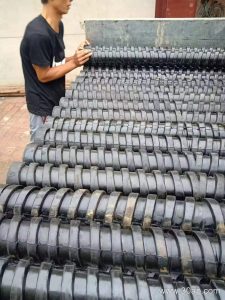
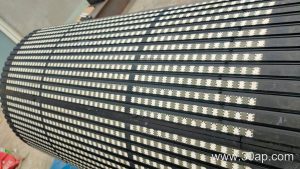
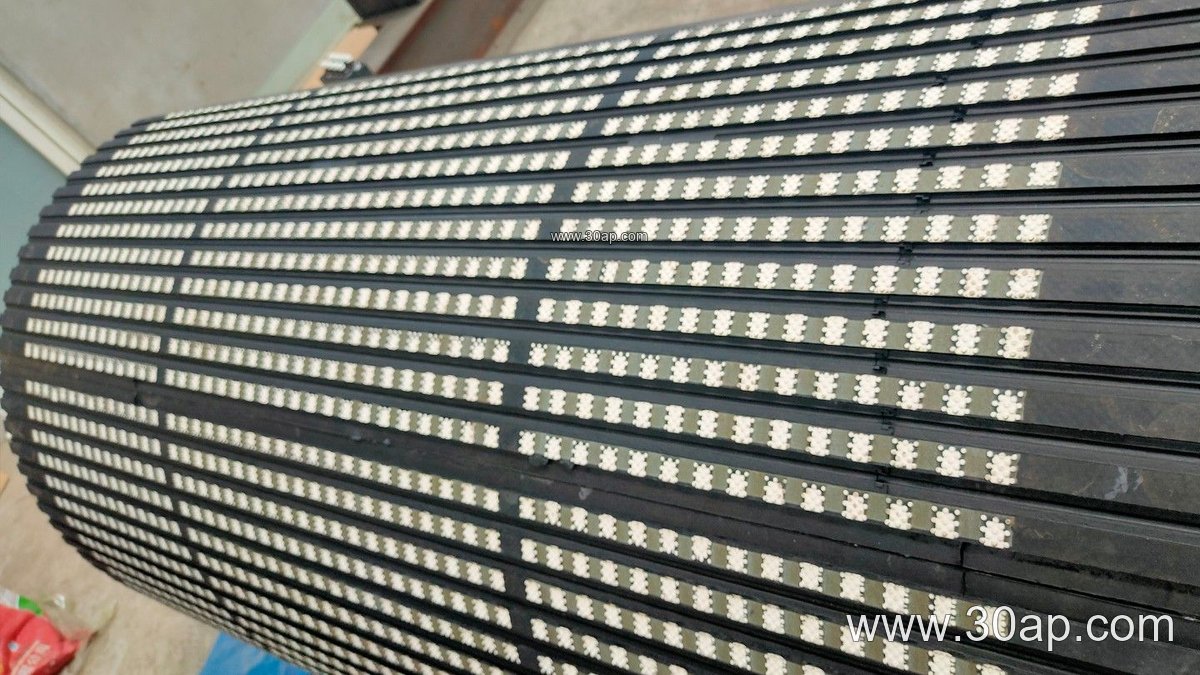
The pulley surface affects grip and wear life. Plain (smooth) shells suit tail or bend positions where little traction is needed. Rubber lagging, applied by cold bonding or hot vulcanizing, improves friction and protects the shell from fine stone dust. Diamond or herringbone grooving helps shed water and fines and improves tracking on wet or dirty belts. Ceramic lagging is chosen where slip and abrasion are severe, such as a drive pulley on a heavy stone crushing line.
- Plain shell: light duty, low traction demand
- Cold-bonded rubber: general stone and aggregate duty
- Hot-vulcanized rubber: higher grip and longer life
- Diamond or herringbone lagging: wet, dusty, or tracking-sensitive belts
- Ceramic lagging: high-torque drive positions with heavy abrasion
Lagging thickness is commonly 8, 10, 12, 15, or 20 mm, selected against belt tension and expected wear.
Where It Sits on the Conveyor
Position matters. A drive pulley at the head transmits power; a tail pulley at the loading end returns the belt and helps maintain tension; a bend pulley changes belt direction without driving. These are different functions and are not interchangeable, so the specification should name the position clearly. In a quarry line feeding a crusher, a lagged drive pulley may run alongside a smooth bend pulley and a tail pulley with a self-cleaning shell. Related parts such as the conveyor belt, idler roller, and conveyor bracket should be matched to the same duty level.
Buyer Checklist
Before ordering, confirm belt width, shell diameter, face width, shaft diameter, bearing type, lagging form and thickness, and the installation position. Check whether the belt is an EP conveyor belt, an abrasion resistant conveyor belt, or a heavy-duty mining conveyor belt, because belt stiffness and tension affect pulley grip and shell load. Ask for the balancing grade and runout tolerance, and confirm that the shaft keyway and bearing centers match the existing conveyor bracket. For wet or dusty stone lines, specify drainage-friendly lagging and sealed bearings.
At hanmun.com, stone conveyor pulley inquiries are usually answered faster when the drawing or the belt width, diameter, and lagging type are supplied together. A pulley that matches the belt and the duty will run cooler, track better, and last longer in quarry, cement, and aggregate service.