What an Idler Quotation Covers
When a plant engineer requests an idler quotation, the goal is not simply a price for a single roller. The document should define the carrying idler set, its mounting arrangement, and the running conditions that shape the design. A quotation may list a full troughing station for a quarry conveyor or a single return roller for a cement plant transfer point, but in both cases the specification matters as much as the number. Buyers who compare quotes on price alone often discover later that bearing class, roller wall thickness, or seal type was left undefined.
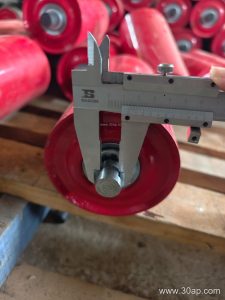
The idler roller itself is a steel tube fitted with end caps and a shaft, rotating on bearings that are protected by a sealing system. Its duty is to support the conveyor belt and the material load with low rolling resistance while keeping dust and moisture away from the bearing cavity. A well-prepared quotation reflects that duty in every line item rather than treating the roller as a generic spare.
Matching the Idler to the Belt Line
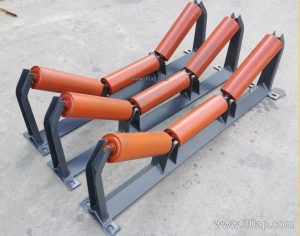
Selection starts with the belt width and the load profile. Troughing sets are commonly supplied as two-roll or three-roll assemblies, and the trough angle influences how much material a given belt can carry. Typical angles of 20, 30, 35, and 45 degrees suit different material characteristics and transfer conditions. For wider belts, the roller length changes with the belt width and the number of rolls; for example, a three-roll troughing set on a B1000 belt often uses rolls in the region of 380 mm long, while a B1400 set may use rolls around 530 mm. These figures are common references, not fixed rules, and side rolls can differ from the centre roll.
Roller diameter selection usually follows belt speed and load. Diameters such as Ø89, Ø108, Ø127, Ø133, and Ø159 appear frequently in bulk handling, while heavier stations may use Ø178 or Ø194. The bearing size should be chosen together with the shaft and load calculation, not inferred from belt width alone. A quotation that states bearing numbers such as 6205, 6305, or 6308 gives the maintenance team a clear basis for spares planning.
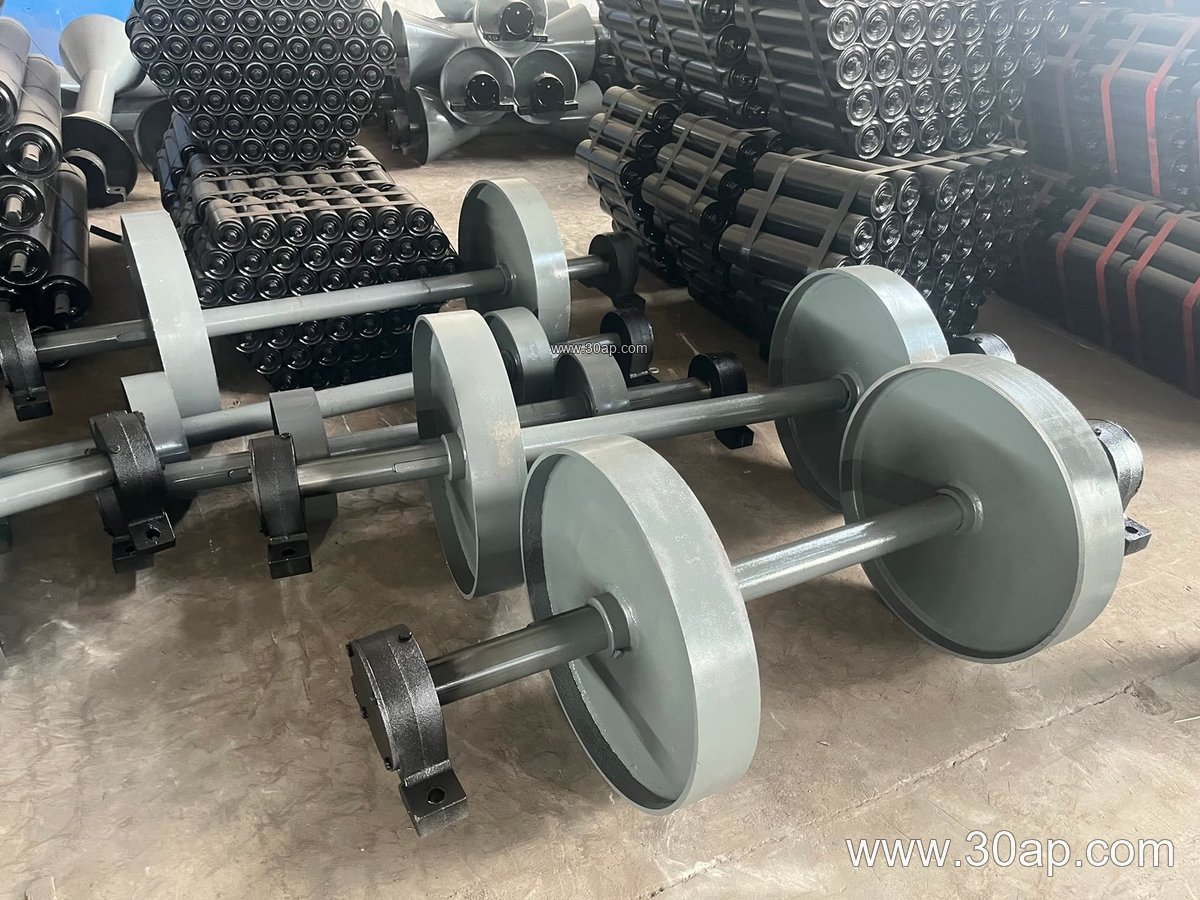
Where Idlers Earn Their Keep
In an iron ore plant, impact idlers with rubber rings are often placed below the loading point to absorb the fall of lump ore, while standard troughing idlers carry the material along the main run. In a coal handling system feeding a power plant, self-aligning idlers help correct belt drift on long spans, and return rollers support the empty belt on the lower strand. Sand and gravel operations, crushing and screening circuits, and fertilizer plants all rely on the same principles: support the belt, control its path, and keep the bearings clean.
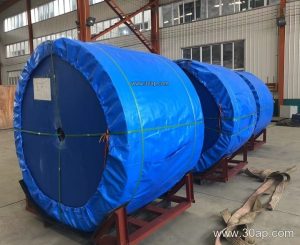
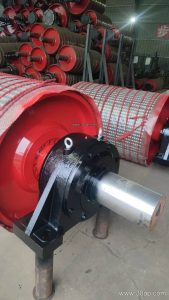
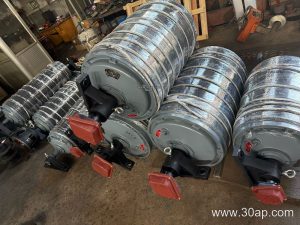
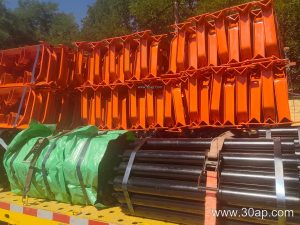
The idler is only one part of the conveyor. The conveyor belt, conveyor pulley, and conveyor bracket must all be compatible with the chosen roller. A quotation for idlers should therefore identify the frame type and mounting dimensions so that the new rollers fit existing brackets without field modification.
Reading a Quotation Line by Line
- Roller type and position: troughing, return, impact, or self-aligning.
- Roller diameter and length, with the number of rolls per set.
- Tube material and wall thickness, such as steel tube or nylon-covered roller.
- Bearing designation and sealing arrangement.
- Shaft end configuration and fixing method.
- Surface treatment, including painting or rubber lagging where specified.
Buyers should also confirm whether the quotation covers complete stations or rollers only, and whether installation hardware is included. Where a project involves a long overland conveyor, the same quotation may need to address several belt sections with different duty levels.
Specification Table for Reference
| Item | Common Options | Notes |
|---|---|---|
| Idler type | Troughing, return, impact, self-aligning | Position on the conveyor determines the type |
| Roller diameter | Ø63, Ø89, Ø108, Ø127, Ø133, Ø159, Ø178 | Selected by load and belt speed |
| Belt width reference | B500, B800, B1000, B1200, B1400, B1600 | Roller length follows the station design |
| Trough angle | 20, 30, 35, 45 degrees | Affects material cross-section |
| Bearing | 6204, 6205, 6305, 6306, 6308, 6310 | Matched to shaft and load calculation |
| Roller surface | Steel, nylon, ceramic, rubber ring | Rubber rings suit impact zones |
Values in this table are typical references. Final dimensions should be confirmed against the conveyor drawing and the actual belt specification.
Questions to Ask Before Ordering
A useful idler quotation answers several practical questions. What is the measured belt width and current roller length? Is the station a two-roll or three-roll design? What is the trough angle? Are the bearings sealed for dusty or wet conditions? Does the plant require a specific shaft end to match existing brackets? For abrasive service, such as a quarry conveyor carrying crushed rock, roller wall thickness and seal quality deserve more attention than a small difference in unit price.
It also helps to state the operating environment. A coal mining conveyor may need flame retardant belting and suitably protected rollers, while a food or fertilizer line may call for a clean, corrosion-aware design. The quotation should reflect these conditions rather than offering a single universal roller for every position.
Keeping Spares Rational
Standardizing on a small number of roller diameters and bearing sizes across a plant simplifies inventory without compromising performance. Maintenance teams can then replace a worn return roller quickly and keep the line running. A clear idler quotation supports that strategy by documenting each item precisely, so the next order matches the last one and the conveyor stays predictable.