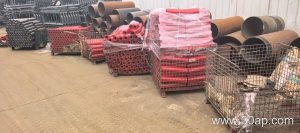
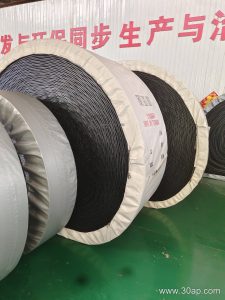
What a Conveyor Drive Pulley Does
The conveyor drive pulley is the powered drum at the head of a belt conveyor. It grips the inside of the conveyor belt and converts motor torque into linear belt motion. Everything downstream depends on this grip: a quarry conveyor belt hauling blasted rock, a cement plant moving clinker, or a power plant feeding coal into a boiler. Because the drive pulley transmits the full peripheral force, it is usually the largest and most heavily built drum on the machine.
It is also called a head pulley or drive drum. Those terms describe the same component. A tail pulley, a bend pulley and a take-up pulley look similar in a drawing but serve different purposes, so they should never be ordered as substitutes for a drive drum.
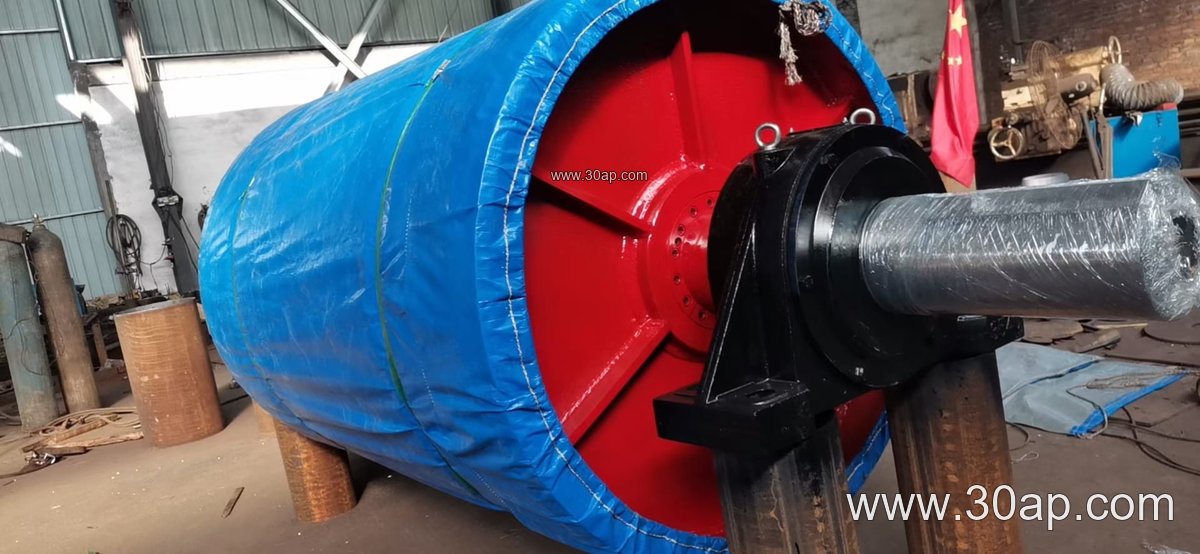
Construction and Key Components
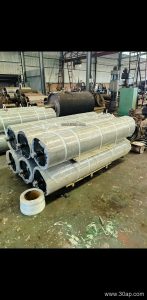
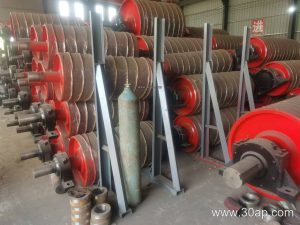
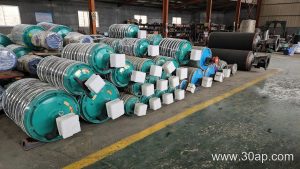
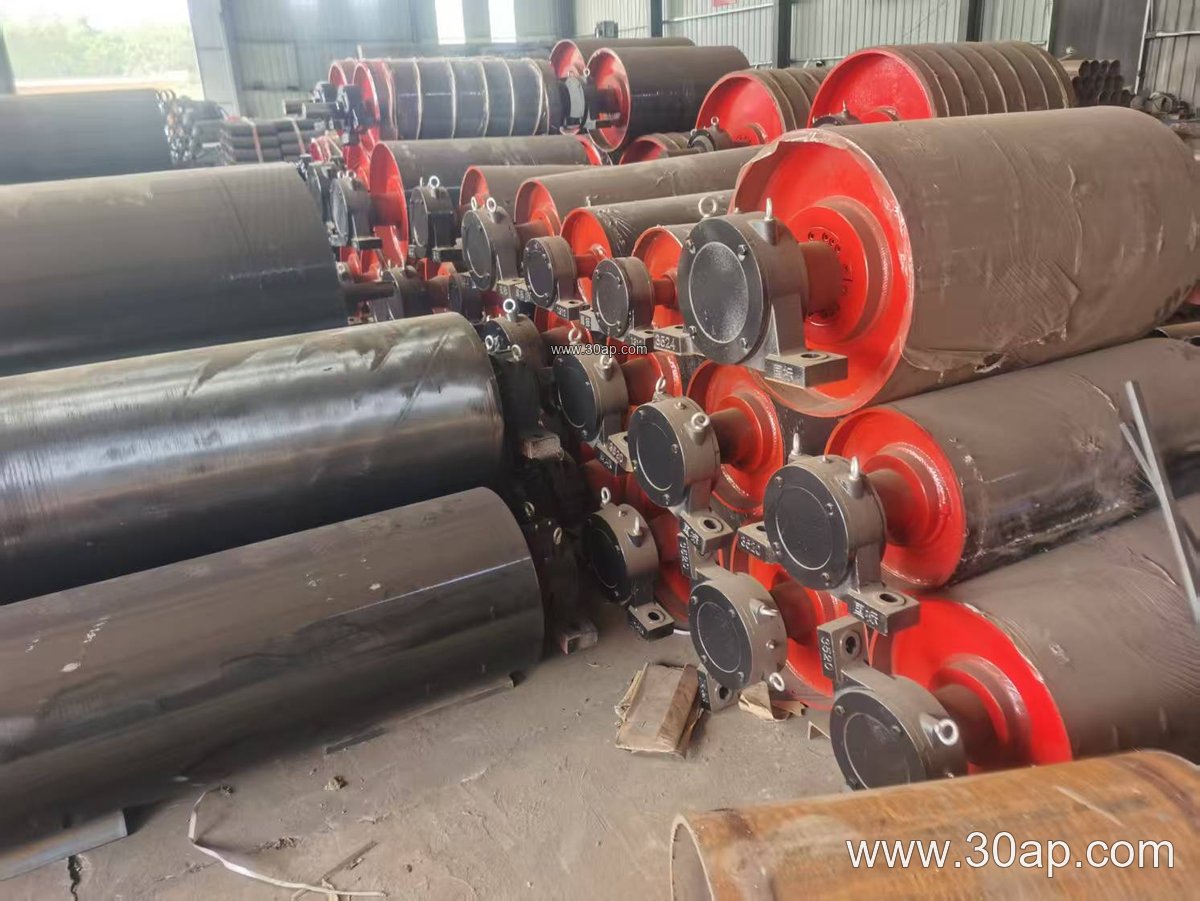
A typical drive drum consists of a cylindrical shell, two end discs, a shaft, and bearing housings mounted on a sturdy conveyor bracket or frame. The shell is often machined from seamless pipe or rolled plate, then welded to the discs and stress-relieved before finishing. The shaft is keyed or shrink-fitted to the hubs and sized by torque and radial load, not by belt width alone.
- Shell and discs carry the belt tension and bending loads.
- Shaft diameter is calculated from drive torque and bearing reactions; common sizes include Ø80, Ø100, Ø120, Ø140 and Ø160 mm, but the final value comes from the design.
- Lagging improves friction between drum and belt, reducing slip under load.
- Bearings are selected for the radial load from belt tension plus the weight of the drum.
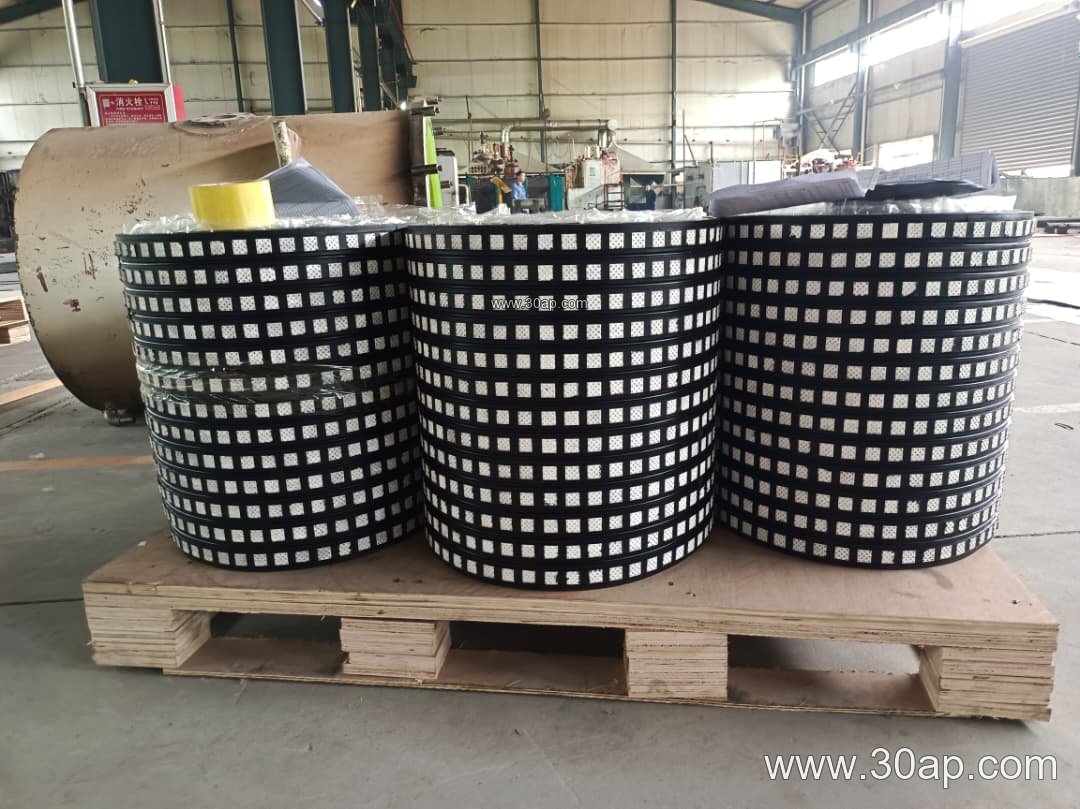
Surface options include plain, cast rubber, cold-bonded rubber, hot-vulcanized rubber, diamond grooving, herringbone grooving and ceramic lagging. Lagging thickness is commonly 8, 10, 12, 15 or 20 mm. Diamond or herringbone patterns help shed water and fines, which matters on a wash plant or in a tunnel where the belt can run wet.
Matching the Drum to the Belt and the Duty
Face width normally exceeds belt width so the belt is fully supported. A B800 belt often pairs with a drum face around 950 mm, and a B1200 belt with roughly 1400 mm, yet these are reference figures rather than fixed rules. Diameter is chosen from the belt’s wrap angle, the required traction, and the allowable belt sag between idler roller stations.
| Belt width | Typical drum face | Example diameter range |
|---|---|---|
| B500 | about 600 mm | Ø250 to Ø400 |
| B800 | about 950 mm | Ø400 to Ø630 |
| B1200 | about 1400 mm | Ø630 to Ø1000 |
| B1600 | about 1800 mm | Ø800 to Ø1250 |
The belt itself influences the choice. A heavy-duty mining conveyor belt with a steel cord conveyor belt carcass needs a larger drum to limit bending stress in the cords. An EP conveyor belt or NN conveyor belt with fabric plies tolerates tighter bending, so a smaller diameter may be acceptable. Abrasion resistant conveyor belt and heat resistant conveyor belt grades also affect lagging selection, since hot material can degrade ordinary rubber.
Where It Is Installed
Drive pulleys appear at the discharge end of nearly every bulk handling line. In an iron ore or copper ore plant, the head drum pulls ore conveyor belt sections up inclines. In a coal mining conveyor belt system, flame retardant conveyor belt and anti-static conveyor belt grades are common, and the drive drum must be earthed and fitted with lagging that will not generate static. Aggregate conveyor belt lines in a sand and gravel pit usually run smaller B650 or B800 drums with plain or diamond rubber surfaces.
Some plants use an electric drum, with the motor and gearbox built inside the shell, where space at the head end is tight. Others combine a drive pulley with a bend pulley to increase wrap angle on high-tension lines. Both arrangements are valid; the choice depends on layout and maintenance access.
Buyer Checklist Before Ordering
- Confirm belt width, belt type and the maximum belt tension the drum must handle.
- State the required shaft diameter and bearing type, or provide the drive torque so the supplier can calculate it.
- Choose lagging: plain for light duty, rubber for general service, ceramic for abrasive rock and ore.
- Check that the drum face, keyway and bolt pattern match the conveyor bracket and gearbox output.
- Ask for dynamic balancing data on large drums, especially above Ø1000 mm.
Maintenance Points That Extend Service Life
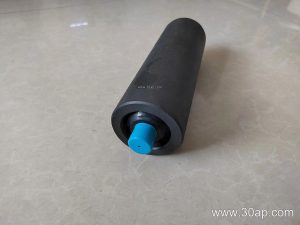
Lagging wear is the first sign of trouble. Worn grooves reduce friction and cause belt slip, which heats the drum and damages the belt cover. Inspect lagging every few months, check bearing temperature and lubrication, and verify that the shaft alignment has not shifted. Keeping the idler roller set and the belt tracking in good order reduces side load on the drive pulley and prevents edge damage. For a conveyor pulley working in a dusty cement plant or a wet quarry, scheduled cleaning of the drum surface is as important as lubrication.