What a Heavy-Duty Lagged Pulley Does
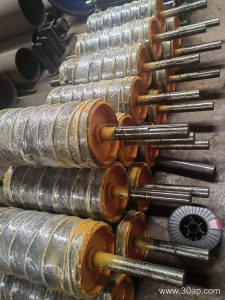
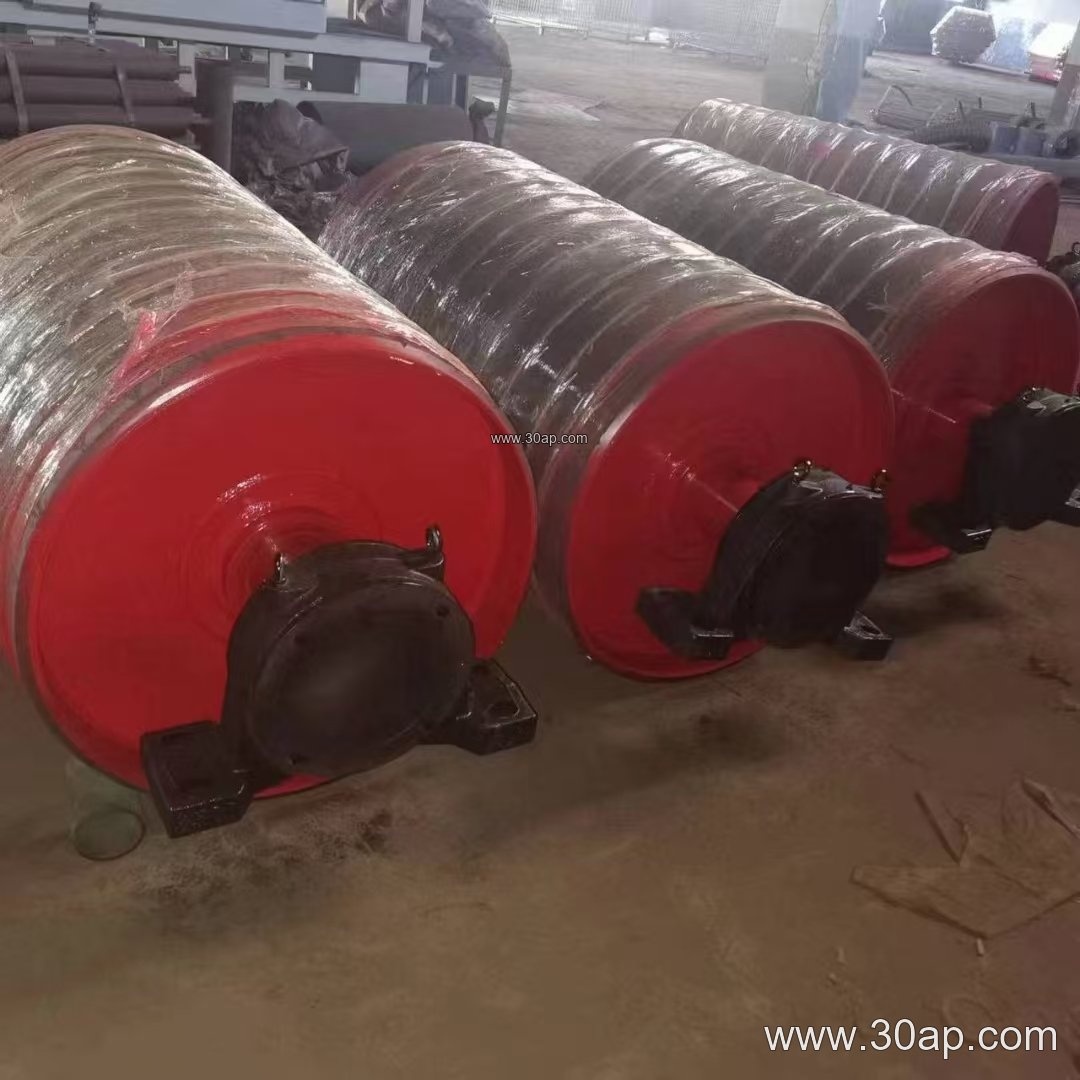
A heavy-duty lagged pulley is a conveyor pulley built for continuous, high-load service and fitted with a rubber or ceramic lagging layer on its shell. The lagging raises friction between the pulley and the conveyor belt, protects the shell from wear, and helps shed water and fines. In a quarry, limestone mine, or iron ore concentrator, this component often sits at the head or drive position where starting torque and belt tension are highest. It is not a tail pulley or a bend pulley; those positions serve different duties, and a heavy-duty lagged drive pulley is selected for its own torque and traction requirements.
Construction and Lagging Options
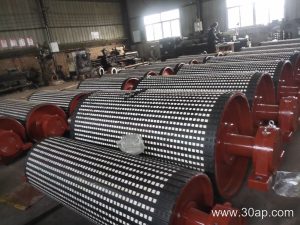
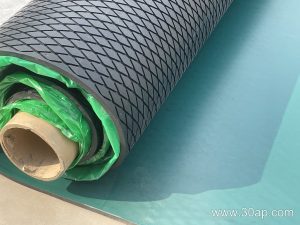
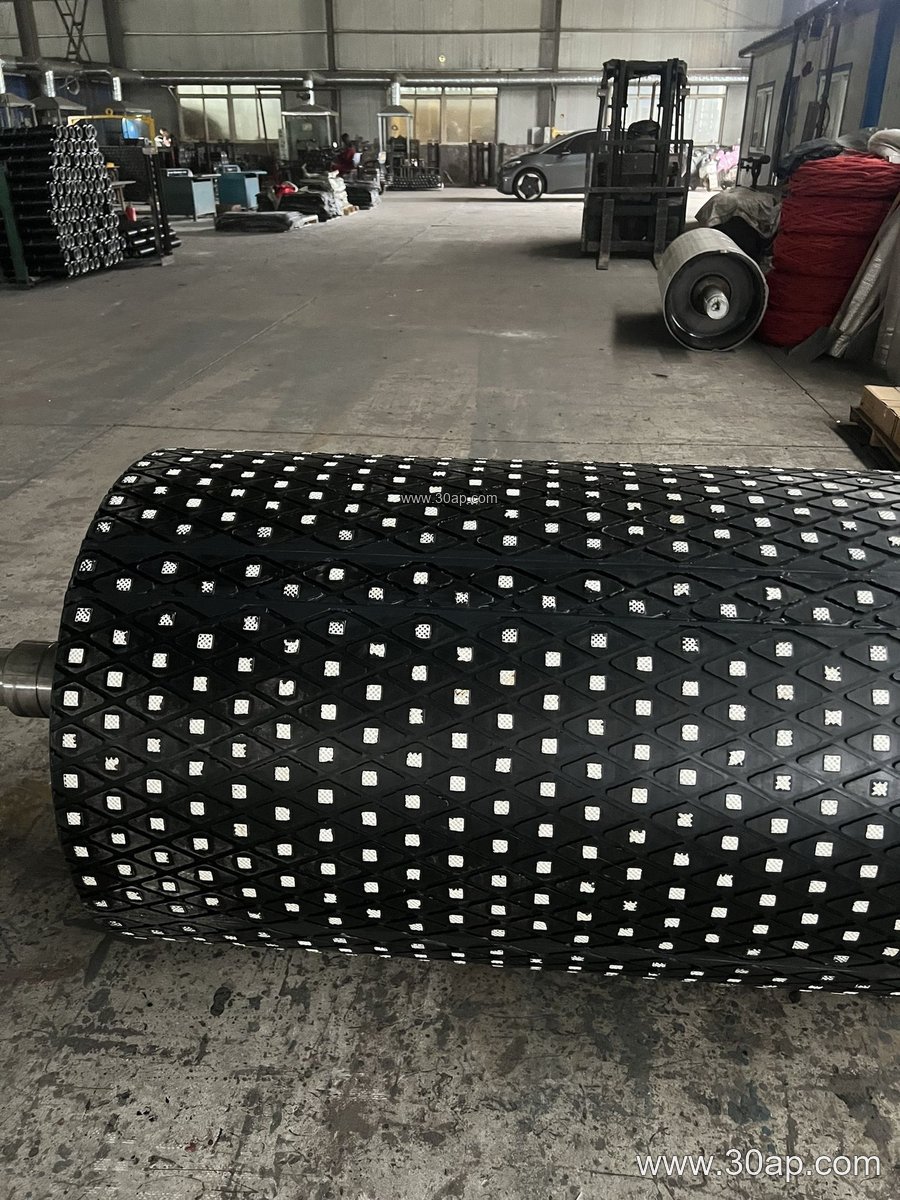
The pulley body usually combines a welded steel shell, end discs, a shaft, and hub assemblies. Lagging is applied either as hot-vulcanized rubber, cold-bonded rubber, cast rubber, diamond-grooved rubber, herringbone rubber, or ceramic tile. Thickness commonly runs 8, 10, 12, 15, or 20 mm depending on belt tension and slip risk. The shell face width is usually wider than the belt so the belt can track without edge damage; for example, a B1200 belt may run on a pulley face around 1400 mm. A heavy-duty lagged pulley used with a fabric core conveyor belt or steel cord conveyor belt should have lagging matched to the belt cover compound and the environment.
Common Reference Dimensions
The values below are typical reference ranges, not a fixed selection table. Diameter and shaft size must be confirmed by torque, belt tension, and load calculations.
| Belt Width | Typical Pulley Face Width | Common Diameter Range | Common Lagging Thickness |
|---|---|---|---|
| B650 | About 750 mm | Ø250 to Ø500 | 8 to 12 mm |
| B800 | About 950 mm | Ø315 to Ø630 | 10 to 15 mm |
| B1000 | About 1150 mm | Ø400 to Ø800 | 10 to 15 mm |
| B1200 | About 1400 mm | Ø500 to Ø1000 | 12 to 20 mm |
| B1400 | About 1600 mm | Ø630 to Ø1250 | 15 to 20 mm |
| B1600 | About 1800 mm | Ø800 to Ø1400 | 15 to 20 mm |
Shaft diameters commonly range from Ø50 to Ø200, but the final shaft size is determined by torque and bearing load, not by belt width alone. A B1200 × Ø1000 heavy-duty lagged pulley and a B800 × Ø500 unit can both exist in the same plant for different duty points.
Where It Fits in the Conveyor
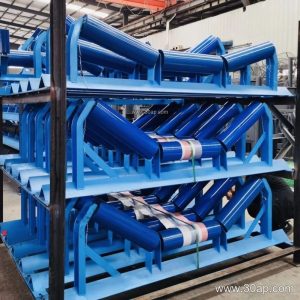
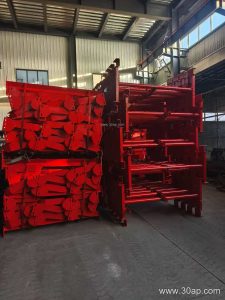
This pulley is often found in coal mining conveyor systems, cement plant clinker lines, power plant coal handling, and port bulk terminals. It works alongside the conveyor belt, idler rollers, and conveyor brackets, but its main job is transferring drive force or maintaining belt wrap at a high-tension location. In a crusher conveyor or a heavy-duty mining conveyor belt line, the lagged surface reduces slip when the belt is wet or dusty. A flame retardant conveyor belt or abrasion resistant conveyor belt may be running on the same system, so lagging compound and belt cover should be compatible.
Buyer Checklist
- Confirm the pulley position: drive, head, tension, or snub. A heavy-duty lagged pulley at the drive end has different demands from a bend pulley.
- Match lagging type to conditions: diamond or herringbone rubber for water shedding, ceramic for severe abrasion, plain rubber for general bulk material.
- Check belt width and pulley face width together, and verify diameter against belt speed and tension.
- Review shaft diameter, hub fit, and bearing load with the conveyor designer.
- Consider the belt type in service, such as EP conveyor belt, NN conveyor belt, or steel cord conveyor belt, and confirm lagging hardness and groove pattern.
For ongoing reliability, inspect lagging wear at the same time as idler roller and conveyor bracket checks. A worn lagged surface can cause belt slip and edge damage long before the pulley shell fails. More conveyor component references are available at beltconveyorparts.com and pulley-solutions.com for teams specifying heavy-duty lagged pulleys in mining and bulk material handling.