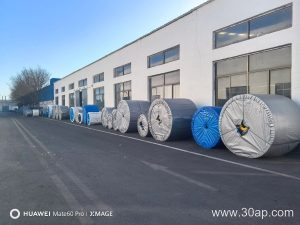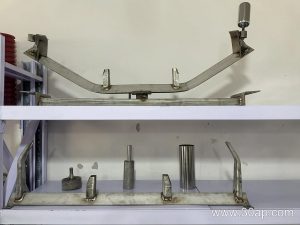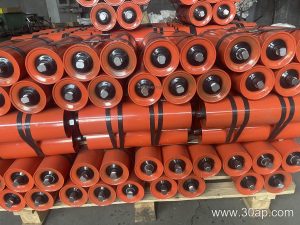
What Conveyor Pulley Machining Covers
Conveyor pulley machining is the set of turning, boring, keyway cutting, welding and surface finishing operations that turn a raw shell, shaft and hub assembly into a true-running drum for a belt conveyor. The work decides how straight the shell runs, how well the shaft fits the bearing housing, and how evenly the lagging sits against the conveyor belt. In a quarry, a cement plant or a power plant coal yard, a pulley that is out of round or poorly balanced will wear the belt edge, load the bearings unevenly and shorten the life of the whole conveyor.
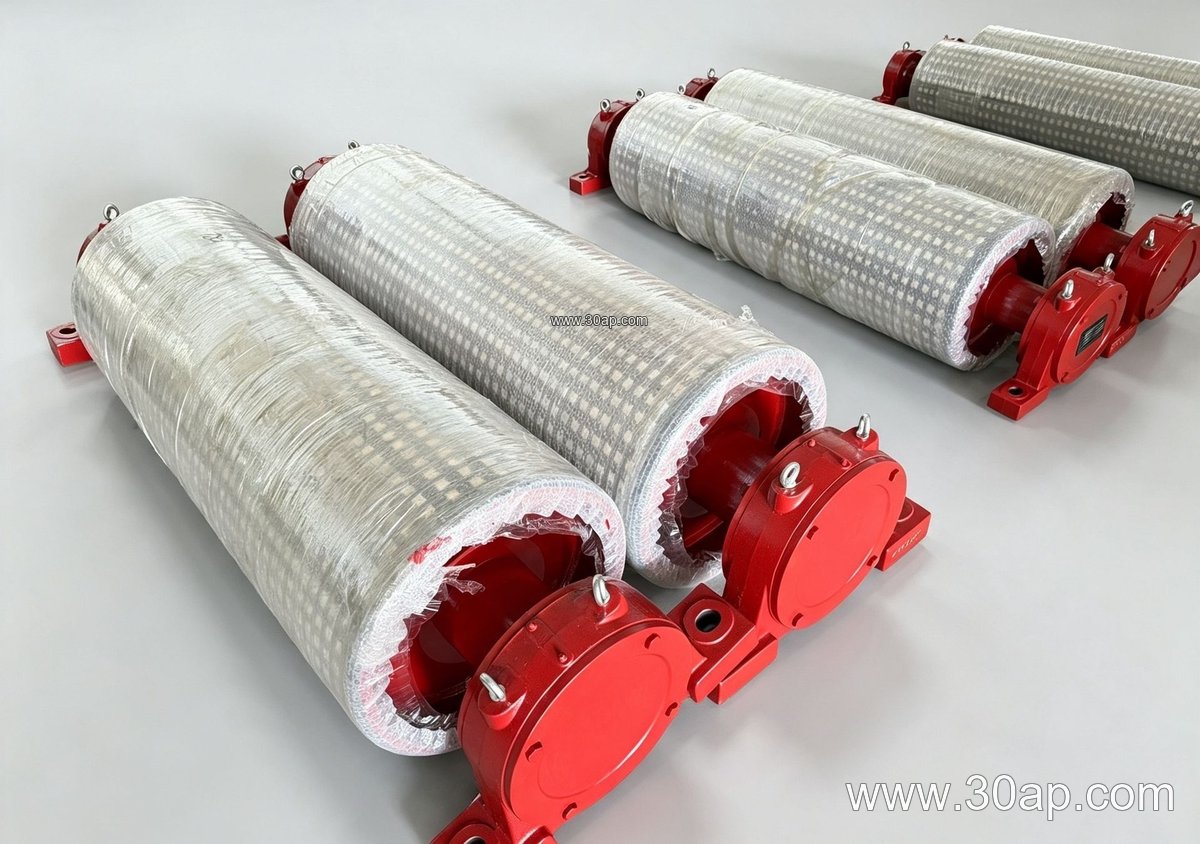
The machined product is usually called a conveyor pulley or, in many workshops, a conveyor drum. Both names refer to the same component. Drive, tail and bend pulleys are separate positions in the conveyor and are not interchangeable terms.
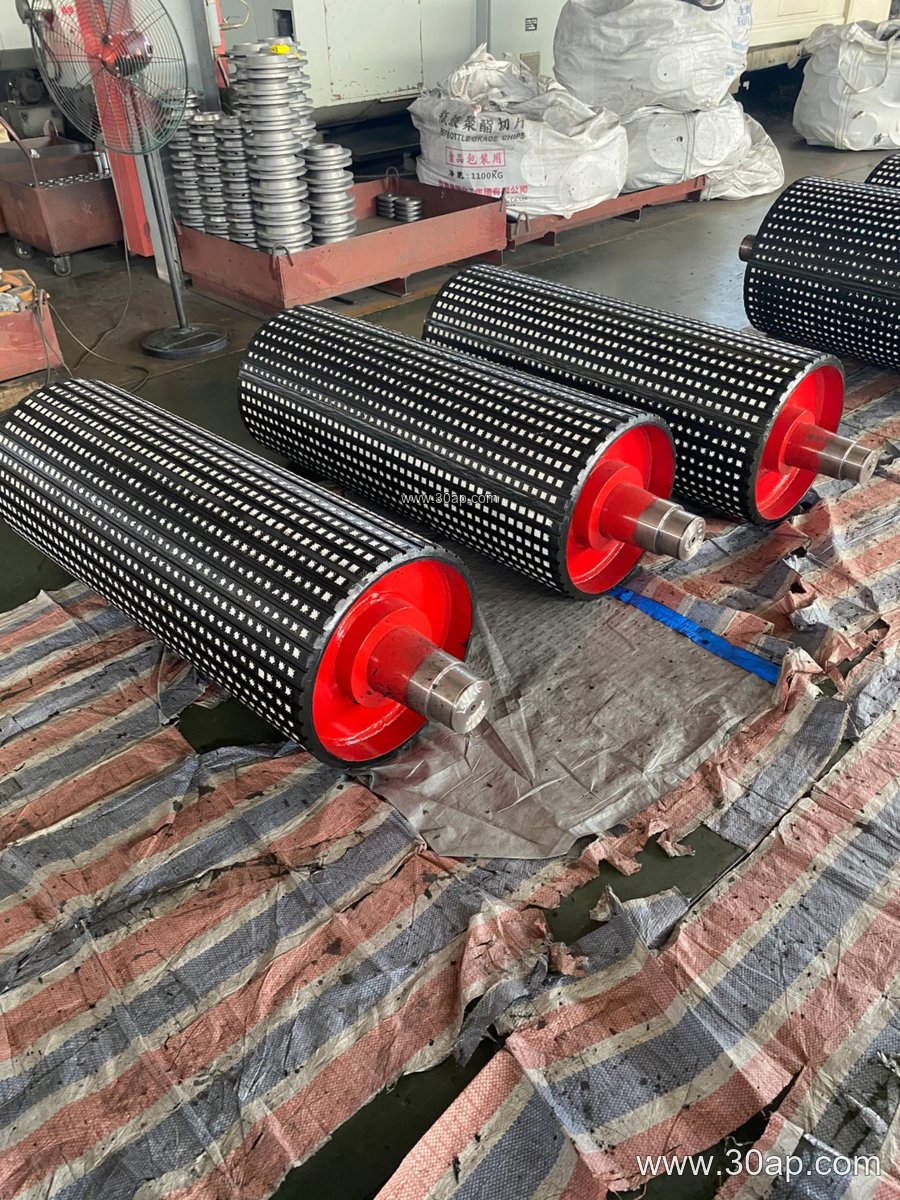
How a Machined Pulley Is Built
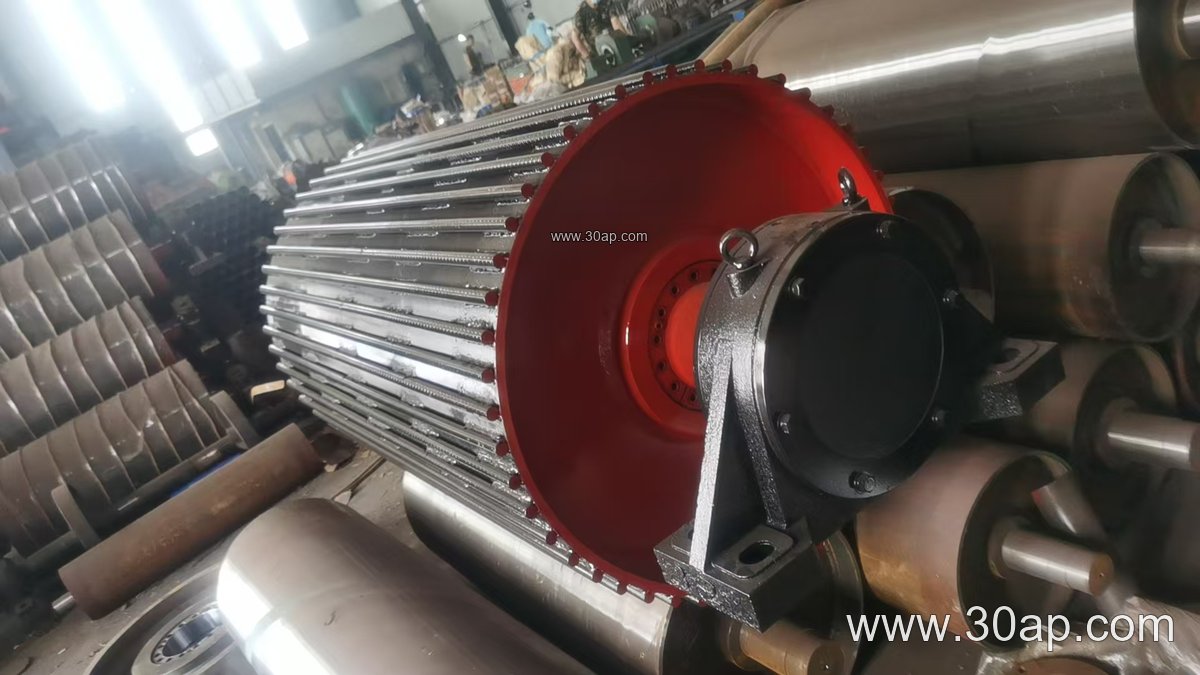
Most pulleys start as a rolled or welded steel shell with end discs, a through shaft and hubs. Machining then follows a sequence that keeps every surface referenced to the shaft centreline:
- Rough turning of the shell outside diameter and end faces.
- Boring of the hub and end disc bores to the shaft fit.
- Keyway cutting and, where required, shrink-fit preparation.
- Final turning of the shell to the specified diameter and crown.
- Dynamic balancing, especially for wide or high-speed drums.
- Surface preparation before lagging or painting.
Good machining practice keeps runout small. A shell that is true to the shaft means the belt tracks steadily, the idler roller frames and conveyor bracket mounts are not forced to absorb vibration, and lagging wears evenly across its face.
Where Machined Pulleys Are Used
These drums appear wherever bulk material moves on a belt. In a limestone quarry or aggregate line, a head pulley discharges crushed rock onto a screen or stockpile. In a coal washing plant or underground coal mining conveyor, flame retardant and anti-static belts run over machined drums that must hold alignment in confined spaces. Cement plants use them on clinker and raw meal conveyors, power plants on coal handling lines, and port terminals on ship loading conveyors handling ore and bulk cargo.
The belt itself dictates much of the duty. A heavy-duty mining conveyor belt or a steel cord conveyor belt pulls harder than a light fabric core belt, so the pulley shell, shaft and lagging must be matched to that load. A chevron conveyor belt or corrugated sidewall belt may need a larger drum diameter to clear the profile, while a pipe conveyor belt has its own special requirements. Matching the drum to an EP conveyor belt or an abrasion resistant conveyor belt is a normal part of conveyor design.
Common Reference Dimensions
The table below shows typical reference values used when discussing pulley machining. They are design references, not a fixed selection rule.
| Item | Common reference values |
|---|---|
| Belt width | B400, B500, B650, B800, B1000, B1200, B1400, B1600, B1800, B2000 |
| Pulley diameter | Ø200, Ø250, Ø315, Ø400, Ø500, Ø630, Ø800, Ø1000, Ø1250, Ø1400 |
| Shell face width | Usually wider than the belt, e.g. B800 about 950 mm, B1200 about 1400 mm, B1600 about 1800 mm |
| Shaft diameter | Ø50, Ø60, Ø70, Ø80, Ø90, Ø100, Ø120, Ø140, Ø160, Ø180, Ø200 |
| Lagging thickness | 8, 10, 12, 15, 20 mm |
Typical combinations such as B800 x Ø500 or B1200 x Ø1000 are often quoted as examples. They are not fixed pairs; a given belt width can work with several drum diameters depending on belt tension, wrap angle and material. Shaft diameter is set by torque and bearing load, not by belt width alone.
Surface Options and Their Role
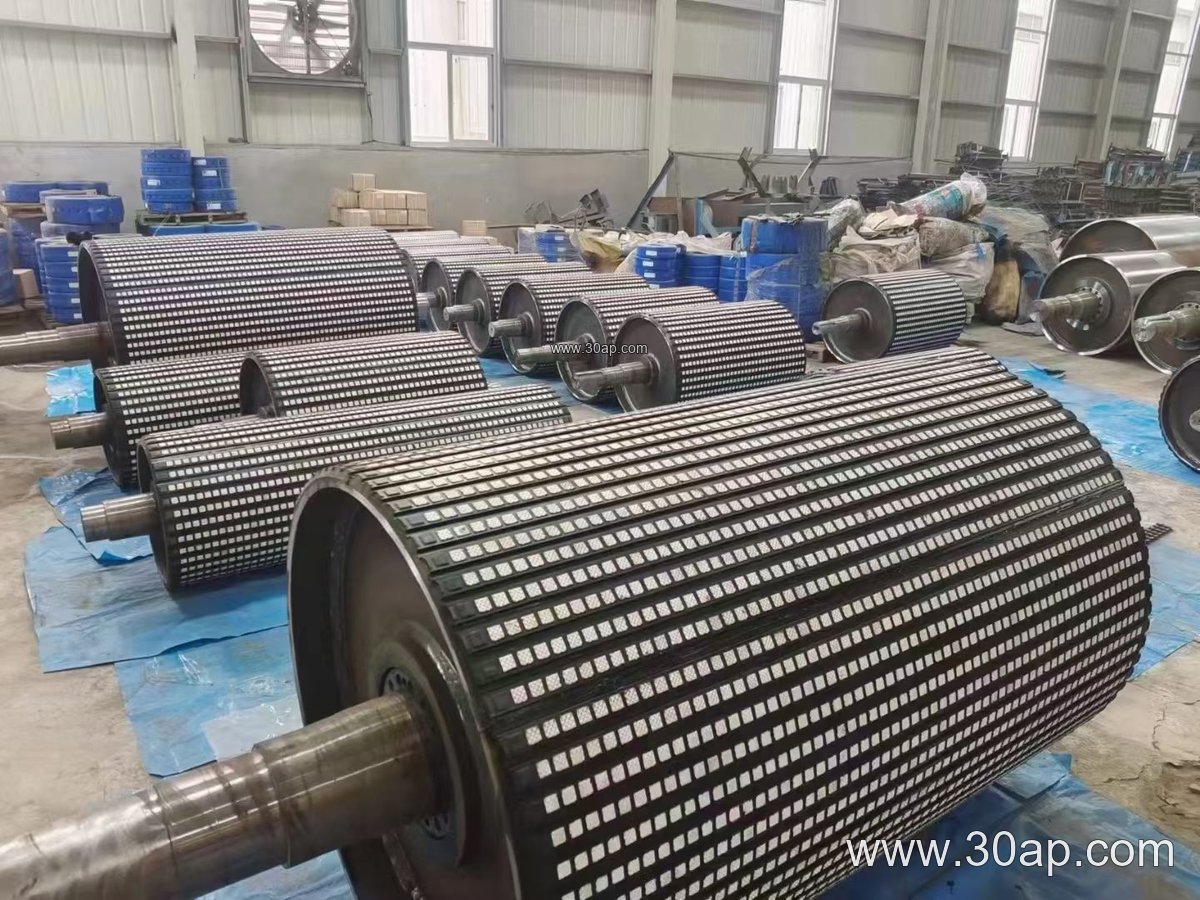
Machining does not stop at bare steel. The running surface is often finished with plain face, cast rubber, cold-bonded rubber, hot vulcanised rubber, diamond lagging, herringbone lagging, ceramic lagging or plain rubber sheet. The choice depends on grip, abrasion and material build-up. A drive pulley on a wet aggregate conveyor usually benefits from diamond or ceramic lagging, while a bend pulley may run plain or lightly lagged. Lagging thickness of 10 to 15 mm is common on medium-duty drums, with thicker covers on high-torque drives.
What Buyers Should Check
When ordering conveyor pulley machining, confirm the shaft fit and keyway dimensions, the shell diameter and face width, the lagging type and thickness, and the balancing grade required. Ask how the drum will be centred and whether the end discs are welded or shrink-fitted. Check that the conveyor bracket and bearing housing interface match the drawing, and that the pulley will align with the conveyor belt and idler roller line. For flame retardant or fire resistant belts in underground service, confirm that lagging materials are compatible with the belt and the local safety requirements.
Finally, keep drawings and inspection records. A machined drum that is verified for runout, diameter and balance before dispatch saves rework at the plant and keeps the conveyor running with less belt edge damage and fewer tracking corrections.