What a Trough Idler Bracket Does
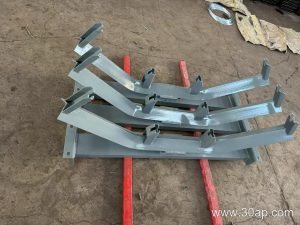
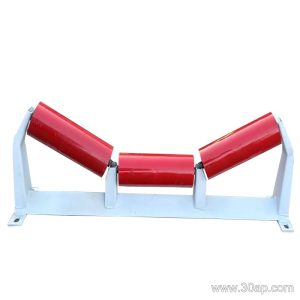
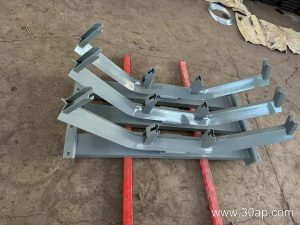
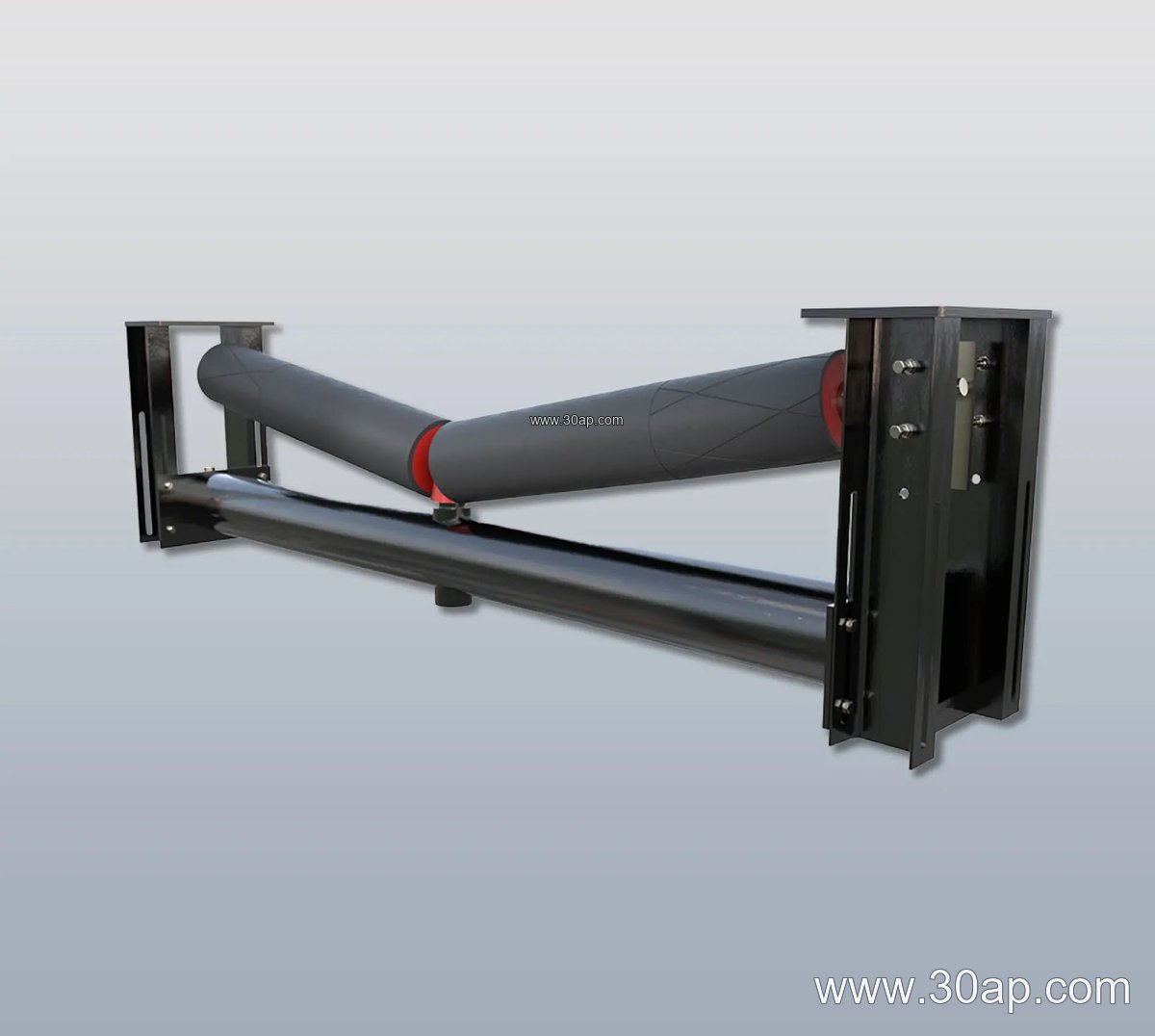
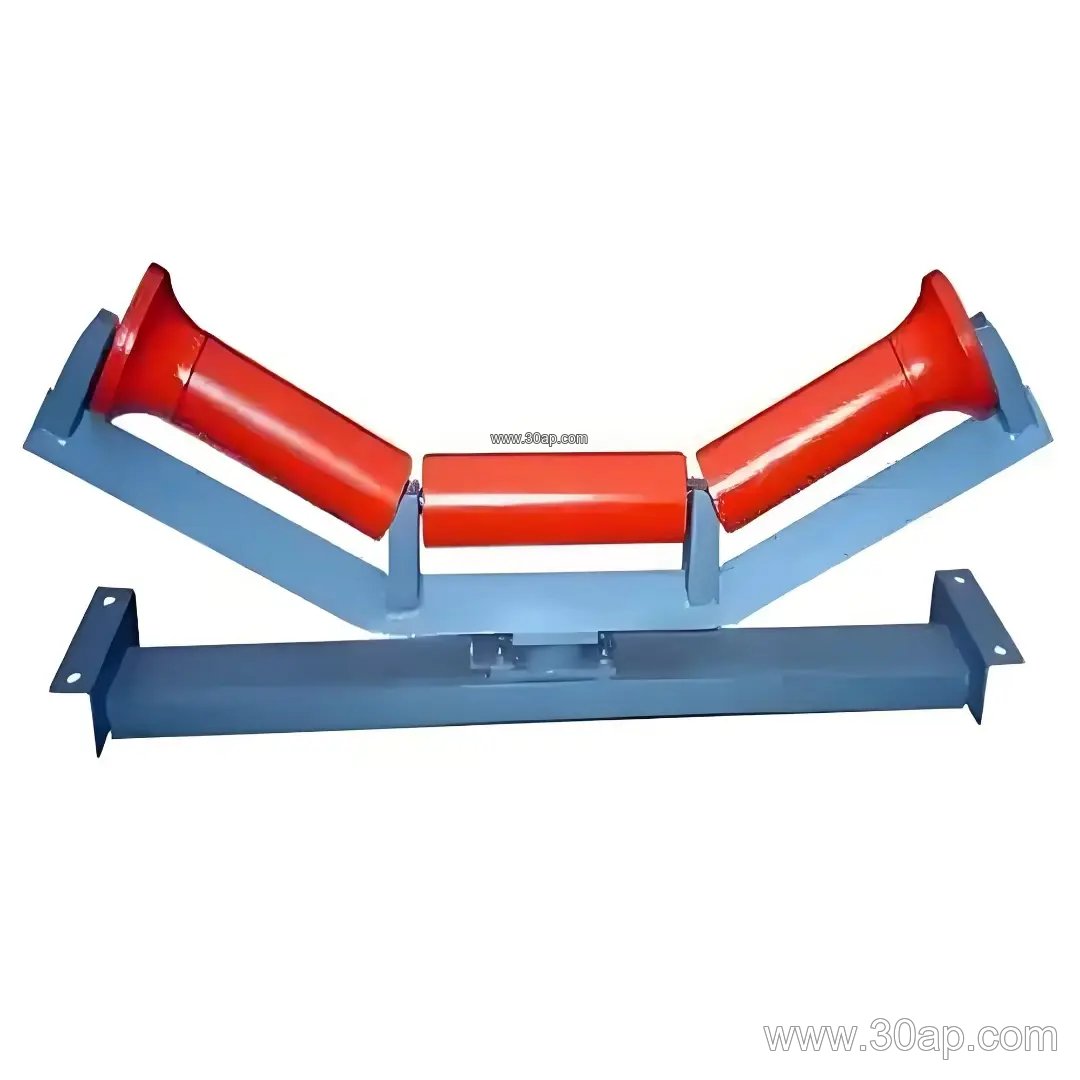
A trough idler bracket is the steel frame that holds the angled idler rollers in a troughed conveyor. It sets the trough angle, carries the load from the belt and material, and keeps the idler roller spacing consistent along the line. In a quarry or a cement plant, these brackets are the quiet parts that decide how well the belt tracks and how long the rollers last. The same item is also called a troughing idler bracket or troughing frame, and those names refer to the same product.
How the Bracket Is Built
Most units are made from angle steel, channel steel, or folded steel plate. The bracket has a cross beam, mounting slots or holes for the roller shafts, and end plates that bolt to the conveyor stringer. Fixed brackets are welded at a set angle. Adjustable brackets have slotted joints or movable arms so the trough angle can be changed in the field. A paint or galvanized finish is common for outdoor work, while underground coal mining conveyors often use coated steel for corrosion and flame safety reasons.
Where It Fits on the Conveyor
You will see a trough idler bracket on the carrying side of a belt conveyor, usually in three-roller and five-roller arrangements. It is not a drive pulley or a tail pulley, and it does not tension the belt. Its job is support and alignment. In a coal mining conveyor or a power plant coal line, the bracket works together with the conveyor belt and idler roller to keep the material centered. In a crushing and screening circuit, a heavy-duty bracket under the crusher discharge area can be paired with impact idlers to absorb shock.
Common Sizes and Angles
Bracket dimensions follow belt width, trough angle and roller diameter. The values below are typical reference points, not fixed combinations. Installation hole spacing and beam length are set by design and should be confirmed against the conveyor drawing.
| Belt width | Common trough angle | Typical roller diameter |
|---|---|---|
| B500, B650 | 20°, 30°, 35° | Ø89, Ø108 |
| B800, B1000 | 30°, 35°, 45° | Ø108, Ø133 |
| B1200, B1400 | 35°, 45° | Ø133, Ø159 |
| B1600, B1800 | 35°, 45° | Ø159, Ø194 |
| B2000, B2200 | 35°, 45° | Ø159, Ø194 |
Forward-leaning brackets are often set around 1.5° to 2° to help belt training. Adjustable brackets can move between 20°, 30°, 35° and 45° within their design range. A B800 bracket at 35° with Ø108 rollers is a common mid-duty setup, while a B1200 unit at 45° with Ø133 rollers suits heavier loads. These are examples only; one belt width does not lock you to one angle or one roller size.
Choosing the Right Bracket
Start with the conveyor belt width and the idler roller diameter, then confirm the trough angle that matches the material profile. For a 1200mm wide conveyor belt in a cement plant, a 35° or 45° trough bracket is usual, but the final choice depends on belt stiffness and load. Check the mounting hole pattern against the stringer, and confirm the beam length fits the frame. For dusty or wet conditions in an ore conveyor or aggregate conveyor, choose a bracket with good drainage and a finish that resists corrosion. If the line carries a steel cord conveyor belt or a thick heavy-duty belt, the bracket and rollers must be rated for the extra weight.
Installation and Maintenance Notes
- Align brackets in a straight line before tightening the bolts; a small offset can cause belt wander.
- Check that all three idler rollers sit firmly in their slots and turn freely.
- Inspect welds and mounting holes after the first weeks of operation, especially on a quarry conveyor belt line.
- Replace bent or worn brackets rather than forcing a roller into a distorted frame.
- For adjustable types, record the set angle so future maintenance can restore it.
A well-matched trough idler bracket is a low-cost part that protects the conveyor belt, the idler roller and the whole conveyor pulley system from misalignment and premature wear. Buyers should compare material thickness, finish, hole pattern and angle range rather than price alone, and confirm every dimension against the actual conveyor design.