What a Vertical Idler Bracket Does
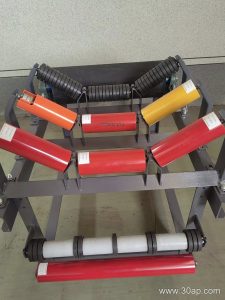
A vertical idler bracket holds the idler roller in a near-vertical position along a conveyor belt, typically on steep inclines or in transition zones where the belt needs extra side support. Unlike a standard troughing bracket that sets rollers at a fixed trough angle, this bracket is mounted so the roller axis stands more upright, pressing the belt edge inward and helping keep material centered on steep grades. In quarry and aggregate operations, a vertical idler bracket often appears near the loading point or on a steep incline conveyor where a conventional 30-degree or 35-degree trough may not hold the load. The bracket works together with the conveyor belt, the idler roller, and the conveyor pulley to maintain belt tracking.
Construction and Mounting
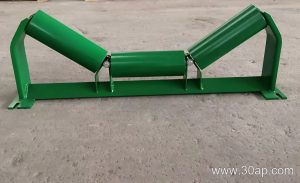
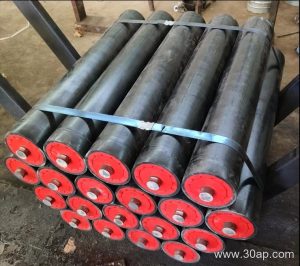
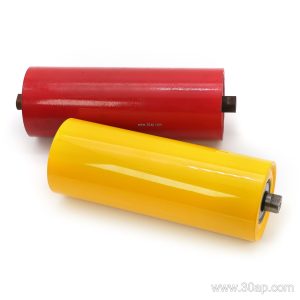
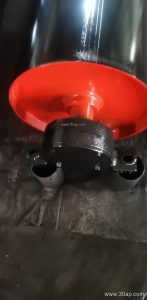
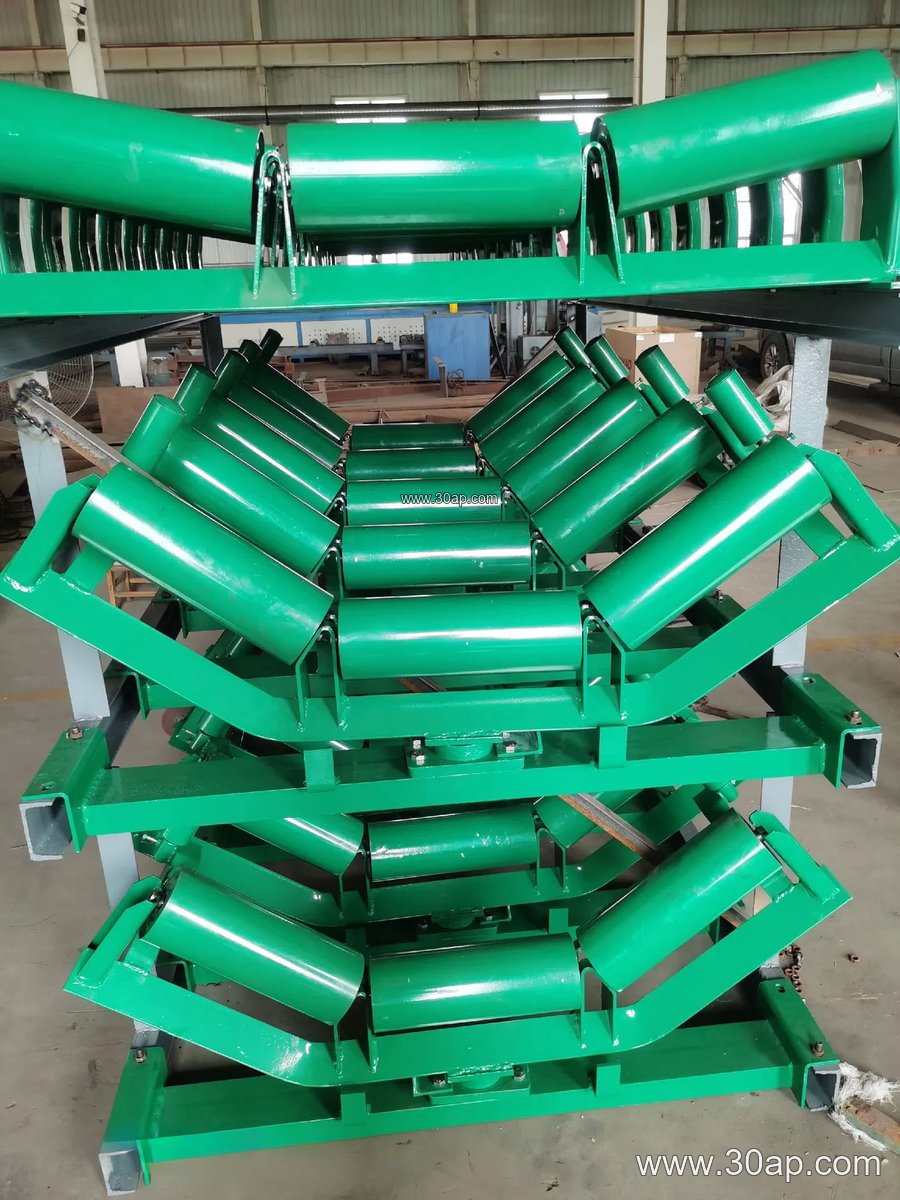
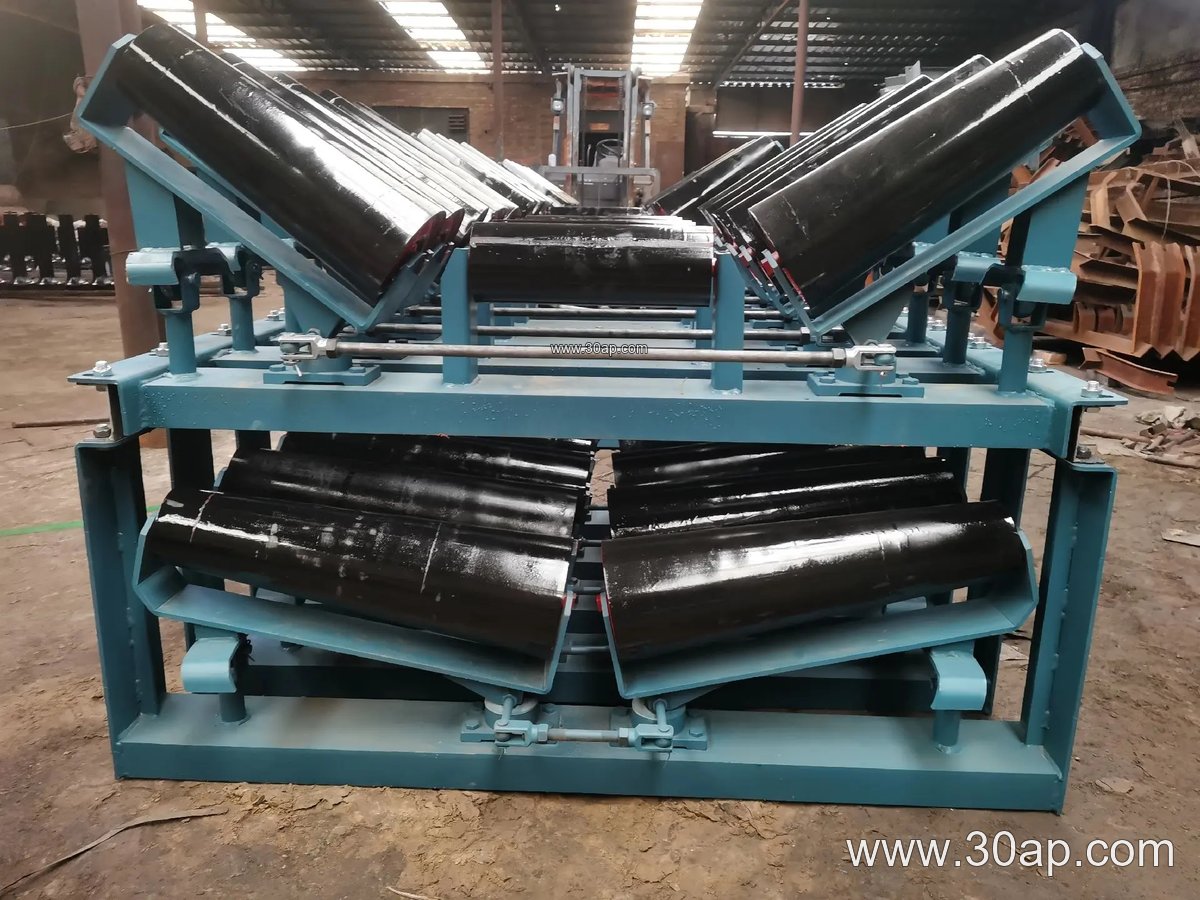
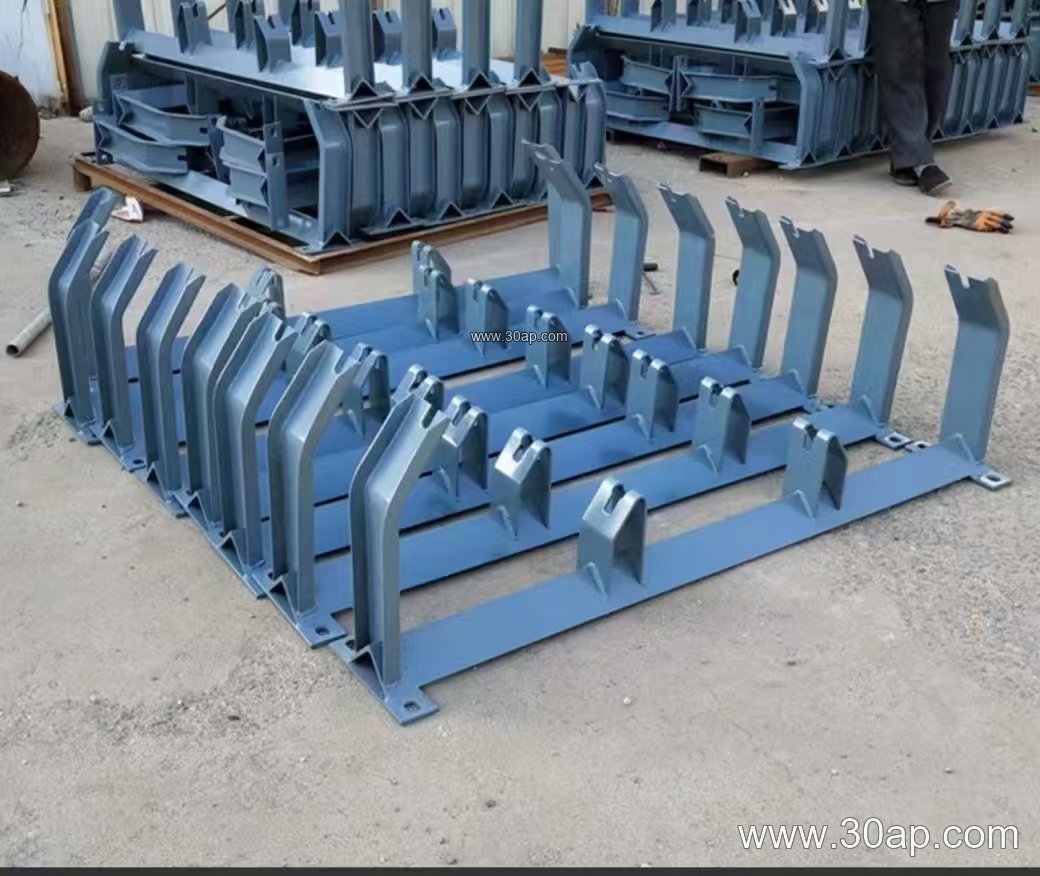
Most vertical idler brackets are fabricated from angle steel, channel steel, or folded steel plate. The bracket usually has a base plate that bolts to the conveyor frame stringer, an upright section that positions the roller shaft, and a slot or set of holes for adjustment. Common roller diameters used with this bracket include Ø89, Ø108, Ø133, and Ø159, though the exact match depends on belt width and load. Belt widths from B500 to B2000 are seen in practice, and the bracket length and mounting hole spacing change with the belt width and trough angle. The bracket is not a one-size-fits-all part; a B650 conveyor and a B1200 conveyor will use different bracket dimensions even if the roller diameter is the same.
Where It Fits in a Conveyor System
Vertical idler brackets are common in bulk material handling where inclines are steep. In a limestone quarry, a vertical bracket may support the belt on a 20-degree incline section ahead of the crusher. In a coal washing plant, it can help guide a flame retardant conveyor belt through a transfer house. In a cement plant, the bracket may appear on a clinker incline where an abrasion resistant conveyor belt carries hot, sharp material. The bracket is also used in power plant coal handling and in sand and gravel lines. It is not a substitute for a drive pulley or a tail pulley; those components transmit power and set belt tension, while the vertical bracket only supports and guides the belt.
Adjustment and Trough Angle
Some vertical idler brackets are adjustable, allowing the operator to change the roller position between common trough angles such as 20 degrees, 30 degrees, 35 degrees, and 45 degrees. This adjustability is useful during commissioning when belt tracking needs fine-tuning. A fixed vertical bracket, by contrast, is welded or bolted in one position and is chosen when the conveyor design is already settled. The vertical bracket should not be confused with a transition bracket, which handles the change from trough to flat, or with a V-return bracket, which supports the belt on the return side. Each bracket type has a distinct role.
Buyer Checklist
Before ordering a vertical idler bracket, confirm the belt width, the idler roller diameter, the desired trough angle, and the mounting hole pattern on the conveyor frame. Ask for the bracket material and finish, since dusty or wet conditions may call for galvanized or painted steel. Check that the bracket suits the conveyor belt type in use, whether that is an EP conveyor belt, an NN conveyor belt, or a steel cord conveyor belt. For steep inclines with chevron conveyor belt or corrugated sidewall conveyor belt, the bracket position may need to be adjusted to avoid interference with the cleats. Finally, verify the bracket load rating against the roller weight and belt tension, and keep spare brackets on hand for maintenance.
Maintenance Notes
Inspect vertical idler brackets for loose bolts, bent uprights, and worn mounting holes. A bracket that has shifted can cause the belt to misalign, leading to edge damage on the conveyor belt and uneven wear on the idler roller. In dusty plants, clean the bracket base so the adjustment slots remain free. When replacing a roller, check that the bracket still holds the correct angle; a bent bracket may look fine but set the roller off position. For high-abrasion service, such as iron ore or copper ore handling, use a heavy-duty bracket and inspect more often. A well-maintained vertical idler bracket is a small part that keeps a steep conveyor running straight.