What a Mining Conveyor Belt Is
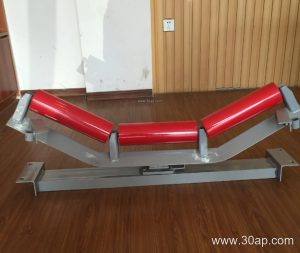
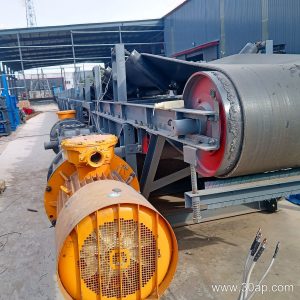
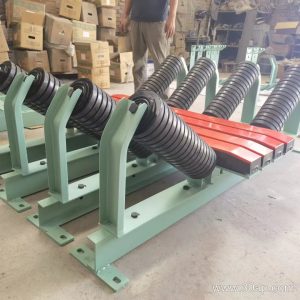
A mining conveyor belt is the continuous load-bearing surface that moves extracted material—run-of-mine ore, coal, crushed rock, or aggregate—along a fixed route between digging, crushing, stockpiling, and transport points. In a quarry, cement plant, power station, or underground coal mine, this belt works with conveyor pulleys, idler rollers, and conveyor brackets to form the complete conveying line. The belt itself is a composite: a fabric or steel cord carcass carries tension, while rubber covers protect the carcass from abrasion, impact, heat, oil, or flame. The term Mining Conveyor Belt covers several constructions, and the right choice depends on the duty, the material, and the environment.
Construction and Core Types
Most mining belts fall into two carcass families. Fabric-core belts use multiple plies of EP or NN fabric; steel cord belts use parallel brass-plated wires for very high tension and long center distances. Within fabric core, an EP Conveyor Belt (polyester warp, nylon weft) offers low elongation and good troughability, while an NN belt (nylon warp and weft) gives higher impact resistance. A Multi-Ply Fabric Core Conveyor Belt with 2 to 6 plies is common for primary and secondary haulage. For mainline haulage in large mines, a Steel Cord Conveyor Belt such as ST1600 or ST2000 is often specified.
Cover compounds address the working environment: an Abrasion Resistant Conveyor Belt for sharp rock, a Heat Resistant Conveyor Belt for cement clinker or sinter, a Flame Retardant Conveyor Belt for underground coal, and an Oil Resistant Conveyor Belt for oily ore or recycled material. Special profiles include the Chevron Conveyor Belt for inclined haulage and the Corrugated Sidewall Conveyor Belt (skirted) for steep, space-limited routes.
Common Specifications
Belt width, strength grade, cover thickness, and carcass construction are selected together. The values below are typical reference ranges, not fixed universal specifications; final data should be confirmed with the belt manufacturer and the conveyor design.
| Parameter | Common reference values |
|---|---|
| Belt width | B500, B650, B800, B1000, B1200, B1400, B1600, B1800, B2000 (500–2000 mm) |
| EP strength grade | EP200, EP315, EP400, EP500, EP630, EP800, EP1000, EP1250, EP1600, EP2000 |
| Steel cord grade | ST1000, ST1250, ST1600, ST2000, ST2500, ST3150 |
| Cover thickness (top + bottom) | 3+1.5, 4+2, 5+2, 6+2, 8+3 mm |
| Fabric plies | 2 to 6 plies, depending on grade and width |
A 1200mm wide belt with EP1000 carcass and 6+2 mm covers is a common combination for primary crushing discharge, but it is not a rule. Wider belts such as 1800mm or 2000mm are used where high tonnage must pass at moderate speed. Belt width and pulley diameter are matched by conveyor design calculation, not by a single fixed ratio.
Where It Is Used
Mining conveyor belts appear across the extractive chain. In an open-pit Iron Ore Conveyor Belt line, abrasion-resistant covers handle sharp lump ore. A Coal Mining Conveyor Belt underground usually requires flame retardant and anti-static properties, often in a PVG or PVC construction. Cement plants rely on heat-resistant belts after the kiln and abrasion-resistant belts for clinker and limestone. Power plants, sand and gravel yards, port ship loaders, and crushing circuits all use these belts with idler rollers, conveyor pulleys, and brackets sized to the duty. A quarry conveyor belt moving blasted rock may need impact-resistant covers at the loading point, while a pipe conveyor belt can enclose the material on curved routes.
Buyer Checklist
- Material and duty: lump size, temperature, moisture, oil content, and whether the belt runs underground (flame retardant and anti-static requirements).
- Tension and length: calculate the required strength grade and carcass type; do not choose a grade by habit.
- Cover thickness: match top cover to abrasion and impact, bottom cover to pulley contact and cleanliness.
- Belt width and speed: confirm the conveyor’s rated capacity and lump size before fixing width.
- Edge and splice: specify whether an endless belt is required on site, and agree on the splice method.
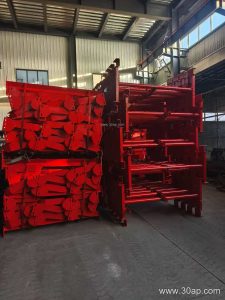
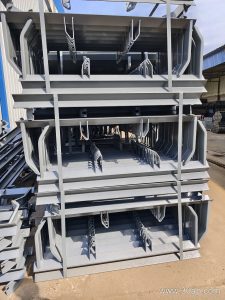
- Supporting components: check that idler roller spacing, pulley diameters, and conveyor bracket dimensions suit the selected belt.
For any mining project, the belt, pulleys, rollers, and frame should be treated as one system. A correctly specified Mining Conveyor Belt, matched to its conveyor pulley and idler roller set, reduces spillage, extends service life, and keeps the haulage route running.