What the Conveyor Belt Support Frame Does
On a belt conveyor, the conveyor belt support frame is the steel structure that holds the idlers at the right height and angle so the belt can carry material without sagging or wandering. It is not a single part but a family of frames: upper trough frames, return frames, impact frames, transition frames and self-aligning frames. In a quarry or a cement plant, these frames are usually bolted to the conveyor stringers and spaced at regular intervals along the entire length of the line.
Because the frame directly controls idler position, it influences belt tracking, material spillage and the life of both the conveyor belt and the idler roller. A well-built frame keeps the trough angle consistent, while a weak or misaligned one shows up quickly as edge wear and off-centre running.
How a Support Frame Is Built
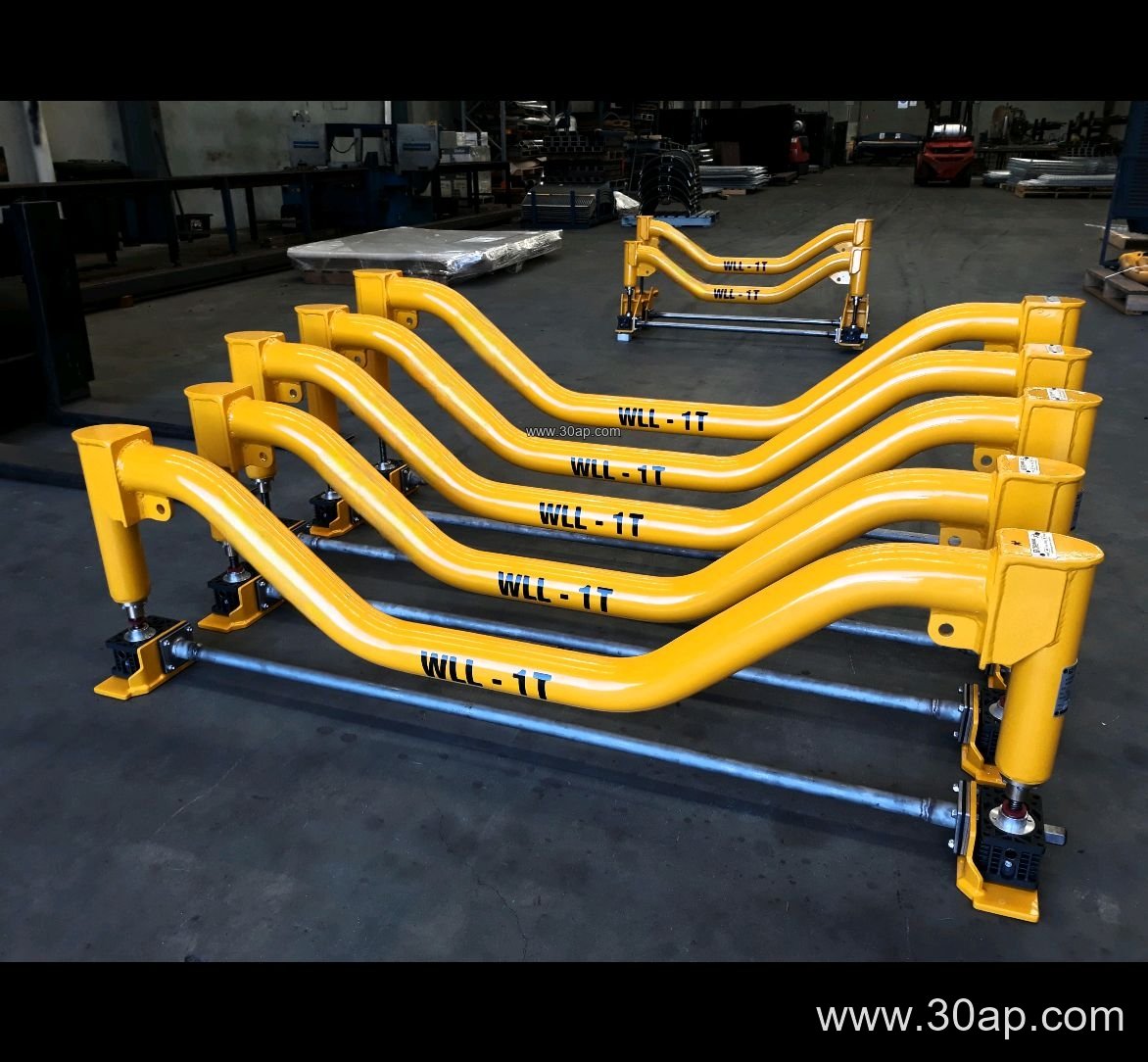
Most frames are fabricated from angle steel, channel steel or folded steel plate. The cross beam carries the idler brackets, and the end plates or mounting feet connect to the conveyor structure. For a trough frame, the side brackets are set at a fixed angle; for an adjustable frame, the brackets can be repositioned to change the trough angle on site.
Typical frame choices include:
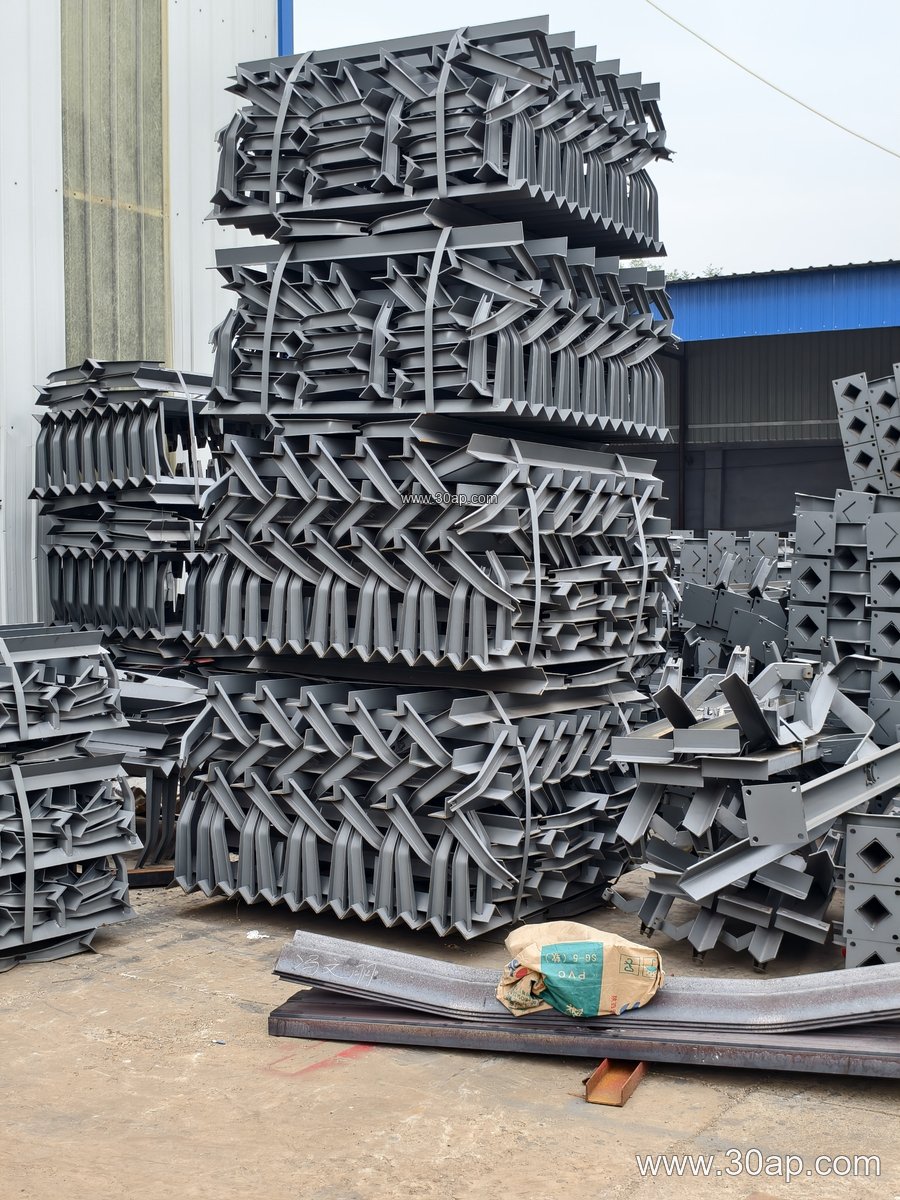
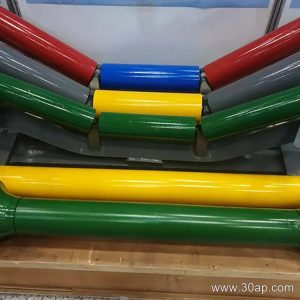
- Trough frame – carries three idlers in a 20°, 30°, 35° or 45° trough
- Transition frame – eases the belt from flat to troughed at the tail or head
- Return frame – supports the empty side, often with a V-shaped or flat return idler
- Impact frame – reinforced to take the load at a transfer point
- Self-aligning frame – allows the idler set to pivot and correct belt tracking
Frame length and mounting hole spacing are not fixed values; they follow the belt width, trough angle and the idler diameter selected for the line. A B800 frame with 35° trough and Ø108 idlers is a common arrangement in aggregate plants, while a B1200 or B1400 line in a coal preparation plant may use 45° trough and Ø133 or Ø159 idlers. These are reference examples, not mandatory pairings.
Where These Frames Are Used
The same basic frame design appears across bulk handling industries. In a limestone mine or a crushing and screening plant, trough frames support the belt under heavy run-of-mine rock, and impact frames sit below the crusher discharge. In a power plant coal yard, flame retardant and anti-static belt grades run on frames that must resist coal dust and occasional washdown. In a cement plant, heat resistant conveyor belt sections near the kiln area need frames that stay stable under thermal expansion.
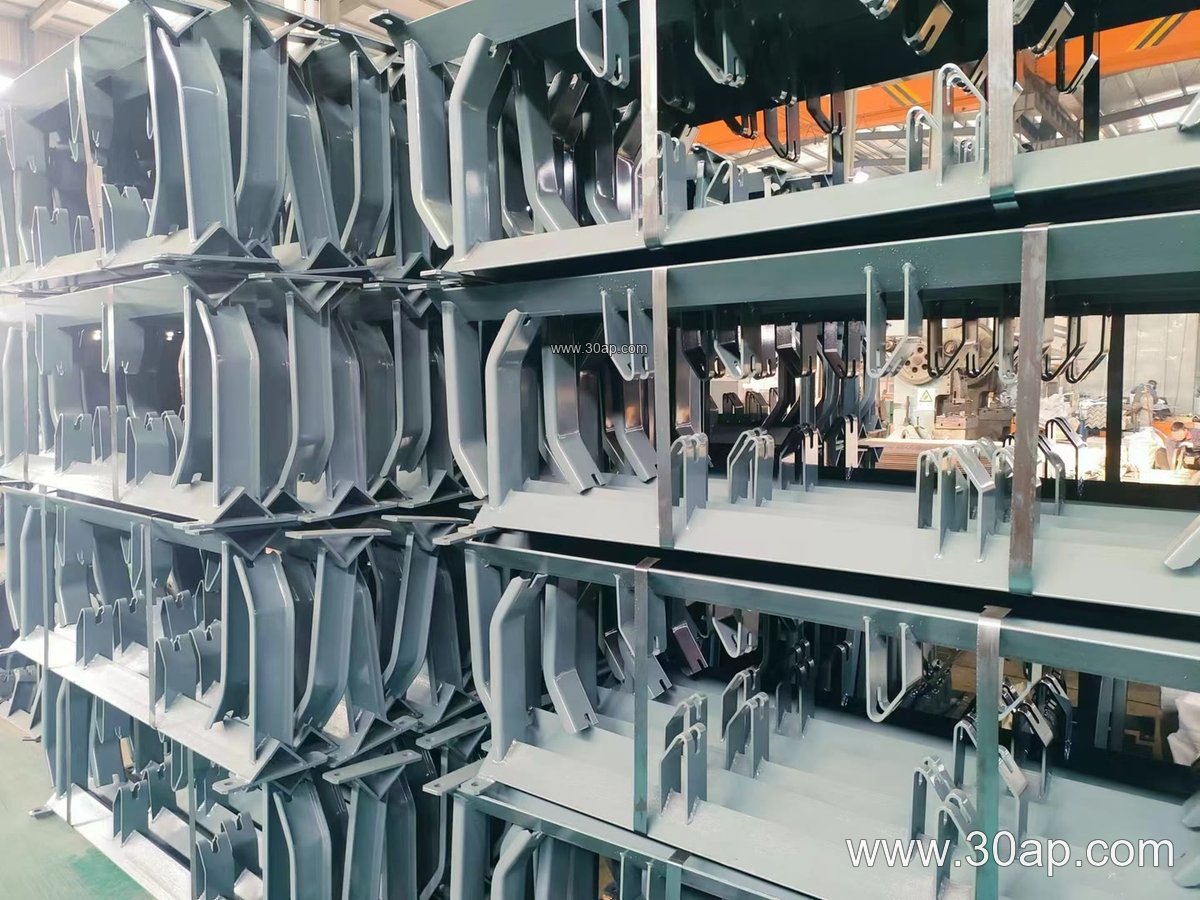
Port terminals and ship loading conveyors use long, straight runs of trough frames where alignment accuracy matters for belt tracking. In a steel plant sintering line, heavy-duty frames with reinforced cross beams carry high belt tension. Even a small sand and gravel line benefits from correctly selected frames: a poorly matched frame can shorten the life of an EP conveyor belt or a multi-ply fabric core belt long before the belt itself wears out.
Matching the Frame to the Rest of the Line
Selection starts with the belt width and the idler diameter, but it does not end there. The frame must suit the belt type, the material being carried and the environment. A pipe conveyor belt or a corrugated sidewall belt needs special frame geometry, not a standard trough frame. A chevron conveyor belt may require frames that tolerate the raised cleat pattern. In underground coal mining, frames are usually specified together with flame retardant and anti-static belt to meet site safety requirements.
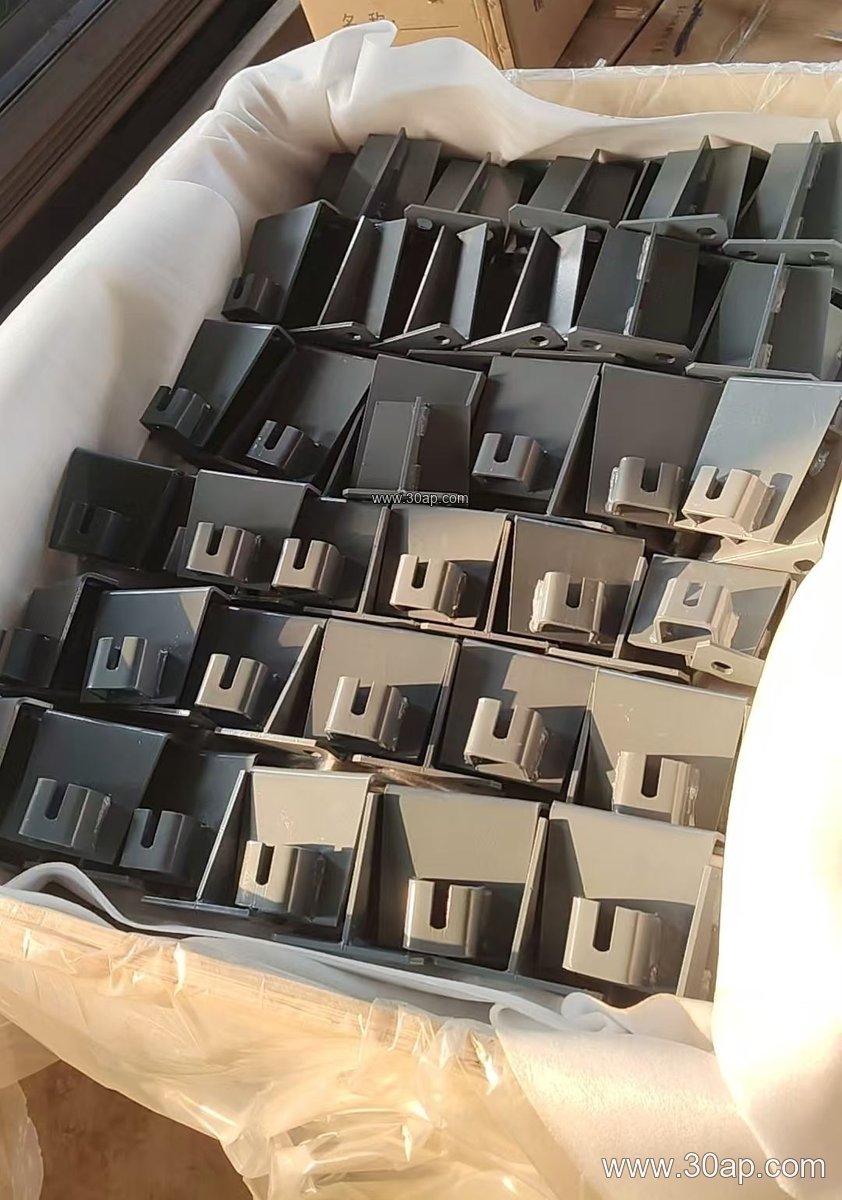
Buyers should also check the connection details: bolt hole spacing, cross beam height and the way the frame sits on the stringer. If a conveyor bracket is replaced, the new bracket must match the frame, not the other way round. For a quick reference, common frame-related parameters are summarised below.
| Parameter | Common range | Notes |
|---|---|---|
| Belt width | B500 to B2200 | Frame length follows belt width |
| Trough angle | 20°, 30°, 35°, 45° | Adjustable frames allow change on site |
| Idler diameter | Ø89, Ø108, Ø133, Ø159, Ø194 | Selected by load and belt speed |
| Material | Angle steel, channel steel, folded plate | Coating or galvanising by site condition |
| Frame type | Trough, return, impact, transition, self-aligning | Each has a specific position on the line |
For heavy-duty mining conveyor belt applications, a reinforced frame with thicker cross beam is often preferred, while a light aggregate conveyor belt line can use a standard frame. The goal is to keep the belt supported without overbuilding every section. Maintenance teams should inspect frames for loose bolts, bent brackets and corrosion, because a frame that has moved a few millimetres can affect belt tracking across the whole conveyor.
Whether the line carries iron ore, cement clinker or grain, the conveyor belt support frame is the quiet component that keeps the belt, the idler roller and the conveyor pulley working together as intended.