What the Head Drive Pulley Does
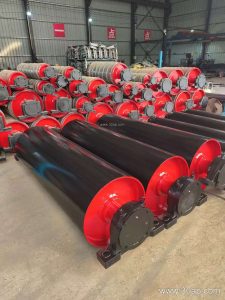
The head drive pulley is the powered drum at the discharge end of a belt conveyor. It grips the conveyor belt, pulls the loaded strand toward the head, and transfers torque from the gearbox or motor into forward motion. Because it sits where material leaves the belt, it is also called the head pulley or drive drum. In a typical aggregate line or cement plant, this single component sets the pace for everything upstream.
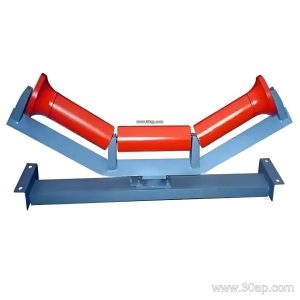
Its job is not the same as that of a tail pulley, which turns freely at the loading end, or a bend pulley, which only redirects the belt. Those are separate subtypes with different duties. The drive drum must handle the highest belt tension and the most demanding traction conditions on the conveyor.
Construction and Surface Options
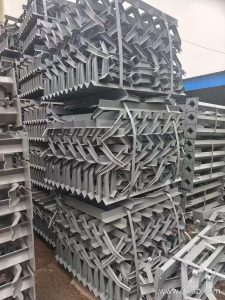
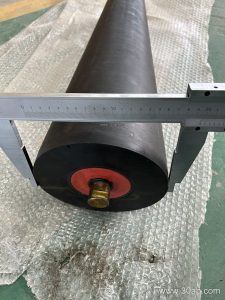
A head drive pulley usually combines a welded steel shell, end discs, a shaft, and bearing housings mounted on a sturdy conveyor bracket. The shell is machined true so the belt tracks evenly. Shaft diameter is chosen from torque and load, commonly in the range of Ø80 to Ø200, rather than fixed by belt width alone.
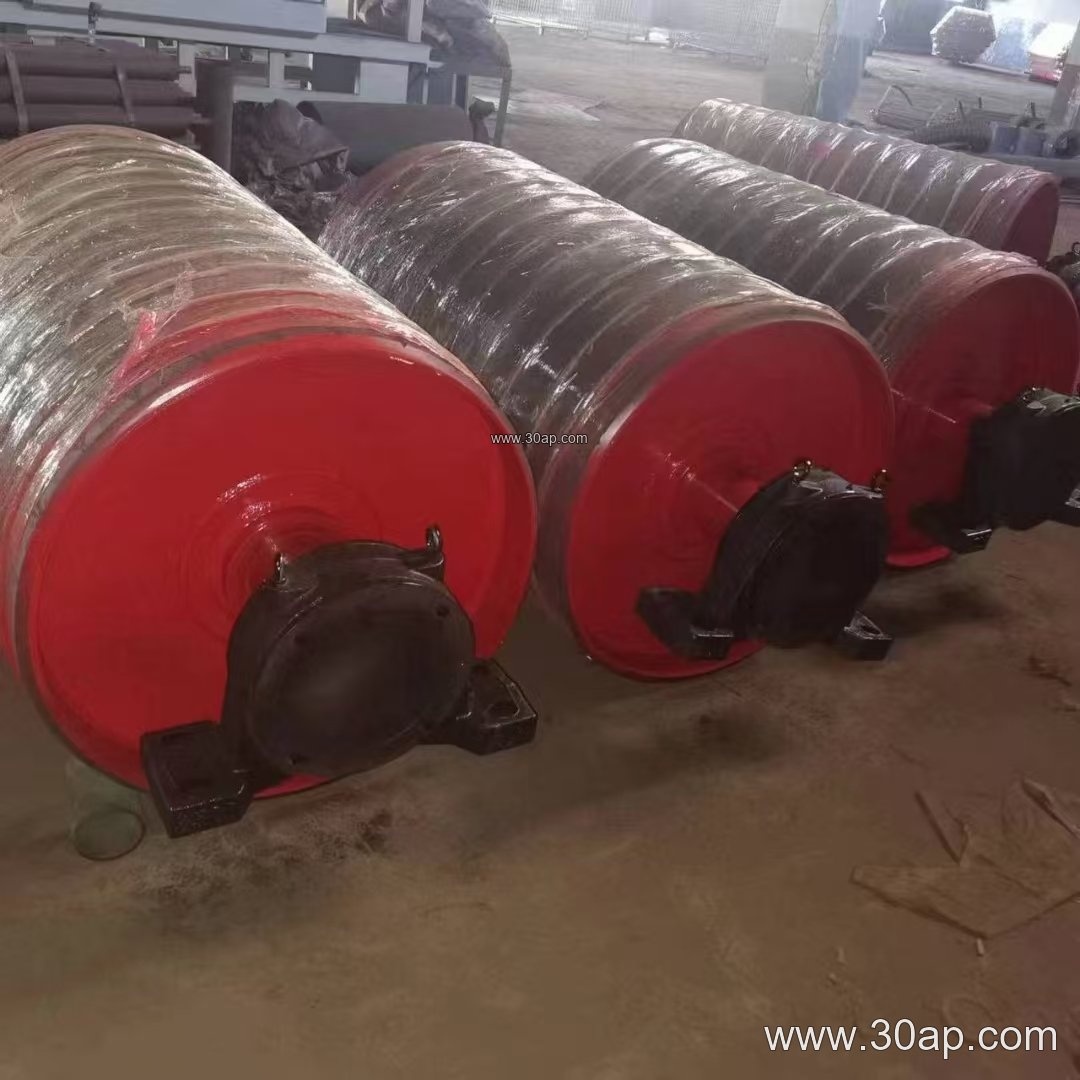
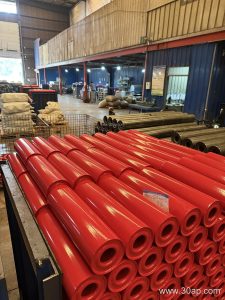
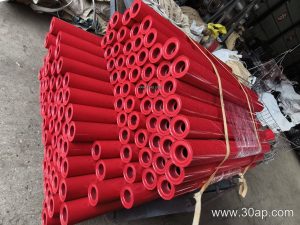
Surface treatment decides grip. Plain shells suit light duties, while rubber lagging improves friction in wet or dusty service. Common forms include diamond grooving, herringbone pattern, ceramic lagging, and plain rubber. Lagging thickness is often 8, 10, 12, 15, or 20 mm depending on the duty.
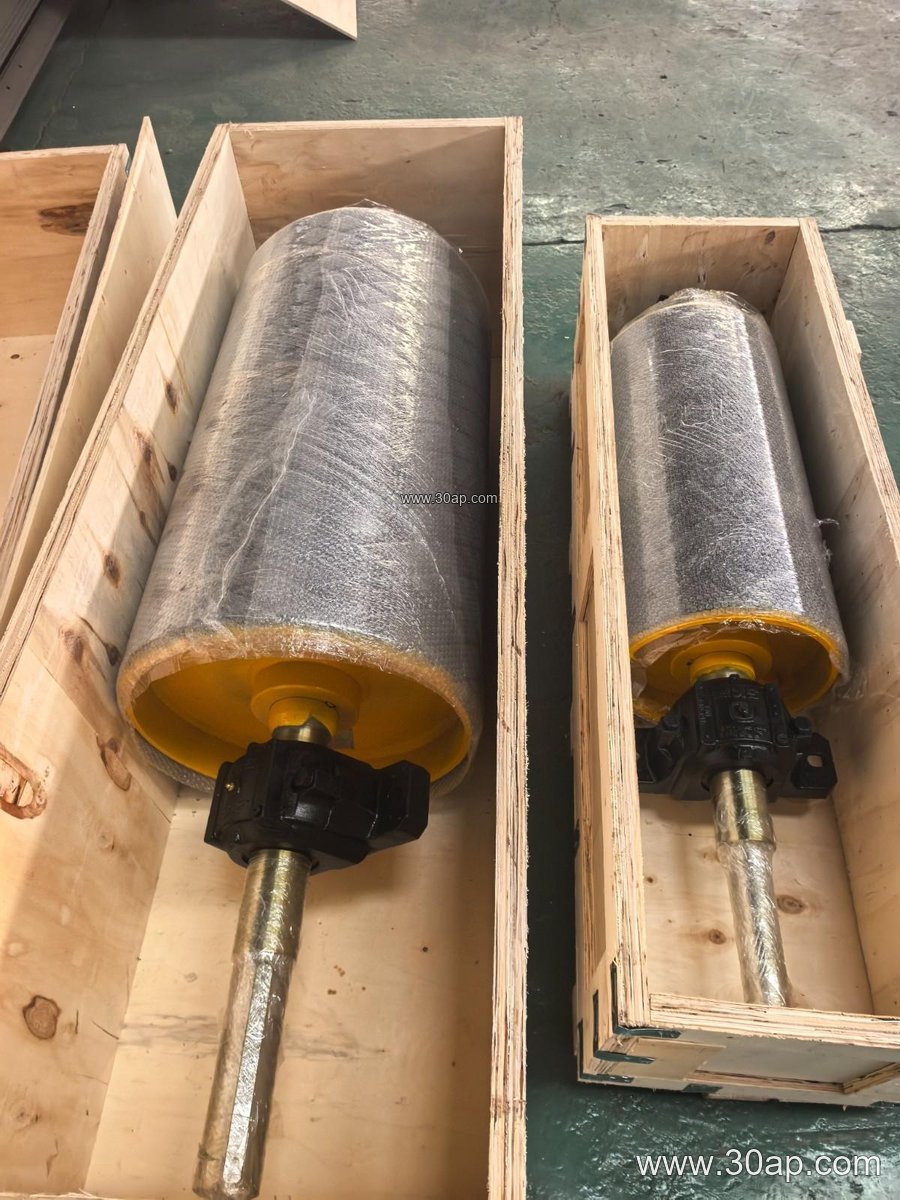
- Diamond lagging: good general grip, sheds water
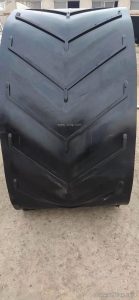
- Herringbone lagging: helps center the belt on reversing conveyors
- Ceramic lagging: high wear resistance for abrasive bulk material
- Plain rubber: economical choice for clean, dry conditions
Where It Fits in the Plant
Head drive pulleys appear across many bulk handling sites. In a quarry or sand and gravel plant, they power primary crusher discharge belts. In a coal washing plant or power station coal yard, they move fuel toward bunkers. Cement plants use them on clinker and raw meal lines, while port terminals rely on them for ship loading conveyors. The pulley must match the belt it drives, whether that is an EP conveyor belt, an NN conveyor belt, or a steel cord conveyor belt in long overland systems.
When the belt carries hot clinker or sinter, a heat resistant conveyor belt is common, and the pulley lagging must tolerate the same temperature. In underground coal mining, flame retardant conveyor belt grades are paired with drive drums built for dusty, confined service.
Matching Pulley to Belt Width
Face width is normally slightly wider than the belt so the belt stays supported. Reference values below show typical relationships, not fixed rules.
| Belt Width | Typical Pulley Face Width |
|---|---|
| B650 | about 750 mm |
| B800 | about 950 mm |
| B1000 | about 1150 mm |
| B1200 | about 1400 mm |
| B1400 | about 1600 mm |
| B1600 | about 1800 mm |
Diameter is selected from belt speed, wrap angle, and tension. A B800 conveyor might use a Ø500 drum, while a B1200 line could run Ø1000 or larger. The same belt width can work with more than one diameter, so the final choice belongs to the conveyor designer.
Buyer Checklist
Before ordering, confirm the belt width, the required diameter, the shaft size, and the lagging type. Ask how the pulley will be balanced and whether the bearing housing suits the conveyor bracket. Check that the lagging matches the material: abrasive ore calls for ceramic or thick rubber, while a food or clean process may need a different approach. Also confirm compatibility with the conveyor belt splice, since an endless conveyor belt or a vulcanized joint affects start-up loads.
For more on drums, belts, and conveyor components, visit beltconveyorparts.com and review the drive pulley range alongside conveyor pulley options. A well-specified head drive pulley keeps the whole line running smoothly, from the crusher to the stockpile.