What the Drive Rubber Lagged Pulley Does
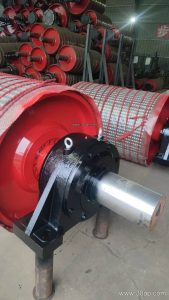
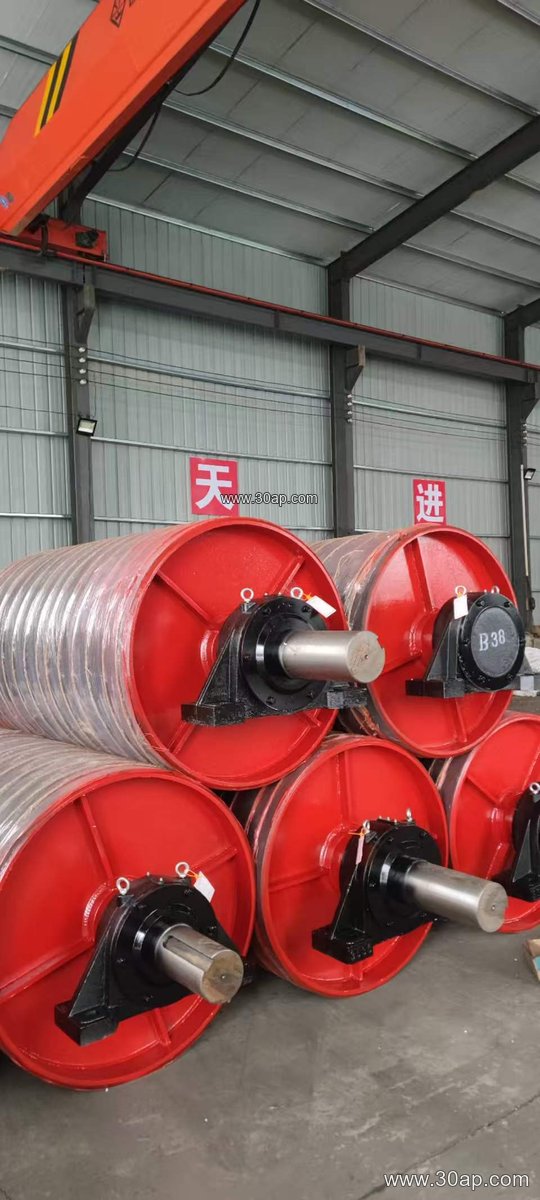
A drive rubber lagged pulley is the powered drum at the head of a belt conveyor that transfers torque from the gearbox to the conveyor belt. The rubber lagging is the key detail: it raises the effective friction between drum and belt, so the same motor can pull a heavier load with less slip. In a quarry or a cement plant, that difference often decides whether a conveyor can start fully loaded after a weekend shutdown. The drum is not a tail pulley or a bend pulley; those guide or tension the belt, while the drive drum does the pulling.
Engineers often call the same item a head pulley with rubber lagging or a lagged drive drum. These are accurate descriptions of the same product, and the subtype stays fixed: it is the powered pulley, not an idler roller and not a conveyor bracket.
Construction and Lagging Options
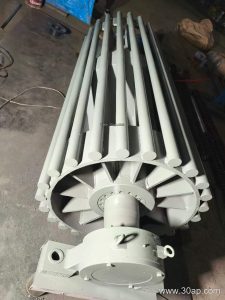
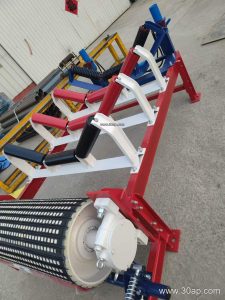
The core is usually a welded steel shell with machined end discs and a shaft sized by torque and radial load. Lagging is applied in several ways: hot vulcanized rubber, cold bonded rubber, or cast rubber. Surface patterns include plain, diamond, and herringbone. Diamond lagging helps shed water and fines, which suits wet aggregate lines, while plain lagging is common where the belt back is smooth and clean.
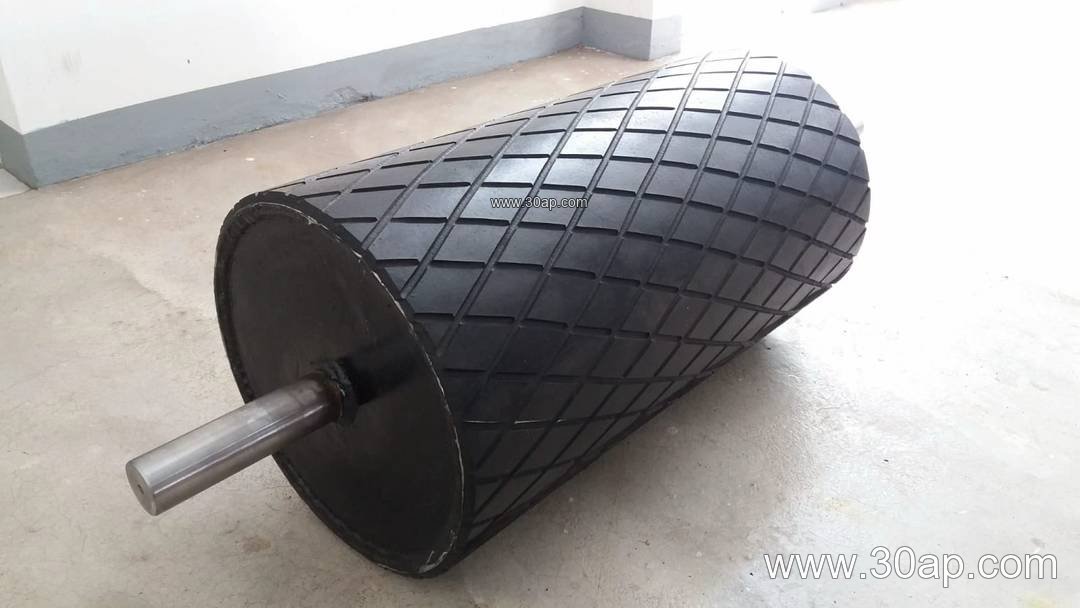
Lagging thickness commonly ranges from 8 mm to 20 mm, with 10 mm and 12 mm frequent in medium-duty service and 15 mm or 20 mm chosen for high-torque drives. The rubber grade should match the site: oil resistant where hydraulic leaks are possible, flame retardant for underground coal mining conveyors, and anti-static where dust ignition is a concern. A drive drum works alongside a rubber conveyor belt, carrying idlers, and return idlers; the belt grade and the lagging must be compatible to avoid polishing or rapid wear.
Sizes and Typical Combinations
Drum diameter and face width follow belt width, belt tension, and wrap angle rather than a single fixed rule. The table below shows common reference combinations; final values are determined by design.
| Belt width | Typical pulley face width | Example diameter | Common lagging |
|---|---|---|---|
| B500 | about 600 mm | Ø400 | 10 mm diamond |
| B650 | about 750 mm | Ø500 | 10–12 mm plain |
| B800 | about 950 mm | Ø500–Ø630 | 12 mm diamond |
| B1000 | about 1150 mm | Ø630–Ø800 | 12–15 mm diamond |
| B1200 | about 1400 mm | Ø800–Ø1000 | 15 mm herringbone |
| B1400 | about 1600 mm | Ø800–Ø1250 | 15–20 mm plain |
| B1600 | about 1800 mm | Ø1000–Ø1400 | 15–20 mm diamond |
Shaft diameters commonly fall between Ø80 and Ø200 for these sizes, but the shaft is selected from torque and bearing loads, never from belt width alone. A B1200 × Ø1000 drum and a B800 × Ø500 drum can both be correct for their own conveyors.
Where It Fits in the Plant
In an iron ore or copper ore concentrator, the drive drum at the transfer tower handles abrasive, dense material and benefits from thick, abrasion resistant lagging. In a coal mining conveyor or underground coal mining conveyor, flame retardant and anti-static properties matter more than grip alone. Power plant coal handling and limestone preparation lines often use a heavy-duty mining conveyor belt with a lagged drive pulley sized for high starting tension.
Port bulk terminals and ship loading conveyors pair large drive drums with steel cord conveyor belt or high strength fabric belt; the lagging must resist both slip and the polishing effect of fine dust. In a sand and gravel plant, a crusher conveyor belt and the drive pulley work under shock loads, so a slightly larger diameter and thicker lagging can reduce belt stress.
Buyer Checklist
- Confirm the drum is genuinely a drive pulley, not a tail or bend pulley, and state the mounting position.
- Provide belt width, belt type, motor power, starting torque, and wrap angle.
- Specify lagging thickness, pattern, and rubber grade: abrasion resistant, oil resistant, flame retardant, or anti-static.
- Check shaft diameter, bearing size, keyway, and hub arrangement against the gearbox output.
- Ask for dynamic balance and runout tolerances if the drum runs at high speed.
- Plan inspection of lagging wear and bolt tightness during scheduled shutdowns.
For a reliable drive rubber lagged pulley, match the rubber compound and surface pattern to the actual material and environment, then verify dimensions against the conveyor frame and conveyor bracket layout. A well specified drive drum protects the belt, reduces slip, and keeps the whole conveying line running.