What the Drive Rubber Lagged Pulley Does
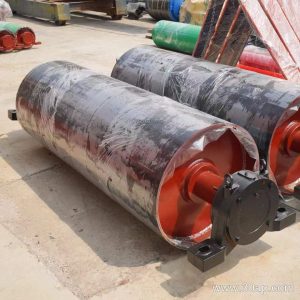
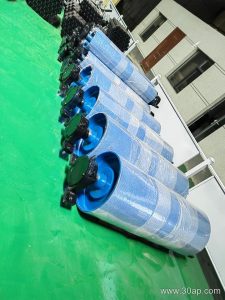
A drive rubber lagged pulley is the powered drum at the head of a conveyor that transfers torque from the gearbox to the conveyor belt. The rubber lagging is not decoration. It raises the friction coefficient between the shell and the belt, which lets the pulley transmit more pull before slip occurs, and it protects the steel shell from abrasive dust and wet slurry. In a quarry or a cement plant, that difference shows up as fewer belt stoppages on start-up under load. The same component is often called a rubber lagged head pulley or a lagged drive drum; these are accurate equivalents for the same product, while tail, bend and take-up pulleys remain separate positions with different duties.
Construction and Surface Options
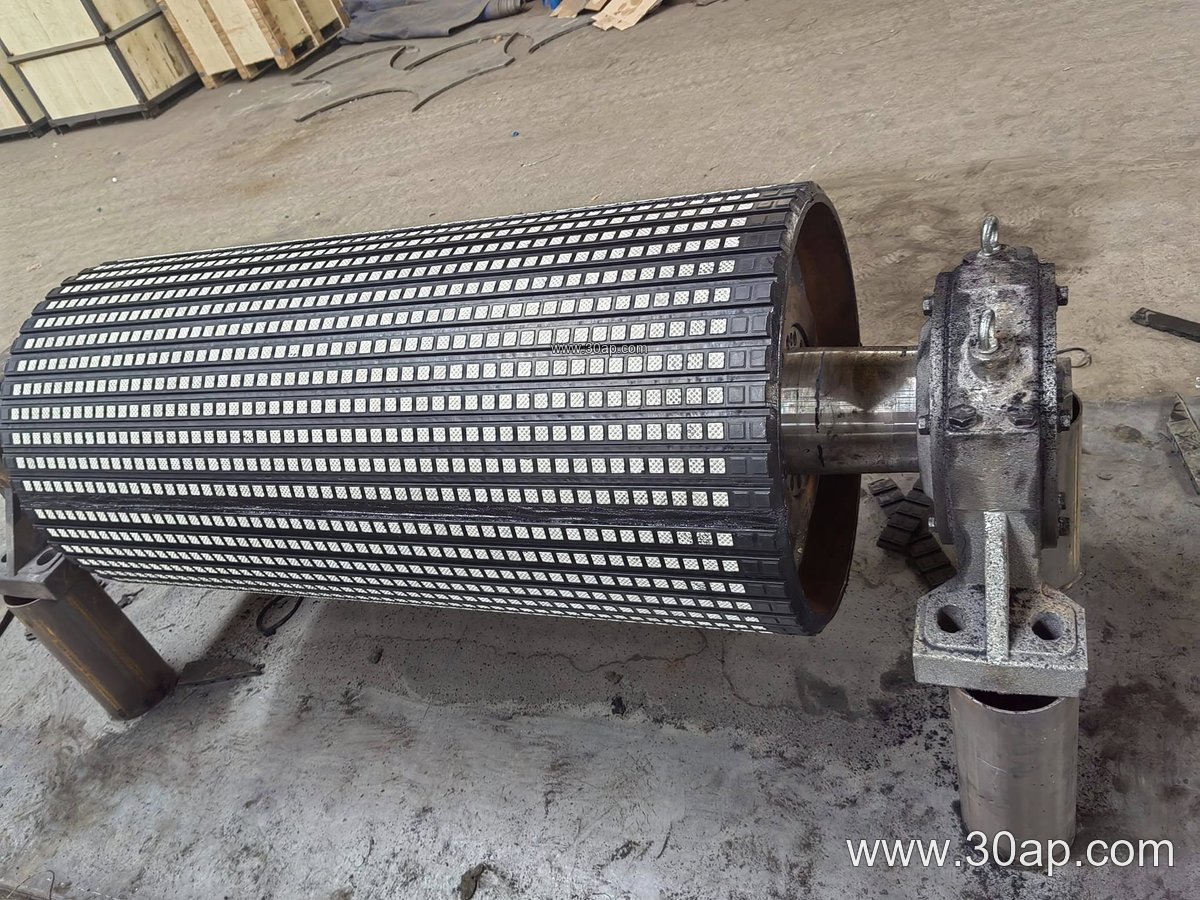
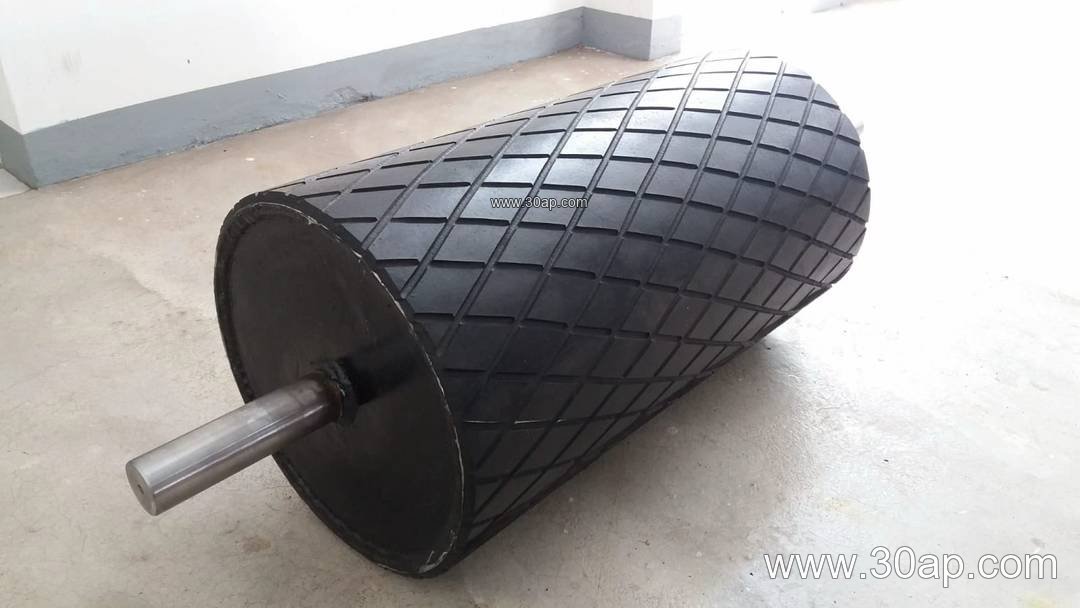
The core is a welded steel cylinder with end discs and a shaft, machined so the lagging sits true. Rubber can be applied in several ways. Cold-bonded sheet is common for general duty, hot-vulcanised rubber gives a stronger bond for high-torque drives, and cast or moulded lagging suits heavy shock loading. Surface patterns matter too: plain lagging for cleaning-friendly duty, diamond groove for wet or dusty conditions where water drainage helps grip, and herringbone groove for bidirectional or high-slip risk. Ceramic tiles embedded in rubber are chosen where abrasion is severe, though they are a different wear solution and not the same as plain rubber lagging.
Typical reference values
The figures below are common workshop ranges, not universal specifications. Final dimensions follow torque, belt tension and shaft load calculations.
- Belt width range: B400 to B2400
- Pulley diameter range: Ø200 to Ø1800
- Lagging thickness: 8, 10, 12, 15, 20 mm
- Shaft diameter range: Ø50 to Ø200
Shell face width is usually slightly wider than the belt, for example B800 with about 950 mm face, B1200 with about 1400 mm, and B1400 with about 1600 mm. A drive drum might be ordered as B1200 × Ø1000 or B800 × Ø500, but no single belt width locks you to one diameter. Shaft size is set by torque and bearing load, not by belt width alone. Where a very wide face is needed, as on a 1800mm wide conveyor belt line, the drum is built to match the frame and gearbox arrangement rather than picked from a table.
Where It Fits in the Plant
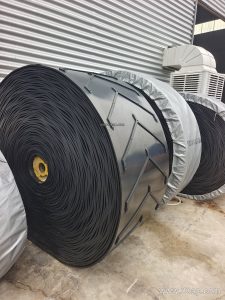
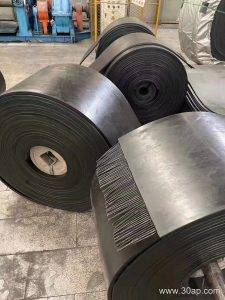
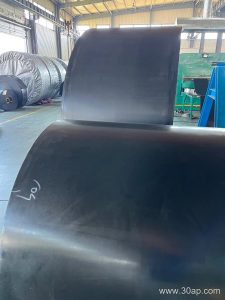
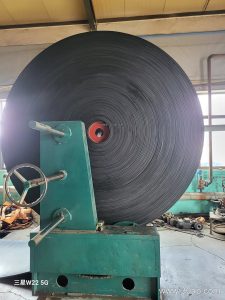
These pulleys appear at the discharge end of primary crushing circuits, on clinker transport in cement works, on coal handling conveyors at power plants, and in port bulk terminals. A drive drum paired with a heavy-duty mining conveyor belt or an abrasion resistant conveyor belt must hold grip when the belt is dusty and the load is uneven. In a coal mining conveyor belt installation, flame retardant conveyor belt and anti-static conveyor belt grades are common, and the lagging must not compromise that safety profile. Downstream, the same line may run a fabric core conveyor belt such as an EP conveyor belt or NN conveyor belt on lighter branches, and the drive pulley should be sized for the heaviest belt it will ever pull.
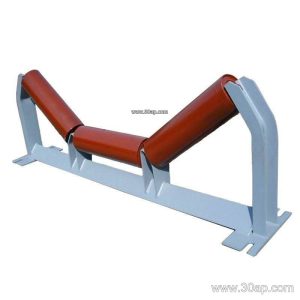
Other positions are not substitutes. A tail pulley guides and tensions the return side; a bend pulley changes direction; a snub pulley increases wrap angle. Only the drive pulley delivers power, so its lagging, diameter and shaft are chosen together with the gearbox and the conveyor bracket layout.
Buyer Checklist
- Confirm the actual belt width and the required face width, allowing for belt wander.
- State the driving torque and starting condition, since lagging grip is most critical at start-up.
- Choose lagging thickness and pattern for the site: wet washing plants, dry aggregate lines and dusty clinker conveyors differ.
- Check shaft diameter and keyway against the gearbox output, not against belt width.
- Ask how the lagging is bonded and whether grooves are cut before or after vulcanising.
- Plan balance and runout checks, plus a spare drum for critical crusher feed lines.
Maintenance Notes
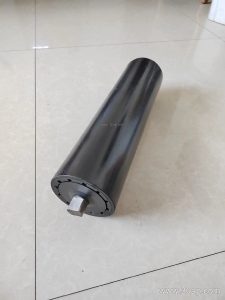
Inspect lagging wear at the same interval as idler roller and belt checks. Grooves that have worn flat, glazed rubber, or lifted edges all reduce grip and should be addressed before slip damages the belt cover. Keep the drum face clean of sticky material; build-up changes the effective diameter and can cause tracking drift. When replacing lagging, record the pulley diameter and rubber thickness so the belt path and take-up stroke stay within design range. Matching the drive rubber lagged pulley to the belt, the load and the environment is what keeps a conveyor line running through a shift without unplanned stops.