What a Guide Idler Bracket Does on a Conveyor
A guide idler bracket is the support structure that holds a guide idler in the correct position relative to the conveyor belt. The guide idler itself is a small vertical or angled roller that contacts the belt edge to keep it centered on the conveyor pulley and head pulley line. The bracket carries that roller, sets its height and angle, and transfers the side load into the conveyor frame. In a quarry or a limestone crushing line, a drifting belt can rub against the structure within minutes, so a well-built guide idler bracket is often the cheapest way to protect both the belt edge and the frame.
The same component is also called a belt guide bracket or a guide roller bracket. Those names describe the same product. It should not be confused with a troughing idler bracket, a return bracket, or a bend pulley support, because each of those has a different job on the conveyor.
Construction and Mounting Position
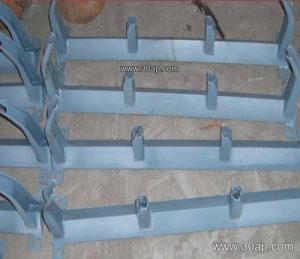
Most brackets are fabricated from angle steel, channel steel, or folded steel plate, then drilled or slotted for the mounting bolts. A typical unit has a base plate that bolts to the conveyor stringer, an upright arm, and a roller shaft seat. Some designs include a slotted hole so the roller can be moved in or out, which helps during alignment on site.
- Fixed bracket: welded or bolted in one position, used where the belt path is already stable.
- Adjustable bracket: slotted or swivel-mounted so the guide roller angle and offset can be tuned after installation.
- Pairs: usually installed on both sides of the belt, just before the tail pulley or ahead of a loading point.
Mounting hole spacing and beam length are not universal. They change with belt width, roller diameter, and frame design, so the bracket should be matched to the actual conveyor drawing rather than chosen by belt width alone.
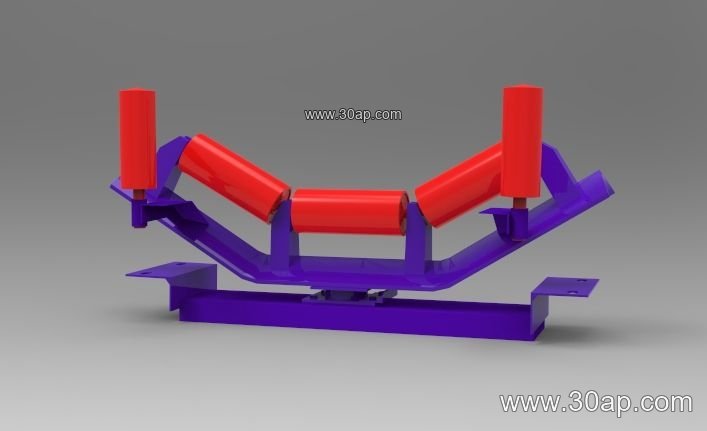
Where Guide Brackets Fit in Bulk Handling
These brackets appear in a wide range of plants. In a coal washing plant or a power plant coal yard, they are often fitted near transfer chutes where the belt is most likely to shift. In a cement plant, they help keep a fabric core conveyor belt centered on long inclined runs feeding the kiln area. In an iron ore or copper ore operation, a heavy-duty version is common because the belt carries dense, abrasive material and any edge contact wears quickly.
The bracket works alongside the troughing idlers, return idlers, and the conveyor pulley, not instead of them. A troughed section may use a 35 degree or 45 degree troughing bracket, while the guide bracket sits at the belt edge to correct tracking. On a pipe conveyor belt or a corrugated sidewall belt, the guide function is handled differently, so the bracket design must match the belt profile.
How to Match the Bracket to Belt and Roller Size
Buyers should confirm four things before ordering: belt width, guide roller diameter, mounting hole pattern, and frame type. The table below shows common reference combinations, not fixed rules. A B800 belt can run with different roller diameters depending on load and speed, and a B1200 conveyor may use a larger roller in a high-tonnage application.
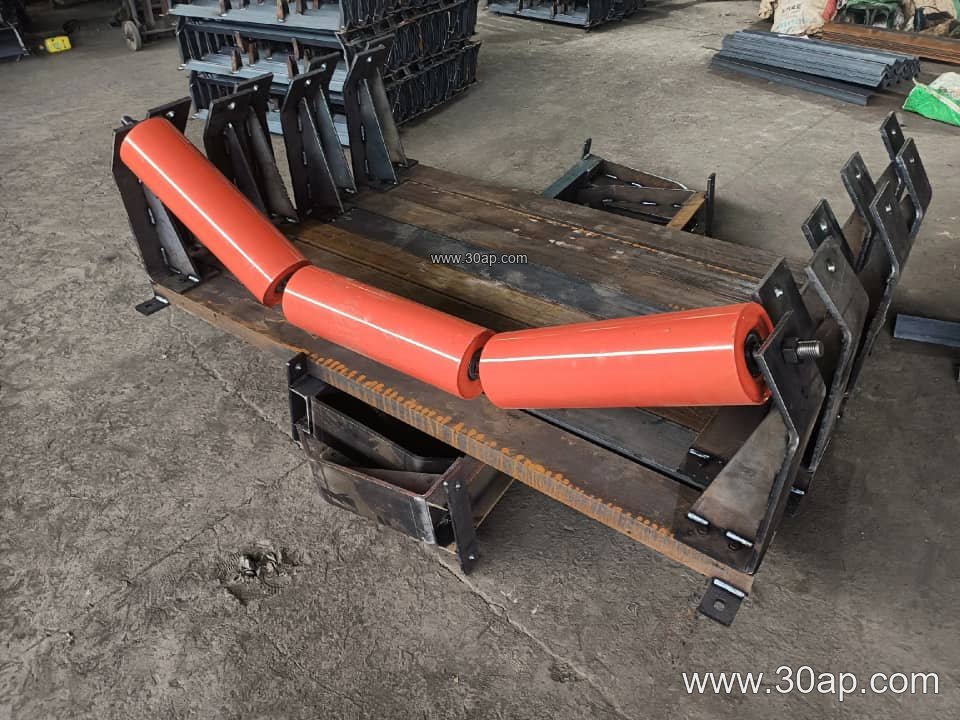
| Belt Width | Common Guide Roller Diameter | Typical Frame Fit |
|---|---|---|
| B500 | Ø89 | Light to medium stringer |
| B650 | Ø89 or Ø108 | Medium stringer |
| B800 | Ø108 or Ø133 | Medium to heavy stringer |
| B1000 | Ø108 or Ø133 | Heavy stringer |
| B1200 | Ø133 or Ø159 | Heavy stringer |
| B1400 | Ø133 or Ø159 | Heavy stringer |
| B1600 | Ø159 or Ø194 | Extra heavy stringer |
| B1800 to B2000 | Ø159 or Ø194 | Extra heavy stringer |
These values are reference data only. Actual selection depends on belt tension, material weight, and the space available beside the frame. For a high abrasion resistant conveyor belt carrying rock, a thicker bracket plate and a larger roller shaft are usually worth the extra cost.
Buyer Checklist Before Installation
Ask for a dimension drawing that shows the hole centers and the roller offset. Check that the bracket material matches the environment: galvanized or painted steel for a port conveyor, and a corrosion-resistant finish near a fertilizer or grain silo. Confirm whether the guide roller is included or supplied separately. On an underground coal mining conveyor, flame retardant and anti-static properties matter for the belt, but the bracket itself should still be checked for fit and strength.
During commissioning, adjust the bracket in small steps and watch the belt for a full revolution. Over-tightening the guide roller can cause edge wear and extra motor load. A slight contact is usually enough. Keep spare brackets on hand for crusher conveyor and screen feed lines, where impact and misalignment are common.
For matching brackets, idler rollers, and pulleys, see the conveyor component range at ppss-group.com and the belt selection notes at ppss-group.com. A guide idler bracket is a small part, yet it protects the conveyor belt, the pulley lagging, and the frame from avoidable damage.