What a Striped Lagged Pulley Does
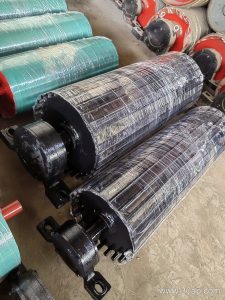
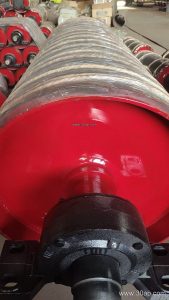
A striped lagged pulley is a conveyor pulley whose shell carries a grooved rubber or polymer lagging with a striped pattern, usually a herringbone or chevron-style groove arrangement. The stripes channel water, fines, and dust away from the contact patch so the belt keeps grip instead of slipping. In a quarry or aggregate line, that difference shows up quickly on a wet morning when a plain pulley would spin and a striped lagged pulley keeps pulling.
It is still a conveyor pulley at heart: a cylindrical shell, a shaft, end discs, and a lagging layer bonded or bolted to the surface. The stripe pattern is the detail that separates it from a smooth lagged version, and it is what buyers should look at first when slip, belt tracking, or carryback is the complaint.
How the Striped Surface Is Built
The shell is usually steel tube or rolled plate, machined at the ends and welded to hubs or end discs. Lagging is applied as natural rubber, SBR blend, or a wear-resistant compound, in thicknesses commonly 8, 10, 12, 15, or 20 mm. Stripes are cut or molded into the surface, and the edges are often chamfered to prevent belt edge damage.
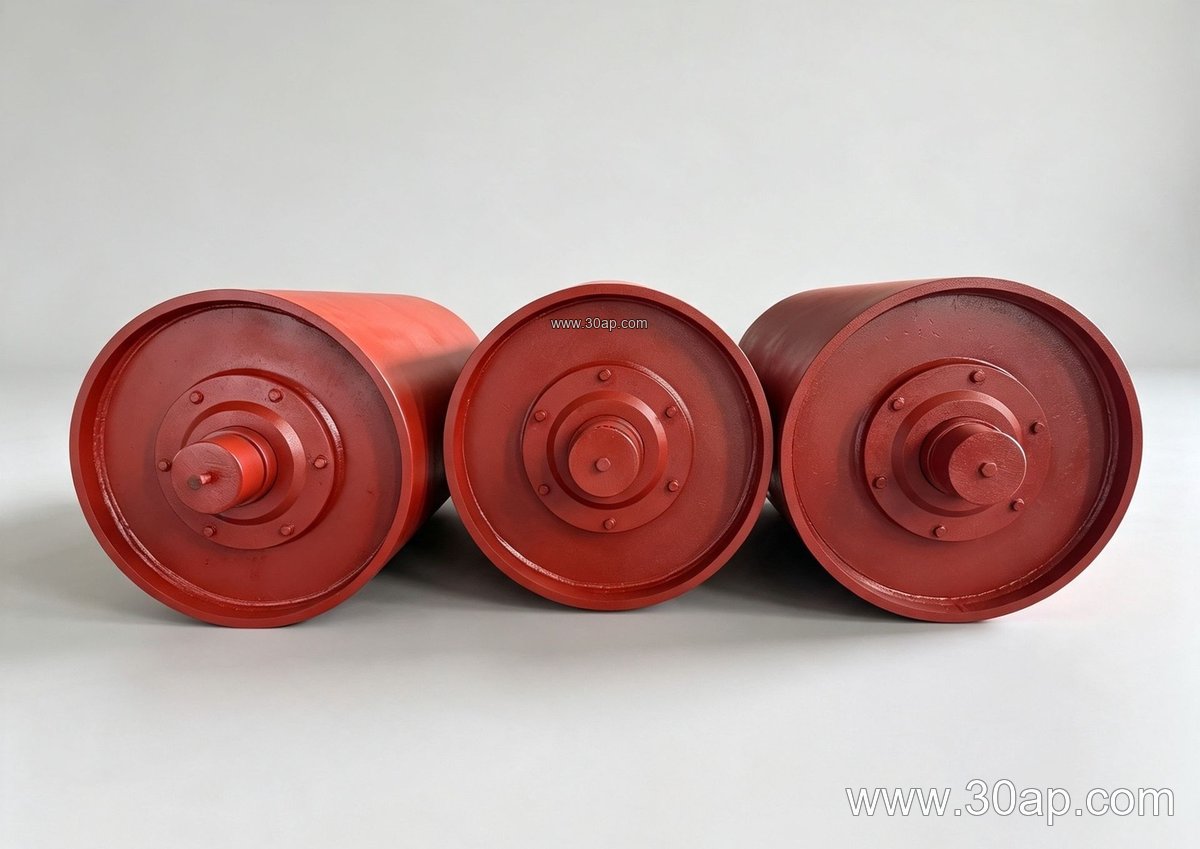
Attachment matters as much as the pattern. Cold-bonded lagging suits lighter duty and field replacement, while hot-vulcanized lagging gives a stronger bond for high-tension drives. Ceramic or diamond inserts can be combined with a striped layout, but the groove geometry should stay open enough to shed material rather than pack it.
Common surface and size references
| Item | Typical reference values |
|---|---|
| Belt width | B500, B650, B800, B1000, B1200, B1400, B1600, B1800 |
| Pulley diameter | Ø250, Ø315, Ø400, Ø500, Ø630, Ø800, Ø1000, Ø1250 |
| Lagging thickness | 8, 10, 12, 15, 20 mm |
| Face width | Usually wider than belt, e.g. B800 about 950 mm, B1200 about 1400 mm |
| Shaft diameter | Ø70, Ø80, Ø90, Ø100, Ø120, Ø140 mm, set by torque and load |
These are common references, not fixed pairings. A B1200 belt can run on Ø800 or Ø1000 depending on tension and wrap angle, and shaft size follows calculated load rather than belt width alone.
Where the Striped Lagging Pays Off
The striped lagged pulley is most useful at the drive position of a belt conveyor handling wet or gritty bulk material. In a sand and gravel plant, wash water and fines reach the pulley face constantly; in a coal preparation plant, slurry and coal dust do the same. The grooves break the water film and push debris sideways, so the belt does not hydroplane.
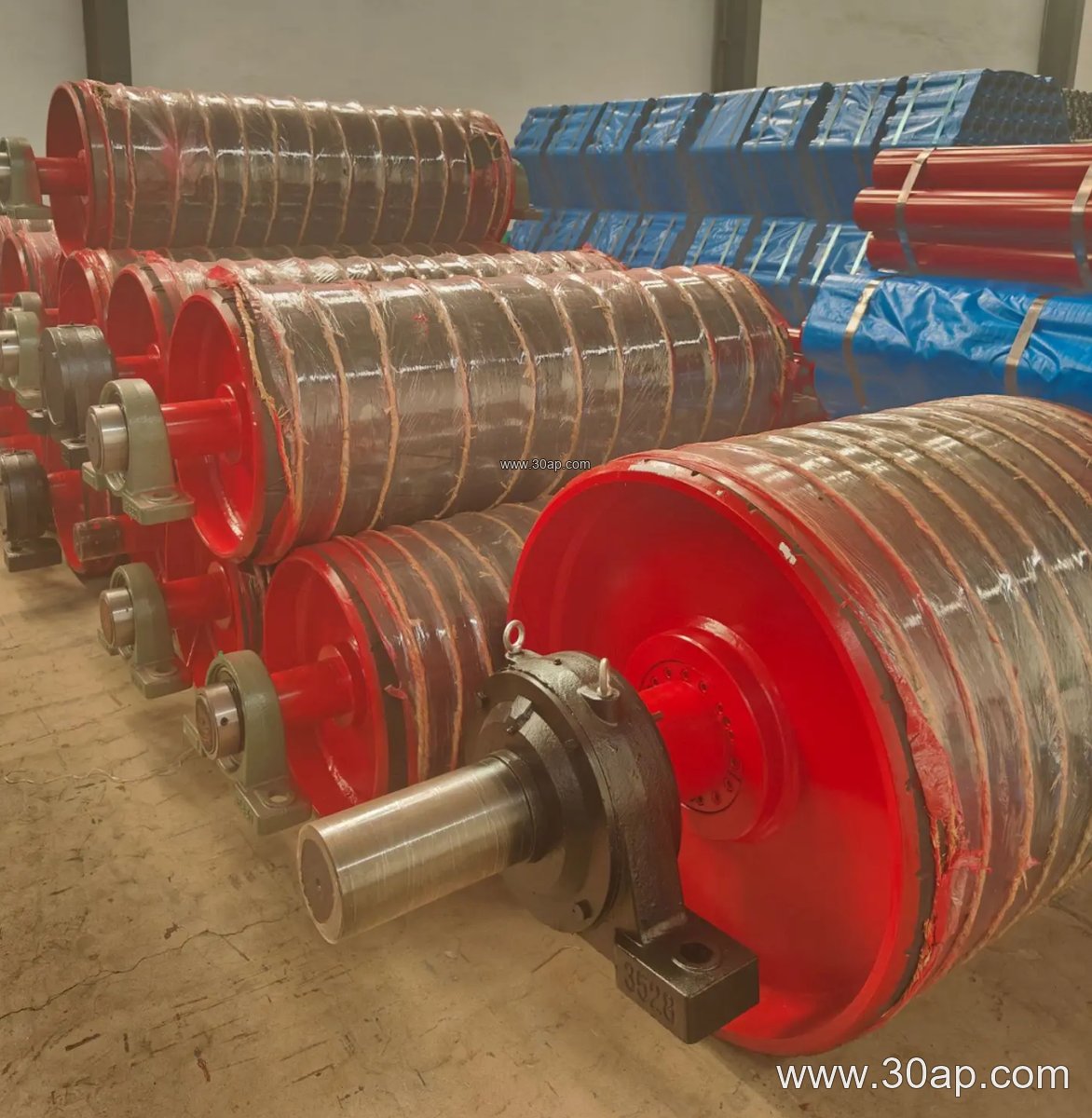
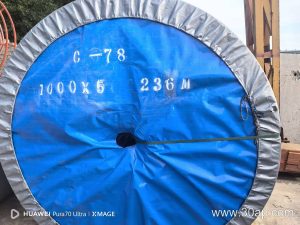
It also helps on incline conveyors where the belt must hold a loaded strand without creep. Paired with an abrasion resistant conveyor belt or a heavy-duty mining conveyor belt, a striped lagged drive pulley gives the friction needed to transmit torque without over-tensioning the belt.
At tail and bend positions, a striped lagged pulley can still be used, but the main benefit is at the drive. For comparison, a smooth lagged pulley may be preferred on a clean, dry line where material build-up is not an issue. On a crusher conveyor belt or a quarry conveyor belt running wet stone, the striped version usually earns its place.
Reading the Drive, Tail, and Bend Positions
Drive pulleys transmit torque; tail pulleys redirect the return strand; bend pulleys change direction without driving. These roles are not interchangeable, and a striped lagged pulley is normally specified for the drive because that is where slip costs the most. A tail pulley with striped lagging may still be chosen in wet conditions to reduce material wrapping, but it is not a substitute for a drive pulley.
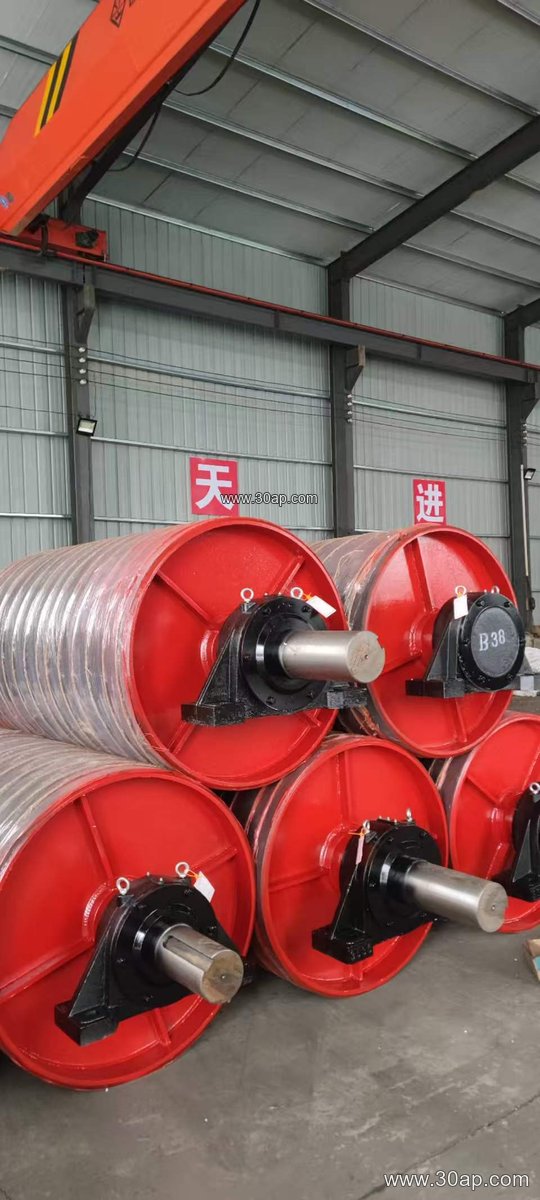
When checking a conveyor layout, confirm the wrap angle, belt tension, and lagging thickness together. A thicker lagging, such as 15 or 20 mm, increases the effective diameter and must be accounted for in belt length and take-up travel.
Buyer Checklist Before Ordering
- Belt width and pulley face width, matched with a small margin.
- Pulley diameter and shaft diameter, confirmed by torque calculation.
- Lagging compound and stripe pattern, selected for wet, oily, or abrasive duty.
- Lagging thickness and attachment method, cold-bonded or hot-vulcanized.
- Bearing type, conveyor bracket interface, and balancing requirement.
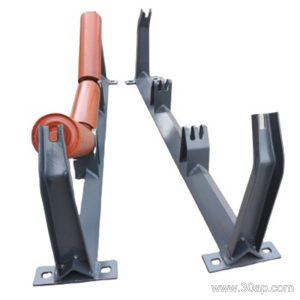
- Compatibility with the conveyor belt, idler roller set, and take-up system.
Also ask how the stripes are cut and whether the groove depth stays consistent after wear. A shallow, well-drained groove pattern often outlasts a deep one that packs with fines.
Care and Inspection
Inspect the striped surface for groove packing, edge lift, and uneven wear at each shutdown. Clean grooves with a scraper or water jet, check lagging bond at the edges, and verify that the belt tracks centrally. A worn stripe pattern loses drainage first, then grip. Re-lagging before the shell is exposed avoids costly belt slip and premature replacement of the conveyor pulley.
For plants running EP conveyor belt or steel cord conveyor belt constructions, keep records of pulley diameter and lagging thickness so replacement parts match the original design. Small changes in face width or lagging can affect belt training on the whole conveyor.