What a Coal Mine Belt Conveyor Idler Does Underground
In an underground coal mine, a Coal Mine Belt Conveyor Idler carries the loaded conveyor belt and keeps it tracking along the structure. These idlers support the belt between the head and tail, absorb the weight of coal, and reduce friction so the drive can move material efficiently. They are used on both the carrying side and the return side, and their condition directly affects belt life and energy consumption. A worn or seized idler can damage the belt cover, misalign the belt, and create a fire risk in a coal mining conveyor belt system.
Construction and Common Types
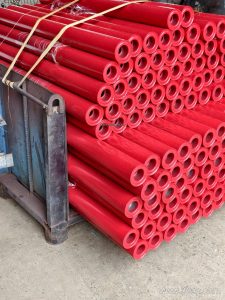
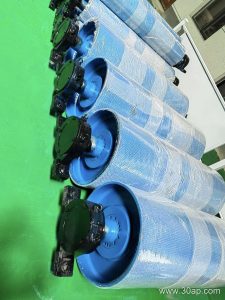
A typical idler roller consists of a steel tube shell, bearing housings, seals, and a shaft. The shell may be plain steel, nylon-coated, ceramic-covered, or fitted with rubber rings for impact absorption. Bearing sizes such as 6204, 6205, 6305, 6306, 6308, and 6310 are common in different idler series, but the bearing must match the load and speed of the application rather than a single tube diameter. Seals are critical in coal dust; labyrinth or multi-stage seals help keep fine particles out of the bearing cavity.
Common idler types for coal mine conveyors include:
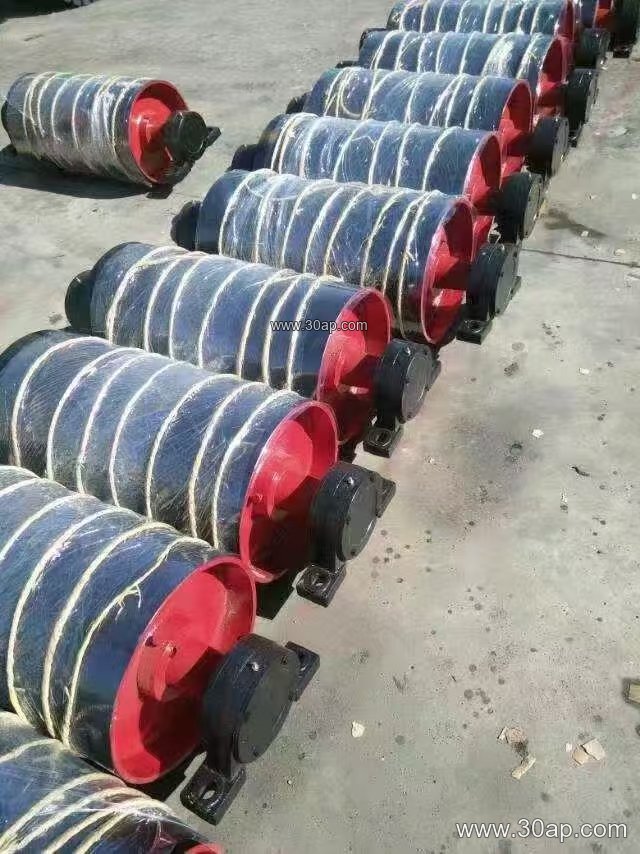
- Troughing idlers (three-roll, two-roll, or single-roll) for the carrying side
- Impact idlers with rubber rings under loading points
- Return idlers, including flat and V-type, for the empty belt
- Training idlers for belt alignment
- Spiral idlers for sticky material
Belt widths from B650 to B2000 are common in underground and surface coal conveyors. Idler diameter choices typically range from Ø89 to Ø159, with larger diameters used for heavier loads and wider belts. Trough angles of 20, 30, 35, and 45 degrees are selected based on material characteristics; a 35-degree trough is common for coal, while a 45-degree trough may be used where higher capacity is needed. Roll length varies with belt width and trough angle—for example, a three-roll troughing set for B1000 often uses a center roll around 380 mm, but side rolls and actual dimensions are determined by the conveyor design.
Where Coal Mine Idlers Are Used
These idlers appear in underground coal mining conveyor belts, surface coal handling systems, and transfer points at power plant coal yards. They are also found in washing plants and drift conveyors. In a coal mining conveyor belt system, flame retardant conveyor belt and anti-static conveyor belt properties are important, but idler performance still determines how well the belt is supported. A seized idler can generate heat, so maintenance checks are part of fire prevention.
Buyer Checklist for Coal Mine Belt Conveyor Idlers
When specifying idlers for a coal mine, consider the following:
- Belt width and trough angle to determine roll length and idler arrangement
- Load and speed to select shaft, bearing, and tube thickness
- Sealing method for dust and water exposure
- Shell material and coating for abrasion or corrosion
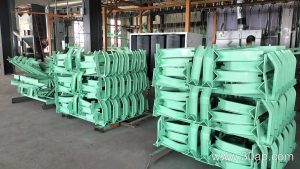
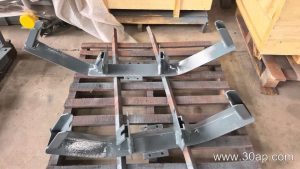
- Compatibility with the conveyor bracket and frame spacing
Parameters such as idler diameter, bearing size, and roll length should be confirmed against the conveyor design. A common three-roll troughing set for B1200 may use a center roll of about 465 mm, but this is not a fixed rule for every conveyor. Buyers should request dimensional drawings and material certificates rather than relying on nominal sizes alone.
Maintenance and Replacement Notes
Regular inspection of idler rotation, seal condition, and belt tracking helps prevent unplanned downtime. In coal dust environments, idlers that do not turn freely should be replaced promptly. Keeping spare idlers and brackets on site reduces stoppage time. For heavy-duty mining conveyor belt systems, idler selection should match the belt’s load and speed, and any change in belt type or capacity may require a review of idler spacing and diameter. More information on conveyor components is available at brconveyorbelt.com.